 English
 Le français
 Türkçe

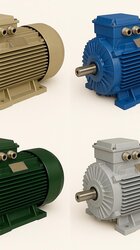
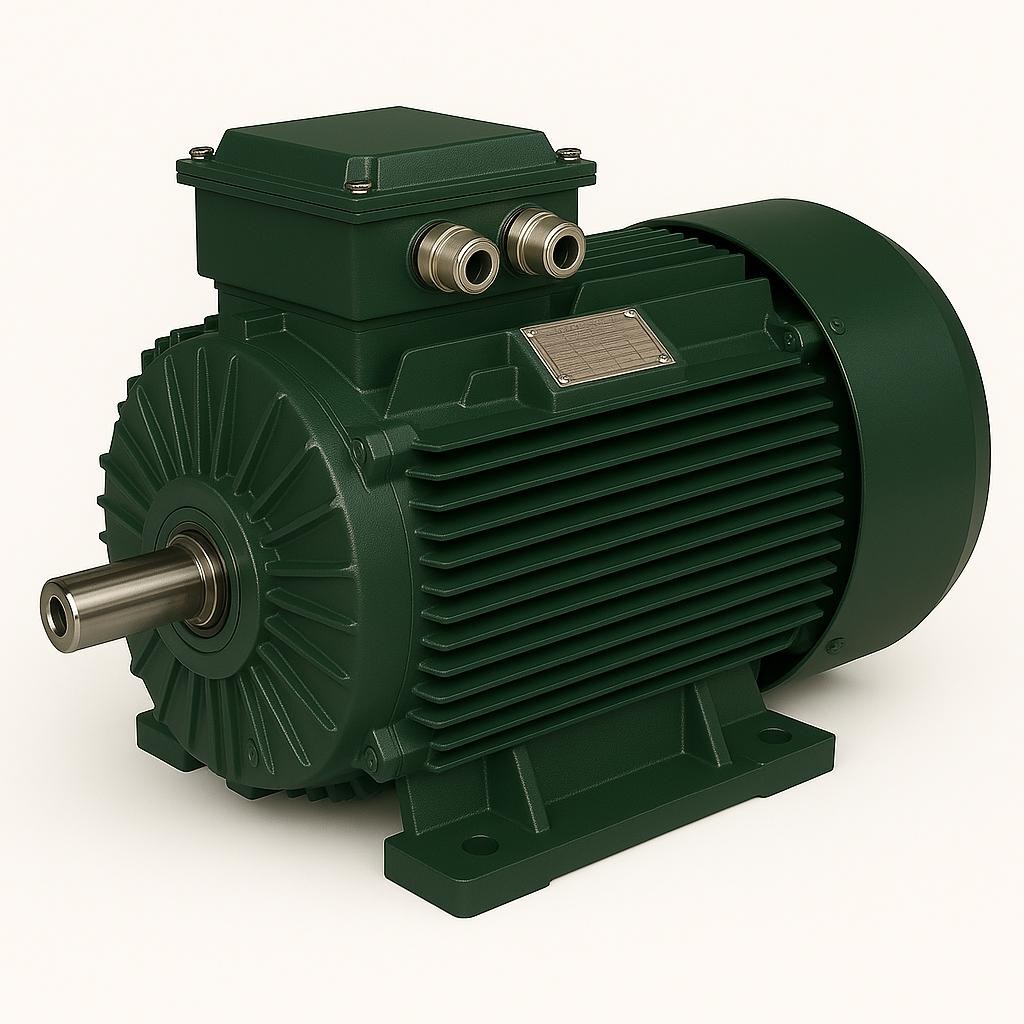

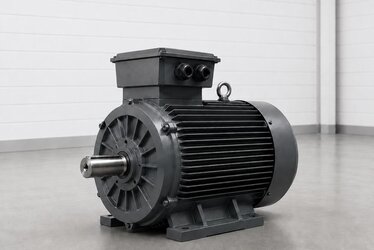
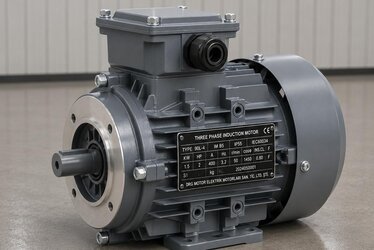
In industrial facilities, warehouses, and large commercial buildings, the quality of the indoor air directly affects production efficiency and worker health. One of the most effective solutions for expelling this air is the roof-mounted exhaust fan. At the heart of these systems is an electric motor that must withstand harsh conditions. The right motor selection determines both the efficiency and the lifespan of the exhaust fan.
In this article, we will examine in detail what to pay attention to when selecting an electric motor for roof exhaust fans. For the basic concepts, you can also review our article on what is an electric motor.
What is a roof exhaust fan?
A roof exhaust fan is a ventilation device mounted on the roof of a building that expels dirty, hot, or humid air from the interior. It efficiently discharges air coming from kitchens, production lines, and warehouses.
These devices generally consist of a fan, a housing, and an electric motor that drives it. Because the motor operates in an exposed and demanding location such as a roof, its selection requires special attention.
Roof exhaust fans draw the air from the environment upward and release it into the atmosphere. In this way, smoke, odor, excess heat, and humidity accumulated indoors are quickly removed. The continuous and quiet operation of the system depends largely on the quality of the chosen motor and its suitability for the application.
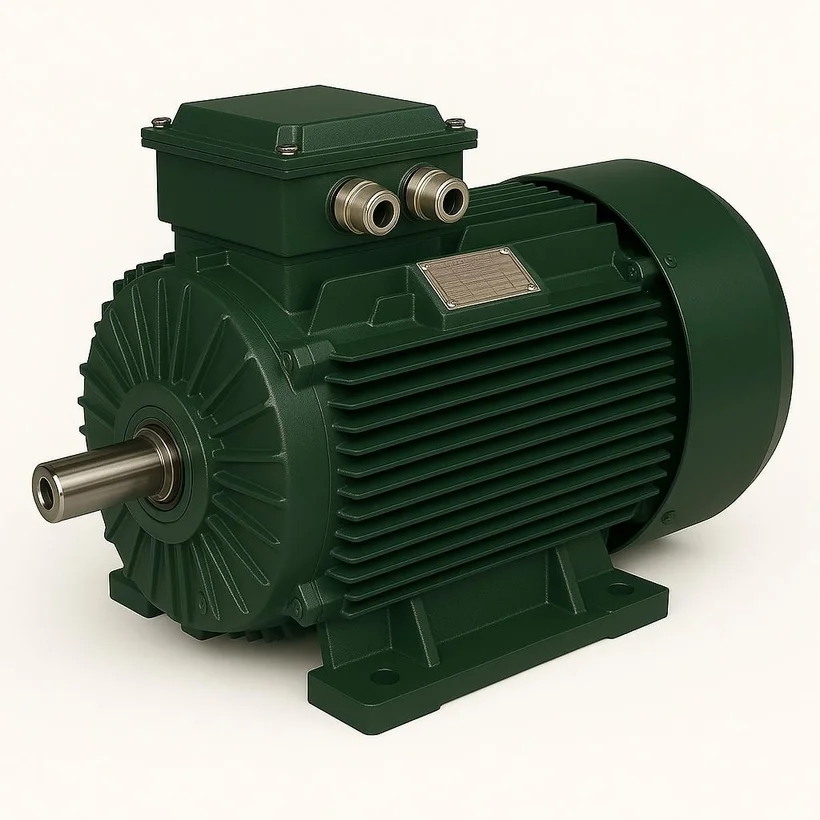
The challenges of outdoor conditions
A motor mounted on a roof is continuously exposed to natural conditions such as rain, snow, sun, and wind. These conditions are far more severe than those for a motor operating in an enclosed environment.
For this reason, a roof exhaust fan motor must have a protection level suitable for outdoor use. Otherwise, moisture and water enter the motor and damage the windings.
Under the sun, the roof surface reaches very high temperatures in summer, while in winter it falls below freezing. These temperature swings constantly stress the motor's housing and insulation. Sudden temperature differences can also cause condensation inside the body, leading to moisture buildup. A properly selected motor must have the materials and design to resist these fluctuations.
The importance of the IP protection class
The IP protection class indicates how well the motor is protected against dust and water. For roof applications, a protection level of at least IP55 is recommended.
A high IP class prevents rain and snow water from entering the motor. On this subject, our article on IP protection class selection provides detailed guidance.
The first digit of the IP class indicates protection against dust, and the second against water. In a location such as a roof that is continuously exposed to water and dust, both values must be high. In facilities where dust is abundant or where materials such as cement or flour are processed, IP65 and above protection is safer. Choosing the wrong IP class can cause the motor to fail within a few seasons.
Single-phase or three-phase?
For low-power exhaust fans, single-phase motors may be sufficient. However, in large facilities with high airflow, three-phase motors are preferred.
Three-phase motors operate more efficiently and in a more balanced way. The use of a three-phase motor in industry is standard in large ventilation systems.
Single-phase motors are generally preferred in small exhaust fans up to about 2.2 kW and can be fed from a standard outlet. Three-phase motors, on the other hand, run at higher power while drawing lower current and offering a longer service life. If your facility has a three-phase supply, choosing a three-phase motor for medium and large exhaust fans is advantageous in terms of both efficiency and maintenance.
Capacitor in single-phase motors
Single-phase exhaust fan motors need a capacitor to start. The correct value of this capacitor ensures that the motor starts smoothly.
A weak or faulty capacitor causes the motor to start with difficulty. For details, you can look at our article on single-phase motor capacitor.
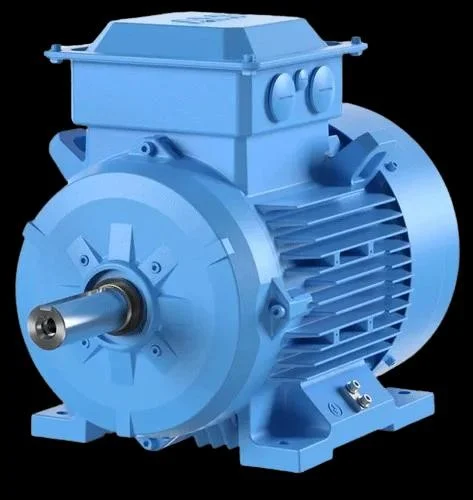
Speed control and airflow adjustment
Ventilation needs can change throughout the day. For this reason, being able to adjust the speed of the exhaust fan motor provides a great advantage.
With a frequency inverter, the motor speed is reduced to prevent unnecessary energy consumption. Our article on frequency inverter energy saving explains this method.
In fan applications, power varies in proportion to the cube of the speed. This means that reducing the motor speed by even just twenty percent can nearly halve the energy consumption. Therefore, in facilities with variable air requirements, the use of a frequency inverter is one of the investments with the fastest payback. The inverter also provides a soft start to the motor, reducing mechanical stress.
Protection from the exhaust air
An exhaust fan sometimes discharges oily, corrosive, or dusty air. If this air reaches the motor's windings, it causes damage over time.
In well-designed exhaust fans, the motor is isolated from the discharged airflow. In this way, the dirty air passes only through the fan, not the motor.
Especially in kitchens and food facilities, the discharged air contains oil vapor. This oil can accumulate on the motor body, clogging the cooling fins and causing the motor to overheat. In chemical plants where corrosive gases are present, the motor must be fully isolated from these gases. For this reason, the separation between the airflow and the motor is a critical design detail in terms of lifespan.
Rain and snow resistance
Rain and snow water accumulating on the roof are the greatest threat to the motor. For this reason, the motor must be protected with a cap or cover.
Proper installation and a protective cap prevent water from reaching the motor body. Drainage holes, in turn, allow any small amount of water that seeps in to be discharged.
In regions with heavy snowfall, snow accumulating on the exhaust fan can clog the fan inlet. In this case, the motor is strained and draws excessive current. A well-designed roof exhaust fan has a cap that prevents foreign matter such as snow and leaves from entering. Keeping the motor dry and cool under this cap is the foundation of long-lasting operation.
Temperature and insulation class
In summer, the roof surface heats up considerably, and in kitchen exhaust the air can be hot. The motor insulation must be chosen in a class that withstands these temperatures.
Class F or H insulation provides safe operation at high temperatures. Our article on insulation class explores this subject in depth.
In kitchen hood exhaust, the air temperature can rise quite high, and this hot air also heats the area around the motor. If the insulation class is not selected according to this condition, the winding insulation wears out prematurely. High-class insulation provides a safe buffer against both high ambient temperature and the motor's own heating. This significantly reduces the risk of failure in a hard-to-access motor on the roof.
Airflow and pressure calculation
The amount of air the exhaust fan must move (airflow) and the resistance it must overcome (pressure) determine the motor power. An underpowered motor cannot provide the desired ventilation.
The right calculation ensures that a motor is selected that neither consumes excess energy nor falls short. This balance affects both the comfort and the economy of the facility.
Airflow is usually expressed in cubic meters per hour (m³/h) and is calculated based on the volume of the space and how many air changes per hour are desired. Factors such as duct length, the number of elbows, and filters increase the pressure resistance of the system. The higher this resistance, the more powerful the motor must be. Calculating correctly prevents both insufficient ventilation and unnecessary energy consumption.
Efficiency and energy consumption
Exhaust fans usually run for long hours, which makes efficiency critical. An efficient motor makes a big difference in the annual energy bill.
High-efficiency motors pay for themselves quickly during these long operating hours. High-efficiency electric motors are ideal for exhaust fan applications.
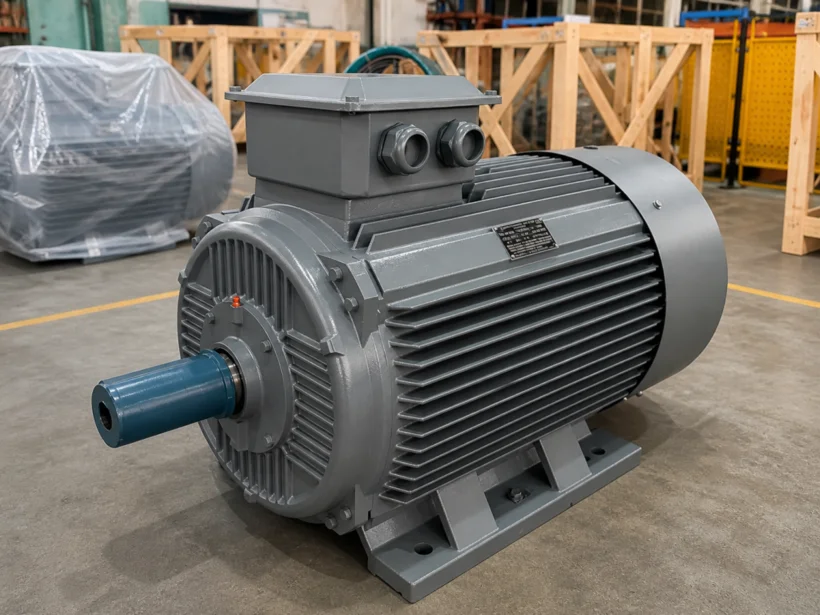
In an exhaust fan motor that runs twenty hours a day, choosing an IE4-class motor instead of IE3 provides a noticeable saving in annual energy consumption. Although the efficiency difference may seem like just a few percent, in a continuously running motor this difference reaches large figures. You can find detailed information on where efficiency losses come from in our article on efficiency losses. The right efficiency class benefits both the environment and the budget.
Bearing life and continuous operation
Because exhaust fan motors often run without interruption, their bearings are under high load. Quality bearings and proper lubrication significantly extend their life.
Regular maintenance is the most effective way to prevent bearing failures. Our article on extending bearing life helps on this subject.
Vibration and noise control
An exhaust fan mounted on the roof can transmit its vibration to the building. This creates both discomfort and structural fatigue.
Vibration mounts and a balanced fan solve this problem. Our article on reducing noise and vibration explains additional measures.
Overload protection
Dirt accumulating on the fan blades or a clogged duct can cause the motor to draw excessive current. In this case, if the motor is unprotected, it burns out.
Protection devices such as thermal relays protect the motor from these risks. Our article on overload protection details the measures.
In roof exhaust fans, oil and dust sticking to the fan blades create imbalance over time, which causes the motor to draw extra load. A thermal relay, when set according to the motor's rated current, detects the overcurrent and cuts the circuit. In this way, the motor is protected before the windings burn out. In a motor running out of sight on the roof, this automatic protection prevents major failures.
The danger of phase loss
In three-phase exhaust fan motors, the loss of one phase causes the motor to overheat and burn out. In a motor on the roof, this fault may be noticed late.
A phase protection relay automatically prevents this danger. Our article on phase loss covers the subject in depth.
Grounding and electrical safety
For a motor operating outdoors on a roof, grounding is vitally important. The risks of lightning and leakage current are higher here.
Solid grounding protects both the device and the maintenance personnel. Our article on grounding completes this subject.
The roof is the point where the risk of lightning strikes is highest; therefore, the grounding of the exhaust fan motor must be compatible with the building's lightning protection system. In a humid environment, a current leaking to the body can be fatal for anyone who touches it. Measuring the grounding resistance regularly confirms the effectiveness of the protection system. Safe grounding also makes maintenance work on the roof safe.
Fan and exhaust fan motor selection principles
The fan type (centrifugal or axial), blade design, and speed affect motor selection. A wrong match degrades both efficiency and the noise level.
The right fan-motor match gives the most efficient result. Our article on fan and blower motor selection details these principles.
Similarities with cooling tower fans
Roof exhaust fans operate in harsh conditions similar to cooling tower fans. In both, moisture, water, and continuous operation are common challenges.
This similarity brings the motor selection logic closer. Our article on cooling tower fan motor offers complementary information.
In both applications, the motor works intertwined with water vapor and continuous moisture. For this reason, the housing material must be corrosion-resistant and the sealing gaskets must be of good quality. Experience gained from cooling towers is directly useful in selecting a roof exhaust fan motor. A motor designed against moisture and water lasts a long time in both applications.
Exhaust fan motors in industrial facilities
In large factories, exhaust fans are critical equipment that maintains the quality of production air. For this reason, durable motors suitable for continuous operation are required.
Industrial-class motors are suitable for this intensive use. Industrial electric motors meet these expectations.
Bearings, Grease and Dust
Reaching a motor on the roof can be difficult; therefore, it is necessary to choose a motor that will run for a long time without failing. An easily accessible installation makes maintenance easier.
Regular maintenance prevents the exhaust fan from stopping unexpectedly. Our article on maintenance steps summarizes this routine.
During maintenance, it is important to clean the fan blades, check the bearings, and keep the drainage holes in the housing open. Leaves accumulating on the roof or bird nests can obstruct the airflow and strain the motor. A comprehensive check performed at least once a year both preserves efficiency and prevents unexpected failures. Making access easier with a safe platform ensures that this maintenance is carried out without interruption.
Tracking with energy monitoring
Monitoring the current drawn by the exhaust fan motor gives early warning of clogging or failure. A sudden increase in current is the sign of a problem.
This monitoring makes it possible to assess the motor's condition without climbing onto the roof. Our article on energy monitoring explains this approach.
Modern building automation systems centrally record the current, temperature, and operating hours of the exhaust fan motor. This data helps both to optimize energy consumption and to predict approaching failures. A slow but steady increase in current can indicate that the fan is getting dirty or that the bearings are wearing out. In this way, maintenance can be planned before the motor stops completely.
Service Plan and Spares
Vibration and temperature sensors can detect a fault in a roof exhaust fan before it occurs. This prevents unplanned downtime in a hard-to-reach location.
Predictive maintenance provides great convenience in roof exhaust fans. Our article on predictive maintenance explains the methods.
Working with the right supplier
In a demanding application such as a roof exhaust fan, a reliable supplier who recommends the right motor is very important. A good seller correctly determines the IP class and power suitable for the conditions.
A motor purchased from the right source will not cause trouble for years. Our article on electric motor dealers offers selection tips.
Powerful ventilation solutions with DRG Motor
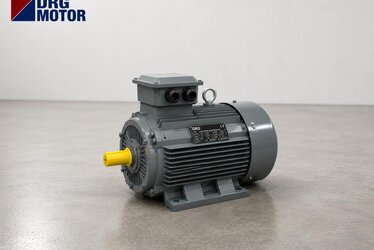
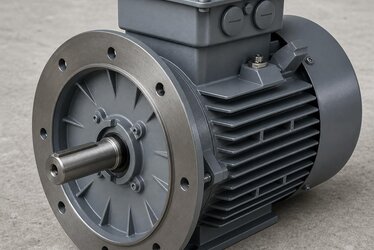
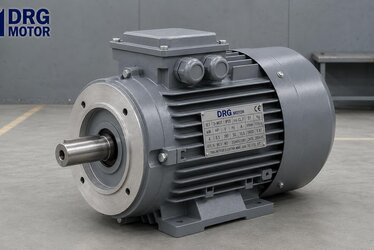
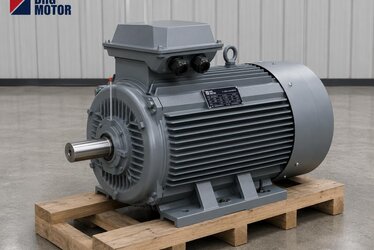
DRG Motor delivers high IP-protected and efficient electric motors suitable for the harsh conditions of roof exhaust fans. With their weather-resistant design and solid insulation, these motors operate safely for years in rain, snow, and heat.
If you want to choose the right exhaust fan motor for your ventilation project, you can review DRG Motor products and contact our expert team. For more information, you can read our article on fan and blower motor selection or visit our homepage.