 English
 Le français
 Türkçe


Many of the electric motors used in homes and small businesses run on a single-phase (monophase) supply. From washing machines to water pumps, from small fans to compressors, a huge number of devices are driven by single-phase motors. Yet for these motors to run at all, they rely on a special component: the capacitor. Without a capacitor, a single-phase motor usually cannot start turning on its own. So why exactly do single-phase motors need a capacitor?
At DRG Motor, this article looks closely at the role and importance of the capacitor in single-phase motors. If you want to understand the broader difference between single-phase and three-phase machines, you can also read our article on three-phase electric motors in industry, where we explain why heavy industrial loads almost always use three-phase power.
What Is a Single-Phase Motor?
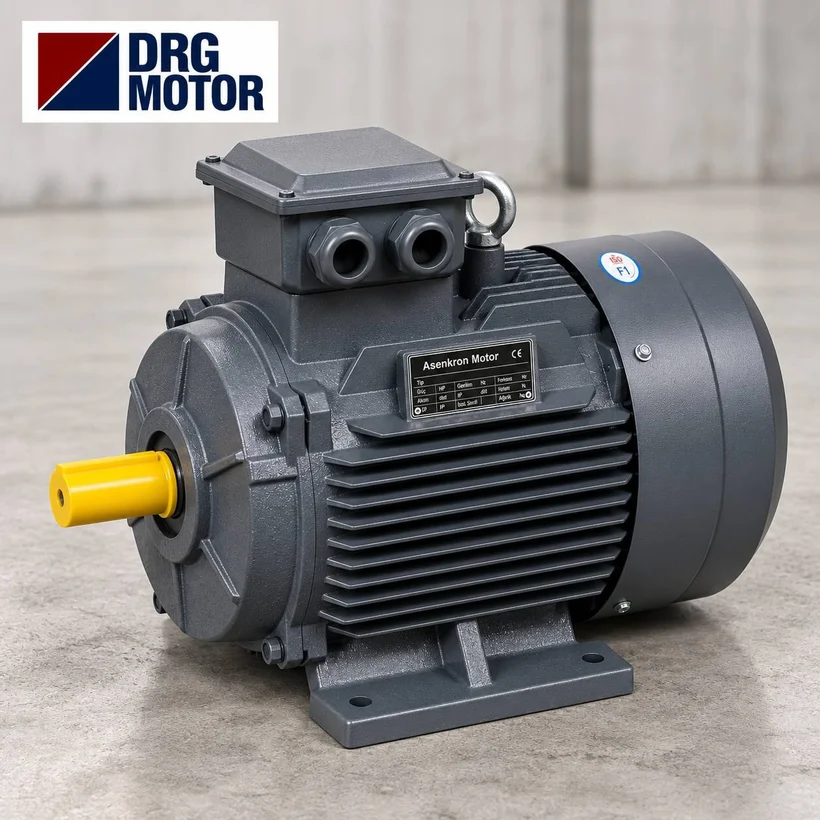
A single-phase motor is an electric motor that runs from a single-phase supply, usually 220V in homes and light-duty applications. It is the most common type of motor in domestic and small-power settings. Unlike a three-phase motor, a single-phase motor cannot generate a rotating magnetic field on its own. Because of this fundamental limitation, it needs some form of help to begin turning.
Single-phase motors are a practical solution for small and household applications. They are compact, affordable and easy to connect to an ordinary wall outlet. But to overcome the starting problem, they depend on a capacitor.
The Rotating Magnetic Field Problem
In a three-phase motor, the three phases energize in sequence and naturally create a rotating magnetic field, so the rotor follows it and the motor spins up by itself. In a single-phase motor there is only one phase, so this rotating field does not form on its own. The result is a motor that, when powered, produces only a pulsating field that pushes the rotor back and forth rather than around. This is precisely the gap that the capacitor fills.
A single phase, on its own, is not enough to produce a rotating field. The capacitor corrects this shortcoming by creating an artificial second phase, and that is what makes self-starting possible.
The Job of the Capacitor
In a single-phase motor, the capacitor creates a phase difference between the main winding and the auxiliary (start) winding. This phase shift makes a rotating magnetic field appear inside the motor, and that field is what allows the motor to start turning on its own. In short, the capacitor is the key to starting a single-phase motor.
Without a capacitor, a single-phase motor usually cannot begin to rotate. That is exactly what makes this small component indispensable rather than optional.
Main and Auxiliary Windings
A single-phase motor contains two windings: the main winding and the auxiliary winding. These windings are placed 90 electrical degrees apart from each other. The main winding is fed directly from the mains, while the auxiliary winding is fed through the capacitor. This arrangement is what produces the phase difference and lets the motor turn.
The harmonious operation of these two windings is the foundation of every single-phase motor. The capacitor is the component that establishes and maintains that harmony.
Creating a Phase Difference
The capacitor shifts the phase of the current in the auxiliary winding, producing a phase difference relative to the main winding. That phase difference creates a magnetic field that rotates inside the motor, and the rotating field sets the rotor in motion. This is the basic mechanism behind the operation of the machine.
The phase difference is the source of the rotating field, and therefore of the rotation itself. The capacitor is the part that creates this difference reliably, every time the motor is switched on.
The Start Capacitor
Start capacitors allow the motor to begin running with high starting torque. These capacitors remain in the circuit only during start-up and drop out once the motor reaches speed, usually disconnected by a centrifugal switch. They are used in applications such as water pumps that demand high breakaway torque. The result is a strong, dependable start even under load.
A start capacitor lets the motor cut in even during heavy starts. This translates directly into the high torque needed to overcome a stationary, loaded machine. For pump duty in particular, the right start capacitor is essential, as we also note in our guide to choosing an electric motor for water pumps.
The Run (Permanent) Capacitor
Run capacitors stay connected together with the motor at all times. These capacitors help the motor run quietly, with low vibration and good efficiency. Permanent-capacitor motors are common in fans and similar applications where smooth, continuous operation matters more than high starting torque. The outcome is steady, stable running.
The run capacitor keeps the motor operating efficiently around the clock. Because it shapes the rotating field continuously, it also supports the quiet operation that users expect from quality appliances.
What Happens Without a Capacitor?
Without a capacitor, a single-phase motor generally cannot start by itself. Even when power is applied, the motor often just hums and vibrates in place without turning. It may begin to spin if you give the shaft a manual push, but this is neither practical nor safe in real use. This is exactly why the capacitor is required.
A single-phase motor without a capacitor is, for all practical purposes, a motor that does not work. That simple fact underlines just how important this component is to everyday equipment.
Where Single-Phase Motors Are Used
Single-phase motors are found in washing machines, refrigerators, small water pumps, fans and similar household appliances. These low-power applications all run with the help of a capacitor. Single-phase motors are the backbone of domestic and small-scale machinery, which gives them an enormously wide field of use.
For light-power applications, a single-phase motor is a practical and economical choice. The capacitor is what makes these motors viable, turning a simple winding into a self-starting machine.
Single-Phase Versus Three-Phase
Three-phase motors generate a rotating field on their own and need no capacitor. Single-phase motors, by contrast, require one. In industry, three-phase machines are preferred for high power, while single-phase motors serve smaller applications. The choice depends on the available power and the supply infrastructure.
We explain the practical differences in our article on three-phase motors in industry. Both types are suited to different needs, and understanding that distinction helps you specify the right machine.
Start and Run Capacitors Together
Some single-phase motors use both a start capacitor and a run capacitor. The start capacitor delivers high torque during start-up, while the run capacitor maintains efficient, stable operation afterwards. This combination offers both a powerful start and efficient running. The result is the best of both characteristics in a single machine.
A two-capacitor system optimizes both starting and running behaviour. In practice, this means a motor that breaks away strongly under load and then settles into smooth, economical operation.
Capacitor Value
The capacitance, measured in microfarads, is determined by the motor's power rating and type. A capacitor of the wrong value will cause the motor to run weakly or fail to start at all. The correct capacitor value is critical to healthy operation, which makes proper selection so important.
The capacitor value must be matched to the specific motor. Getting this right is what ensures reliable starting and sound, sustained running rather than nuisance faults.
Capacitor Faults
Capacitors can wear out or fail over time. A faulty capacitor causes the motor to fail to start, run weakly, or overheat. For this reason, capacitor faults are one of the most common causes of single-phase motor problems. A defective capacitor should always be replaced rather than ignored.
Because capacitor failure is so frequent in single-phase motors, regular inspection of this component is well worth the effort and prevents larger, costlier breakdowns.
Symptoms of a Failing Capacitor
The symptoms of a faulty capacitor include the motor struggling to start, failing to turn at all, humming loudly, or overheating. When these signs appear, the capacitor should be checked first. Early detection prevents damage to the motor and supports safe operation throughout its life.
These symptoms usually point straight to a capacitor problem. Recognizing them early allows timely intervention before the windings themselves are harmed.
Capacitors in Water Pumps
Single-phase water pumps use a capacitor for high starting torque. Bringing a pump online against a full line requires a strong start, and the start capacitor provides exactly that. The result is a pump that starts safely and reliably, even when it has to push against static head from the first moment.
We cover pump motor selection in detail in our article on water pump electric motor selection. The capacitor is a decisive factor in clean pump starting and long-term reliability.
Capacitors in Fans and Exhaust Units
In small fans and exhaust units, a run capacitor stays permanently in circuit to provide quiet, efficient operation. Because these applications need little starting torque, a permanent capacitor is usually sufficient on its own. The result is a simple and efficient solution with very few moving parts to fail.
We explain fan motor choices in our guide to fan and blower motor selection. The capacitor delivers the smooth, efficient running that ventilation equipment depends on.
Capacitors in Home Appliances
Washing machines, refrigerators and similar household appliances run on single-phase motors with capacitors. These motors are designed to operate at low power and run quietly. The capacitor allows these devices to start and run safely, making it an invisible but essential part of daily life at home.
Home appliances are the most widespread use of single-phase motors. In every one of them, it is the capacitor that quietly gets the motor turning.
Capacitors and Efficiency
The correct capacitor contributes to the efficient operation of a single-phase motor. A run capacitor improves the motor's power factor and overall efficiency, while a wrong or faulty capacitor reduces it. This is why the capacitor matters for starting and for energy performance.
We discuss the importance of power factor in our article on power factor (cosφ). The capacitor influences efficiency as well, so its condition affects your running costs.
Capacitors and Heating
A faulty or incorrectly rated capacitor can cause the motor to overheat. Overheating degrades the motor's insulation and shortens its service life. The correct capacitor, by contrast, helps the motor run cool and safe, which translates into long, trouble-free service.
We cover temperature management in our article on keeping an electric motor's temperature under control. Choosing the right capacitor is one simple way to prevent unnecessary heating.
Capacitor Wiring
Correct wiring of the capacitor is critical to the operation of a single-phase motor. Incorrect connection can make the motor run in reverse or fail to start at all. For this reason, the wiring must always follow the motor's connection diagram. Correct wiring is the basis of healthy, predictable operation.
Proper connection ensures the single-phase motor runs in the intended direction and at full efficiency. This is what separates a deliberate, informed installation from a source of recurring problems.
Direction of Rotation and the Capacitor
In single-phase motors, the direction of rotation can be set by changing the connections of the auxiliary winding and the capacitor. This is necessary in some applications where the motor must turn in a specific direction. The right connection delivers the correct direction of rotation and proper adaptation to the driven machine.
Direction of rotation can be controlled through the capacitor wiring. This is a simple yet genuinely useful feature when matching a motor to an existing piece of equipment.
Capacitor Quality
The quality of the capacitor affects the reliability of the single-phase motor. High-quality capacitors last longer and fail less often. Cheap capacitors, on the other hand, can cause frequent problems. This is why using a good-quality capacitor is so important to overall dependability.
A quality capacitor supports the reliability of the single-phase motor and contributes directly to a longer service life with fewer interruptions.
Capacitor Replacement
A failed capacitor must be replaced with one of the same value and the correct type. A capacitor of the wrong value will prevent the motor from running properly. The correct replacement restores the motor to healthy operation, making it a straightforward but important piece of maintenance.
We outline general maintenance principles in our article on electric motor maintenance steps. Capacitor replacement is one of the most common service tasks on single-phase motors.
The Limits of Single-Phase Motors
Although single-phase motors run with the help of a capacitor, they are limited in terms of power. For high-power industrial applications, three-phase motors are preferred. Single-phase motors are best suited to small and domestic applications, which makes correct motor-type selection essential.
As the power requirement grows, three-phase motors come to the fore. The decision always comes back to matching the motor type to the demands of the application.
Maintaining a Single-Phase Motor
When servicing single-phase motors, the condition of the capacitor must also be checked. Regular inspection catches capacitor faults early and keeps the motor running continuously and efficiently. Maintenance matters just as much for single-phase machines as for larger industrial ones.
Regular maintenance extends the life of a single-phase motor and underpins reliable, predictable operation year after year.
Capacitor Safety
Because capacitors store energy, they must be discharged before any work is carried out. Touching a charged capacitor can be dangerous. For this reason, capacitor maintenance must always be performed with proper safety precautions in place. This is what makes service work safe rather than hazardous.
Capacitor safety requires care during single-phase motor maintenance. A disciplined, informed approach protects both the technician and the equipment.
Choosing the Right Capacitor
The right capacitor for a single-phase motor is chosen according to the motor's power, type and intended application. Whether a start or a run capacitor is needed depends on the duty. The correct selection ensures the motor runs as it should, making this an informed installation decision rather than a guess.
Choosing the right capacitor is the foundation of single-phase motor performance. Getting it right from the start saves a great deal of trouble later.
Single-Phase Motors and Reliability
A quality single-phase motor together with the correct capacitor delivers reliable operation. Quality components mean fewer faults and a longer life. This is why both the motor quality and the capacitor quality are important, and why they should be considered together as a system.
A quality motor and a quality capacitor gain value when paired correctly. Together they make for long-lived, dependable operation.
Single-Phase Motors and Energy
Although single-phase motors are low-power, their energy consumption becomes significant when many are used together. Efficient single-phase motors save energy even in small applications. The correct capacitor supports this efficiency, making mindful selection a genuinely worthwhile habit.
An efficient single-phase motor saves energy even on a small scale. Across many units, that adds up to a meaningful environmental and cost benefit.
Matching the Choice to the Application
The choice of single-phase motor and capacitor must be made according to the power and starting requirements of the application. For applications that need high breakaway torque, a start capacitor is preferred; for continuous running, a run capacitor is chosen. The correct selection keeps the motor running efficiently.
Correctly identifying the needs of the application leads to the right capacitor choice. That is what produces the best possible result in service.
The Right Choice With Expert Support
The selection of a single-phase motor and capacitor should be tailored to the specifics of each application. Consulting an expert helps you identify the motor and capacitor best suited to your needs. The right support delivers trouble-free operation, and expert assessment is the key to a sound decision.
At DRG Motor, we provide technical support for single-phase motor selection. The right choice is the basis of smooth, dependable operation.
Compressors and Capacitors
Small single-phase compressors require high starting torque, and so they use a start capacitor. Bringing a compressor online against pressure demands a strong start. The correct capacitor allows the compressor to begin running safely, which means uninterrupted operation.
In compressor motors, the capacitor makes a heavy start possible. This is one more reason why correct capacitor selection is so important.
Types of Capacitor
Capacitors used in single-phase motors come in different types, mainly electrolytic (start) and film (run) capacitors. Start capacitors offer high capacitance for a short time, while run capacitors stay permanently in circuit. The correct type is selected according to the application, ensuring sound operation.
The capacitor type is determined by the needs of the motor. Choosing it correctly is part of specifying a reliable single-phase machine.
Quiet, Vibration-Free Operation
A run capacitor helps the single-phase motor run quietly and with low vibration. A smooth rotating field produces balanced, quiet rotation. This improves operating comfort, and quiet running is a hallmark of a well-built motor.
Quiet operation is achieved with the correct capacitor and a quality motor. The result is comfortable, unobtrusive performance in any setting.
DRG Motor for Single-Phase Applications
At DRG Motor, we offer quality, reliable single-phase motors for small and domestic applications. Our goal is to ensure that your application runs quietly and efficiently, in full harmony with its capacitor. By assessing your power and application needs, we recommend the most suitable motor for you.
To choose the right single-phase or three-phase motor and to receive technical support, you can get in touch with DRG Motor and explore our range on the our products page, or visit our homepage. The right match of motor and capacitor is the foundation of trouble-free operation.