English
 Le français
 Türkçe




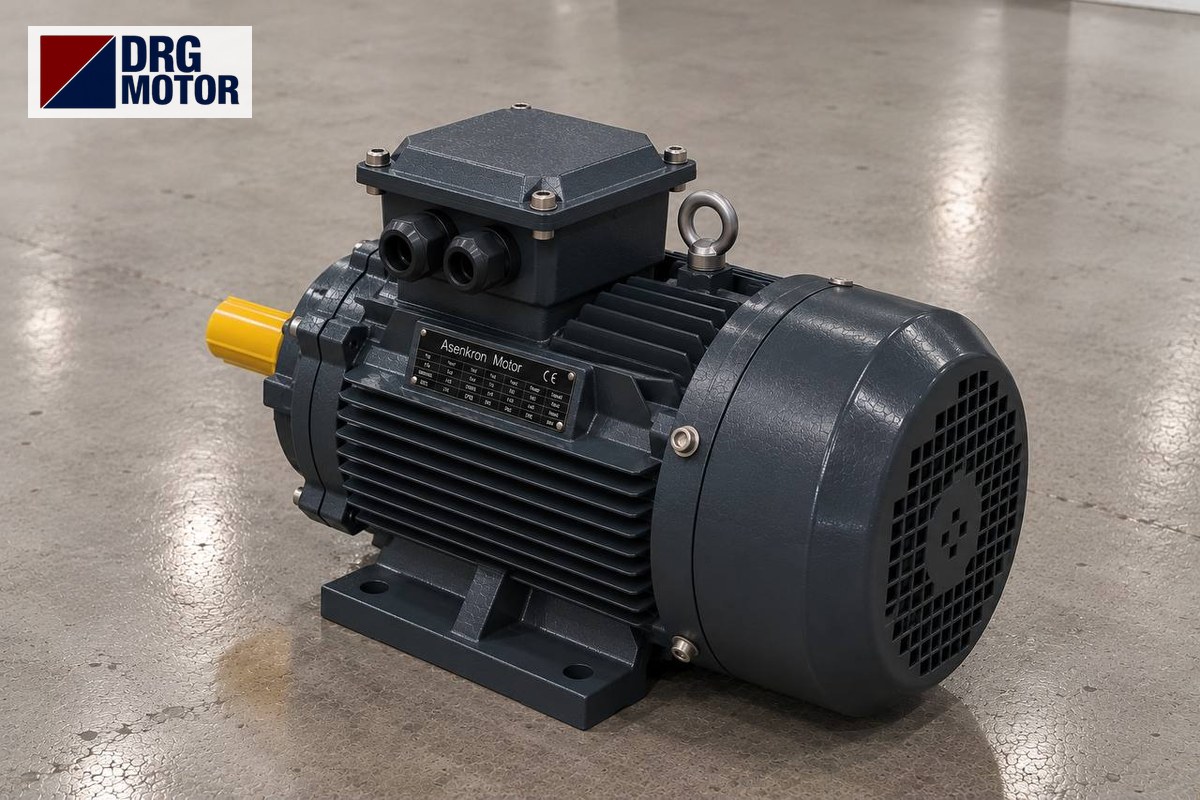

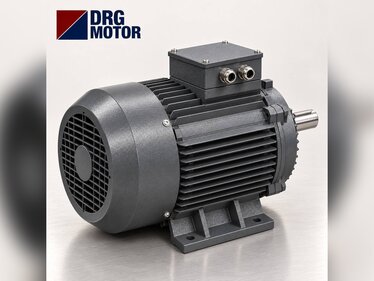
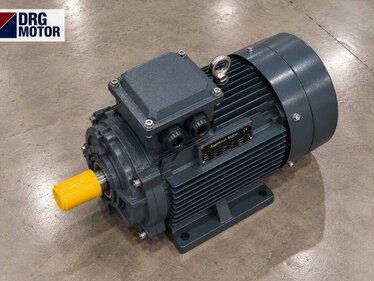
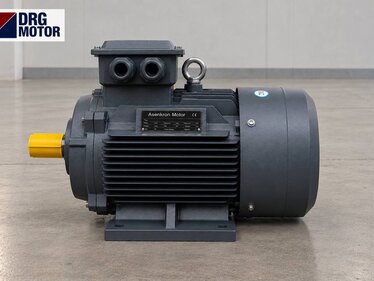
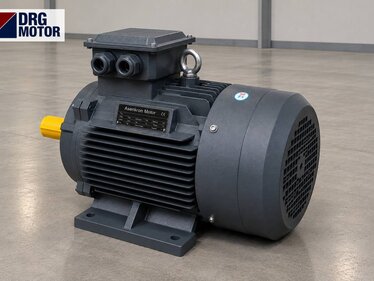
Motor power on bottling and filling line conveyors is usually small: on a 10-metre plastic table-top chain conveyor carrying a single file of bottles, the power needed comes to about 0.15 kW under the assumptions below, and a 0.25 kW 4-pole motor (DRG-711-4, 1340 rpm, 0.66 A at 400 V) is enough. On a filling line what decides is not the power of one motor but the relative speed of many small motors, their resistance to wet conditions and their fit to the gearbox. These figures are a guide; the exact power is the conveyor manufacturer's data and the existing motor's nameplate.
A filling line is made up of dozens of short conveyors, each with its own motor, linking the filler, capper, labeller and packer. These motors are mostly in the 0.25–1.5 kW range, flange-mounted to a worm or helical gearbox and synchronised with inverters. Inverter, motor and control wiring must be done by a qualified electrician; isolate the line before washing.
You can filter all small-frame models by power and speed among the 120 models on the Buy Electric Motors Online page.
Bottle conveyor motor power: chain, moving and accumulated bottles
On a plastic chain bottle conveyor the force comes from three places: chain friction on the wear strips, the weight of moving bottles, and accumulated bottles waiting while the chain slides beneath them. In the accumulation zone the bottle stands still but the chain keeps running underneath; chain-on-strip and bottle-on-chain friction act together there, making it the most heavily loaded part of the line.
Example line (assumptions): 10 m long, chain 2.5 kg/m, moving bottle load 6 kg/m, accumulated bottles 7.5 kg/m over the last 3 m; chain-on-strip friction μ = 0.25, bottle-on-chain friction μ = 0.3; speed 20 m/min.
| Item (assumed) | Mass × factor | Force | Share |
|---|---|---|---|
| Chain (carry + return) | 50 kg × 0.25 | 123 N | 35% |
| Moving bottles | 42 kg × 0.25 | 103 N | 30% |
| Accumulated bottles | 22.5 kg × 0.55 | 121 N | 35% |
| Total | — | 347 N | 100% |
Motor power: P = F × v / η = 347 N × 0.333 m/s / 0.75 ≈ 154 W. Here η is a transmission factor that includes the worm gearbox loss (assumption); on worm gearboxes this loss grows with the ratio. Friction factors vary with lubrication (soapy water or dry lube), chain material and bottle base; on a dry-running line the same conveyor can need noticeably more power.
Speed: capacity, bottle diameter and gearbox ratio
Conveyor speed is first bounded by capacity. On a line filling 12000 bottles per hour, even if 80 mm bottles flow in a single file with no gaps, speed must be at least 12000 × 0.08 / 60 = 16 m/min. Because gaps between bottles and buffers at machine infeeds are needed, we chose 20 m/min in the example.
With a 130 mm sprocket pitch diameter, sprocket speed is n = v / (π·D) = 49.0 rpm. To leave room for synchronising, we want the motor to run at 40 Hz rather than 50 Hz at this speed: 1340 rpm × 40/50 ≈ 1072 rpm and a ratio of ≈ 21.9. The line can then speed up by about 25% before reaching 50 Hz while the motor stays in the constant-torque range. Check ratio and output torque with the gearbox output speed and torque calculator.
Torque check
Torque needed at the sprocket is F × D/2 = 347 × 0.065 ≈ 22.6 Nm. DRG-711-4 has a rated torque of 1.78 Nm; with a ≈ 21.9 ratio and η = 0.75 it delivers ≈ 29.2 Nm at the output. At 40 Hz on an inverter the motor gives the same torque but its power drops by 40/50: 0.20 kW, above the 0.15 kW required. If the accumulation zone grows or the line runs dry, 0.37 kW (DRG-712-4) is the next option.
- Model: DRG-711-4
- Power: 0.25 kW
- Speed: 1340 rpm
- Rated torque: 1.78 Nm
- Current 400 V: 0.66 A
- Shaft D × E: 14 × 30 mm
- Frame: 71 aluminium
Line synchronisation: speed differences between conveyors with inverters
Conveyors on a filling line do not run at the same speed but with controlled differences: the discharge conveyor runs slightly faster to open gaps between bottles leaving a machine, and the accumulation zone slightly slower. With a separate inverter per conveyor, these differences are set by frequency. Taking 20 m/min = 40 Hz as in our example, speed is proportional to frequency:
| Line section | Speed | Inverter frequency | Purpose |
|---|---|---|---|
| Filler infeed | 20 m/min | 40 Hz | Reference speed |
| After filler | 22 m/min | 44 Hz | Opening gaps |
| Labeller infeed | 24 m/min | 48 Hz | Bottle spacing |
| Accumulation before packing | 18 m/min | 36 Hz | Buffer |
Since every frequency stays below 50 Hz, the motors keep their rated torque. Had the ratio been chosen for the reference speed at 50 Hz, the faster sections would go above 50 Hz and motor torque would fall in inverse proportion to frequency. See the frequency–torque relation in the VFD frequency, torque and power calculator.
- One inverter, several motors: conveyors that must run at the same speed can share one inverter; each motor then needs its own overload protection and the inverter is sized for the total current.
- Master speed reference: if conveyor frequencies follow the filler speed, the whole line slows down when the filler does; tipping and jams are reduced.
- Ramp: on a conveyor carrying full bottles a short ramp tips them over; set start and stop ramps for bottle height and filled weight.
Wet and washdown areas: protecting the motor from water and detergent
On a filling line the motor meets spilled product, soapy chain lubrication water and end-of-shift washing. The product pages in our store state IP55 protection; IP55 means protection against dust and low-pressure water jets. Do not aim a high-pressure washing gun directly at the motor, the terminal box gasket or the shaft seal.
- The terminal box lid gasket must be in place with the screws tightened; the cable gland must match the cable diameter.
- Route the cable so it enters the gland from below (drip loop); otherwise water runs down the cable into the box.
- If water gets into the flange face between motor and gearbox it reaches the shaft seal; the flange joint must seat fully.
- After washing, remove water and foam from the motor body before starting the line; as a cold motor warms up, condensation can form inside.
Small frames and flanged gearbox connection (B5 / B14)
On filling line conveyors the motor is almost always flange-mounted to a gearbox, and space constraints keep the frame small. According to our catalogue data, 0.25–1.5 kW 4-pole motors are in frames 71, 80 and 90:
| Frame | Shaft D × E | B5 flange P / N | Cable entry |
|---|---|---|---|
| 71 | 14 × 30 mm | 160 / 110 mm | 1 × M20×1.5 |
| 80 | 19 × 40 mm | 200 / 130 mm | 1 × M20×1.5 |
| 90S | 24 × 50 mm | 200 / 130 mm | 1 × M25×1.5 |
| 90L | 24 × 50 mm | 200 / 130 mm | 1 × M25×1.5 |
As the table shows, frames 80 and 90 carry the same B5 flange (200 / 130 mm) but have different shaft diameters; when replacing a motor, checking the flange alone is not enough. B14 (small tapped flange) dimensions, common on small frames, are not in our catalogue table; if B14 is required, take the dimensions from the gearbox input flange and state the mounting option (B5 / B35 / B14) in the order note in the store. Our article on choosing a flange motor for a gearbox explains the difference between the two flange types; all dimensions are on the DRG motor technical drawings page.
Many small motors: current, cos φ and the panel
Small motors have a low cos φ: 0.75 for DRG-712-4. With 12 conveyors of 0.37 kW on the line, total current at 400 V is 12 × 0.92 ≈ 11.0 A, and a significant part of it is reactive. When sizing the power factor correction panel for this load, remember that capacitors must not be connected at the terminals of inverter-driven motors; correction is done at the panel incomer (power factor correction calculator). Set each motor's overload to its own nameplate current; individual current values are on the motor current chart page.
Filling line conveyor motor checklist
- Was the minimum speed calculated from capacity (bottles/hour) and bottle diameter, with a gap margin added?
- Did the accumulation zone length and dry/wet lubrication enter the power calculation?
- Was the ratio chosen so that the motor runs below 50 Hz at reference speed (40 Hz in our example)?
- Is gearbox output torque above the sprocket torque?
- Do motor shaft D×E and flange type (B5 / B14) fit the gearbox input?
- Are the terminal box gasket, gland and cable direction suitable for washdown?
- Does every motor fed from a shared inverter have its own overload protection?
- Are correction capacitors connected at the panel incomer rather than at the inverter output?
Motors in this power range
The models in the table are 4-pole with aluminium frames; currents are at 400 V.
| Model | Power / speed | Frame | Current 400 V |
|---|---|---|---|
| DRG-711-4 | 0.25 kW / 1340 rpm | 71 aluminium | 0.66 A |
| DRG-712-4 | 0.37 kW / 1340 rpm | 71 aluminium | 0.92 A |
| DRG-801-4 | 0.55 kW / 1400 rpm | 80 aluminium | 1.31 A |
| DRG-802-4 | 0.75 kW / 1420 rpm | 80 aluminium | 1.75 A |
| DRG-90S-4 | 1.1 kW / 1445 rpm | 90S aluminium | 2.48 A |
| DRG-90L-4 | 1.5 kW / 1445 rpm | 90L aluminium | 3.3 A |
- DRG-711-4 – 0.25 kW – 1340 rpm – 71 aluminium
- DRG-712-4 – 0.37 kW – 1340 rpm – 71 aluminium
- DRG-801-4 – 0.55 kW – 1400 rpm – 80 aluminium
- DRG-802-4 – 0.75 kW – 1420 rpm – 80 aluminium
- DRG-90S-4 – 1.1 kW – 1445 rpm – 90S aluminium
- DRG-90L-4 – 1.5 kW – 1445 rpm – 90L aluminium
Click to see current prices and order these motors nowSEE PRICES →
Frequently Asked Questions
What size motor does a bottle conveyor need?
On a 10 m chain conveyor carrying a single file of bottles, our example assumptions gave ≈ 0.15 kW and a 0.25 kW motor was enough. With a long accumulation zone or dry lubrication, 0.37–0.55 kW may be needed.
At what frequency should a conveyor motor run?
To leave a synchronising margin, choose a ratio so that the motor runs below 50 Hz at reference speed, for example at 40 Hz. Faster sections then stay under 50 Hz and the motor keeps its rated torque.
Can one inverter drive several motors?
Yes, for conveyors that run at the same speed. The inverter is sized for the total current and each motor gets its own overload relay; if one motor stops, the others keep running.
How many amps does a 0.37 kW motor draw?
DRG-712-4 draws 0.92 A at 400 V and 0.97 A at 380 V; cos φ is 0.75.
Send us the number of conveyors, line speed and gearbox flange and we will choose the motors together. All models are on the Buy Electric Motors Online page. DRG Motor is a manufacturer, supplier and seller of electric motors. Phone: +90 (542) 666 11 11 · E-mail: [email protected] · Contact