 English
 Le français
 Türkçe

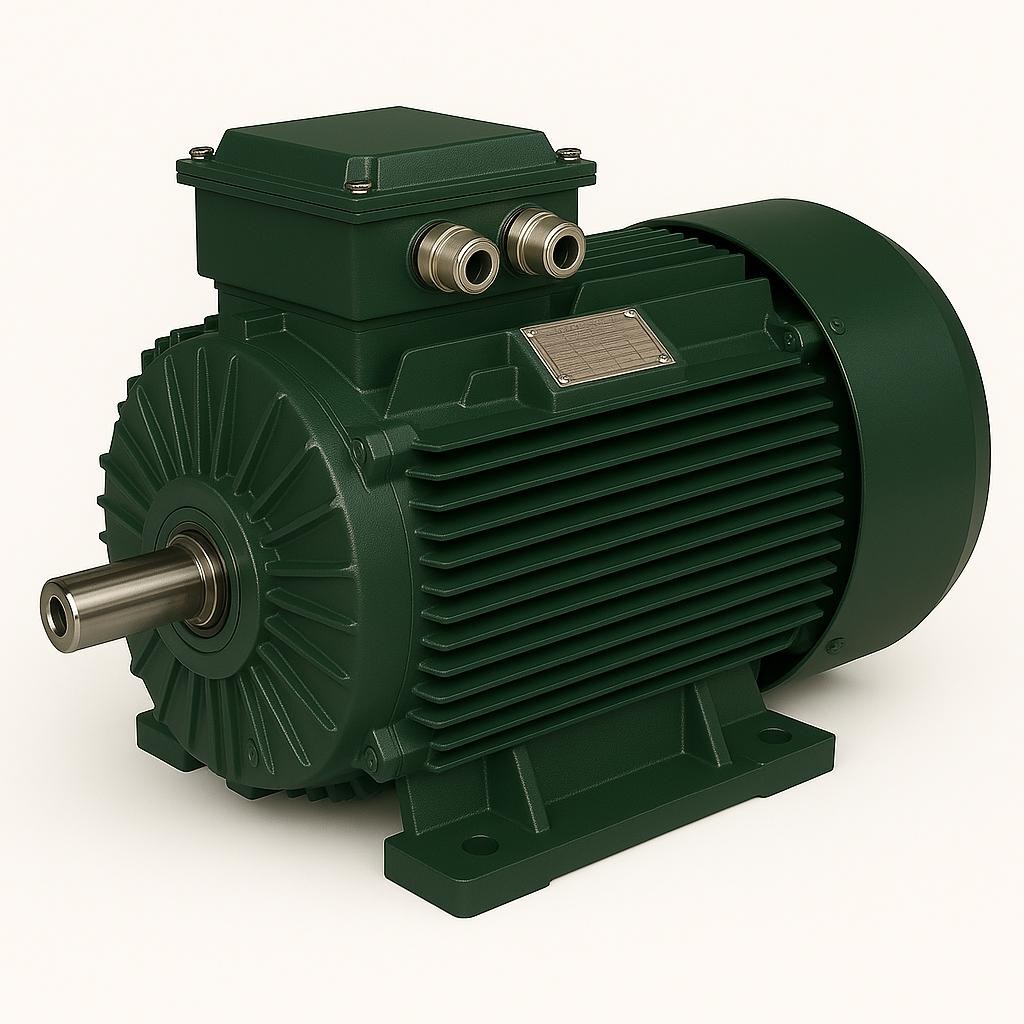

Escalators and moving walkways carry millions of people every day, from shopping malls and metro stations to airports and business centers, and they are expected to run without interruption. At the heart of these systems lies an electric motor that keeps the step chain or the conveying belt moving continuously and safely. A poorly selected motor leads to sudden stops, uncontrolled movements that threaten passenger safety, high energy bills and frequent breakdowns. In this article we examine the electrical and mechanical criteria, braking requirements, geared-drive logic and energy-efficiency approaches that matter when selecting a motor for escalators and moving walkways, drawing on DRG Motor's experience in asynchronous motor applications.
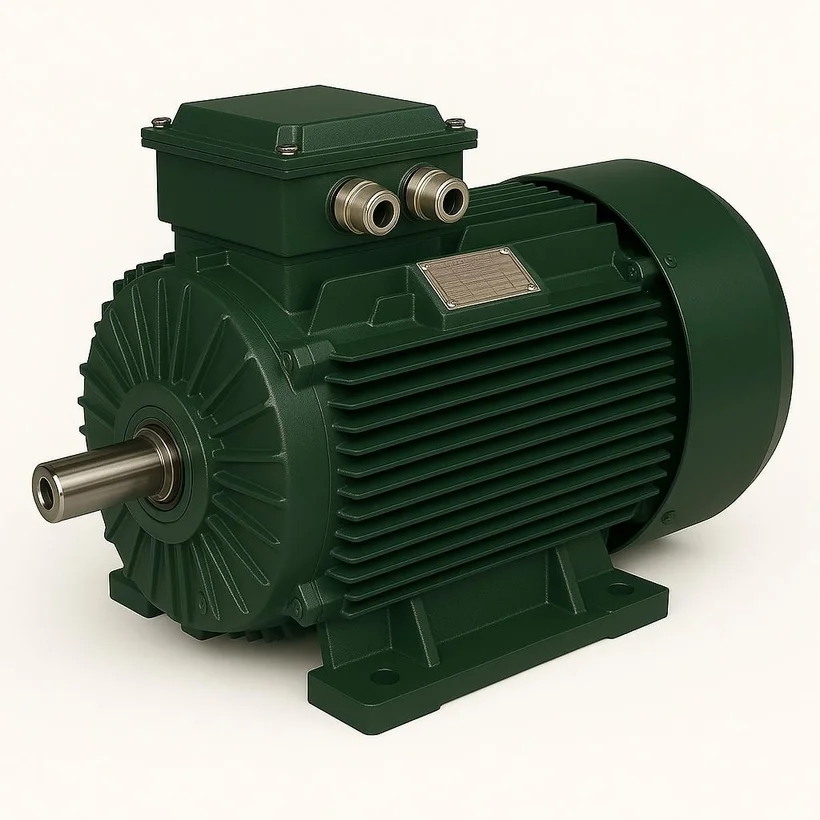
How do escalators and walkway systems work?
An escalator operates by circulating an endless step chain between two gear sets. The drive motor transmits power to the main gear through a reducer, and the steps move in synchrony with the handrail. In moving walkways, a continuous conveying surface replaces the steps, but the principle is the same. In both systems the motor's task is to maintain a constant speed under variable passenger load, to accelerate smoothly at start-up and to stop safely when required.
The fundamental role of the drive motor
The drive motor does more than provide motion; it determines the safety and comfort level of the whole system. The motor torque must keep the system moving without jolts even under full load. For this reason, durable industrial electric motors that produce high starting torque are generally preferred in escalator applications.
In these systems the motor is subjected to thousands of load changes throughout the day. As the number of passengers rises, the weight on the step chain increases; as it falls, the load lightens. The drive motor must respond to these load changes without losing speed and without overheating. A well-sized motor maintains its rated speed even during the busiest hours, offering passengers a consistent experience. The motor must also withstand the repeated starting cycles that occur when the system is stopped and restarted; over time these cycles create fatigue in the winding insulation and the bearings.
Why is an asynchronous motor preferred?
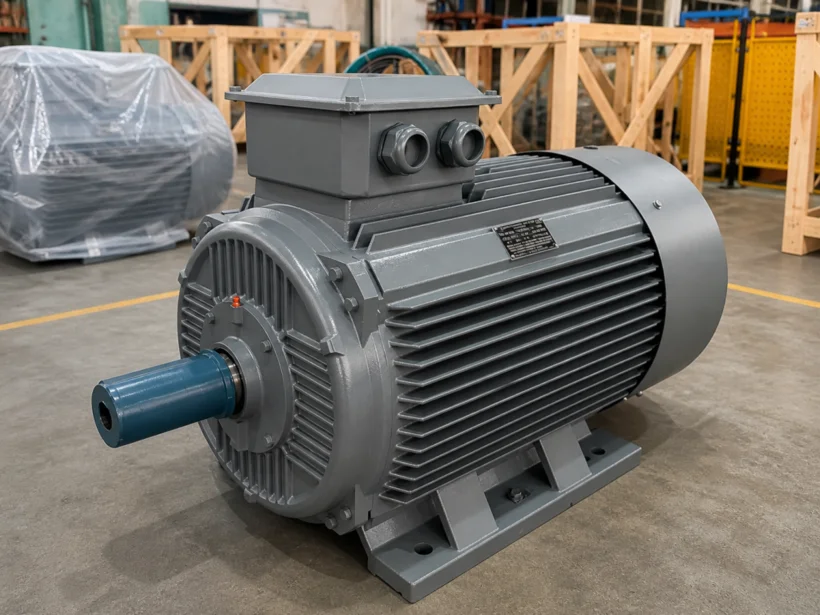
Three-phase asynchronous (induction) motors are the standard solution for escalator and walkway drives. Their hard-wearing construction, low maintenance needs, availability across a wide power range and cost advantages explain this choice. To explore the working principle of the asynchronous motor in detail, see our article on what an electric motor is.
The greatest advantage of the asynchronous motor is that it contains no wearing parts such as brushes or commutators. The rotor turns under the influence of the rotating magnetic field created in the stator; this contactless principle means long life and low maintenance. In a public application where continuous and reliable operation is expected, this characteristic is decisive. Furthermore, when used with a frequency inverter, asynchronous motors can operate efficiently across a wide speed range, allowing the escalator to be run flexibly both at full speed and in energy-saving mode.
Variable passenger load and motor sizing
The most distinctive feature of escalators is that the load changes continuously throughout the day. An escalator running almost empty in the early morning reaches full capacity at the start of working hours. The motor must be sized for this peak load condition, yet must not waste energy when idle or lightly loaded. This balance is struck by selecting the correct motor power and, where needed, with drive support.
Starting torque and inrush current
Setting a loaded step chain in motion from standstill requires high torque. With the direct-on-line starting method, the motor draws an inrush current that reaches several times the rated current. This current both stresses the grid and creates jolts in the mechanical system. For this reason the use of a soft starter or a frequency inverter has become widespread in modern systems.
Star-delta starting application
In medium-power drives, the star-delta connection method can be used to limit the starting current. The motor is energized in star at start-up so it engages with a low current, and once the speed reaches a certain level it switches to delta. This method reduces the current surge and protects the mechanical components.
Why is a brake motor mandatory?
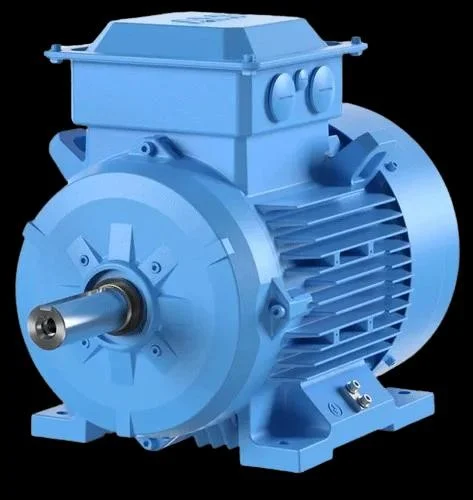
In escalator and walkway systems, braking is not a comfort feature but a fundamental safety requirement. When power is cut, when an overload is detected or when the emergency-stop button is pressed, the system must stop in a controlled and rapid manner. This task is performed by an electromagnetic brake integrated onto the motor shaft. The question of when a brake motor is needed is one of the most critical topics in this application.
How the electromagnetic brake works
The electromagnetic brake is designed to release when energized and to close under spring force when de-energized. Thanks to this fail-safe principle, the brake engages automatically during a power failure and the escalator stops without rolling back. On an escalator carrying an uphill load, this feature provides vital protection that prevents passengers from sliding backward.
Safe stopping distance
Standards require the escalator to stop within a defined distance in an emergency. A stop that is too abrupt can throw passengers forward; a stop that is too late jeopardizes safety. The brake torque setting is calculated according to the load so as to maintain this balance.
The stopping distance depends on the brake torque, on the current load condition and the direction of travel. The stopping distance on a fully loaded upward escalator is calculated differently from that on a downward one, because gravity assists braking in one direction and resists it in the other. For this reason the brake system must be designed to handle the most adverse scenario safely. In some systems a second safety brake is provided in addition to the main brake; this redundant arrangement guarantees a safe stop even if a single brake fails.
The logic of geared drive
Electric motors operate efficiently at high speed, whereas the step chain must move at a low and controlled speed. The reducer provides this speed matching. The reducer lowers the high motor speed while increasing the torque, so a relatively small motor can move a heavy load with ease.
Choosing the reducer type
Worm or helical-bevel reducers are used in escalator drives. The worm reducer is compact and quiet; the helical-bevel reducer offers more efficient power transmission. The choice is made according to mounting geometry, noise level and efficiency target.
Efficiency and energy transmission losses
Every mechanical connection in the chain from the motor to the step produces some loss. Reducer efficiency, belt-chain transmission and bearing friction together determine the overall system efficiency. Starting with a high-efficiency motor is the first step toward minimizing the losses in this chain.
Because escalators run for long hours every day, even small efficiency differences translate into a noticeable amount on the annual energy bill. For example, an improvement of a few percent in system efficiency yields significant savings on a continuously running escalator. For this reason, motor selection should consider the purchase cost and the lifetime energy cost. A high-efficiency motor may be slightly more expensive at the outset, but under continuous operating conditions it pays for itself quickly.
Energy saving through load-sensing speed control
A significant portion of modern escalators are equipped with systems that slow down or stop completely when there are no passengers. When sensors in the entry zone detect a passenger, the escalator rises to full speed; when traffic ceases, it drops to a low speed. Implementing this logic requires the motor to be driven by a frequency inverter.
Driving with a frequency inverter
The frequency inverter (drive) adjusts the motor speed by changing the supply frequency. This provides both smooth start-up and load-sensing speed control. Reducing the speed during low-traffic hours brings direct energy savings. For an in-depth look at the topic, see our article on energy saving with a frequency inverter.
Soft start and mechanical life
The soft start provided by the drive does more than improve comfort; it extends the life of the mechanical components by reducing sudden stresses on the step chain, the gears and the reducer. The shock loads created by abrupt starts are one of the biggest causes of failure in the long run.
The practical value of energy saving
| Operating mode | Description | Energy effect |
|---|---|---|
| Continuous full speed | Runs at full speed whether or not passengers are present | Highest consumption |
| Load-sensing slowdown | Drops to low speed when idle | Noticeable saving |
| Load-sensing stop | Stops completely when idle, starts on passenger arrival | Highest saving |
Overload protection
A foreign object caught in the step chain, a jammed item or an unexpected mechanical resistance causes the motor to draw excessive current. In this case, overload protection must engage to protect the motor from burning out and stop the system safely.
Overload protection guards the motor. It also works as an early warning for a developing mechanical problem. For example, a drop in reducer oil, the wear of a bearing or a loss of chain tension causes the motor to draw more current than normal. Regularly monitored current values make it possible to detect such problems before a fault turns into major damage. For this reason the protection relay should be regarded not merely as a safety device but also as a diagnostic tool.
Phase loss and imbalance risks
In a three-phase motor, the loss of one of the phases causes the motor to run under strain and to overheat. In continuously running systems such as escalators, phase loss and voltage unbalance can cause serious damage, so protection relays are mandatory.
Grounding and electrical safety
In these systems operating in public areas, electrical safety must be of the highest level. Proper grounding of the motor body and metal components eliminates the risk of electric shock arising from leakage currents.
The motor panel and control elements
All protection and control functions of the system are gathered in the motor panel. Contactors, protection relays, the drive and the control circuit are located in this panel. Panel and contactor selection directly affects the reliability of the system.
Continuous operation and thermal endurance
Escalators run for up to 16-20 hours a day. For this reason the motor's insulation class and thermal endurance must be suitable for continuous-duty (S1) conditions. Insufficient thermal endurance leads to gradual deterioration of the winding insulation and early failure.
Winding temperature is one of the most critical factors directly determining motor life. Continuously exceeding the temperature permitted by the insulation class accelerates the aging of the insulation material and eventually leads to a short circuit. In an escalator motor operating under continuous-duty conditions, thermal protection elements placed in the windings (such as PTC thermistors) monitor the temperature directly and form an additional safety layer against overheating. In this way the motor is kept within safe limits even during the summer months when the ambient temperature is high.
Cooling and ventilation
Most escalator motors are placed inside a pit. Because heat can accumulate in this enclosed environment, regular cleaning of the motor's cooling fins and ventilation openings is important for thermal performance.
Protection class and ambient conditions
For escalators operating outdoors or in humid environments, the motor must have an appropriate protection class (IP) against the ingress of dust and water. This criterion becomes even more prominent at open airport transfers or metro exits.
Vibration and noise control
For passenger comfort, the system is expected to run quietly. A balanced rotor, a correctly aligned reducer and sound bearings minimize vibration. Excessive vibration both spoils comfort and accelerates the wear of the mechanical components.
Maintenance intervals and reliability
A reliable escalator is possible only with planned maintenance. Brake-pad wear, reducer oil level, bearing condition and electrical connections must be checked regularly. A well-designed drive unit reduces maintenance needs but does not eliminate them.
Brake pad and adjustment checks
Since braking is the foundation of safety, brake-pad wear and brake-torque setting must be inspected at regular intervals. A worn pad lengthens the stopping distance and creates a safety risk.
Spare parts and service access
In a system that must run continuously, downtime should be minimized. Choosing standard, readily available motor and reducer types provides a major advantage in spare-parts supply and service.
Similarities with crane and lifting applications
The braking and safe-stopping logic in escalators is similar to that of heavy-lifting systems. Crane and lifting motors also require fail-safe brakes and high starting torque; the two applications are therefore related in terms of design.
Relationship with conveyor and belt applications
Moving walkway systems rely on the same fundamental principles as industrial conveyors. The principles of conveyor belt motor selection apply directly to moving walkways in terms of continuous load transport and speed control.
Harmonic effects and drive use
While the use of a frequency inverter provides energy savings, it can also introduce harmonic distortion into the grid. For this reason, appropriate filtering measures must be taken. The topic of harmonic effects should not be overlooked in drive-fed applications.
The returns of correct motor selection
A correctly sized motor, equipped with a brake and drive support where needed, returns as low energy consumption, long mechanical life, high passenger safety and reduced downtime. A wrong choice, on the contrary, turns into an operation constantly struggling with problems.
Comparison with elevator applications
The escalator and the elevator are two different forms of vertical transport, and their motor requirements partly overlap. Compared with elevator electric motor selection, the escalator runs continuously at constant speed, whereas the elevator runs with frequent start-stop cycles.
DRG Motor for escalator and walkway solutions
DRG Motor offers asynchronous motor solutions for escalator and moving walkway systems that are durable under continuous-duty conditions, produce high starting torque and are available in brake versions. Thanks to their compatibility with frequency inverters, they enable load-sensing speed control and energy-saving applications. To determine together the motor best suited to your project's load profile and safety requirements, get in touch with the DRG Motor team and build a system that is both safe and economical with the right drive solution.