English
 Le français
 Türkçe




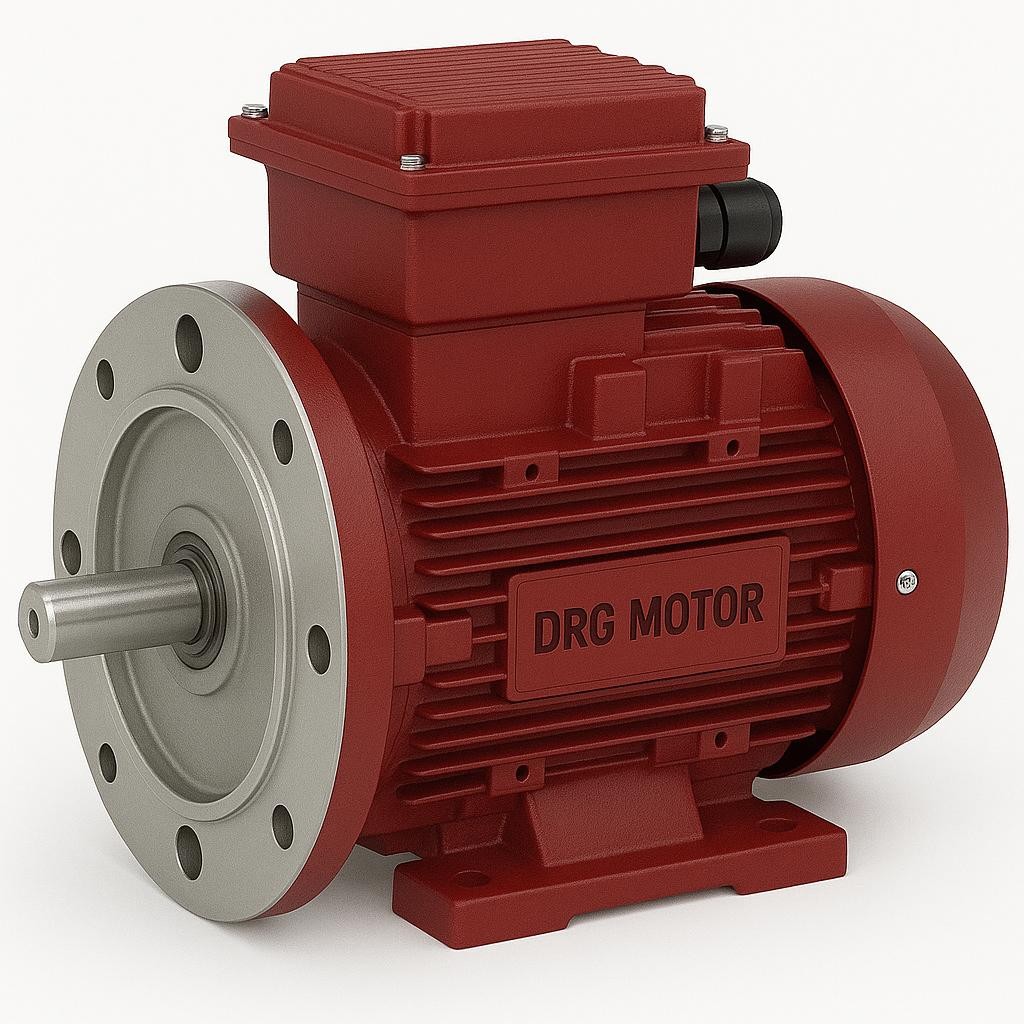

The purchasing team raised the order, the motor reached the site and maintenance wired it in; a few weeks later accounting cannot tell which order the invoice belongs to, and the quality department cannot find the motor's conformity document during an audit. This situation comes less from the motor itself than from a poorly planned paper trail. This article is a checklist of the documents a business should request from the seller when buying an electric motor, what to check on each one and what to record at the moment of delivery. Which documents are supplied as standard varies from seller to seller, so the safest approach is to send your requirements to the seller in writing before you order.
Document Checklist for the Purchase File
The table below lists the documents recommended for the file of a motor purchase and the stage at which each one should be requested. You can add or remove columns to suit your internal procedure.
| Document | When to request | Who checks | What to look at |
|---|---|---|---|
| Quotation or shop order summary | Before ordering | Purchasing | Model code, quantity, excl./incl. VAT amount, shipping note |
| Proforma or order confirmation | Before payment | Purchasing + accounting | Order code, payment method, buyer's company name |
| Payment receipt | After payment | Accounting | Order code in the description, sender name, amount |
| Invoice (e-invoice / e-archive) | With shipment or right after | Accounting | Company name, tax number, product description, VAT line |
| Declaration of conformity | Request before ordering, collect at delivery | Quality / OHS | Model range, standards referenced, signature and date |
| Test report | Request before ordering | Maintenance / quality | Serial number, measured values |
| Delivery note and delivery report | At delivery | Warehouse / site | Quantity, packaging condition, nameplate data |
Invoice: Which Details Must Be Correct Line by Line?
A small error on an invoice can delay payment approval or the use of the VAT deduction. When ordering, give the seller the following details in full and compare the invoice against the same list when it arrives:
- Full registered company name, tax office and tax number (national ID number for private purchases)
- Billing address and delivery address written separately if they differ
- Whether you are registered for e-invoicing; if so, your company name exactly as it appears in the system
- Product description with model code, power (kW), speed (rpm), frame type and mounting
- Unit price excl. VAT, VAT rate (20%) and grand total
- Your purchase order number in the notes field, if you have one
If the product is described only as "electric motor", it later becomes unclear which motor was bought when recording fixed assets or tracking spares. Below is a small example of how the expected invoice line for a shop item might look:
| Product description | Qty | excl. VAT | incl. VAT (20%) |
|---|---|---|---|
| DRG-160L-4 — three-phase, 15 kW, 4-pole (1500 rpm), cast iron | 1 | 30,610.80 TRY | 36,732.96 TRY |
Prices are taken from the DRG Motor online shop list dated 24.09.2026; a 3% discount applies to bank transfer/EFT payments, shipping is not included in the price and is paid by the buyer. Please see the shop page for current prices.
Matching the Payment Receipt to the Order Code
The most common confusion in corporate purchases is not knowing which order an incoming payment belongs to. To avoid this, write the order code given by the shop in the bank transfer or EFT description, ideally together with your own purchase number. The name on the paying account should match the name the invoice is issued to; payments made from a group company or a partner's account need an extra explanation in accounting.
Because a 3% discount is applied to the list price for bank transfer/EFT payments, the amount on the receipt will differ from the card price shown on the shop page. Telling accounting about this difference in advance prevents an "underpayment" query. Payment methods and bank account details are on the payment options page. Keeping the PDF of the receipt in the same folder as the order summary saves time in a reconciliation months later.
Declaration of Conformity: What Should It Say and What to Compare It With?
For electrical equipment operating at low voltage, the Low Voltage Regulation, whose European counterpart is Directive 2014/35/EU, requires the manufacturer to issue a declaration of conformity and affix the CE marking. In corporate purchasing it is common practice to ask the seller for a copy of this declaration; it is expected in the file especially at sites subject to occupational safety or customer audits.
When you receive the declaration, check:
- The name and address of the company issuing it
- The product type or model range covered, and whether the code of your motor falls within it
- The regulations and harmonised standards referenced (the IEC/EN 60034 series is common for rotating electrical machines)
- Date of issue, signature and title of the signatory
Comparing the model range on the declaration with the type information on the motor nameplate is the most practical way to see that the document really belongs to that product. The voltage, frequency and power on the nameplate should also match your order.
Test Report: Routine Test Versus Type Test
"Test report" can refer to two different documents. A type test is carried out on a selected sample to verify the design of a model family, and its report is general for that model. A routine test consists of short checks applied to every motor at the end of production; if there is a report, it is tied to the serial number. State clearly in the order which one you need.
Routine test records usually contain the following measurements:
- Winding resistance (per phase, with ambient temperature)
- Insulation resistance (megger measurement)
- Withstand voltage (high-voltage) test result
- No-load current and direction of rotation check
A separate report for each motor is not standard in every supply chain and may take extra time. So write your requirement to the seller at the quotation stage and get written confirmation of whether it can be provided. When you receive the report, always check that the serial number matches the one on the motor nameplate.
Checks at Delivery and the Delivery Report
When the motor arrives by carrier, the first few minutes prevent most later disputes. The person receiving it should follow these steps and record the result in a report:
- Compare the number of boxes or pallets with the delivery note.
- Look for crushing, punctures or water marks on the packaging; photograph any you find.
- Match the model code, power, speed and voltage on the nameplate with the invoice and order summary.
- Turn the shaft by hand; there should be no sticking or rubbing noise.
- Visually check the terminal box cover, the feet or flange and the fan cover.
- Check that small parts such as the shaft key and links are not missing.
The delivery report should include the date, time, delivering carrier, vehicle plate, name and signature of the recipient and any damage note. If damage is found, the report should be drawn up while the carrier's staff are present and signed by them as well. Read the delivery and shipping page for the shipping process and the return and exchange policy for what to do in case of damage or a wrong product.
Common Document Mistakes in Corporate Purchases
- Name mismatch: one company orders, another pays and the invoice is issued to a third name.
- Vague product description: the invoice has no model code; if several motors of the same power were bought, it is impossible to trace which went to which machine.
- Late request: the declaration of conformity or test report is requested after the motor has been installed; retrieving it from the seller's archive takes time.
- Delivery without a report: packaging damage is noticed but the carrier leaves without a signature.
- Scattered archive: the receipt stays in e-mail, the invoice in the accounting software, the declaration in the maintenance folder; nothing is collected in one order file.
The simple fix is to open one folder per motor purchase, named after the order code, and make the checklist above its first page. You can use the online shop page to select and order products.
Frequently Asked Questions
Can I see the declaration of conformity before ordering?
You can ask the seller for it. Send your request in writing together with the model code; if your corporate procedure requires it, approve the order only after seeing the document.
I forgot to write the order code in the transfer description. What should I do?
E-mail the PDF of the receipt to the seller along with the order code and the invoice name. This way the payment is matched to the right order.
The packaging was intact at delivery but I later noticed damage on the motor. What happens?
Photograph it as soon as you notice and inform the seller in writing. The process and time limits are set out in the return and exchange policy; the delivery report and photos are your most important evidence.
Why does it matter that the invoice shows the model code?
For fixed asset records, spare motor planning and reordering the same motor in the future, the model code is the only reliable reference. Even if the nameplate wears off, the invoice record remains.
If you have a question about documents before ordering, reach us on +90 (542) 666 11 11; for written requests, [email protected] and our contact page are also available.