 English
 Le français
 Türkçe
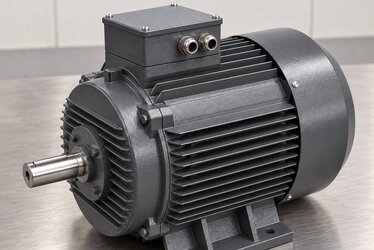
Motor Axial End-Float and Bearing Load
The shaft of an electric motor does not just rotate; even if only by a very small amount, it has the freedom to move back and forth along the axis, that is, along the shaft. This m... More Details


Mehmet Yılmaz is the chief editor of the DRG Motor content team. For 3 years he has been producing content on industrial electric motors, focusing on IE3, IE4 and IE5 efficiency classes and energy-efficiency regulations. He oversees the accuracy and editorial quality of the published technical content.
The shaft of an electric motor does not just rotate; even if only by a very small amount, it has the freedom to move back and forth along the axis, that is, along the shaft. This m... More Details
Printing machines demand one of the most challenging characteristics expected from an electric motor: flawless speed stability. Print quality depends directly on how smoothly and p... More Details
While an electric motor is running, the heat it produces keeps condensation from forming inside. The real danger begins when the motor stops: as the machine cools down, the humid s... More Details
Rubber manufacturing is one of the sectors where heavy-duty conditions and high torque appear most clearly. At every stage, from mixing raw rubber to pressing the finished tire, a ... More Details
The most common way to run an electric motor at the desired speed, with the right torque and with high energy efficiency is to use a frequency inverter, also known as a VFD (Variab... More Details
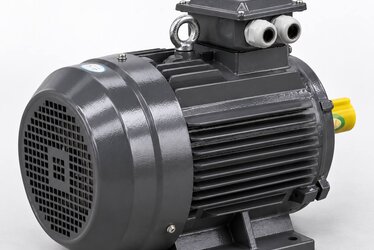
Glass manufacturing is an uninterrupted chain of processes that stretches from melting raw materials at extreme temperatures to controlled cooling of the finished product. Every li... More Details
A biomass and pellet plant is a demanding production environment where heavy-duty machines that grind, compress, dry, and transport raw organic material come together. At every lin... More Details
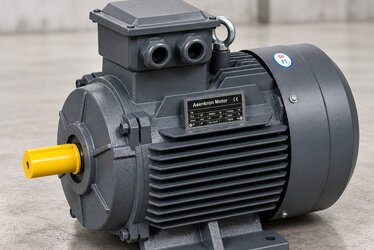
A greenhouse is a living system that must continuously provide the temperature, humidity, and air movement the plant needs inside, regardless of the weather outside. What establish... More Details
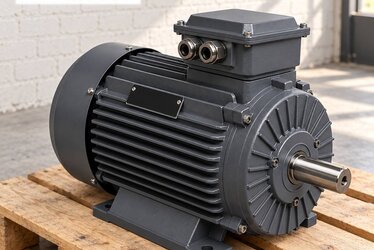
The codes you see on an electric motor's nameplate, such as IP55 or IK08, represent two separate languages that describe how durable the motor is against the outside world. The IP ... More Details
When an electric motor is fed from the mains, the high current it draws at the moment of starting often goes unnoticed, because the city grid behaves like an almost unlimited sourc... More Details
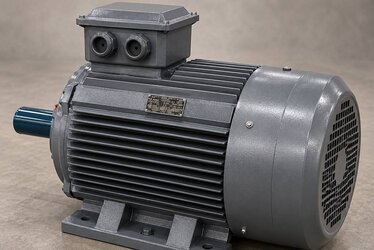
Working underground is one of the toughest assignments an electric motor can face. Mines and tunnels are environments where the accumulation of explosive gas and dust, high humidit... More Details
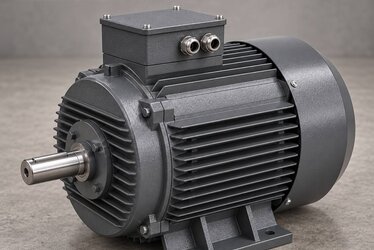
The efficiency value printed on an electric motor's nameplate is a design target achieved under ideal conditions. If you want to learn how efficiently that motor actually runs in t... More Details