 English
 Le français
 Türkçe

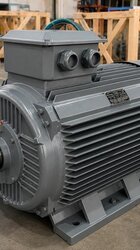
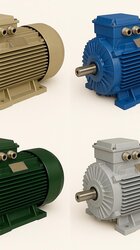
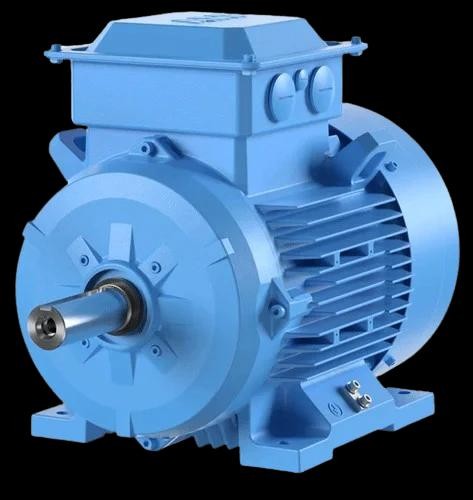

Working underground is one of the toughest assignments an electric motor can face. Mines and tunnels are environments where the accumulation of explosive gas and dust, high humidity, limited ventilation, and human life all depend directly on the reliability of the equipment. In these environments, a motor driving a ventilation fan does more than turn a machine; it keeps the mine breathable, prevents gas from reaching dangerous levels, and preserves evacuation conditions in a fire or smoke scenario. Motor selection for underground mine and tunnel ventilation is therefore not a matter of comfort but a direct safety decision. DRG's industrial electric motors family, with its AC asynchronous design in the IE3, IE4, and IE5 efficiency classes, suitable explosive-atmosphere protection, and high-strength mechanical structure, can be configured to meet the requirements of this critical task.
In this article we address every critical heading of underground ventilation, from jet and axial ventilation fan drives to explosive gas protection, from dust and moisture management to continuous-operation reliability and fire-and-smoke scenarios, explaining how DRG asynchronous motors are positioned in each.
The Challenges the Underground Environment Places on a Motor
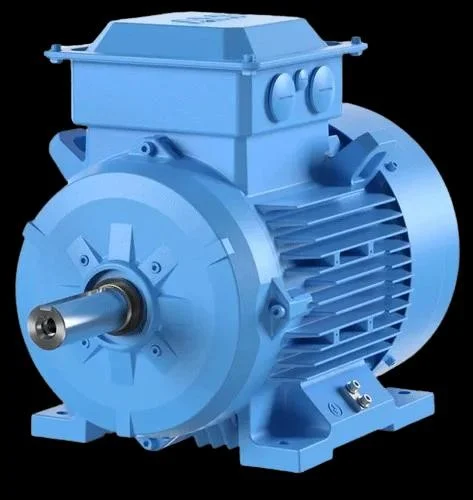
The underground brings together adverse conditions rarely seen at once on the surface: limited fresh air, high humidity, fine and abrasive dust, cramped working space, and very often the risk of explosive gas. Each of these conditions is challenging for a motor on its own; together, they rapidly consume the life of an ordinary motor and create a safety risk. For this reason, an underground motor must be selected from the very start by considering all of these variables together.
The Place of Ventilation in Mine Safety
Mine ventilation is vital so that workers can breathe, so that the gases that arise are diluted and expelled, the temperature is kept under control, and the dust concentration is reduced. When ventilation stops, the mine can become dangerous within minutes; gases such as methane begin to accumulate, the temperature rises, and breathable air quality deteriorates rapidly. For this reason, the motor driving the ventilation fan is one of the most critical pieces of equipment in the mine, and in its selection reliability takes precedence over all other criteria. When a comfort device fails, the result is discomfort; when the ventilation motor fails, the result is a direct risk to human life.
Axial Ventilation Fan Drives
High-flow axial fans push fresh air into the mine through the main ventilation shafts or draw dirty air out; they form the heart of a mine's main air circulation. The motors of these fans must be high-powered, continuously running, and reliable, because the air balance of the entire mine depends on these few large units. In correctly matching the operating point of the fan and motor, the principles of fan and blower motor selection are decisive; a wrong match means both energy waste and insufficient air. If the operating point is not correctly established between the fan curve and the motor's nominal values, the motor is either constantly strained or draws excessive energy needlessly.
Tunnel Ventilation With Jet Fans
In road and metro tunnels, jet fans, suspended from the ceiling, push the air along the tunnel axis and direct exhaust gases or potential smoke in a controlled manner. Unlike shaft ventilation, jet fans provide distributed rather than point ventilation by moving air over long distances within the tunnel. Jet fan motors must be compact, hard-wearing, and able to operate maintenance-free for long periods, because their ceiling-mounted position makes maintenance access difficult. Dozens of fans may serve along the length of the tunnel; the reliability of each determines the total ventilation performance, and the failure of one group can seriously disrupt the tunnel airflow.
Explosive Gas Risk and Ex Protection
In coal mines, methane, and in some tunnels and pits, different flammable gases can accumulate; when these gases mix with air at certain concentrations, they can explode at even the smallest spark. In these environments it is vital that the motor not be a source of ignition through a spark or high surface temperature. Even a small electrical event that might occur at the terminal connection or in the brushless asynchronous structure of a standard motor can turn into a catastrophe in an explosive atmosphere. We address the foundations of selecting a motor suitable for explosive atmospheres in detail in our article on explosive atmospheres and explosion-proof motors; this subject is at the very center of underground motor selection and is a requirement that can never be compromised.
Understanding ATEX Zone Classification
Explosive atmospheres are divided into zones according to the frequency and duration of the presence of gas or dust, and each zone requires a different level of protection. A zone where an explosive atmosphere is continuously present cannot be served by the same motor as a zone where risk arises only in the event of a fault. To choose the correct type of protection, one must first clarify which zone the environment falls into; this classification is the starting point of motor selection. Our article on ATEX zone classification and the motor explains step by step how to make this match and sets out the risks a wrong selection would create.
Dust Management and Its Effect on Cooling
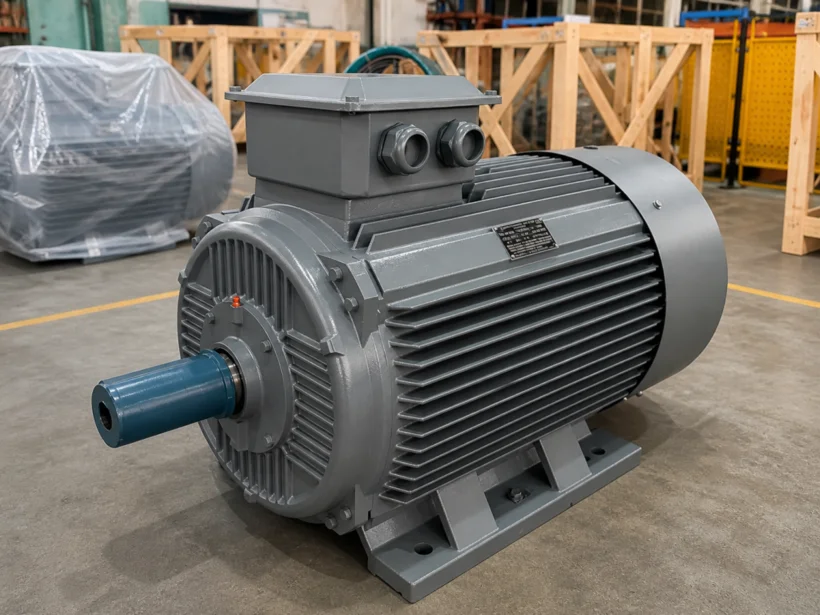
The fine dust that arises underground accumulates on the motor's cooling fins and fan cover, weakening the cooling; over time it traps heat inside like an insulating blanket. As cooling weakens, the motor heats up, and as it heats, the insulation tires and life shortens. For this reason, in underground motors a design resistant to dust accumulation, easy-to-clean surfaces, and high dust protection carry great importance. Dust can also be abrasive; the hard particles carried with the air erode the fan and surfaces, which makes surface protection and regular cleaning necessary.
Protection Against Moisture and Water Ingress
The underground is often humid; water can seep from the ceiling and walls, groundwater can collect, and relative humidity is far above the surface. Under these conditions a high IP protection class and moisture-resistant insulation are essential, because water and dust together try to seep in through the motor's weakest point. A motor with low protection experiences both leakage current and rapid insulation breakdown in this environment. When determining the correct protection class, the criteria in our IP protection class selection guide provide the practical way to correctly match the motor to the environment.
Humidity, Corrosion, and Tropicalization
Constant humidity strains the motor's winding insulation and leads to slow but steady corrosion on metal surfaces. The acidic or salty nature of some mine waters can accelerate this corrosion further. When the windings are strengthened with an additional protective coating through the tropicalization process, the insulation life is significantly extended and the risk of leakage current caused by moisture is reduced. Our article on motor humidity, corrosion, and tropicalization guides in determining the protection level suitable for the underground's humid and sometimes chemically aggressive environment.
Continuous Operation and Reliability
Main ventilation fans often run throughout the mine, without stopping even between shifts. In this continuous regime, the motor's low heating and stable performance are decisive. DRG's high-efficiency design aims for reliable and low-heating performance under S1 continuous duty; this is critical both for safety and for maintenance planning.
Redundant Systems and Fault Tolerance
Because ventilation is critical, systems are often redundant; when one fan stops, the other comes into service and the airflow is not interrupted. Nevertheless, the individual reliability of each motor is the foundation of the total reliability of the system; because the redundancy of two unreliable motors does not inspire as much confidence as one reliable motor. A hard-wearing and predictable motor reduces the burden of redundancy, lowers maintenance frequency, and prevents unexpected shutdowns. Redundancy is a safety net, but it does not replace well-chosen motors.
The Role of Ventilation in Fire and Smoke Scenarios
In a fire situation, the ventilation system directly affects human safety by directing smoke away from evacuation routes; a properly working smoke extraction fan allows people to escape while seeing and breathing. At this critical moment the motor is expected to keep running even under high temperature and harsh conditions, because stopping at precisely the moment it is needed most results in disaster. The reliability and temperature resistance of the motors selected for the fire scenario are the foundation on which the entire evacuation plan rests. For this reason, the motors of smoke control fans are evaluated by stricter criteria than ordinary ventilation motors.
Operating Under High Temperature
In scenarios such as smoke extraction, the motor can encounter an ambient temperature far above normal; the hot smoke being extracted passes over the fan and motor itself. In this case the motor must withstand operating at high temperature for a certain period, long enough to complete its task. The insulation class, the heat resistance of the materials used, and the thermal design are the elements that determine this critical endurance. Because a motor that is adequate under normal conditions may fall short in the extreme temperature of a fire scenario, thermal capacity is selected with particular care in these applications.
Placement in Tight Spaces and Compact Design
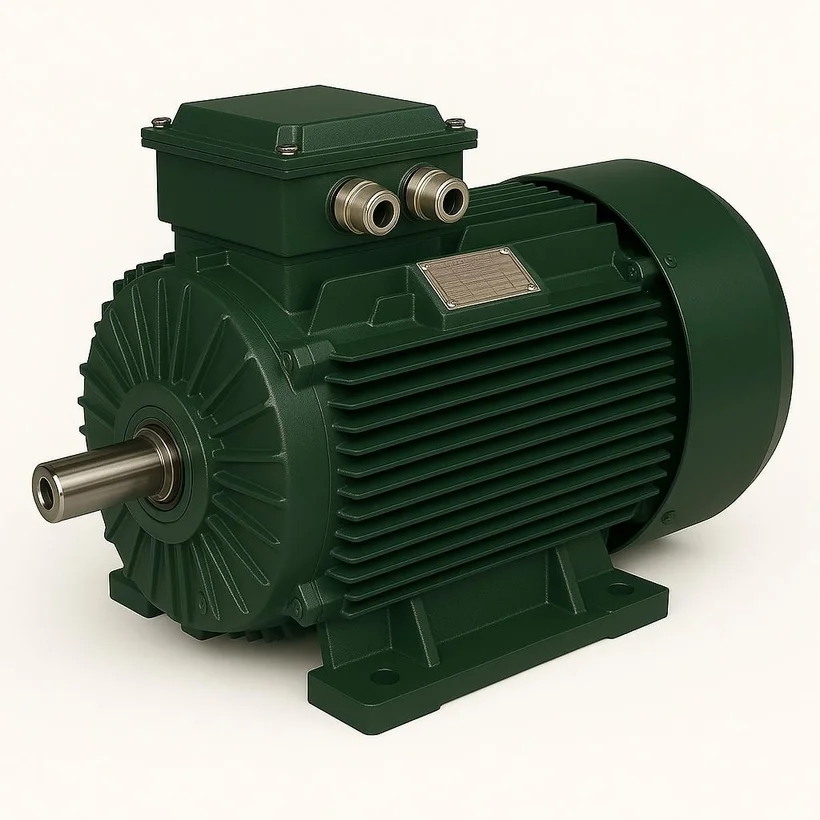
Underground galleries and tunnel cross-sections are narrow; every volume the equipment occupies is stolen from passage, transport, and working space. Compact housing dimensions and high power density facilitate placing the motor in tight spaces and accessing it for maintenance. Fitting the same power into a smaller housing makes both placement and leaving working space around it during service possible. DRG's compact design provides a real advantage in galleries of limited cross-section and in ceiling-mounted jet fan applications.
Vibration and Mechanical Endurance
The rotation of the fan blades, nearby blasting and excavation operations, and general underground activity create vibration that constantly fatigues the bearings and fasteners. A balanced rotor, vibration-resistant bearing selection, and a rigid cast housing directly extend the motor's life under these conditions. A well-balanced fan-motor set reduces both vibration and noise and prevents the fasteners from loosening over time. An inadequately balanced set, on the other hand, feeds vibration and wears both its own bearings and the connected structure.
The Effect of Efficiency on Underground Energy Cost
Because main ventilation fans are high-powered and run continuously, they are one of a mine's largest energy consumers. At this point the motor's efficiency class is reflected directly in the operating cost; even a small efficiency difference means notable savings on a large fan running continuously throughout the year. Our article on high-efficiency electric motors lays out this gain numerically.
Variable Air Demand and Inverter Drive
The air demand in the mine is not constant; it varies according to production intensity, the number of personnel at work, and the shift. Running at full flow during periods of low activity wastes unnecessary energy. Adjusting the fan speed according to demand instead of running at fixed speed and choking with a damper provides both notable energy savings and less mechanical wear. An insulation class suitable for inverter feeding is increasingly becoming common in underground applications, and the motor must be chosen to withstand this feeding method.
Cooling Method Selection
In the underground environment, where dust and moisture are intense, the motor's cooling method must be chosen carefully, because the cooling channels are the points most open to dust accumulation. Air cooling from the outer surface is open to dust accumulation but relatively easy to maintain and clean; closed or surface heat-dissipating cooling is more resistant to dust but requires a different design approach. Determining the correct cooling method according to the real dust and moisture load of the environment keeps the motor at a continuously safe temperature. A wrong cooling choice can tire even the toughest motor over time due to heat.
Bearing and Lubrication Strategy
For bearings that run continuously and are exposed to vibration, the correct grease type, lubrication interval, and, where needed, a re-lubricatable design form the basis of the maintenance plan. Because maintenance access can be difficult and time-consuming underground, long lubrication intervals and durable bearings carry great value. The use of moisture- and dust-resistant grease directly extends bearing life. Since the bearing is the most worn part of the motor, a well-planned lubrication strategy determines the life of the entire motor.
Sealing of the Terminal Box and Cable Entries
The first line preventing dust and moisture from entering the motor is the terminal box seals and cable glands. A well-sealed box prevents corrosion- and dust-driven increases in contact resistance at the terminal connections. In explosive atmospheres this sealing is also a safety requirement; preventing the ignition risk of gas or dust entering the box is an integral part of the Ex-protected design. Most underground failures begin with water or dust seeping in from an unexpected cable entry.
Commissioning and Periodic Testing
Underground ventilation motors, being safety-critical, must be tested regularly and their performance monitored. During commissioning, correct alignment, balanced load distribution, and suitable protection relay settings form the foundation for the motor's expected life and reliability. Periodic tests reveal the condition of the winding insulation and bearings early; thus a failure can be prevented by planned maintenance before it occurs at a critical moment. This disciplined approach keeps the reliability of continuously running ventilation systems standing.
Spare Parts and Service Accessibility
In the event of a failure of a critical ventilation motor, rapid intervention is essential. A standard, widely available motor architecture and clear technical documentation speed up the service process and shorten downtime. This accessibility is as important as technical specifications in safety-critical applications.
Noise Management
Large ventilation fans can produce high noise in the enclosed underground environment; this noise adversely affects both worker comfort and communication. A balanced rotor and suitable fan design reduce motor-sourced noise and improve underground working conditions. A quietly running motor is generally also a well-balanced, low-vibration motor; that is, the effort to reduce noise also improves durability. Because the echoing structure of the underground amplifies sound, this subject carries more importance than in surface applications.
Deciding by Total Cost of Ownership
The real cost of a ventilation motor is far more than the label price. Due to continuous operation, energy consumption often exceeds the purchase price in a short time; when maintenance, spare parts, and possible safety-critical shutdowns are added, the total picture becomes clear. A high-efficiency and reliable motor is almost always more economical and safer in the long run. Underground, the cost of a shutdown is money and a safety risk; for this reason, the decision must be made not on the cheap price but on the total burden over the lifetime.
The Relationship With Mining Drives in General
Ventilation is not the only motor application in a mine; conveyor, grinding, and pump drives share the same harsh environment. The common requirements of these applications make motor selection in a mine a holistic engineering subject. To strengthen the foundation of the subject, our article on what an electric motor is is a good starting point.
Moving Forward With DRG in Underground Projects
Underground mine and tunnel ventilation asks many things of a motor at once: safe design against explosive gas, resistance to dust and moisture, continuous-operation reliability, endurance in a fire scenario, and compact power to fit into narrow galleries. DRG's IE3, IE4, and IE5 class AC asynchronous motors can be configured to answer all of these expectations, with options for suitable explosive-atmosphere protection, high IP protection, and high-strength mechanical design. Let us determine together the correct power, type of protection, and efficiency level for the axial or jet ventilation fan drive in your project; to provide safety and efficiency at the same time under the harsh conditions of the underground, DRG engineering stands by you.