 English
 Le français
 Türkçe

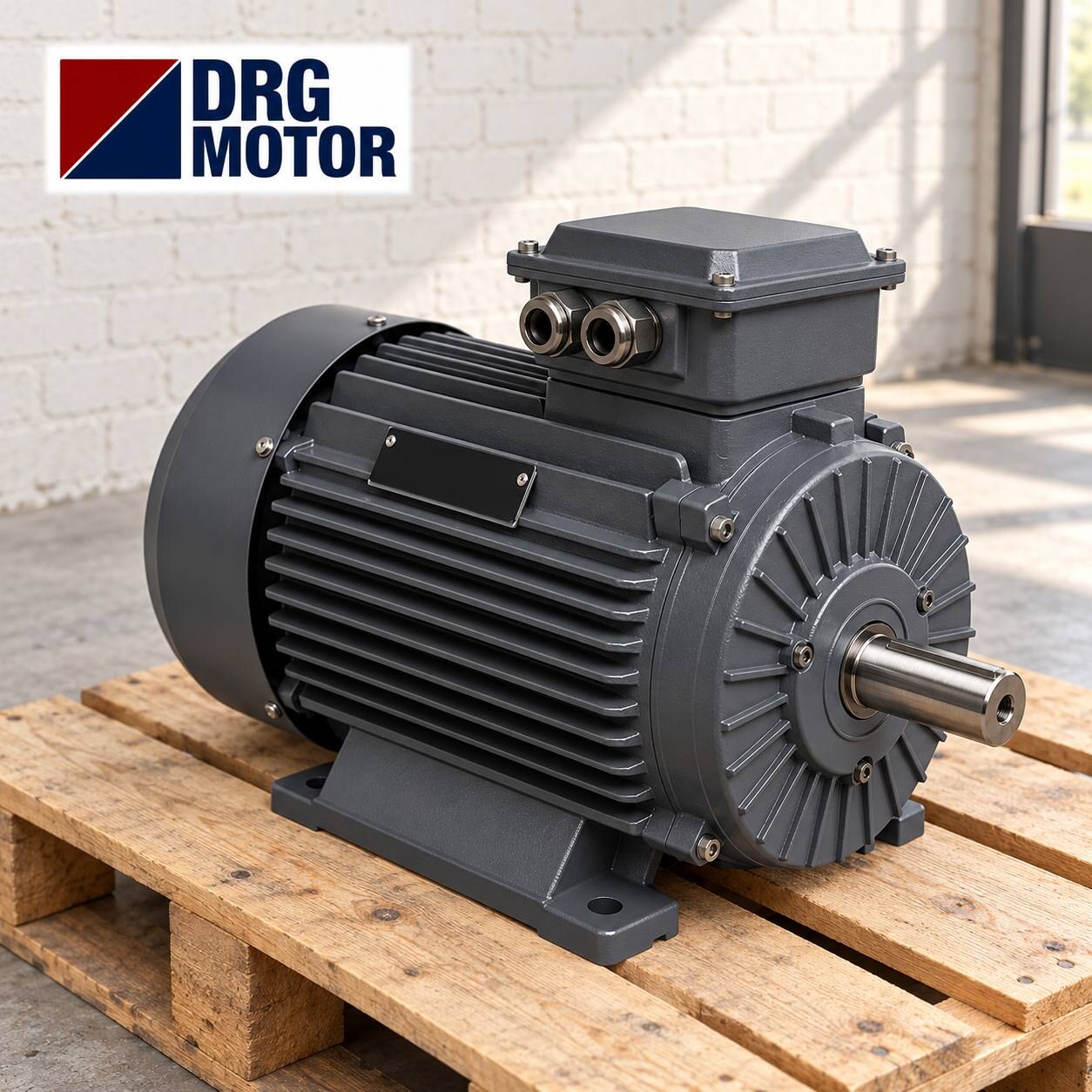

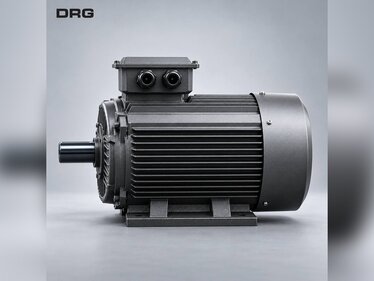
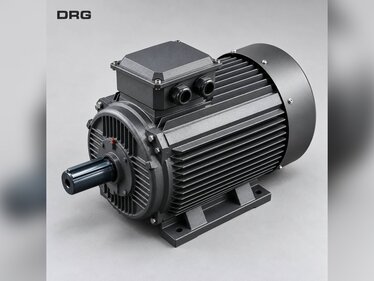
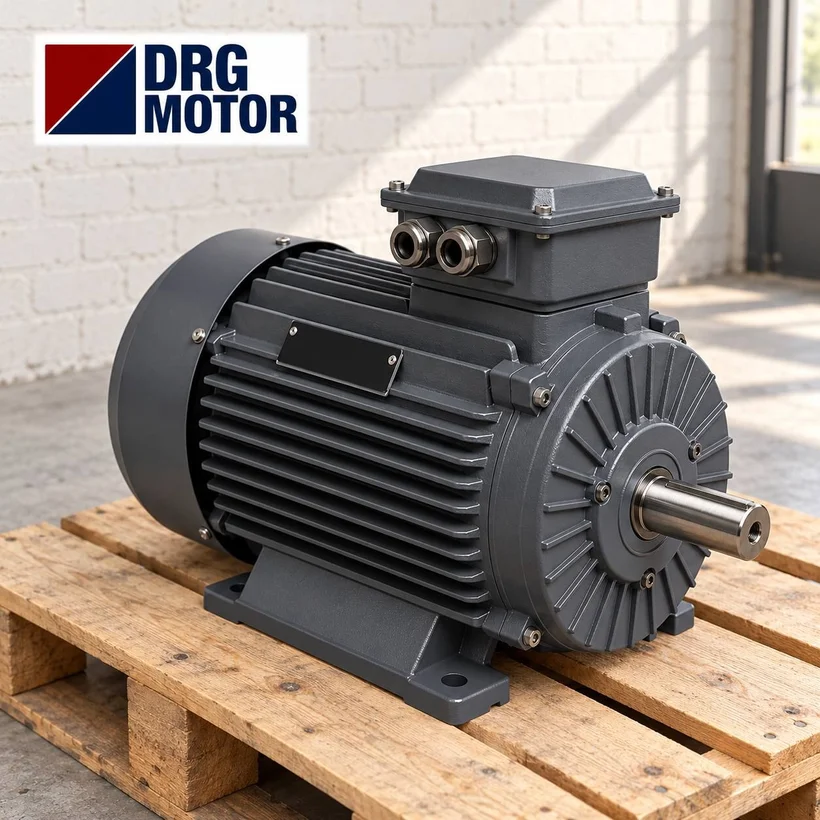
The codes you see on an electric motor's nameplate, such as IP55 or IK08, represent two separate languages that describe how durable the motor is against the outside world. The IP code shows the motor's protection against dust and water; the IK code shows its resistance to mechanical impacts from outside. The two are often confused but measure completely different threats: one answers the question of what gets in, the other the question of how hard it can be struck from outside. In this article we cover what a motor's IP and IK protection tests mean, which number represents what, how the tests are performed, which level is needed in which environment, and how to read the code on the nameplate. Our goal is to show a concrete and error-free way to select the right protection level for the right environment.
Why IP and IK are two separate codes
A motor faces three basic threats in the field: dust, water and impact. Dust and water seep into the motor and damage the winding and bearing, while mechanical impact damages the motor's housing from outside. Because these two threats are by nature different, they are measured with separate codes. IP concerns ingress, IK concerns external impact. A motor having a high IP does not mean it is also resistant to impact; the two are independent.
The structure of the IP code
The IP code consists of the letters "IP" followed by two digits. The first digit shows protection against solid objects and dust, the second digit protection against water. For example, in IP55 the first 5 expresses the protection level against dust and the second 5 against water jets. As the number grows, protection increases. This system makes it possible to understand at a glance which environment the motor is suited to.
IP first digit: solid objects and dust
The first digit of the IP code ranges from 0 to 6. Low values give protection only against large solid objects (a finger, a wire), while high values provide protection against fine dust. The highest level, 6, shows that the motor is completely dust-tight, that is, no dust gets in at all. For dusty production environments, stone and cement plants, and flour and feed factories, a high value of this digit is critical.
IP second digit: water
The second digit of the IP code ranges from 0 to 9 and shows protection against water. Low values give protection against vertical dripping, medium values against spraying from all directions and pressurized water, and high values against immersion and high-pressure washing. On motors that are washed, work outdoors or are in a humid environment, this digit is decisive. The table below summarizes the meaning of the IP digits.
| Digit | 1st digit (dust/solid) | 2nd digit (water) |
|---|---|---|
| 0 | No protection | No protection |
| 1-2 | Large objects, finger | Vertical / angled dripping |
| 3-4 | Wire, small objects | Rain / splashing from all directions |
| 5 | Dust protected (limited dust) | Water jets |
| 6 | Dust-tight (full protection) | Powerful pressurized water |
| 7-9 | — | Immersion / high-pressure hot washing |
The structure of the IK code
The IK code consists of the letters "IK" followed by a two-digit number and shows the motor's resistance to external impact. This number is directly related to impact energy: as the IK code grows, the impact energy (in joules) the motor can withstand increases. For example, a low IK code expresses resistance to a light impact, a high IK code to a heavy mechanical impact. IK is stated separately, independent of IP.
The IK code and impact energy
The IK code represents, in joules, the energy of a standard impact applied to the motor's housing. Low IK levels protect against small impacts of about half a joule, while high IK levels withstand heavy impacts of twenty joules and above. This energy is obtained by dropping a certain mass from a certain height. The table below summarizes the main IK codes and the corresponding impact energy.
| IK code | Impact energy (approx.) | Typical use |
|---|---|---|
| IK02-IK04 | ~0.2 - 0.5 joule | Sheltered indoor |
| IK06 | ~1 joule | Environment with light impact risk |
| IK08 | ~5 joule | General industrial environment |
| IK10 | ~20 joule | Heavy impact risk, outdoor site |
Click to see current electric motor prices and order nowSEE PRICES →
The points where the impact test is applied
In the IK test the impact is applied not randomly but to the motor's most vulnerable points. The terminal box cover, the fan cover, the mounting feet and the wide flat surfaces of the housing are the priority targets, because in the real field an impact mostly lands on these areas. The aim of the test is to verify that even the motor's weakest point withstands the specified impact energy. Even one point cracking means the motor does not meet that IK level.
How the IP dust test is performed
Dust protection is verified by placing the motor in a dust-filled test chamber. A fine, talc-like dust is circulated in the chamber and, over a certain period, it is checked whether dust enters the motor. For the dust-tight level, no dust must enter the motor, and for the dust-protected level, the dust that enters must be little enough not to hinder the motor's operation. This test confirms the real meaning of the first digit on the nameplate.
How the IP water test is performed
Water protection is verified by different tests according to the level. For dripping levels, controlled dripping is applied onto the motor; for spraying levels, water is sprayed from all directions; for pressurized levels, a water jet at a certain flow rate and pressure is applied. At the highest levels the motor is immersed in water or washed with high-pressure hot water. After each test it is checked whether a damaging amount of water has entered the motor.
How the IK impact test is performed
In the mechanical impact test, a hammer or falling weight of a certain mass and hardness is struck against the motor's housing with a controlled energy. The impact energy is set to the joule value corresponding to the IK code. After the test, the housing is examined for cracks, breaks or any damage that would lower the protection level. After the impact, the motor must retain both its mechanical integrity and its IP protection.
Which IP level for which environment
Correct IP selection starts with the environment in which the motor will operate. While a medium IP level is sufficient for a clean and dry indoor space, a dusty, wet or washed environment requires a high IP. Outdoors, under rain, or in places where pressurized washing is done, a high value of the second digit is essential. A wrong choice leads to early failure from dust and water seeping into the motor. To determine the protection class correctly, the article on electric motor IP protection class selection is a detailed guide.
The difference between dust protected and dust-tight
The difference between 5 and 6 in the first digit is often confused but important. At the dust-protected level (5), some dust can enter, but it is little enough not to affect the motor's operation and safety. At the dust-tight level (6), no dust enters. In environments with very fine and conductive dust (such as metal chips or carbon dust), this difference becomes critical; in such places the full dust-tight level must always be selected.
Distinguishing the high water levels
The difference between the high values of the second digit also directly affects the application. While the pressurized water level (jet) protects a motor against being hosed down, the immersion level allows the motor to stay under water for a certain time. The high-pressure hot washing level is designed for environments where daily hygienic washing is done, such as food and beverage production. Selecting the second digit without knowing the washing method leads to wrong protection.
Which IK level for which environment
IK selection is made according to the mechanical impact risk the motor will be exposed to. While a motor working in a sheltered cabinet can manage with a low IK, a high IK is needed on passageways, in areas where transport vehicles maneuver, or in places with a risk of falling material. In outdoor site applications carrying a heavy impact risk, the highest IK level should be preferred. A wrong IK choice means housing damage and loss of protection at the first serious impact.
Additional letters and special cases
It is sometimes seen that the IP code carries an additional letter after the two digits. These letters indicate special cases, for example an additional test performed under a certain condition or a protection quality. For most motors the two digits give enough information; however, in special environments all marks on the nameplate must be read. A code read incompletely can lead to the motor being used in an environment for which it is actually not suitable; for this reason the entire nameplate must be carefully assessed.
Reading the nameplate correctly
On a motor's nameplate the IP and IK codes appear separately. Seeing the IP code and saying "this motor is sturdy" is not enough, because IP says nothing about impact. Similarly, a high IK does not guarantee dust and water protection. For a correct assessment, both codes must be read together and the environment's ingress and impact threats assessed separately. These two codes on the nameplate are the summary of the motor's environmental durability.
The relationship between IP and insulation class
Protection class describes the motor's resistance to external threats; insulation class shows the temperature the winding can withstand. Although the two are different concepts, together they determine the motor's life. A motor with a high IP, because it does not take in moisture, has a longer-lasting winding, which contributes to preserving the insulation. For the whole subject, the article on electric motor insulation class is a complementary reference.
The balance between cooling and protection
A high IP level makes the motor more enclosed, which can make cooling harder. A fully enclosed motor, while not taking in dust and water, has to work harder to expel its heat. For this reason, in environments requiring very high IP, the motor's cooling design is made accordingly. The right choice is to increase protection while not allowing the motor to overheat; this balance is the subtlety of the design.
The role of seals, gaskets and cable entries
A motor's IP protection depends not only on its housing but on all sealing points. The seal at the shaft exit, the gasket of the terminal box and the cable glands are the real weak links of the protection. If even one of these points is loose or damaged, the IP value written on the motor's nameplate does not find its match in the field. For this reason, fitting all sealing elements correctly during mounting turns the nameplate value into reality.
Does the protection level drop over time
Although the protection class seems like a fixed value, it can weaken over time. Seals wear, gaskets harden and crack, cable glands loosen and the housing is worn by impacts. For this reason, especially in harsh environments, the motor's sealing elements must be checked periodically and the worn ones renewed. On an unmaintained motor, an IP65 label can turn into a much lower protection in reality after a few years.
The standardization of test conditions
The reason IP and IK tests are valuable is that they are performed according to an accepted method framework. The dust size, water flow rate, pressure, impact energy and application duration are defined as standard; this allows the protection values of different motors to be compared fairly. A protection claim not based on a standard method is not measurable and does not provide a reliable basis for predicting real field behavior.
Protection class and mounting position
A motor's real protection is also affected by the mounting position. On a vertically mounted motor, water can collect more easily; if the shaft faces up, the seal path may stay under water. The same motor, even if it has the protection level the environment requires, can create a weak point if mounted in the wrong position. For this reason, when selecting the protection class, how the motor will be positioned must also be taken into account.
The cost of wrong protection selection
Lower protection than needed means early failure; higher protection than needed brings unnecessary cost and cooling difficulty. The right balance is to assess the environment's real threat numerically and select the IP and IK level suited to it. Just as putting a low-IP motor in a dusty environment is a mistake, imposing the highest protection class on a clean indoor space is an unnecessary expense. The right choice considers both safety and budget.
Protection class and energy efficiency
Although it may seem unrelated at first, there is an indirect link between protection class and efficiency. A motor that does not take in dust and moisture preserves its design efficiency for longer, because its cooling channels stay clean and its winding insulation is not degraded. On a motor that becomes dirty and takes in moisture, both cooling worsens and losses increase. In this respect, correct protection selection supports durability and long-term efficiency.
Protection in industrial applications
Heavy industrial environments often combine dust, moisture and impact risk all at once. In such places the motor must be selected with both a high IP and a high IK. The article on industrial electric motors covers the other dimensions of selecting a motor suited to harsh industrial conditions and places the protection class decision in a broader framework.
DRG Motor at your side for the right protection
At DRG Motor, in the AC induction motors we manufacture, we treat the IP and IK protection level suited to the operating environment as a fundamental part of the design, because the right protection is the silent factor that determines a motor's real field life. If you are not sure which protection class is right in a dusty, wet or high-impact-risk environment, contact the DRG Motor expert team to select the motor best suited to your application. On this subject you may also review our IP protection class selection and insulation class content.
DRG Electric Motors Suited to This Topic
The models below are available in the DRG Motor online shop. Click a model code to see its technical data, dimensions and current price, and order right away.
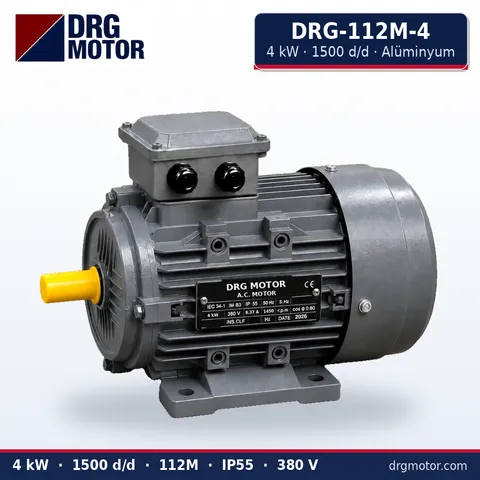
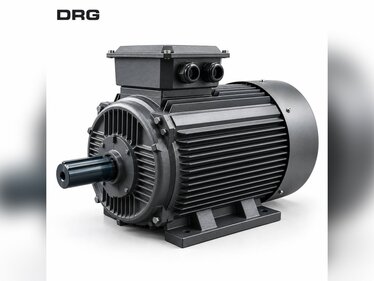
4 kW Three-Phase Motor 1500 rpm – DRG-112M-4 Aluminium
- 4 kW · 1500 rpm (4 poles)
- Aluminium frame · IEC 112M
- Mounting: B3 · B5 · B14 · B35
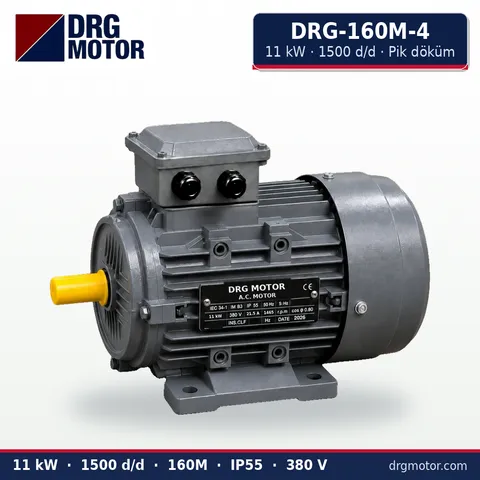
11 kW Three-Phase Motor 1500 rpm – DRG-160M-4 Cast Iron
- 11 kW · 1500 rpm (4 poles)
- Cast iron frame · IEC 160M
- Mounting: B3 · B5 · B14 · B35
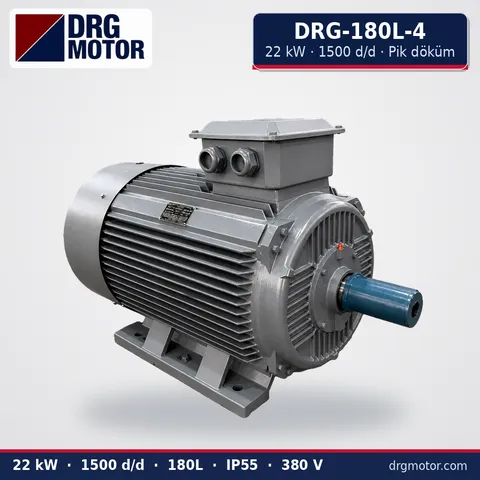
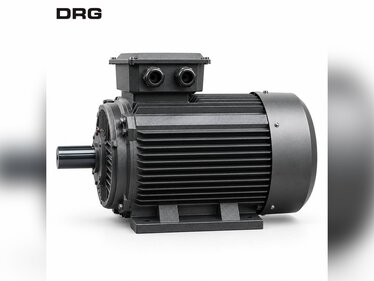
22 kW Three-Phase Motor 1500 rpm – DRG-180L-4 Cast Iron
- 22 kW · 1500 rpm (4 poles)
- Cast iron frame · IEC 180L
- Mounting: B3 · B5 · B14 · B35
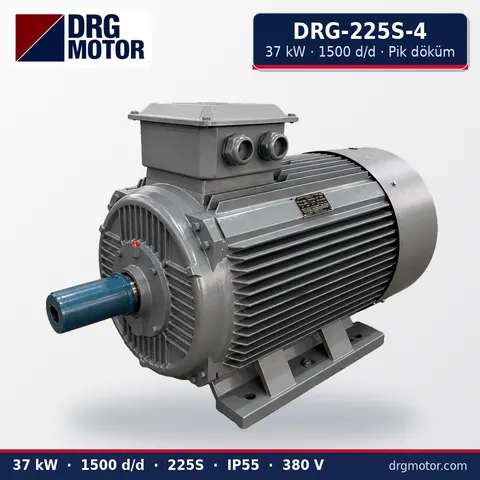
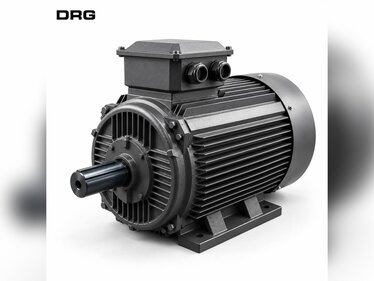
37 kW Three-Phase Motor 1500 rpm – DRG-225S-4 Cast Iron
- 37 kW · 1500 rpm (4 poles)
- Cast iron frame · IEC 225S
- Mounting: B3 · B5 · B14 · B35
Click to see current prices of all electric motors and order nowSEE PRICES →