 English
 Le français
 Türkçe

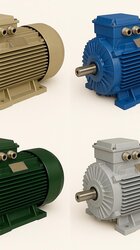
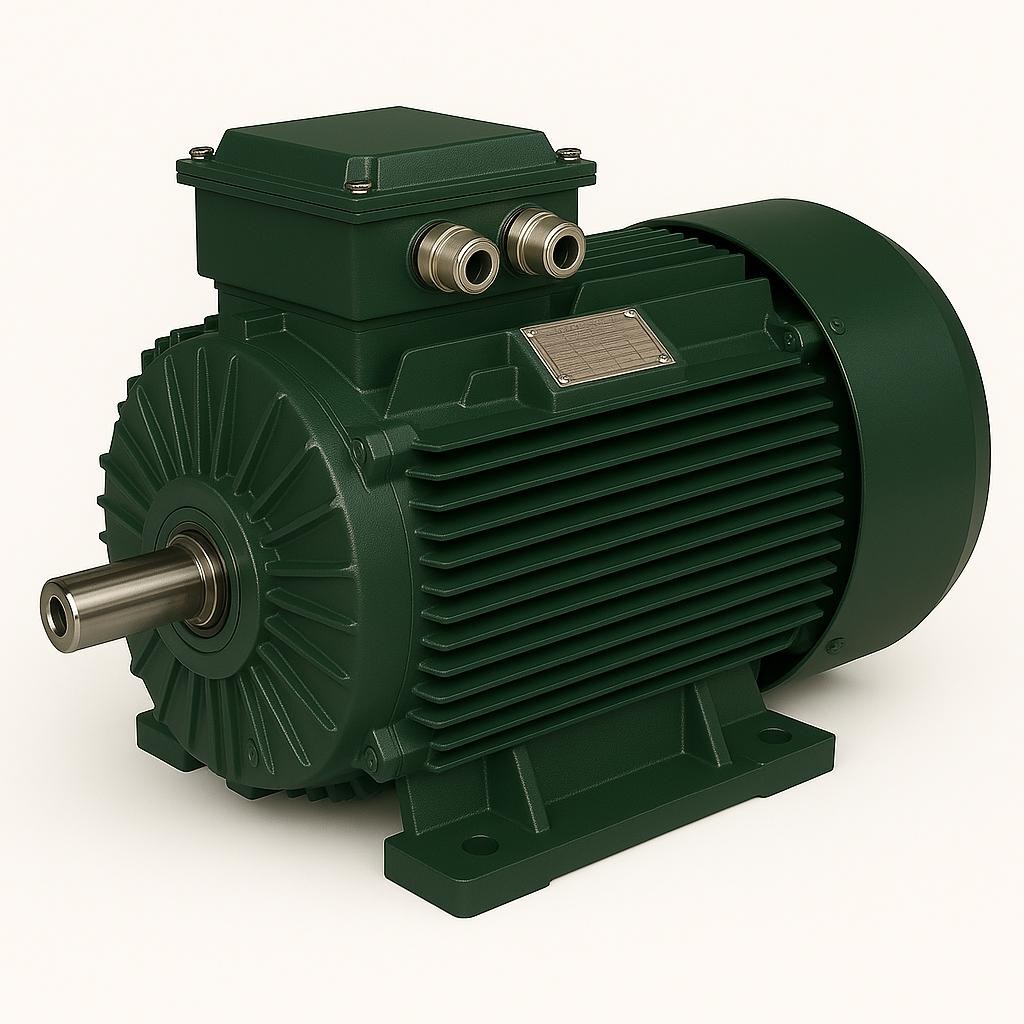

Rubber manufacturing is one of the sectors where heavy-duty conditions and high torque appear most clearly. At every stage, from mixing raw rubber to pressing the finished tire, a powerful drive is needed to overcome a dense and viscous material. Banbury-type internal mixers, open mills, extruders and presses all run on the power behind a correctly selected AC induction motor. This article examines the extraordinary torque demands that the rubber sector places on motors, its heavy-duty conditions, and the ways to operate efficiently and reliably under constant stress.
Rubber processing machines have a far harsher load character than ordinary production equipment. The material resists flowing, the temperature rises, and the motor frequently runs at full load for long periods. For a broad framework on the subject, our article on industrial electric motors offers a good foundation.
The Decisive Role of the Motor in Rubber Processing
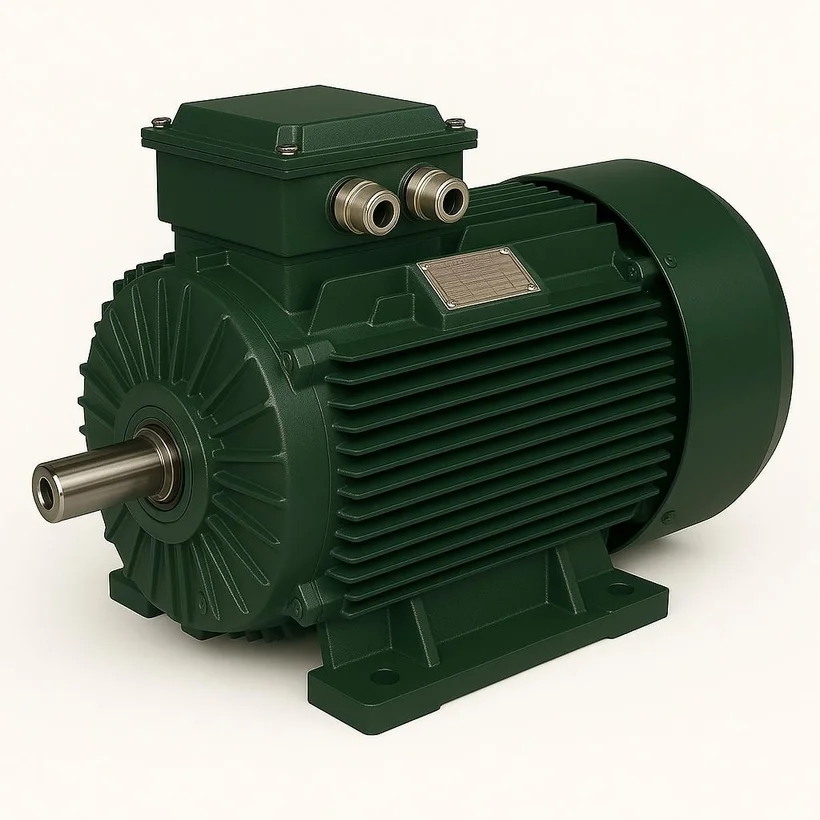
In a rubber factory the motor is the main power source that directly determines the pace and quality of production. Mixing, milling, extrusion and pressing all demand high torque and durability. The power range of the motors spans from medium powers to several hundred kilowatts, and a heavy load character is seen at almost every point.
Banbury-Type Internal Mixer
At the heart of rubber production sits the Banbury-type internal mixer. This machine kneads raw rubber with fillers, oils and chemicals to obtain a homogeneous compound. Because the mixer must continuously turn an extremely viscous and sticky material, it demands extraordinarily high torque from the motor. Moreover, momentary torque peaks occur as the compound is loaded. For this reason Banbury motors must have both high rated torque and the capacity to withstand transient overloads. We examined the principles of correct motor selection in applications requiring high starting torque, with examples, in our article on compressor motor starting torque.
Open Mill and Calender Drives
The mixed rubber is passed through open mills and calender rolls to bring it to the desired thickness and surface. The motors driving these rolls work against the high resistance the material exerts as it passes between the rolls. What matters in mill drives is high torque together with speed stability, because fluctuations in roll speed change the thickness of the product. Since multiple rolls must run in synchronism on calender lines, the motor control must be extremely precise.
Extruder Drive
Extruders are used in the production of continuous products such as profiles, hoses and seals. The extruder screw forces the rubber through a die under high pressure; this process requires constant and high torque. The extruder motor must provide a stable speed throughout the production rate and resist the back pressure created by the screw. Since stability in speed directly determines the uniformity of the product cross-section, precise control with a frequency inverter is of great importance here.
Press and Vulcanization Systems
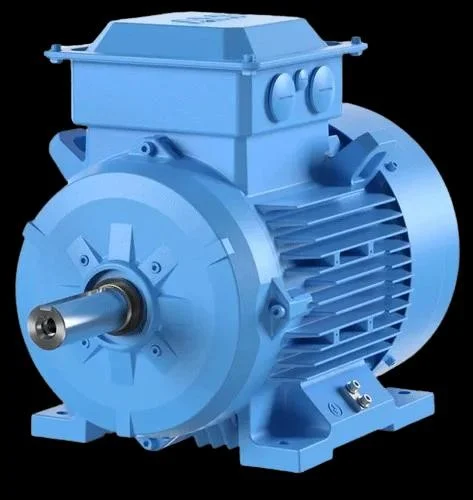
Formed rubber products take their final shape under heat and pressure in vulcanization presses. These presses are usually hydraulically driven, and the pump motor must be powerful and durable to generate the high pressure. During the press cycle the motor frequently engages and disengages; this start-stop regime increases the motor's heating and stresses it thermally. A correctly selected press pump motor stays within a safe temperature range despite frequent cycles.
Heavy-Duty Operation and the Need for High Torque
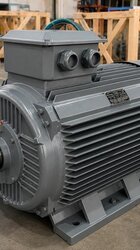
The most distinctive load the rubber sector imposes on the motor is heavy-duty operation. Because the material is dense and resistant, the motor almost never runs idle; it is constantly stressed near full load. This requires the motor to be designed robustly both mechanically and thermally. A copper-wound rotor structure, strong bearings and a solid housing are the distinguishing features of heavy-duty motors. A motor selected in the correct class runs trouble-free for many years even under these demanding conditions.
Temperature Management and Motor Protection
During rubber processing both the material and the machine heat up; moreover, since the motor is constantly under load, it also generates heat internally. This two-way heating makes it essential to monitor the motor's winding temperature. Keeping the winding temperature within a safe range directly extends motor life. We explained the methods of temperature control in detail in our article on electric motor temperature control.
Comparison: Machine Type and Motor Expectation
The main machines in a rubber factory and their demands on the motor are summarized in the table below:
| Machine | Load Character | Key Expectation |
|---|---|---|
| Banbury mixer | Very high torque, peak loads | Overload resistance |
| Open mill / calender | High torque, speed stability | Synchronous operation |
| Extruder | Constant high torque | Speed stability |
| Vulcanization press | Frequent start-stop | Thermal endurance |
Dust, Carbon and Environmental Protection
The carbon black and filler dusts used in rubber production remain suspended in the air and can seep into the motor. These fine and conductive dusts wear down the insulation and abrade the bearings. For this reason the protection class of motors in rubber plants must be chosen carefully; a high IP protection is preferred in dusty areas. We explained which protection class is required in which environment in our article on electric motor IP protection class.
Energy Efficiency and Cost
Rubber factories consume intense energy with their high-torque motors. Since the motors run near constant load, an improvement in efficiency translates directly into large savings. Motors in the IE3, IE4 and IE5 efficiency classes produce significantly fewer losses than standard motors, and these losses gain even greater importance under heavy-duty conditions. We explained in detail what the efficiency classes mean in our article on high-efficiency electric motors.
Control with a Frequency Inverter
In machines where speed accuracy matters, such as extruders and mills, a frequency inverter increases both production quality and energy efficiency. The inverter adjusts the motor speed according to production needs, eliminating unnecessary energy consumption. It also provides a soft start, protecting mechanical transmission elements from sudden torques. We explained the benefits of this approach with examples in our article on energy saving with a frequency inverter.
High Torque at Low Speed with Vector Control
Most rubber processing machines demand high torque even at low speeds. The control method that best meets this need is vector control. Vector control provides full torque at low speeds by precisely managing the magnetic field of the motor; this is critical especially in machines exposed to peak loads such as the Banbury mixer. We compared the differences between vector control and simple V/f control in our article on the difference between inverter V/f and vector control.
Noise and Vibration Control
In heavy-duty machines, high torque brings with it the risk of vibration and noise. An unbalanced motor or a worn transmission element increases vibration, adversely affecting both product quality and machine life. Balanced, low-vibration motors provide longer life and quieter operation on heavy-duty lines. We gathered the ways to reduce vibration in our article on reducing electric motor noise and vibration.
Conveyor and Material Handling Drives
In a rubber factory, raw material, intermediate product and finished product are transported along the line. Belt conveyors, elevators and handling systems run on electric motors. Continuous and reliable operation is essential in these drives. We examined the subtleties of conveyor motor selection in our article on conveyor belt electric motor selection. For the pump motors of auxiliary cooling and hydraulic circuits, you can look at our article on water pump electric motor selection.
Fan and Cooling Systems
Cooling fans and ventilation systems are used to remove the heat generated during vulcanization and milling. Adjusting the flow of these fans according to production needs provides both energy savings and a more stable working environment. We addressed the fundamental principles of fan motor selection in our article on fan and blower electric motor selection. For those who want to recall the basic working principles of the motor, our article on what is an electric motor will be useful.
Frequent Start-Stop and Overload Protection
Rubber processing machines, especially presses and mixers, frequently stop and restart throughout the production cycle. Each start means a high current and thermal load for the motor. A motor selected to suit this regime runs without overheating despite frequent cycles. In addition, overload protection protects the motor from damage when the material shows more resistance than expected. Correct protection relays and thermal control ensure the safety of the motor and of production.
Correct Sizing and Heavy-Duty Design
In the rubber sector, motor sizing must take peak loads into account. A motor selected only for average load is stressed during the momentary torque peaks of the Banbury mixer and may trip out. For this reason, in heavy-duty applications the motor is selected to have a sufficient reserve margin against peak load. A strong rotor winding, a sturdy bearing structure and a durable housing are the basic elements of heavy-duty design. Correct sizing is decisive for both reliability and long life.
Maintenance and Lifetime Cost
In a rubber factory, motor selection should be evaluated by lifetime cost rather than purchase price. The energy consumption of a motor running near constant load reaches a figure far above the purchase price. A high-efficiency motor heats up less, lasts longer and reduces maintenance needs. Regular bearing checks, insulation resistance measurement and vibration monitoring prevent unplanned downtime and secure production continuity.
Stages of Tire Production and Drive Points
The production of a car tire passes through dozens of separate process steps, and each step carries its own drive requirement. First, raw rubber is kneaded with fillers in the Banbury mixer, then turned into sheets on mills. These sheets are formed into profiles in extruders, combined with textile and steel cord layers, and shaped into a tire form on a building drum. Finally the shaped green tire is vulcanized in a press under high temperature and pressure. The machine at every link of this chain is driven by a motor with a different torque and speed profile, so a tire factory is a facility where a wide variety of motor applications coexist.
Synchronization on Calender Lines
The calender is a multi-roll machine that turns rubber into thin and uniform sheets or coats textile fabric with rubber. In this machine each roll must turn at a precise speed ratio relative to the others; otherwise the sheet thickness deteriorates or the material tears. The speed synchronization of the motors driving the rolls is provided through frequency inverters in modern plants. Assigning a separate motor and drive to each roll makes it possible to adjust the speed ratios from software and switch quickly between different products. This flexibility increases both product variety and line efficiency.
Motor Selection in Hydraulic Press Drives
Most vulcanization presses are hydraulically driven, and the electric motor turning the hydraulic pump determines the press's power. High pressure is needed when the press closes, but the pump idles while the press waits. This variable load profile poses a challenge for efficient motor operation. A pump motor controlled with a frequency inverter adjusts its speed according to pressure demand, greatly reducing energy consumption during the waiting period. This approach provides significant savings in plants where many presses operate together and also prevents the hydraulic oil from overheating.
Inverter-Compatible Sturdy Insulation
As the use of frequency inverters becomes widespread in heavy-duty rubber machines, it has become important to produce motors with reinforced insulation suited to inverter feeding. The switching voltages of the inverter can wear standard insulation over time, so motors that will run with an inverter must have insulation designed to withstand this stress. In addition, in mixer and extruder motors that produce high torque at low speed for long periods, the motor's own cooling may become insufficient, so additional cooling solutions are deployed. Selecting the motor and drive together, as a whole, gives the most reliable result.
Carbon Black Feeding and Weighing Systems
Carbon black, an important component of the rubber compound, is weighed in precise proportions and fed to the mixer. In these feeding and weighing systems, screw conveyors, rotary valves and mixers are driven by electric motors. Since carbon black is an extremely fine and conductive dust, the motors in this section must have a high protection class; otherwise the dust enters the motor and quickly leads to failure. The stability of the weighing system secures the correct application of the compound recipe and therefore the consistency of product quality. For this reason, although the feed drives appear auxiliary, they are critical for quality.
Cooling Line and Sheet Handling
The hot rubber leaving the Banbury mixer is passed through a cooling line called batch-off. On this line the sheets are dipped into a cooling fluid or cooled with air and then stacked. The transport rollers and fans on the line run on electric motors; the speed of these motors must match the production pace of the mixer. A speed mismatch leads to the sheets piling up or breaking. Control performed with a frequency inverter keeps the speed of the cooling line synchronized with production, providing an uninterrupted flow. This both reduces scrap and raises the overall efficiency of the line.
DRG Motor Advantage in the Rubber Sector
DRG Motor offers IE3, IE4 and IE5 efficiency-class AC induction motors designed to withstand the heavy-duty and high-torque conditions of the tire and rubber sector. A sturdy structure resistant to peak loads, a thermal design suited to frequent start-stop regimes, high IP protection for dusty environments, and full compatibility with frequency inverters make DRG motors a reliable choice for Banbury mixer, mill, extruder and press applications. To select a solution with the right torque, speed and efficiency class for every machine on your production line, you can contact the DRG Motor engineering team and secure production continuity even under heavy-duty conditions.