 English
 Le français
 Türkçe

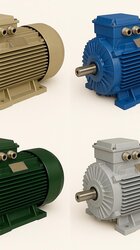
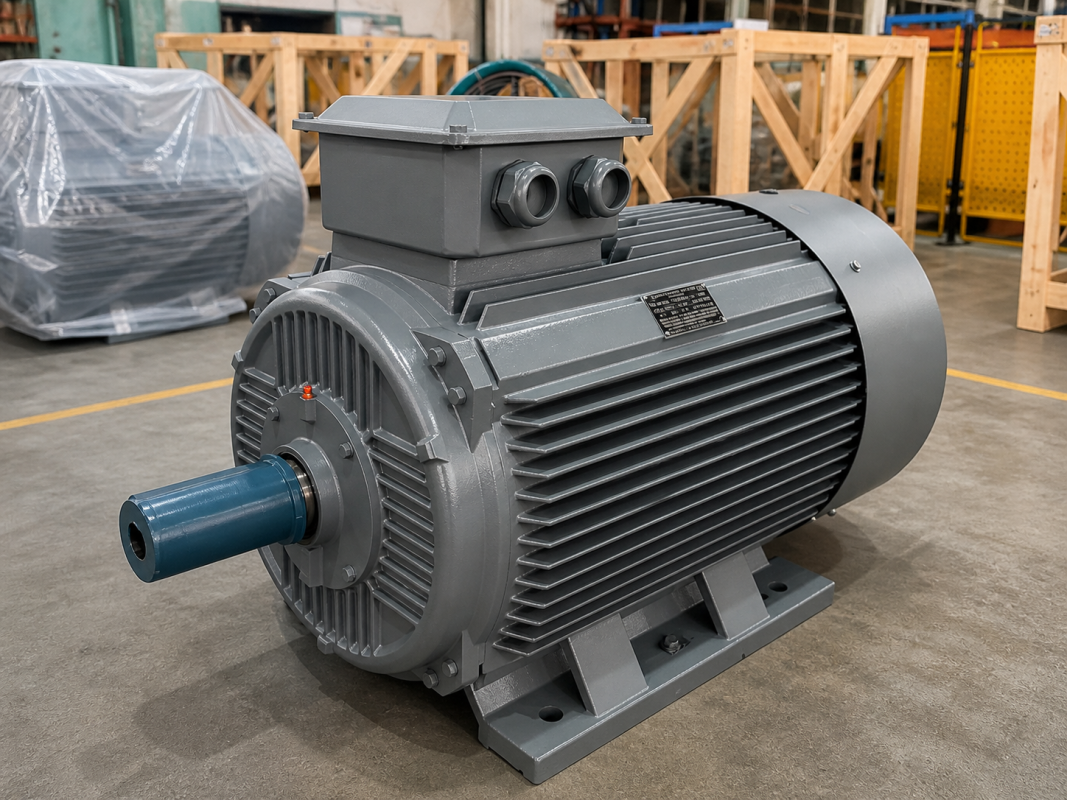

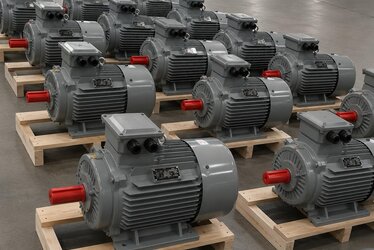
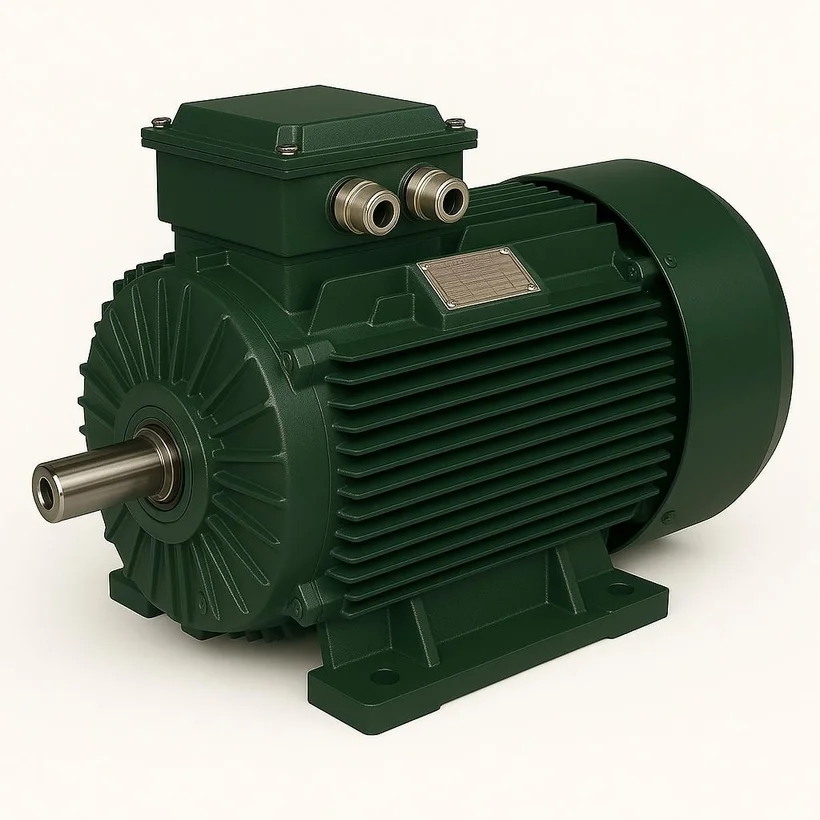
A biomass and pellet plant is a demanding production environment where heavy-duty machines that grind, compress, dry, and transport raw organic material come together. At every link of this chain there is an electric motor: the grinder and mill that break down the raw material, the press that turns the material into pellets under high pressure, the dryer fans, and the conveyors that feed the entire line. These machines operate in an environment full of high torque, continuous operation, and dust together with flammable material. Motor selection in biomass and pellet plants is therefore a direct determinant of both production continuity and safety. DRG's industrial electric motors family, with its AC asynchronous design in the IE3, IE4, and IE5 efficiency classes, high torque capacity, and sturdy heavy-duty structure, can be configured to meet the requirements of this demanding task.
In this article we address every critical heading of pellet plants, from grinder and mill drives to the pellet press, from dryer fans to conveyor systems and dust-and-flammable-environment safety, explaining how DRG asynchronous motors are positioned in each.
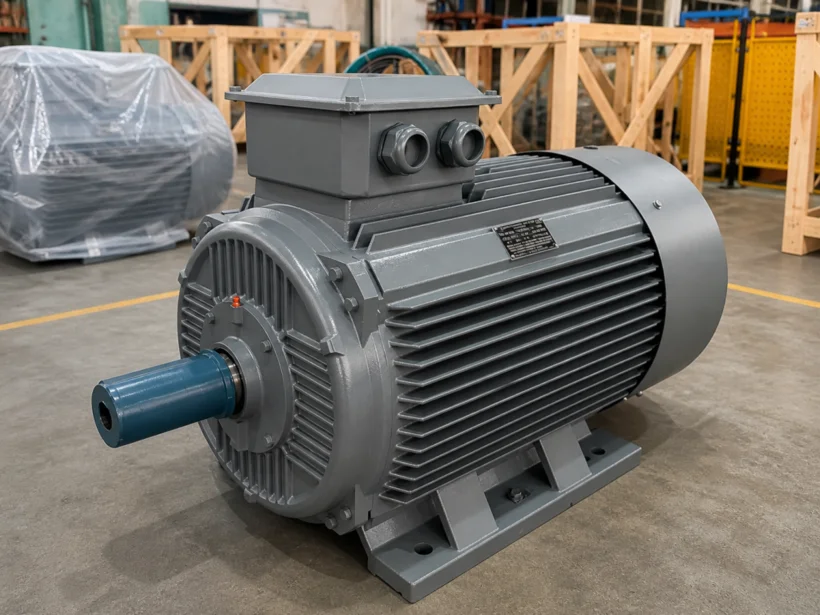
The Challenges the Pellet Plant Environment Places on a Motor
Pellet production creates an unusual combination of loads for a motor: constant high torque, uninterrupted operation throughout the day, fine and flammable dust that spreads everywhere, vibration, and heavy mechanical shocks. Each of these conditions is challenging for a motor on its own; together, they rapidly consume the life of an ordinary motor and create a safety risk. For this reason, a pellet plant motor must be selected from the very start with heavy-duty operation and dust resistance in mind; the real torque and dust load of the application is the foundation of the motor decision.
The Importance of Production Continuity
The pellet line is an uninterrupted chain formed by interconnected machines; the stopping of one link stops the entire line. When the motor of the grinder, press, or conveyor fails, production stops completely, the flow of material within the line is disrupted, and cost rises rapidly. The stopping of one machine often affects all the machines before and after it. For this reason, the reliability of each motor on the line directly determines the total efficiency of the plant. A sturdy and predictable motor protects the plant's profitability by preventing unexpected shutdowns and the production losses they create.
Grinder and Mill Drives
Raw biomass is broken down to a suitable size in hammer mills or grinders before becoming pellets. These machines demand high and variable torque; as material density changes, the motor's load fluctuates suddenly. For this reason, in grinding drives the motor's high starting torque and resistance to sudden load changes are decisive. On motor selection specific to grinding applications, our article on the mill and grinding electric motor provides the practical way to determine the correct power and torque capacity.
The Special Load Character of the Hammer Mill
Hammer mills break up material with hammers rotating at high speed; in this process, constant impact and variable load occur. When a hard piece or a dense feed enters the mill, the motor's load rises instantly and then drops again. This impact and fluctuating load regime requires the motor to be both mechanically sturdy and to have the thermal capacity and torque reserve to absorb sudden load increases. An inadequately sized motor is constantly strained under these impacts, heats up, and tires early. A correctly chosen motor, on the other hand, handles the load fluctuations smoothly and keeps grinding flowing.
The Pellet Press and the Need for High Torque
The pellet press turns the ground material into dense pellets by forcing it through the die holes under high pressure; this is the plant's highest-torque-demanding application. The press needs very high starting torque, especially when coming into service and when the die is full. In this application the motor's starting characteristic, low heating under continuous high load, and mechanical sturdiness are of critical importance. DRG's sturdy heavy-duty design can be configured to suit the press's demanding load profile.
Operating Under Continuous High Load
The pellet press often runs at full load, uninterrupted for hours or even across shifts. In this continuous high-load regime, the motor's low heating and stable performance are decisive, because the press stopping halts the entire production. Overheating tires the insulation and shortens the motor's life; every ten-degree temperature rise significantly reduces insulation life. A correctly sized motor with sufficient cooling stays at a safe temperature even in this demanding continuous regime and offers a long life. For this reason, in the press motor thermal capacity must be chosen at least as carefully as torque.
Conveyor and Material Handling Drives
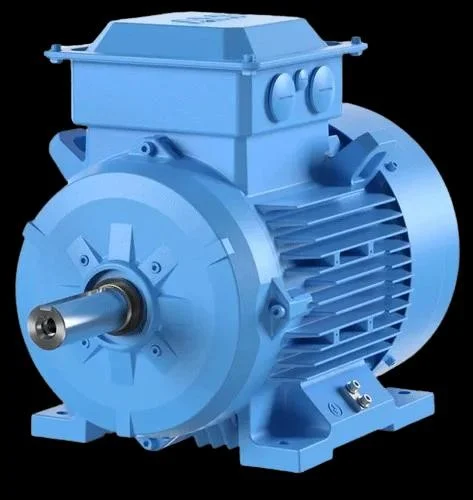
Raw material, ground material, and finished pellets are transported within the plant by conveyors. These conveyors generally operate under heavy load, continuously and with frequent starts and stops. In conveyor drives, the motor's sufficient starting torque, continuous-operation endurance, and dust-protected structure are important. We address motor selection specific to conveyor applications in detail in our article on conveyor belt electric motor selection; correct torque and power keep the line running smoothly.
Dryer Fan Drives
Biomass must be dried to a suitable moisture level before being pelletized; overly moist material can neither be pelletized nor produces quality pellets. This drying is generally done with large fans that blow hot air, and the continuity of drying directly affects the production rate. The motors of dryer fans must operate reliably and continuously in a hot and dusty environment; they must withstand both the high ambient temperature and the dust at once. In correctly matching the fan and motor, the principles of fan and blower motor selection are decisive; the correct operating point provides both sufficient drying airflow and low energy consumption.
Dust and Flammable Environment Risk
The organic dust that arises in pellet production can be flammable and even explosive at certain concentrations; this is the most critical safety subject of pellet plants. In these environments it is vital that the motor not be a source of ignition. We address the foundations of selecting a motor suitable for explosive and flammable dust environments in detail in our article on explosive atmospheres and explosion-proof motors; in zones with dust explosion risk, this subject is indispensable.
Dust Management and Its Effect on Cooling
Fine organic dust accumulates on the motor's cooling fins and fan cover, weakening the cooling; over time it traps heat inside like an insulating layer. As cooling weakens, the motor heats up, and as it heats, the insulation tires. For this reason, in pellet plant motors a design resistant to dust accumulation, easy-to-clean surfaces, and high dust protection carry great importance. Because dust accumulation also means the accumulation of flammable material, regular cleaning is a safety requirement.
IP Protection Class and Dust Resistance
The pellet plant environment is heavily dusty; fine organic particles constantly suspended in the air try to enter the motor through every opening. For this reason a high protection class against dust is essential. When determining the correct protection class, the criteria in our IP protection class selection guide provide the practical way to correctly match the motor to the environment. Complete protection against dust both extends the motor's life and reduces dust-driven failure and safety risks; preventing the flammable dust that enters from accumulating inside the motor is also a safety measure.
Vibration and Heavy-Duty Mechanical Endurance
Heavy machines such as the grinder, press, and conveyor produce constant vibration and mechanical shock; this vibration is transmitted directly to the motor and its bearings. A balanced rotor, vibration-resistant bearing selection, and a sturdy cast housing directly determine the motor's life under these conditions. In heavy-duty applications the motor not only delivers power but must also withstand constant mechanical stress and shock. A well-balanced drive set reduces both vibration and the loosening of fasteners over time; an inadequately balanced set, on the other hand, feeds vibration and wears both itself and the connected structure.
The Effect of Efficiency on Plant Energy Cost
Because high-powered machines such as the grinder and press run continuously, they are the largest energy consumers of a pellet plant. At this point the motor's efficiency class is reflected directly in the production cost; even a small efficiency difference on a large motor running continuously at full load means notable annual savings. The low losses of IE4 and IE5 class motors provide a marked advantage over long operating hours. Our article on high-efficiency electric motors lays out the calculation of this gain.
Starting Method and High Inertia
High-inertia machines such as the grinder and press draw high current and torque when restarting after being stopped; setting the heavy rotating mass in motion requires significant starting energy. Direct starting can strain the grid and the mechanical system on these large machines and can even create sudden shock in belts and couplings. Soft starting or starting with an inverter reduces this strain by ramping up to speed gradually. Correct starting method selection protects the life of both the motor and the driven machine and protects the entire line by softening the mechanical shock that occurs during starting.
Bearing and Lubrication Strategy
For bearings that run under heavy load and vibration, the correct grease type, lubrication interval, and, where needed, a re-lubricatable design are the foundation of the maintenance plan. The use of moisture- and dust-resistant grease in a dusty environment directly extends bearing life. Because the bearing is the most worn part of a heavy-duty motor, a well-planned lubrication strategy determines the life of the entire motor.
Sealing of the Terminal Box and Cable Entries
The first line preventing dust from entering the motor is the terminal box seals and cable glands. A sealed box protects the life of the winding insulation and prevents dust accumulation at the terminal connections. In flammable dust environments this sealing is also a safety requirement; it prevents the dust entering the box from accumulating and the potential ignition risk.
Cooling Method Selection
In the pellet plant environment, where dust density is high, the motor's cooling method must be chosen carefully, because the cooling channels are the points most open to dust accumulation. Air cooling from the outer surface is open to dust accumulation but relatively easy to clean; more dust-resistant, surface heat-dissipating cooling solutions require a different design approach but may be safer in a heavy dust environment. Determining the correct cooling method according to the real dust load of the environment keeps the motor at a continuously safe temperature. A wrong cooling choice can tire even the sturdiest motor over time due to heat.
Determining the Correct Power and Torque
For each drive, the correct selection of power and torque determines both efficiency and life. In machines that demand high torque such as the grinder and press, the motor having a sufficient torque reserve ensures it does not stall during sudden load increases. An oversized motor lowers efficiency; an undersized motor is constantly strained. Correct sizing is the common foundation of efficiency, life, and reliability in a heavy-duty application.
Maintenance Planning and Downtime Cost
Because pellet production is a continuous process, an unplanned shutdown means direct production loss. A sturdy motor with predictable maintenance needs prevents unexpected shutdowns. Scheduling maintenance for planned periods and monitoring it reduces both cost and risk. A well-documented motor makes it easier to set up the maintenance schedule in advance and keep spare parts ready.
Spare Parts and Service Accessibility
In the event of a failure of a critical grinder or press motor, rapid intervention is essential, because when these machines stop, all production stops. A standard, widely available motor architecture and clear technical documentation speed up the service process and shorten downtime. Choosing an exotic, hard-to-source motor may look like a small gain in the initial investment, but it proves far more costly in the event of a failure. This accessibility is as important as technical specifications in a continuously running plant, and sustainable supply is an integral part of the motor decision.
Deciding by Total Cost of Ownership
The real cost of a pellet plant motor is far more than the label price. Due to continuous and high-load operation, energy consumption, maintenance, spare parts, and possible shutdowns determine the total cost. A high-efficiency and reliable motor is almost always more economical in the long run. In a plant, the decision must be made not on the cheap price but on the total burden the motor will bring over its lifetime.
The Relationship With Mining and Heavy Industry Drives
The grinding and conveyor drives in a pellet plant share the same engineering foundation as similar applications in mining and heavy industry. These common requirements make heavy-duty motor selection a holistic subject. To strengthen the foundation of the subject, our article on what an electric motor is is a good starting point and prepares the ground for heavy-duty decisions.
Moving Forward With DRG in Pellet and Biomass Projects
Biomass and pellet plants ask many things of a motor at once: high torque capacity, endurance under continuous heavy load, dust and flammable environment safety, and mechanical sturdiness against vibration. DRG's IE3, IE4, and IE5 class AC asynchronous motors can be configured to answer all of these expectations, with options for high-torque design, high dust protection, and a sturdy heavy-duty structure. Let us determine together the correct power, torque, and protection class for the grinder, pellet press, dryer fan, or conveyor drive in your project; to secure your production continuity and energy efficiency at the same time, DRG engineering stands by you.