 English
 Le français
 Türkçe


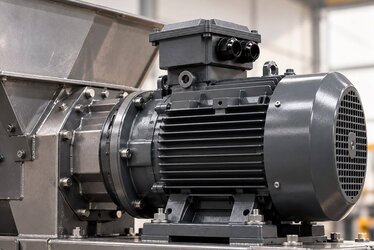
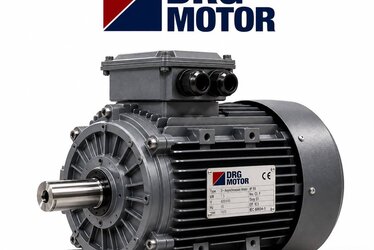
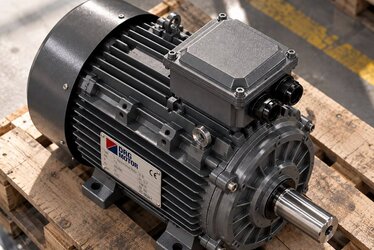
Heavy duty machines are built for rooms where dust, vibration and heat arrive together and the load never settles. Crushing plants, concrete batching, pump stations and production lines ask one thing of the drive: keep turning. What separates the class is mechanical and thermal margin above the nameplate.
What makes a duty heavy
A standard motor is enough in a clean, ventilated room with steady load. Heavy duty is the opposite: load shifts constantly, breakaway torque is high, the air is abrasive, vibration is severe. That reaches every component, from frame strength to insulation class and cooling design.
Cast iron and mechanical strength
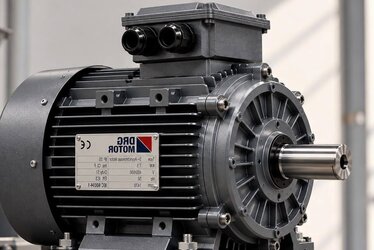
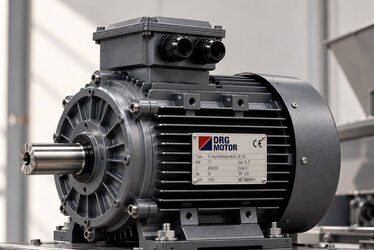
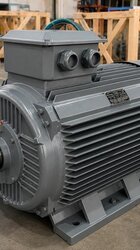
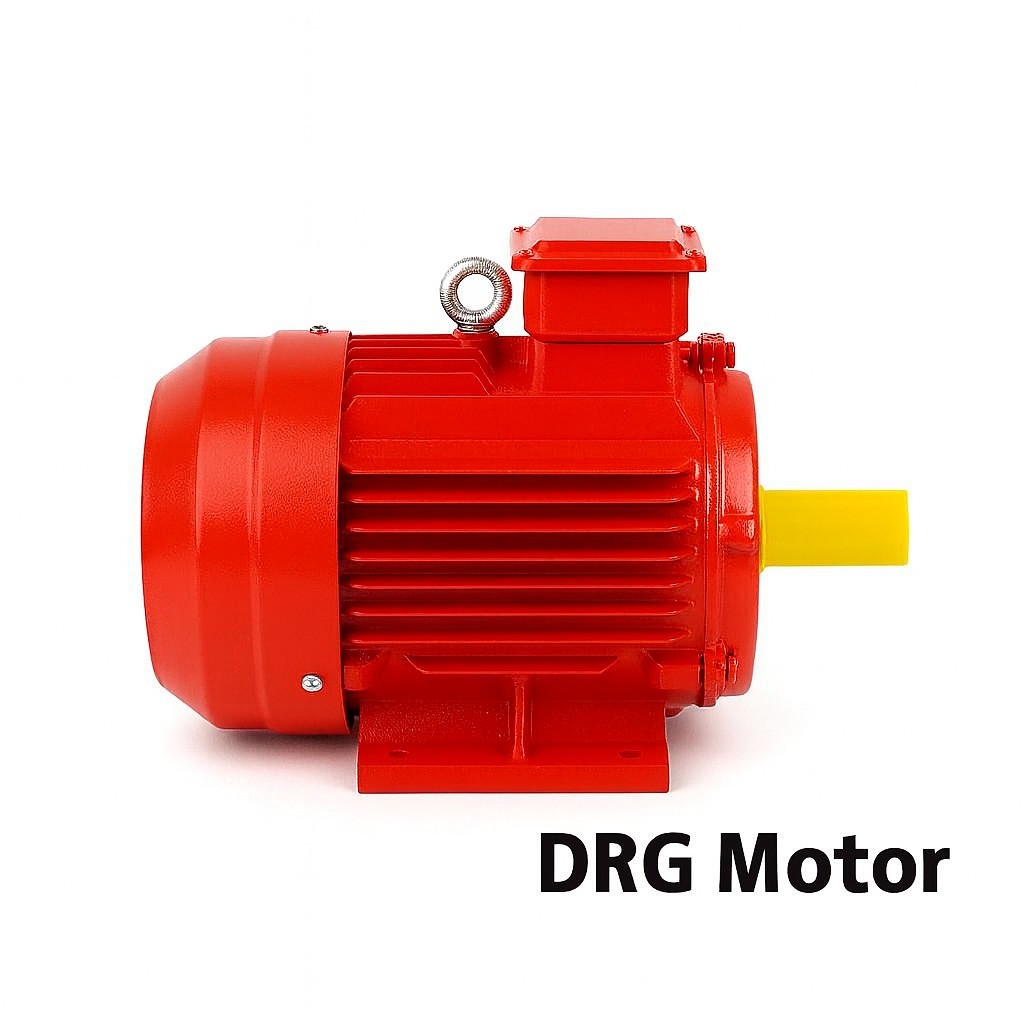
The frame is normally cast iron. Against aluminium it damps high-torque vibration, spreads heat and takes impact better. In crusher and mill work the integrity of the frame is a main factor in service life; solid bearing housings and reinforced mating faces stop deformation under sustained load.
Efficiency against the energy bill
Long hours without a break are normal here, and energy then dominates lifetime cost. The IE3, IE4 and IE5 classes of IEC 60034-30-1 each cut wasted energy measurably. High efficiency costs more up front, yet on a continuous plant the annual bill shows the difference quickly. Super premium units are the common pick on high-hour crusher and pump drives.
Insulation and ambient conditions
Class F insulation gives winding capability to 155°C and stays safe where ambient temperature runs high. IP55 is the accepted baseline against dust and splashing water; very dusty plants justify a higher degree. The surface-cooled IC411 arrangement passes heat out through the frame fins.
Squirrel cage rotor and duty rating
Most heavy duty machines use a squirrel cage asynchronous rotor. No brushes or commutator wear, so maintenance drops. Slip between rotor and rotating field governs torque production under load, and these designs hold high torque continuously. S1 is the correct duty rating for an uninterrupted line.
Typical service
- Stone crushing and screening: high breakaway torque, abrasive dust
- Concrete plants and mixers: continuous heavy load with varying torque
- Large pump and fan systems: steady load, efficiency first
- Conveyors and production lines: stepped starting, smooth torque transfer
Pole count, output and class are set separately per load curve. Frame options sit under electric motors.
Vibration, bearing life and noise
Vibration eats into service life, both for the motor and for the machine bolted to it. A balanced rotor, machined bearing seats and correct bearing selection limit it at high torque. Misalignment is a frequent cause of early failure: angular deviation between shaft and driven equipment loads the bearings through the coupling, and laser alignment at installation removes it.
Preventing unplanned stoppages
Follow the bearing lubrication intervals, clean dust off the cooling fins, measure insulation resistance periodically. Material building up on the frame blocks heat rejection and lifts winding temperature, so cleaning feeds straight into service life. Watching temperature and current catches a fault before production halts.
Thermal protection and overload
The most common damage mechanism is a winding passing its permitted temperature under overload. PTC thermistors or PT100 sensors in the winding monitor continuously and disconnect at the set threshold; a thermal overload relay watches current and opens the circuit on jamming or phase loss. Phase failure protection is decisive: on a lost phase the motor overheats fast and burns its winding, so the relay is set correctly and tested on schedule.
Before ordering, put the real load curve on paper: breakaway torque, duty ratio, ambient temperature, dust level, mounting from B3, B5 or B14. Correct sizing prevents overload and the efficiency lost to an oversized machine.