 English
 Le français
 Türkçe

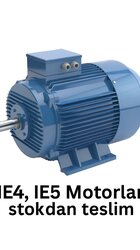
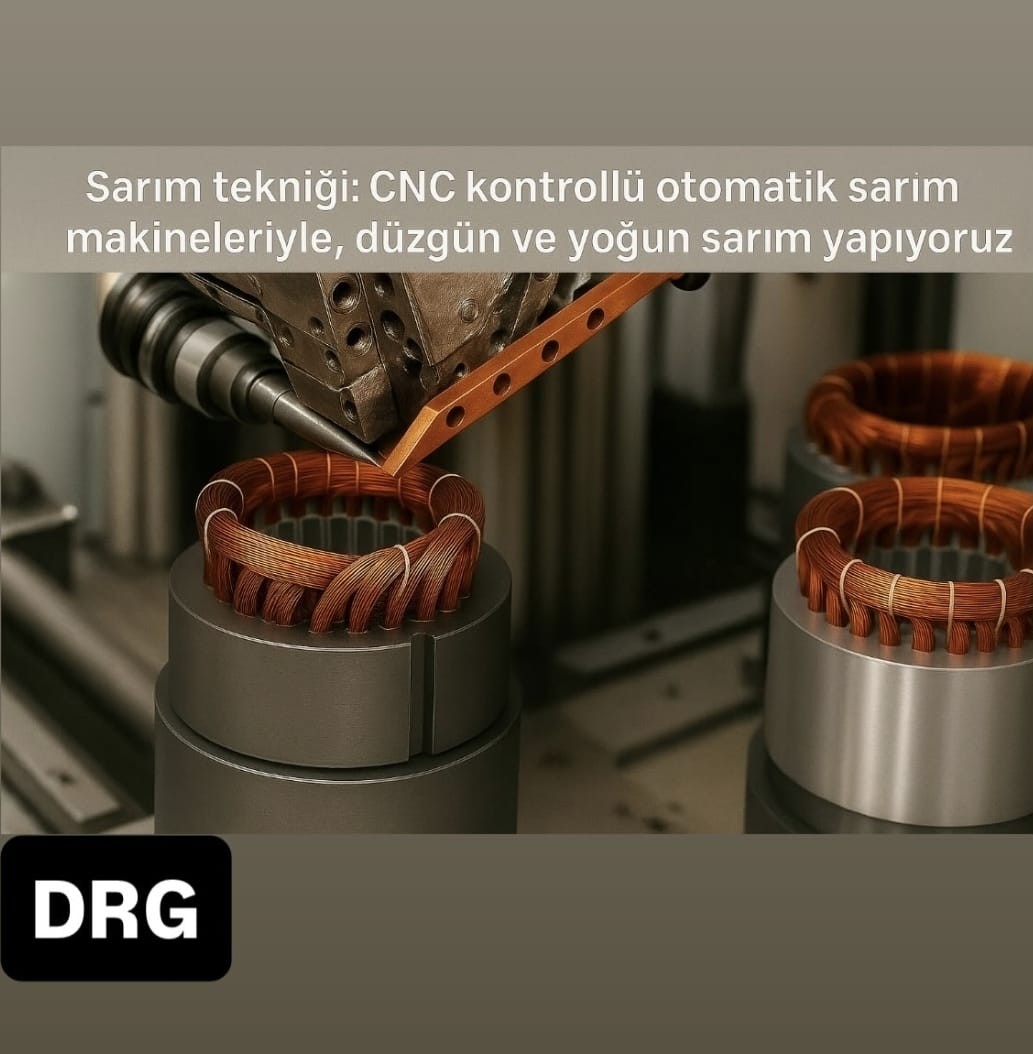

Whatever electricity a factory buys, the bulk of it ends up in its motors. Belt conveyors, screw compressors, process pumps and extraction fans rarely stand still, so the drive specification decides energy cost and environmental footprint more than any other single choice.
Sustainability measured at the shaft
Sustainability here is arithmetic: how much of every kilowatt drawn from the network reaches the shaft. Across a working life, roughly 95 percent of what a motor costs is energy and only 2 to 3 percent the purchase price. A few points between an old IE1 machine and an IE3 or IE4 replacement produce a saving that dwarfs the invoice within a few years of continuous duty.
The steps from IE3 to IE5
Five rungs are defined in IEC 60034-30-1, running from standard through high, premium and super premium to ultra premium. EU ecodesign rules set the minimum at IE3 across most power bands, with larger outputs drifting toward IE4.
- IE1: standard, not specified on new installations
- IE2: high, still common in older plants
- IE3: premium, the threshold of current regulation
- IE4, IE5: lowest loss under heavy duty
Under steady load IE3 usually sits at the balance point between efficiency and cost. Model-by-model comparison is kept on the IE3 electric motor page.
Picking Poles for the Driven Machine
Speed comes from the pole count. On 50 Hz, a 2-pole machine runs near 3000 rpm synchronous, 4-pole 1500 rpm, 6-pole 1000 rpm, 8-pole 750 rpm. Loaded speed falls a little below; the 2 to 5 percent gap is slip, and slip is what lets the machine produce torque. Pumps and fans take 4-pole units; some compressors need a 2-pole design.
Casing, Ingress Rating and Winding Class
A sustainable drive has to last as well as save. Cast iron frames damp vibration and hold thermal stability in heavy industry; aluminium is lighter and cheaper at mid power. IP55 is standard once dust or moisture is present, since it covers jets of water and dust arriving from any direction. Class F insulation, rated to 155°C, leaves a safe margin in hot rooms.
Sizing mistakes
Most production line motors run S1 duty, hours of uninterrupted load. Oversizing is the common error: a machine larger than the job sits on a poor load ratio and power factor drops. Pick a size that keeps the working point in the 75 to 100 percent band of rated output, which is also where bearing and winding life run longest.
Common duties
The range runs from 0.55 kW to 355 kW, standardised for 400 V / 50 Hz. That covers industrial fans, water and wastewater pumps, belt conveyors, screw compressors, crushers and mixers. Breakaway torque, inertia and running hours differ in each case, so all three are weighed together. Mounting follows the interface: B3 foot on a base plate, B5 flange straight to a pump, B14 for the small flange case.
Working out the saving
Put a 75 kW machine on 6000 annual hours. IE2 efficiency around 94 percent against 95.4 percent for IE3 leaves a 1.4 point gap, which at that output and duty is close to 6700 kWh. Priced at an industrial tariff, one machine returns thousands of lira, and dozens of them run in a single plant.
Power factor and network load
Active power efficiency is only part of it. A lightly loaded machine, or one with poor cos φ, draws needless reactive power and wastes transformer capacity. Correct sizing, with cos φ held up where it belongs, cuts line losses and the compensation equipment needed.
Keeping the efficiency
Dirty cooling fins raise winding temperature, which raises resistance and lowers efficiency. Worn bearings add friction loss, and a drifting coupling alignment adds load to the shaft. Cleaning, lubrication and vibration monitoring hold a motor near its original figures for years; a neglected one loses efficiency quietly.
Before the order goes out, read ambient conditions, the annual hour count and the load profile, then match frame, speed and power to what they say. That reading keeps both capital cost and lifetime energy cost down.