 English
 Le français
 Türkçe


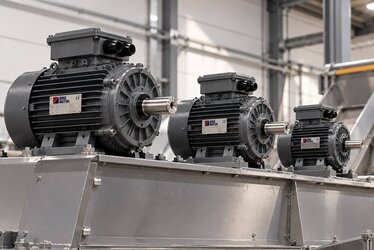
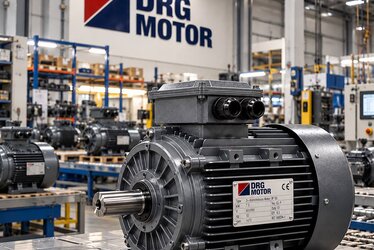
Uninterrupted production rests on motors that were chosen correctly in the first place. Different industries ask for different combinations of power, efficiency and durability, and the machine that suits a packing line will not survive a crusher house. What follows is the technical detail that matters on the plant floor.
What Industry Actually Demands
A motor working inside a factory has to run under sustained load without overheating, tolerate dust and humidity, and last. Standard protection and insulation values are the first thing to read on any offer.
Efficiency Classes and the Bill
Energy is among the largest costs a continuously running plant carries. The efficiency classes set by IEC 60034-30-1, IE3 Premium, IE4 Super Premium and IE5, cut consumption measurably on machines that run all day. Careful winding geometry, plus a rotor in balance, draws less electrical input for identical shaft output. A few points of efficiency, spread across a year, become a number worth noticing.
Durability From the Cast Iron Frame
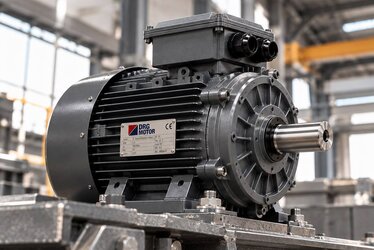
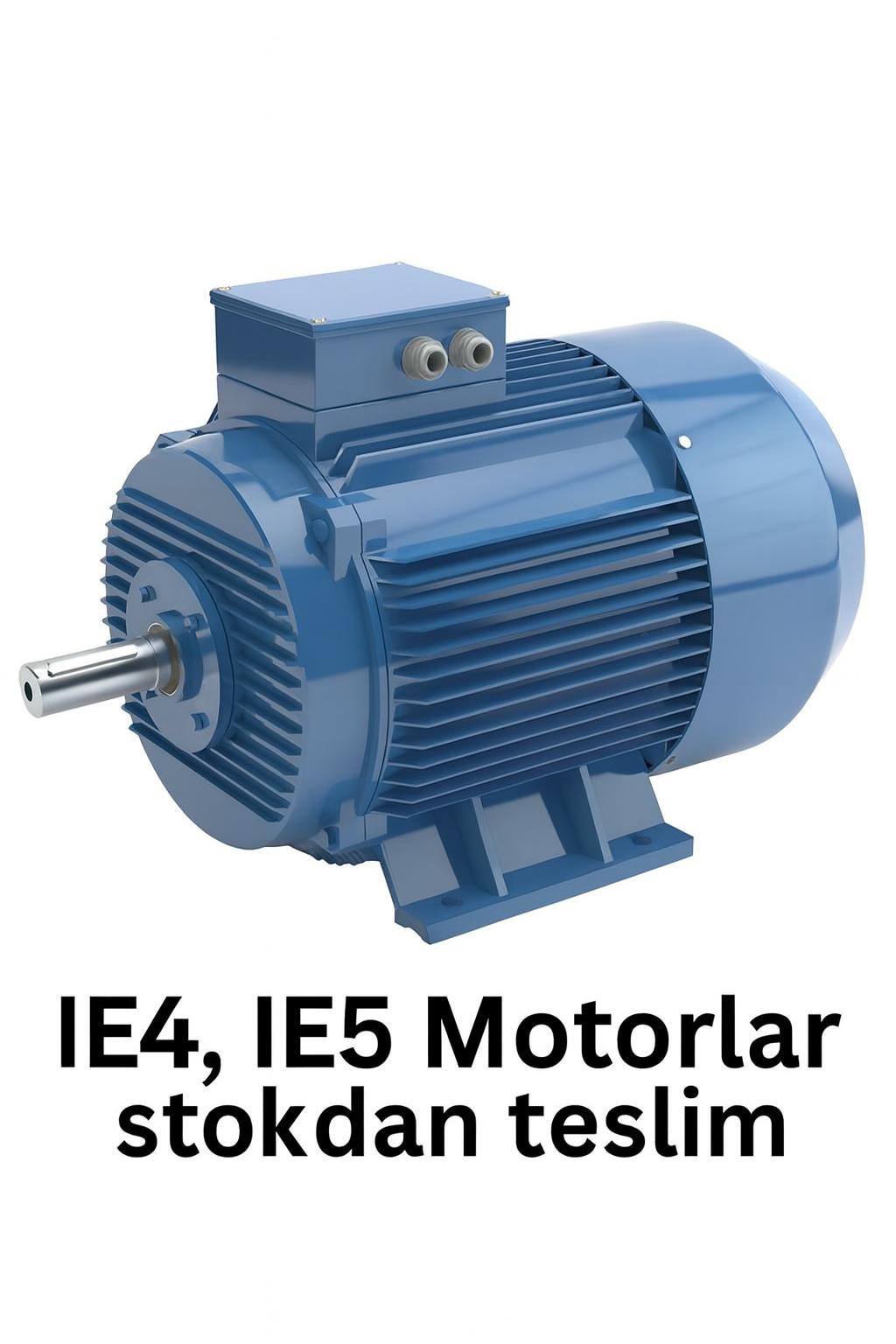
Against aluminium, grey iron wins on three counts that matter here: it damps vibration, it carries heat out through the ribbed casing, and it takes impact. On crushing, screening and concrete batching sites that is what allows a machine to work for years without incident. A rigid frame also extends bearing life.
Low Vibration Is a Mechanical Asset
A well balanced rotor runs quietly, and quiet here means long-lived rather than comfortable. An unbalanced machine chews through its own bearings and then through the equipment bolted to it. Dynamic balancing protects the whole assembly on sensitive pump and fan duties.
Where These Motors Are Found
- Stone crushing and screening plants: high starting torque, sturdy frame
- Concrete batching: continuous load and vibration resistance
- Pump systems: flange mounting and high efficiency
- Fans and ventilation: quiet, balanced running
- Compressors: low consumption on continuous duty
Deciding Power Class and Speed
An oversized machine runs inefficiently at low load; an undersized one strains and cuts its own life short. The number of poles decides how fast it turns, with 3000, 1500 and 1000 rpm the common results. Selecting the right combination within the 0.55 to 355 kW band, matched to what the driven machine actually demands in newton-metres and rpm, raises both energy efficiency and machine life.
Protection and Insulation on the Shop Floor
Industrial air is usually some mixture of dust, moisture and heat, and in those conditions the protection and insulation classes decide the service life outright. IP55 closes the machine against splashing water and dust ingress, which is what makes it usable on dusty production sites. F class insulation at 155 °C preserves the thermal safety margin of the winding when the ambient climbs.
Mounting Type and Fit
Whether a motor drops onto an existing machine without argument comes down to the mounting arrangement. Foot mounted B3 suits belt and pulley transmission, flange mounted B5 bolts directly onto gearboxes and pumps, while the small flange B14 is for compact machines. The wrong choice means an adaptor or a new baseplate, adding cost and days to the installation.
Putting Numbers on the Efficiency Gap
Take a 30 kW compressor motor running 20 hours a day, 330 days a year. An IE2 machine sits near 91 percent efficiency while an IE4 reaches about 94 percent. Those three points, at that intensity of use, amount to tens of thousands of kilowatt-hours across the year, closing the price gap at purchase in short order.
Commissioning and the First Run
The life of a correctly chosen motor begins with the way it enters service. Terminals wired correctly, direction of rotation verified, axial alignment with the coupled equipment set, and current readings watched during the first run. Poor alignment or a reversed phase connection can start bearing and winding damage on day one, long before anyone suspects the motor itself.