 English
 Le français
 Türkçe

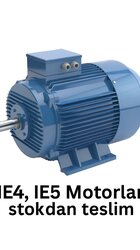
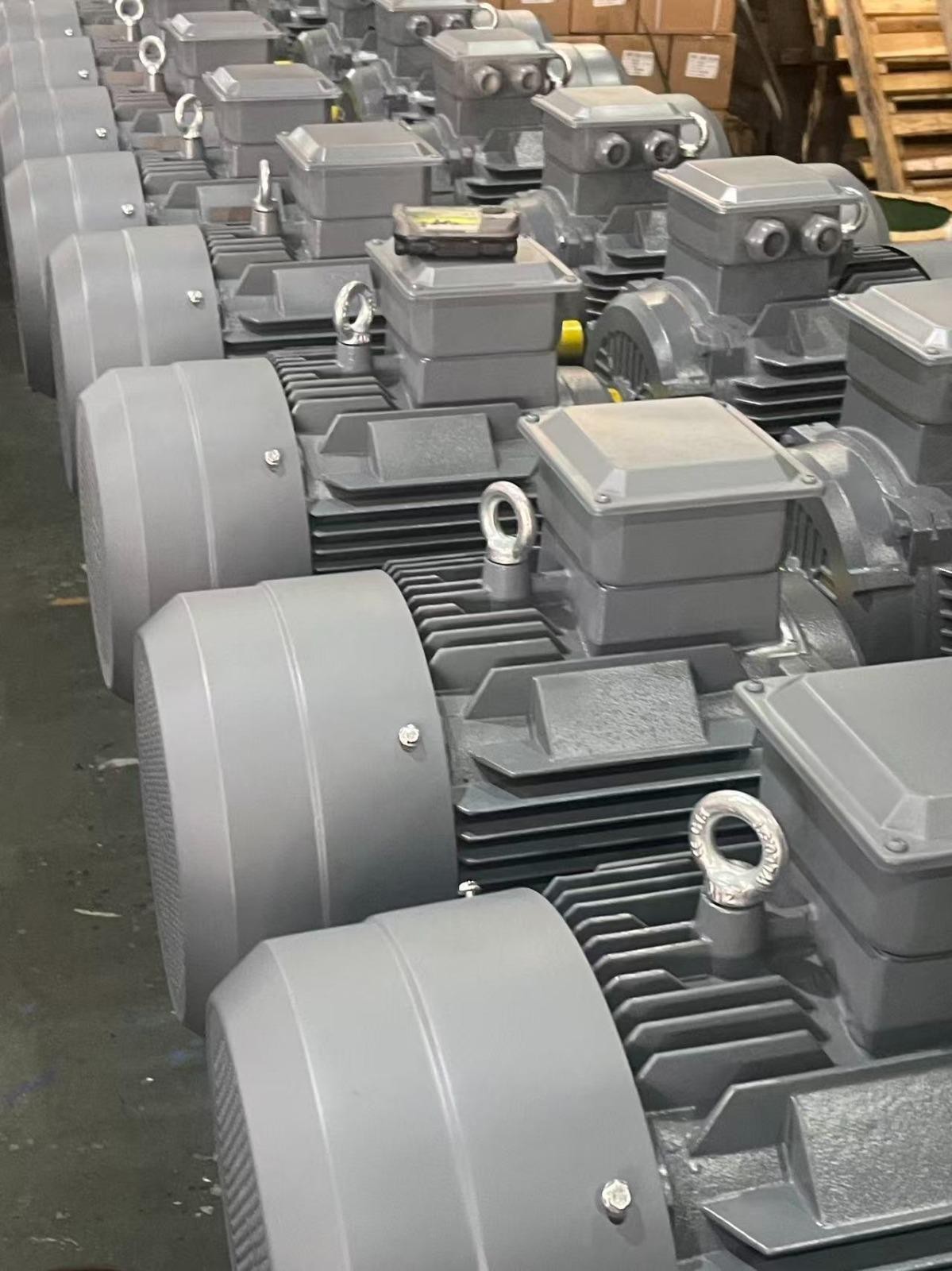

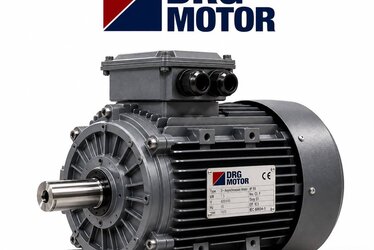
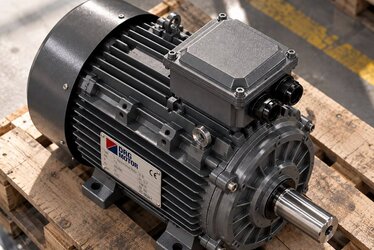
The energy class on a nameplate answers one question: how much electricity the machine burns to do the same job. IE3, IE4 and IE5 mark the efficiency steps of asynchronous motors, and the choice reshapes the monthly bill along with how the plant loads its supply.
What the Energy Class Tells You
Graded under IEC 60034-30-1, efficiency sets mechanical output at the shaft against the electrical input taken from the supply. IE3 is premium, IE4 super premium, IE5 ultra premium. Every rung above means less loss for the same output and a lower current draw. The standard sets a separate minimum threshold for every rating from 0.55 kW to 355 kW, per pole count and per supply frequency.
- IE3, premium: the legal floor across many power bands
- IE4, super premium: the step for lines that run continuously
- IE5, ultra premium: usually an inverter-supported synchronous architecture
Efficiency Level Sets the Operating Cost
Across a working life the electricity bill dwarfs whatever the machine cost to buy. Where the drive never stops, that bill dominates ownership cost, so the efficiency class becomes a budget decision. Moving up a class raises the initial spend, and high running hours close the gap.
Speed or Torque
Pole count decides rated speed as firmly as the class decides losses. A 2-pole motor turns near 3000 rpm, a 4-pole near 1500 rpm and a 6-pole near 1000 rpm. High-speed pumps and compressors take two poles, balanced applications take four, and low-speed loads that demand torque take six.
Mechanical Build and Protection
New-generation efficient motors share a common mechanical baseline. IP55 is the usual protection level, keeping out dust and sprayed water. Insulation is class F at 155 °C, with the temperature rise held down to extend winding life. Duty type is S1, continuous. Frames come in cast iron or aluminium; heavy industry picks cast iron for vibration and impact resistance. Mounting is B3 foot, B5 flange or B14 small flange.
The Arithmetic of the Saving
Numbers settle the argument. Take a 45 kW motor running 6000 hours a year, at 94.6 percent for IE3 and 95.6 percent for IE4. The IE4 machine draws 45 / 0.956, about 47.07 kW; the IE3 machine draws 45 / 0.946, about 47.57 kW. That 0.5 kW gap is roughly 3000 kWh a year. The return grows with both power and running hours, so the calculation is repeated for each application rather than generalised.
Managing Energy with a Drive
A frequency inverter sets speed against demand instead of holding the motor at one point. Where flow is throttled today, cube-law behaviour means a modest speed cut leaves a far smaller shaft power demand, so the partial-load hours are where an IE4 or IE5 machine earns most. Such a motor on an inverter collects the high nominal efficiency and the speed-control saving at the same time. Motor current, cable distance and harmonic effects are assessed together when the drive is sized. The architectural differences are covered in our asynchronous motor article.
Keeping the Efficiency You Paid For
A nameplate value survives only with maintenance behind it. Greasing bearings on schedule limits friction loss, and clearing dust from the cooling cover prevents overheating. Periodic insulation resistance measurement catches moisture and ageing early, while vibration monitoring exposes misalignment and bearing wear in time.
Grid Behaviour and Power Factor
Power factor deserves the same attention as efficiency. Running a motor well below its rated load pushes cos φ down and pulls more reactive power off the distribution network. Rating the machine for the torque it genuinely sees keeps active efficiency and cos φ high; on a 400 V / 50 Hz supply, compensation balances whatever reactive load remains.
Before ordering, put four figures on the table for each drive: hours run per day, the load ratio it averages, whether an inverter will be used, and the supply voltage. The class that fits falls out of those four numbers.