 English
 Le français
 Türkçe

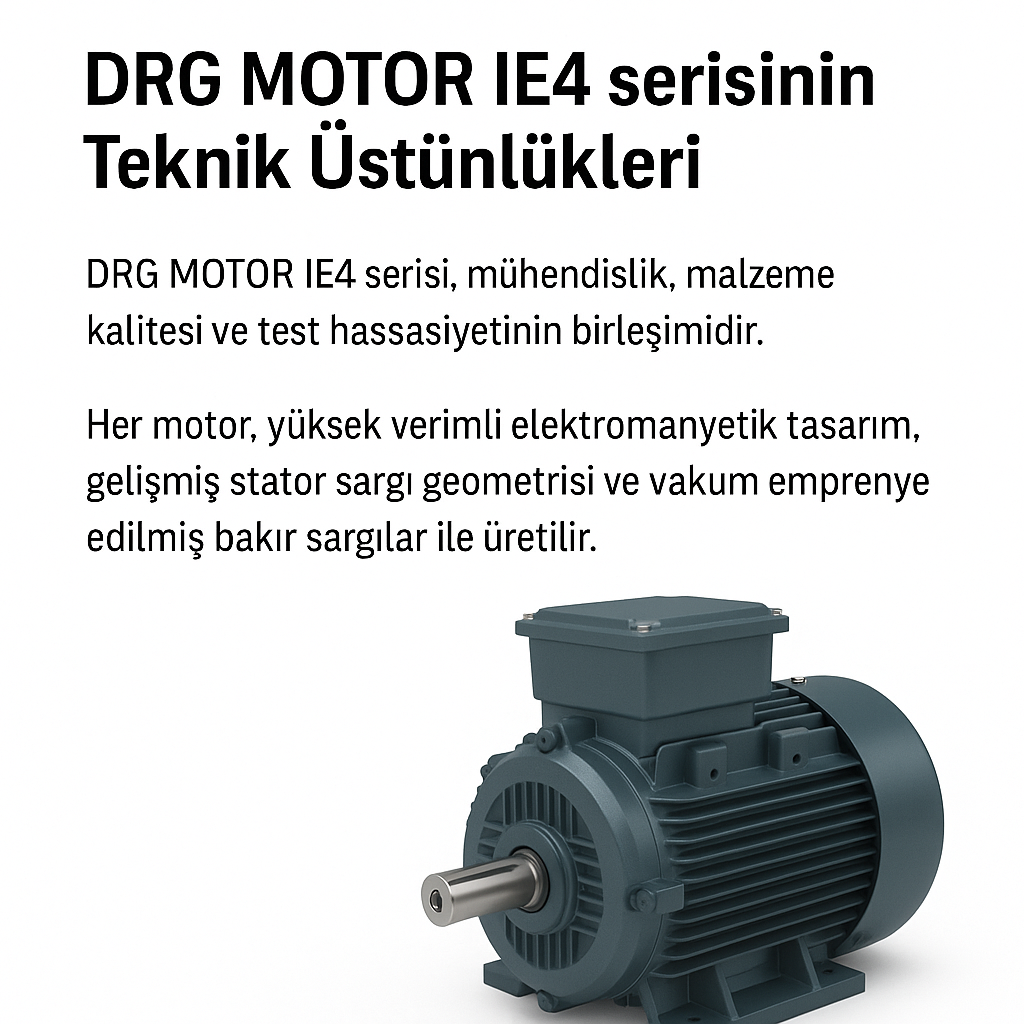

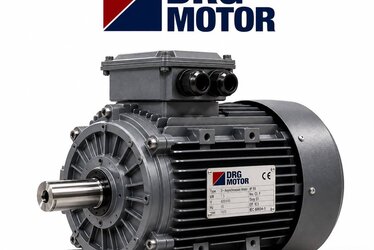
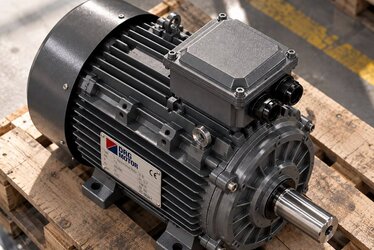
Over its working life a motor spends several times its own purchase cost on electricity, which turns the energy class from a technical footnote into a competitive question. Industry, agriculture, irrigation and automation buy the same asynchronous machines; what separates their operating costs is the efficiency class cast into the nameplate.
What the classes mean
IEC 60034-30-1 sorts machines into efficiency classes running IE1 to IE5, and each step delivers equal work at lower loss. IE3 premium is the mandatory floor in most industrial applications; IE4 super premium produces a visible saving in shift-working plants; IE5 targets the lowest loss level and matters in energy-intensive processes. Class to class, the difference is a percentage reduction in loss, and it lands on the electricity bill.
What high efficiency returns
Raising the class means more of every kilowatt-hour becomes mechanical power. The percentages look small until they meet a machine running 16 to 24 hours a day. On a continuous pump or fan, the extra purchase cost of a higher class is often covered by energy saving inside a year.
Steady performance
Efficiency here does not cost performance. Much of it comes from optimising the squirrel cage rotor: better stator lamination, a more conductive cage and a tighter air gap cut magnetic and electrical loss, so more drawn energy becomes shaft power and less heat. Keeping slip low holds speed under load. With 2, 4 and 6-pole options the speed the application needs, 3000, 1500 or 1000 rpm, is matched rather than approximated.
Frame options
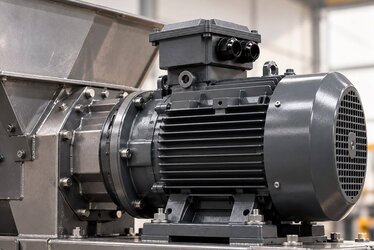
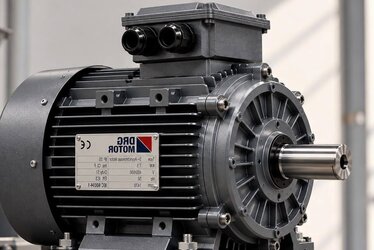
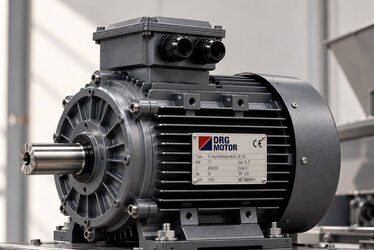
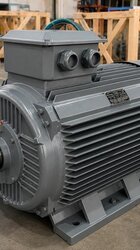
At small and medium outputs the aluminium frame stays light and goes in quickly. In heavy industry grey cast iron absorbs impact and damps vibration, which is what produces long life. Water jets and dust are held off by IP55, while F class insulation keeps the windings serviceable when they run hot.
Sector by sector
- Industry: production lines, conveyors, compressors, process equipment
- Mining and aggregate: crushing plants, breakers, screening systems
- Agriculture: deep well pumps, irrigation lines, transfer systems
- Automation: fans, pumps, variable speed process applications
In each case the pairing of output, speed and efficiency class governs both energy use and equipment life. Technical background sits under asynchronous AC motors.
Thermal protection
Overheating shortens motor life more than anything else. Quality components and thermal protection hold winding temperature inside safe limits and prevent early ageing of the insulation. Machines fitted with PTC thermistors protect the circuit under overload, guarding both the machine and the line it feeds, which is what makes long service possible even in S1 continuous duty.
The saving from one class step
A 30 kW motor running 16 hours a day, roughly 5000 hours a year, cuts its losses measurably moving from IE3 to IE4. That reduction becomes thousands of kilowatt-hours annually, and against the current tariff the extra purchase cost returns quickly. The more shifts a plant runs, the faster it arrives.
Pairing with a frequency inverter
Savings grow further when a high-efficiency machine runs under an inverter. Where pump and fan load varies, adjusting speed to demand beats fixed-speed running by a wide margin. Inverter-compatible winding insulation, and forced cooling where needed, let the motor work safely at low speed.
Field conditions
Agricultural motors run long hours across a season, often outside peak tariff windows. On deep well pumps the efficiency class effectively sets the season total, since the same flow is delivered on less electricity. IP55 protection, backed by class F insulation, holds the pump motor safe in dusty, damp field conditions.
Match the class to running hours: IE3 serves a machine that only runs briefly each day, while continuous pumps and process drives repay IE4 or IE5 quickly. Annual hours, average load ratio and tariff are the three figures to weigh.