 English
 Le français
 Türkçe

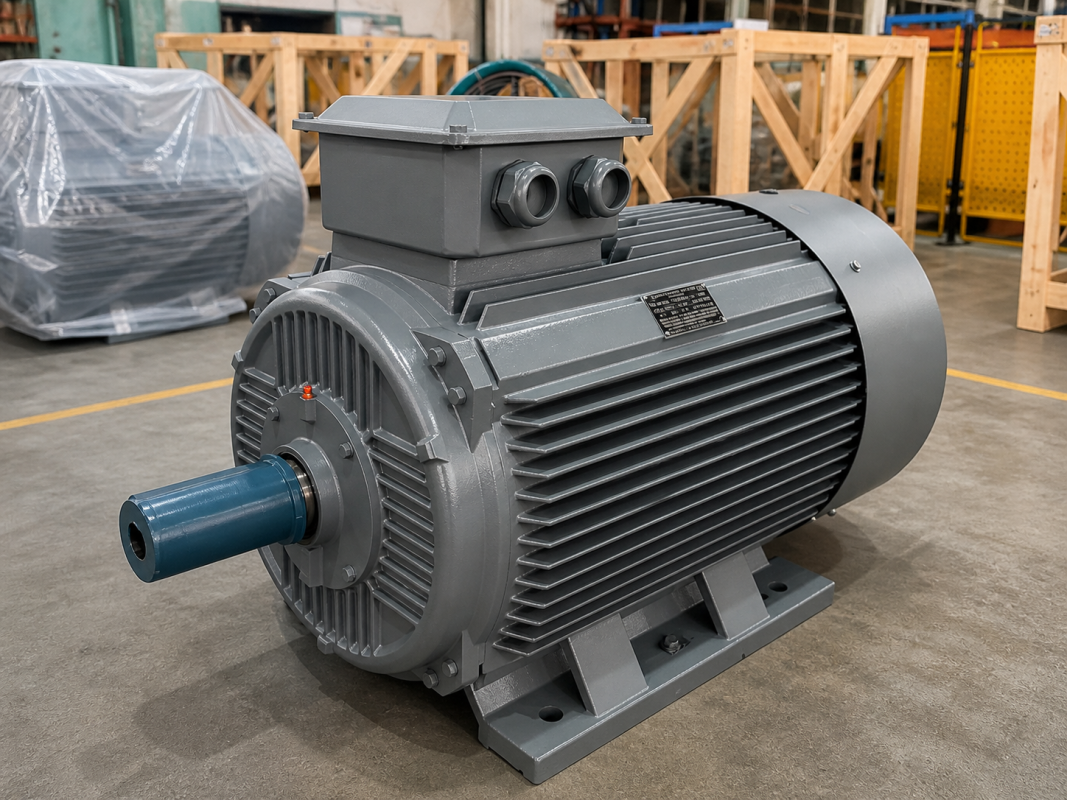

Frequency inverters can slow an electric motor down, and they can also push it above its rated speed. However, making a motor turn faster is not simply a matter of raising the frequency; every motor has a mechanical overspeed limit. Going beyond this limit directly strains the centrifugal stresses in the rotor, the bearing life and the balancing quality. In this article we look at the overspeed capability of electric motors, the constant-power region, the mechanical limits and how the safe overspeed limit is determined. Two of our articles are important companions: pole count and speed to understand the source of speed, and power, torque and speed relationship to see the relationship between speed and torque.
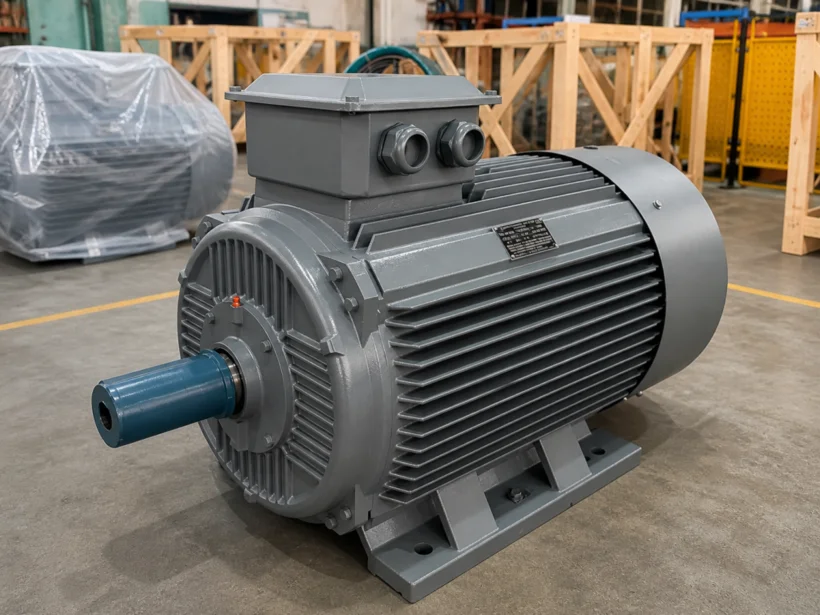
What Is Overspeed?
Overspeed is the situation in which a motor is turned above its rated speed. This is most often done deliberately by going above the rated frequency of the frequency inverter. When some applications require a higher speed, the motor is run at overspeed in the constant-power region. However, this operation has a mechanical upper limit, and this limit must definitely be known.
Rated Speed and Above
The rated speed of an induction motor is determined by the pole count and the supply frequency. When the inverter frequency is lowered below the rated value, the motor slows down; when it is raised above it, the motor speeds up. Below the rated speed the motor can deliver constant torque, while above it the motor enters the constant-power region and torque falls. This transition forms the basis of overspeed operation.
The Constant-Power Region
Above the rated speed the motor can maintain its power, but the torque decreases in inverse proportion to speed. This is called the constant-power region. That is, the motor turns faster but produces less torque. How much torque the application needs in this region determines whether overspeed is possible. We examined the details of the power-torque-speed relationship in our article on the power, torque and speed relationship.
Rotor Centrifugal Stress
The real mechanical limit of overspeed is in the rotor. The rotating rotor is subjected to a centrifugal force that increases as speed rises, and this force grows with the square of speed. That is, when the speed doubles, the centrifugal stress quadruples. This stress strains the strength limit of the rotor material and is the most critical constraint of overspeed.
Why Is Centrifugal Force So Important?
The conductors, short-circuit rings and lamination stack inside the rotor try to be flung outward at high speed. The centrifugal force strains the bonds that hold these parts in place. Beyond the design limit this force threatens the integrity of the rotor. For this reason the overspeed limit is not an arbitrary number but a safety value determined by the strength of the rotor.
The Bearing Limit
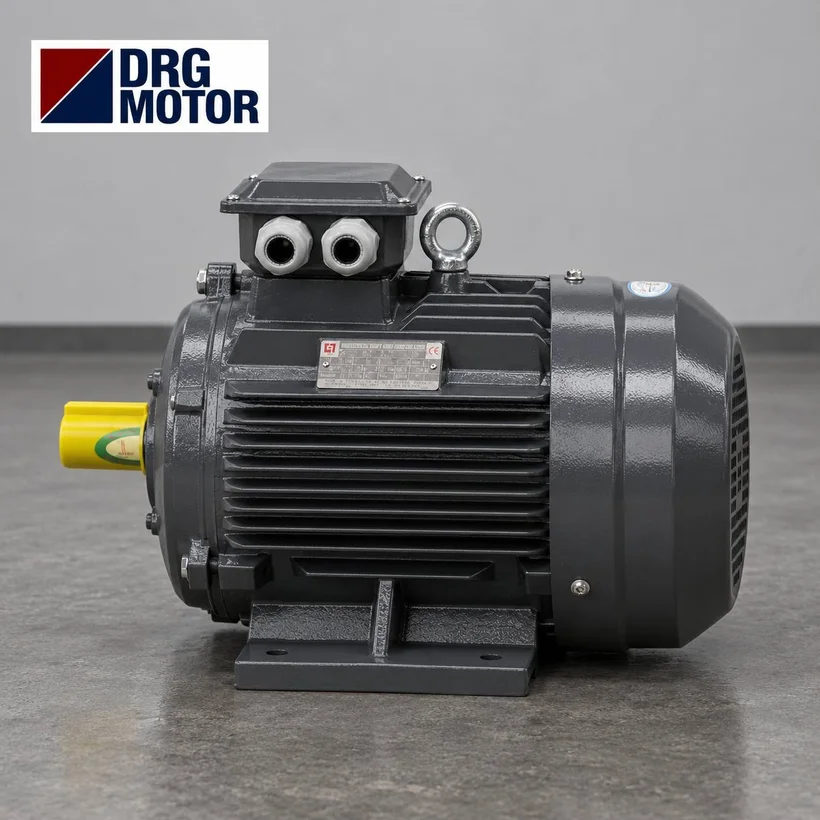
At overspeed the rotor and the bearings are strained together. Every bearing has a speed limit at which it can run safely; when this limit is exceeded, the oil film breaks down, the temperature rises and the bearing fatigues early. In high-speed applications the lubrication type and bearing selection are among the decisive factors of overspeed. A standard-lubricated bearing can be insufficient at very high speed.
Balancing Quality
As speed increases, even the smallest imbalance in the rotor turns into large vibration forces. The force created by imbalance also increases with the square of speed. For this reason a rotor that will run at overspeed must be balanced to a higher balancing quality. Insufficient balancing leads to vibration, noise and bearing wear at overspeed.
Factors Determining the Overspeed Limit Table
The table below summarises the main factors determining a motor's safe overspeed limit and their effects.
| Factor | Effect on Overspeed |
|---|---|
| Rotor centrifugal stress | Increases with the square of speed; the most critical mechanical limit. |
| Bearing speed limit | Limited by lubrication and bearing type. |
| Balancing quality | Determines vibration at high speed. |
| Constant-power region | Torque falls at overspeed, power is maintained. |
| Cooling | The motor's own fan behaves differently at overspeed. |
| Load type | The torque needed at high speed determines feasibility. |
| Shaft and coupling | The critical speed may be approached at high speed. |
The Safe Overspeed Limit
For every motor the manufacturer determines a safe maximum speed. This limit is calculated by evaluating rotor strength, bearing limit and balancing quality together. Before an overspeed application this limit must definitely be confirmed. Going beyond the limit means exceeding the safe operating limits of the motor.
Click to see current electric motor prices and order nowSEE PRICES →
Pole Count and Overspeed Relationship
The base speed of a motor is determined by the pole count. Since low-pole-count (high-speed) motors already run at high speed, their overspeed margins can be more limited. High-pole-count motors, by contrast, can have a wider overspeed range. We explained this relationship in our article on pole count and speed.
Cooling Behaviour at Overspeed
A motor cooled by a fan that turns with its own shaft produces more air movement at overspeed; however, this is not always an advantage. Although the torque falls in the constant-power region, the losses can increase and the cooling requirement changes. In overspeed applications the thermal behaviour of the motor must be re-evaluated together with the speed.
Shaft Critical Speed
Every rotating shaft reaches its natural vibration frequency (critical speed) at a certain speed. As this speed is approached, vibration increases rapidly. In overspeed applications the operating speed must be kept far from this critical speed. Shaft and coupling design play an indirect but important role in determining the overspeed limit.
The Decisive Role of Load Type
The feasibility of overspeed depends on the character of the load. In variable-torque loads such as fans and pumps, the torque requirement already increases at high speed, and this can conflict with the nature of the constant-power region. In constant-torque loads, since torque falls at overspeed, the load may not be carried. For this reason the overspeed decision is made together with the load type.
Overspeed Control with an Inverter
Overspeed is mostly provided with a frequency inverter. The inverter speeds the motor up by going above the rated frequency; however, since voltage no longer increases in this region, the motor enters the constant-power region. The inverter's overspeed parameters must be set within the safe limit of the motor. Entering the overspeed limit correctly into the inverter protects both the motor and the application.
Vibration Monitoring
In a motor running at overspeed, vibration is the best indicator of health. Higher-than-expected vibration signals a balancing problem, bearing strain or that the critical speed is being approached. For this reason vibration monitoring is an inseparable part of safe operation in overspeed applications.
Lubrication and High Speed
At high speed, bearing lubrication becomes more critical. The type, quantity and renewal interval of the grease directly affect bearing life at overspeed. Standard lubrication can be insufficient at very high speeds and special lubrication solutions may be required. For this reason the lubrication plan is set up from the outset in an overspeed application.
Field Weakening Region
Above the rated speed the motor runs in a region called field weakening. Since the magnetic field weakens gradually in this region, the torque the motor can deliver also falls. Field weakening is the physical basis of the constant-power region and determines how far overspeed makes sense. In applications with a high torque requirement, this region remains narrow.
Efficiency at Overspeed
At high speed the motor's losses change; while iron losses increase, mechanical losses also rise. This means that efficiency at overspeed can be different from that at the rated point. The application's operating point must be selected with this change in mind, both for performance and for energy.
Noise and Overspeed
As speed increases, aerodynamic and mechanical noise also increase. Fan noise, bearing noise and air flow rise noticeably at overspeed. In environments sensitive to noise, the overspeed application must be evaluated from this angle as well. A sudden change in noise can also be a herald of a mechanical problem.
The Importance of Nameplate Values
Overspeed evaluation always starts with the values on the motor nameplate and data sheet. The rated speed, power and maximum safe speed information determines the framework in which the application will be designed. An overspeed application made without knowing these values is built on guesswork and is risky; a design made with the correct data, by contrast, is both safe and predictable.
Application Examples of Overspeed
In some machine tool, fan and special-machine applications, a need arises to run slightly above the rated speed. In these cases the motor is selected within the safe overspeed limit and with a suitable load type. Overspeed, when correctly planned, gives the application flexibility; when incorrectly planned, it creates mechanical risk.
Overspeed and Warranty
Running a motor within its safe overspeed limit keeps it within the warranty. Mechanical damage that occurs in motors strained beyond the limit may fall outside the warranty. For this reason an overspeed application must be made within the limits stated by the manufacturer.
Structural Integrity and Safety
Overspeed is a performance question and a safety question. The integrity of a rotor turned beyond the design limit is endangered, and this creates a serious safety risk. For this reason the overspeed limit must never be exceeded arbitrarily; the application must always be planned within the safe limit.
Overspeed Testing
Manufacturers can test motors suitable for overspeed for a short time at a certain test speed. This test confirms that the rotor and the mechanical components turn safely within the design limit. The test speed is different from the continuous operating speed; continuous operation is always below the safe limit, while the test is a short-term verification. This distinction should not be confused when reading overspeed values.
Continuous and Momentary Overspeed
Overspeed is spoken of in two different contexts: the maximum speed at which the motor can run continuously and the momentary speed it can withstand for a short time. Continuous overspeed is the upper limit at which the motor can run safely for years. Momentary overspeed is only for short, exceptional situations. When designing an application, it must be clear which value is taken as the basis.
The Effect of Rotor Design
The diameter, material and internal structure of the rotor determine the maximum speed it can withstand. Since large-diameter rotors reach a higher peripheral speed at the same rpm, their centrifugal stress is also higher. For this reason the overspeed margin of large motors is usually more limited. Rotor design is the fundamental determinant of the overspeed limit.
Overspeed and the Driven Machine
Overspeed reaches past the motor, out to the machine connected to it. The driven equipment must also withstand high speed; otherwise the weak link of the system becomes the connected machine. When planning overspeed, the motor and the load must be evaluated together, as a system.
Overspeed in Industrial Applications
In many industrial applications, running the motor slightly above its rated speed is desired to increase production speed or to adapt to a changing process. This flexibility can be safely provided with the right motor and the right inverter. For an overview of how DRG's broad motor range is selected according to the application, our article on industrial electric motors is a useful guide.
Speed, Peripheral Speed and Size
At the same rpm, the rotor of a small motor reaches a lower peripheral speed than that of a large motor. For this reason small motors usually have a wider overspeed margin. When speed is evaluated not on its own but together with rotor diameter, the real limit of overspeed emerges.
Overspeed and Base-Speed Selection
If a high speed is needed in an application, the question of whether it is better to select a low-pole-count (high-speed) motor from the start or to run a standard motor at overspeed gains importance. Most often, selecting the correct base speed is safer and more efficient than forcing the motor into overspeed. This decision is directly linked to the pole count and speed relationship.
Common Mistakes
The most common mistake is raising the inverter frequency without considering the mechanical limit of the motor. The second is forcing operation with insufficient torque in the constant-power region by ignoring the load type. The third is neglecting the balancing and lubrication requirements at high speed. These mistakes are the most frequent sources of failure in overspeed applications.
Braking and Deceleration
The inertia of a rotor turning at overspeed is high; this also makes deceleration harder. In applications that require fast stopping from high speed, the braking strategy must be planned from the outset. The inverter's capacity to slow down with regenerative braking or a brake resistor is an inseparable part of the overspeed application and directly affects mechanical safety.
Monitoring and Early Warning
In overspeed applications, monitoring vibration, temperature and current is the foundation of safe operation. A sudden change in these three parameters is an early herald of a mechanical problem. Regular monitoring protects both the motor and the driven machine, preventing unplanned and risky stoppages.
Power, Torque and Speed Must Be Considered Together
The overspeed decision is never made on its own; power, torque and speed must be evaluated together. The application is designed knowing that at high speed torque falls while power can be maintained. Setting up this triangle correctly ensures that overspeed is both safe and efficient. For details you can see our article on the power, torque and speed relationship.
Overspeed Evaluation in DRG Motors
DRG induction motors are evaluated according to the speed and load requirement of the application; in projects requiring overspeed, rotor strength, bearing limit and balancing are addressed together to determine a safe operating window. If your need is a speed above the rated value, we provide guidance so that you select the right motor together with the safe overspeed limit.
Speed Has a Limit Too
It is possible to make a motor turn faster, but this is always an engineering decision: rotor strength, bearing limit, balancing and load type are jointly decisive. An application designed within the safe overspeed limit preserves both performance and safety. As DRG Motor, we are here to determine together the right motor and the safe overspeed limit for your high-speed application; share your project and let us set up the most suitable solution.
DRG Electric Motors Suited to This Topic
The models below are available in the DRG Motor online shop. Click a model code to see its technical data, dimensions and current price, and order right away.
- DRG-132S-4 – 5.5 kW – 1460 rpm – cast iron frame
- DRG-160L-4 – 15 kW – 1465 rpm – cast iron frame
- DRG-200L-4 – 30 kW – 1475 rpm – cast iron frame
- DRG-225M-4 – 45 kW – 1485 rpm – cast iron frame
Click to see current prices of all electric motors and order nowSEE PRICES →