 English
 Le français
 Türkçe

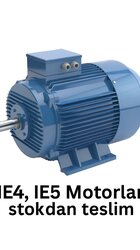
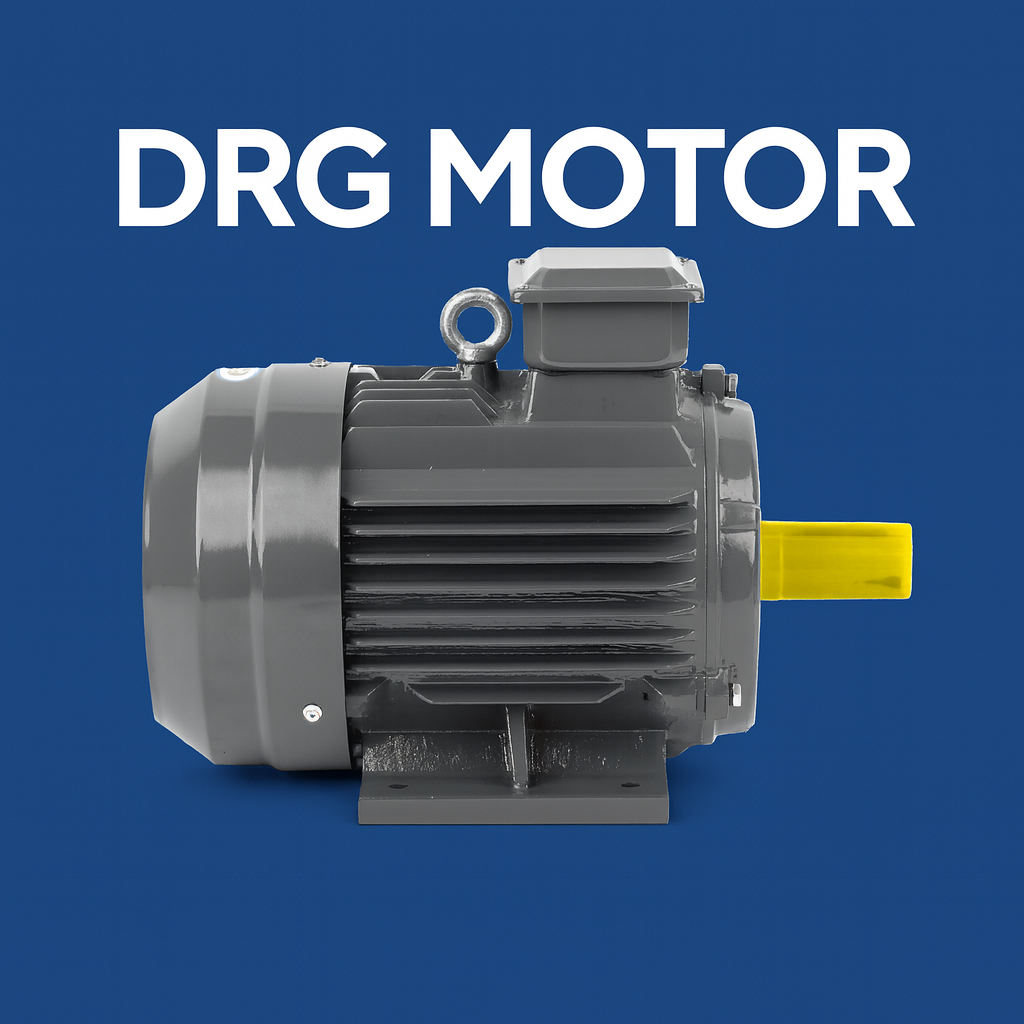

In heavy industry a drive usually succeeds or fails in the first second. A loaded conveyor pulling away, a crusher standing full of stone, a mixer buried in thick paste: each needs real turning force at very low speed. Two machines can carry the same nameplate power and behave completely differently, because what separates them is the shape of the speed-torque curve.
Torque Comes Before Speed
At the shaft, torque is turning force, measured in newton-metres. Of two motors of equal rating, the slower one produces more. A 22 kW machine gives roughly 140 Nm at 1500 rpm; the same 22 kW at 750 rpm works out near 280 Nm. Where load inertia is large, that second figure decides whether the line moves.
The split between starting torque and pull-out torque matters just as much. In squirrel cage induction machines, starting torque reaches 1.8 to 2.5 times the rated value and pull-out torque 2 to 3 times. High figures there let a motor ride through a load spike instead of stalling.
Reading the Speed-Torque Curve
Follow the curve and the behaviour becomes obvious. From standstill the motor begins at its starting torque, dips slightly as speed builds, rises to the peak known as pull-out torque, and finally settles on the rated point. A high torque design puts that peak higher, so when the load jumps the machine only slows a little and recovers.
Pole Count Buys Torque With Speed
Supply frequency and pole count between them set synchronous speed. On 50 Hz, two poles turn at 3000 rpm, four at 1500 rpm, six at 1000 rpm and eight at 750 rpm, with the loaded machine running slightly below because of slip.
- 2 pole, 3000 rpm: pumps and high speed fans, low torque duties
- 4 pole, 1500 rpm: the general purpose choice, balanced torque and speed
- 6 pole, 1000 rpm: conveyors and agitators with rising torque demand
- 8 pole, 750 rpm: crushers, mills and geared heavy drives
Multiplying Torque Through a Gearbox
Some loads turn so heavily that shaft torque alone will not move them. A gearbox cuts speed and multiplies torque in the same ratio: a 1:20 reduction gives twenty times the shaft torque at one twentieth of the speed. That is what makes a smooth start possible on mills, granulators and heavy mixers.
Why the Frame Is Iron Here
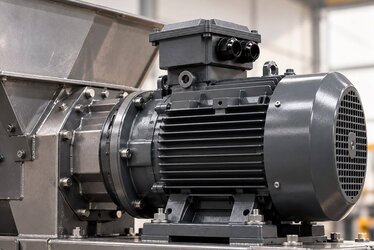
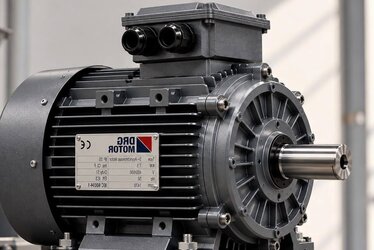
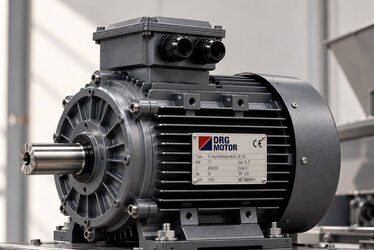
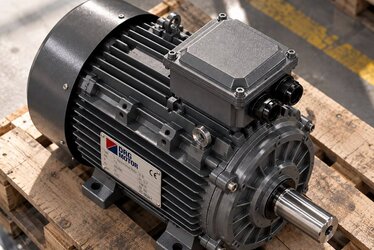
Under high torque the frame carries more than its own weight. Grey iron swallows the vibration a loaded mill throws back, takes the mechanical shock with it, and carries heat out to the casing so the bearing housings do not cook. Aluminium is lighter, but rigidity is what sustained heavy load asks for.
High Torque and High Efficiency Together
Producing torque efficiently is what keeps operating cost down. IEC 60034-30-1 grades machines from IE1 to IE5, and IE3 Premium and IE4 Super Premium are the accepted levels in heavy industry. For a motor working 16 hours a day, around 6000 hours a year, the points gained moving from IE2 to IE3 add up to thousands of kilowatt-hours each year.
Technical Specification
- Power range: 0.55 kW to 355 kW
- Efficiency classes: IE3, IE4, IE5
- Speeds: 750 / 1000 / 1500 / 3000 rpm
- Frame: cast iron on dusty crushing lines, aluminium on light low power drives
- Protection: IP55
- Insulation: F class, 155 °C
- Duty: S1 continuous
- Mounting: B3 foot, B5 flange, B14 face
- Supply: 400 V / 50 Hz
Where High Torque Is Not Optional
- Stone crushing, screening and aggregate plants
- Long, heavily loaded belt conveyors
- Cement, mining and raw material processing lines
- Industrial mixers and kneaders
- Screw and piston compressors
- Geared mills and granulation systems
Settling the Torque Figure
Power alone will not decide this. Work out the rated torque the driven machine needs, the peak demand as it starts, and the daily running time, then read them together. A permanently loaded profile points to S1 duty and a high efficiency class; a violent start points to a high starting torque design.