 English
 Le français
 Türkçe

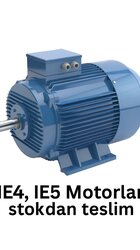
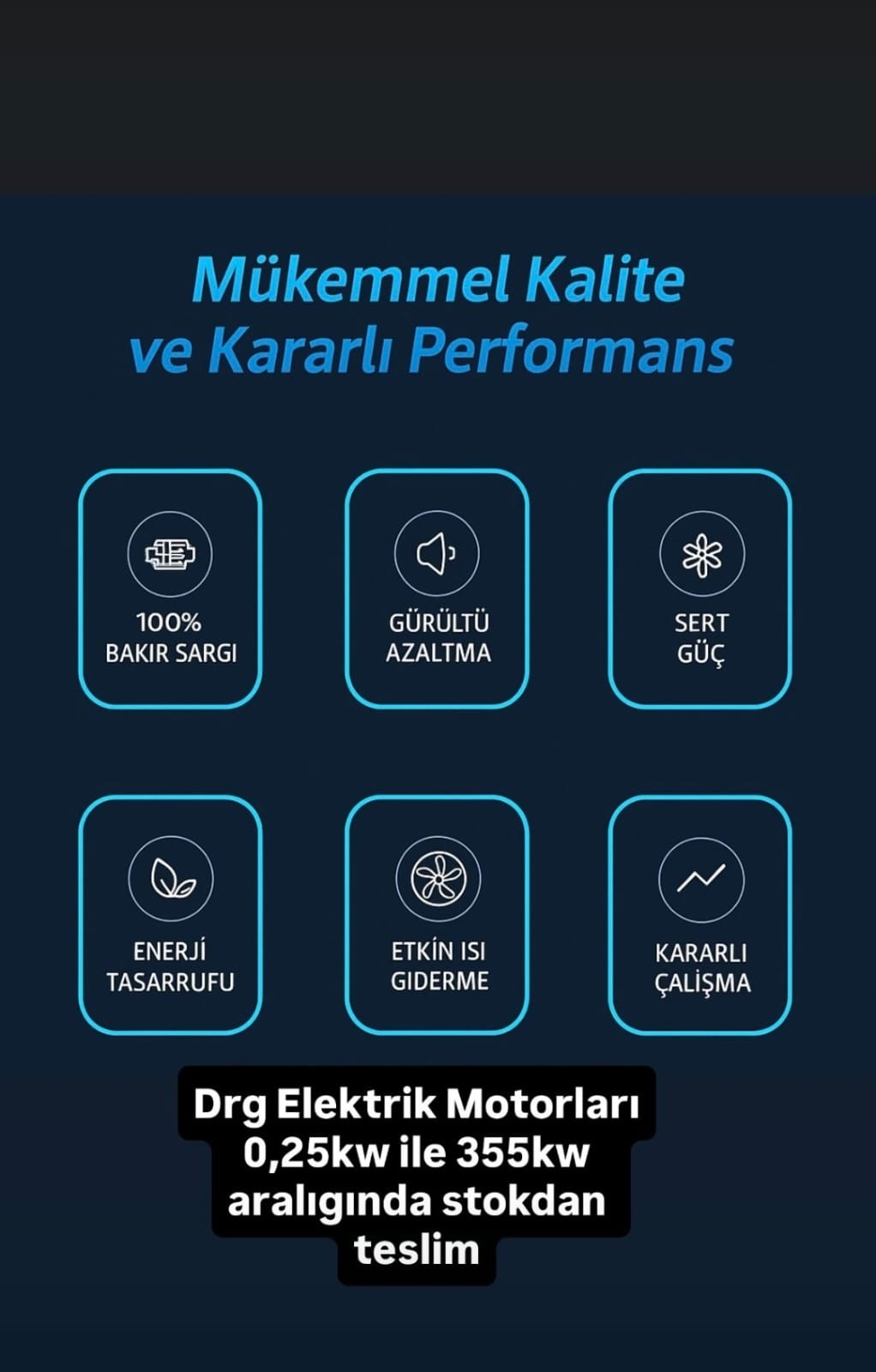

Two figures decide what a motor really costs: the years it survives and the kilowatt-hours it burns while it does. They are closely linked. The same choices that keep a machine cool and mechanically calm, a well chosen frame material plus a high efficiency class, are the ones that keep the meter turning slowly.
What Sets the Service Life
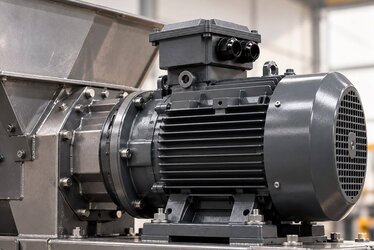
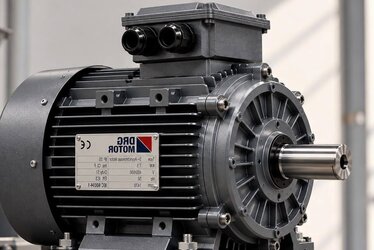
Frame material, winding insulation, bearing quality and the environment decide it together. Under heavy duty with constant vibration, an iron frame soaks up the shock so fatigue cracking comes later; lighter service is fine on aluminium. F class insulation at 155 °C raises the thermal ceiling so the winding does not age early, and IP55 shuts dust and splashed water out of the internals.
- Cast iron frame: long life under vibration and impact
- F class insulation: winding endurance at high temperature
- IP55: safe in locations that are dusty and humid
- Good bearings: low vibration, long bearing life
From IE3 Upward
Across the years a continuously loaded drive stays in service, metered energy runs to several multiples of its purchase price. Savings are therefore determined by the efficiency class that IEC 60034-30-1 defines. IE3 Premium, IE4 Super Premium and IE5 all run at lower loss than IE1 and IE2. A single point of efficiency, at high power and long hours, becomes a visible annual difference on the invoice, which is how the extra purchase cost comes back.
A Worked Example
Consider a 30 kW motor running 16 hours a day, close to 6000 hours a year. Moving from IE2 to IE3 buys only about one and a half percent in efficiency, yet at that duty the annual saving already runs into thousands of kWh. Raise the power or the hours and the gap widens. On continuous production lines the higher class almost always wins the arithmetic.
Sizing Is Also Saving
Size a motor too generously and it sits at low load, where efficiency falls away, and it gets paid for twice over, once on the order and again on every bill. A motor matched to the actual shaft power gives the most balanced result on both sides of the ledger. The same logic governs speed. Pumps and fans usually sit at 3000 or 1500 rpm on two and four poles; mills and conveyors drop to 1000 rpm on six.
Maintenance That Stays Simple
Standard IEC mounting types, B3, B5 and B14, an accessible terminal box and standard bearing sizes shorten both maintenance work and spare part lead time. Regular greasing, clean air inlet grilles and a periodic vibration check are enough to let a motor deliver the life it was designed for.
Choosing Between One Phase and Three
The available supply decides this. Small workshops on a single phase network use single phase induction motors; industrial plant and higher powers run 400 V / 50 Hz three phase as standard. Three phase machines offer better efficiency, lower vibration and longer life, which is why continuous lines specify them.
Flange and Foot Dimensions
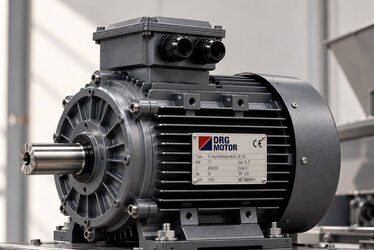
Compatibility with the driven machine starts at the mounting. B3 for foot mounting, B5 for flange connection, B14 for the small front flange on lower powers, all to standard IEC dimensions. Match shaft size, centre height and flange diameter and any future motor swap finishes without an adaptor plate.
Duty Type and Dependability
How long the machine will run changes the selection criteria. Shift-based and continuous lines call for S1 continuous duty; frequent start-stop service brings starting torque and heating behaviour to the front. A motor chosen on the right duty neither overheats nor sits oversized.
Extra Savings Through an Inverter
Pumps, fans and compressors all waste energy when a valve is throttled while the motor spins at fixed speed. A variable speed drive trims the speed to the demand and cuts consumption noticeably. Motors intended for inverter service need winding insulation able to withstand switching voltages, and forced cooling where the speed drops far below nominal.