 English
 Le français
 Türkçe

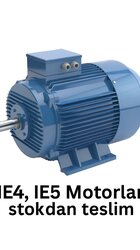
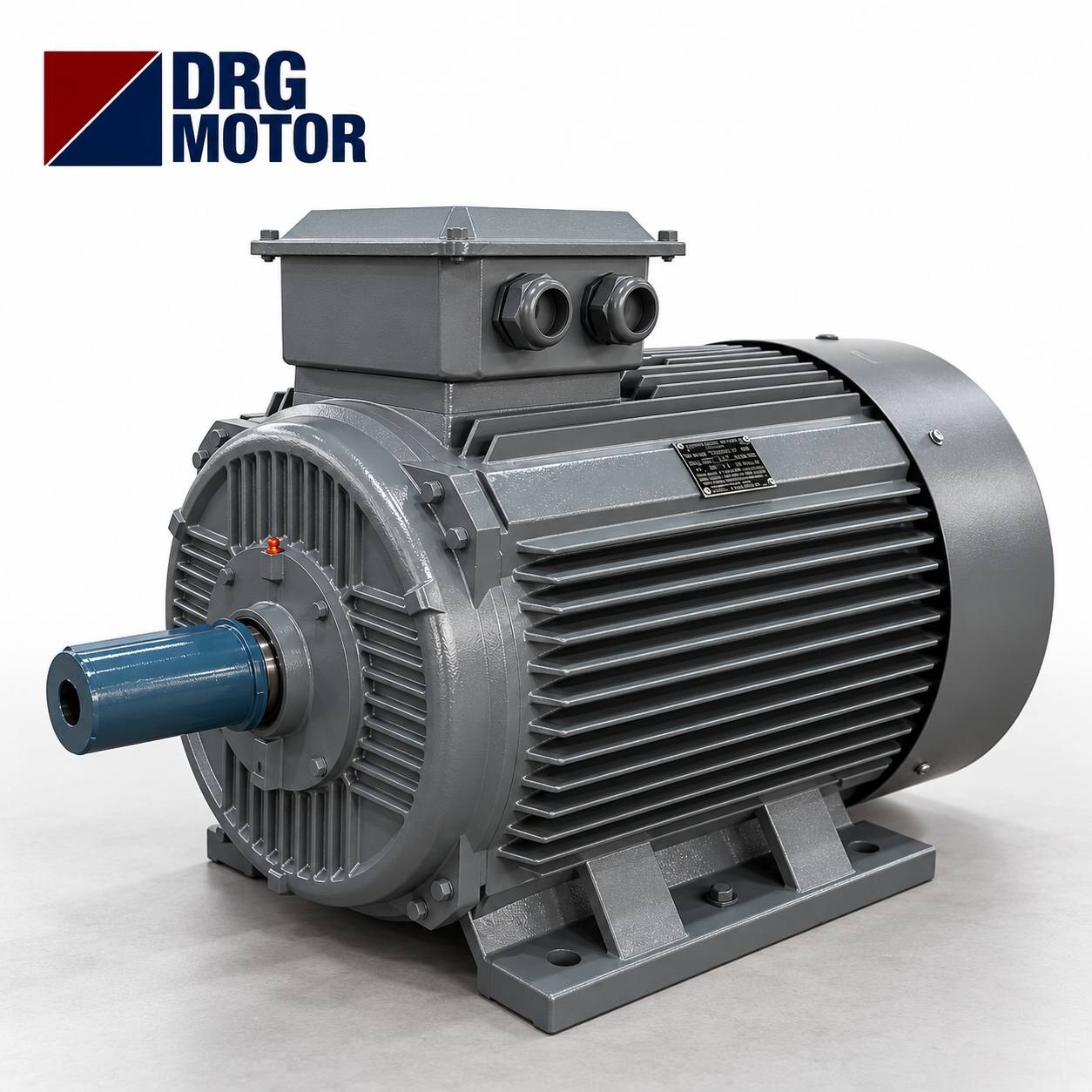
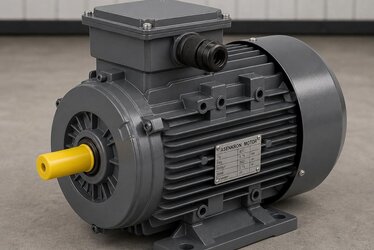
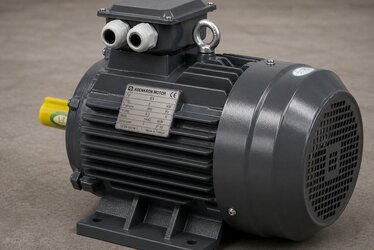
What appears on the label covers only the smallest share of a motor's true cost to you. What you actually pay is the purchase figure plus every kilowatt-hour the machine burns between commissioning and scrapping. IEC 60034-30-1 calls the IE4 class "super premium efficiency", and an IE4 unit does ask more at the counter than the equivalent IE3. Over a normal service window that gap closes, then reverses.
Where the IE3 and IE4 Price Gap Comes From
IEC 60034-30-1 ranks induction motors on a ladder from IE1 to IE5. Hold rating and speed constant, and an IE4 machine typically lands half a point to a full point of efficiency above IE3. Buying that point costs copper: a larger conductor cross-section in the windings, a lower-loss silicon steel stack, tighter manufacturing tolerances. Material and labour go straight onto the price tag.
Technical Parameters That Move the Quote
Two motors can both be stamped IE4 and still be quoted very differently. The drivers are:
- Rating: across the 0.55 kW to 355 kW range, price climbs almost linearly with power.
- Poles and speed: 2-pole at 3000 rpm, 4-pole at 1500 rpm and 6-pole at 1000 rpm need different laminations and winding layouts. A slow machine of the same rating comes in a bigger frame, so it costs more.
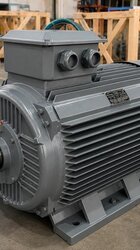
- Frame material: cast iron handles vibration and impact far better than light aluminium; that is what wins it heavy industrial duty, and the quote reflects it.
- Mounting: foot-mounted B3, flanged B5 and small-flange B14 differ in casting and in stock depth.
- Protection and insulation: anything past standard IP55 and class F insulation, such as IP66 or class H, is an extra.
What the Extra Point of Efficiency Buys
IE3 is premium efficiency, IE4 super premium. The difference shows up as heat the motor does not make. On a 4-pole 11 kW machine fed at 400 V / 50 Hz in S1 continuous duty, IE3 sits around 91.4 percent while IE4 reaches roughly 92.6 percent. That 1.2 point spread looks trivial on paper. Run the same motor 16 hours a day and it becomes hundreds of kilowatt-hours a year.
Running the Payback Arithmetic
The maths is short. Moving that 11 kW drive from IE3 to IE4 cuts loss under load by about 0.15 kW. At 6000 operating hours a year, that is roughly 900 kWh saved annually. Multiply by your industrial tariff: on most continuous-duty installations the purchase premium is recovered inside a handful of years. More running hours, faster recovery. That is the whole rule.
Pick the Class from the Duty Cycle
Hours decide the class, not the application name:
- Non-stop pumps, fans and compressors: IE4 pays back fastest here.
- Conveyors and general drives on shift work: IE4 still shows a clear margin.
- Standby or rarely used units: IE3 and its lower entry price is the sensible call.
Asking for a Quote That Can Be Compared
Requesting "the price of an IE4 motor" produces answers you cannot line up against each other. State the rating, the pole count, the mounting type, the protection class and which frame material you want.
Build Quality Behind the Number
Part of what an IE4 costs is structure. With neither brushes nor a commutator, a squirrel-cage rotor leaves nothing in that path to wear out. Against aluminium, cast iron spreads heat better and damps vibration harder, which matters on crushers, mills and heavy conveyors. Under S1 duty, high winding temperature stays within safe limits thanks to class F insulation.
Maintenance and the Five-to-Ten-Year View
A motor that loses less energy runs cooler, and a cooler winding lasts longer. Bearings follow the same curve. Beyond regular greasing, vibration checks and a clean cooling path, an IE4 unit asks for nothing unusual. Judge the price over a five to ten year operating window rather than at the counter, and read the efficiency class guides before you fix the specification.