English
 Le français
 Türkçe




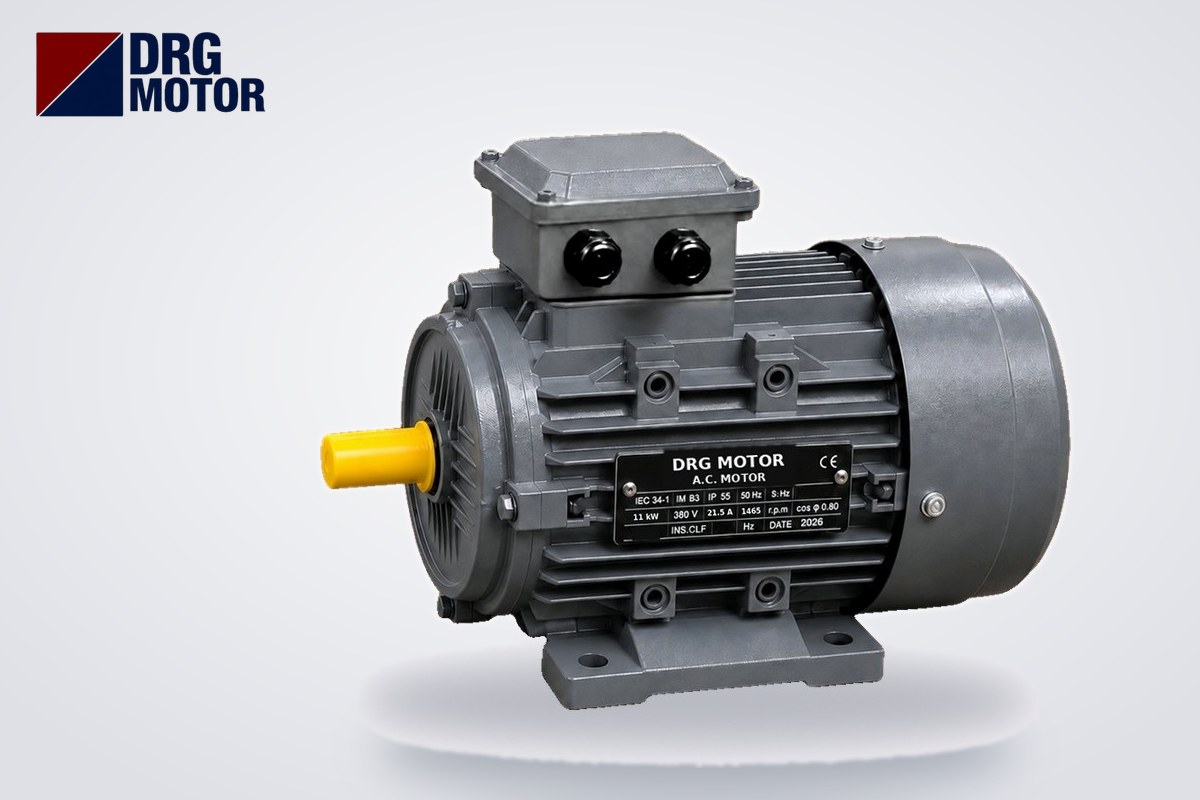

An electric motor consumes, per hour, as many kWh as the power it draws from the grid. At full load this is slightly more than the kW on the nameplate: a 4 kW, 1500 rpm three-phase motor draws 8.37 A at 380 V with a cos φ of 0.82, i.e. about 4.52 kW from the grid, so it uses about 4.52 kWh per hour at full load. For an 11 kW motor the figure is about 12.03 kWh per hour, for a 45 kW motor about 47.77 kWh. The amount on your bill is that kWh figure multiplied by the unit price of your tariff.
If the motor is not fully loaded, consumption falls, but not to zero; even when running idle the motor draws some active power. In this article we do the calculation with the catalogue current and cos φ of the models in our Buy Electric Motors Online store, without estimating the motor's losses separately. Below you will find an hourly and per-shift kWh table for each rating, how to measure at part load and how to go from kWh to cost.
Why Is the kW on the Nameplate Not the Same as the kWh on the Meter?
The power on the motor nameplate is the shaft power: the mechanical power the motor delivers to the machine coupled to its shaft. The meter, however, measures the electrical power the motor takes from the grid. In between are the motor's own losses (winding heating, iron losses, fan and bearing friction). That is why a 4 kW motor uses not 4 kWh but about 4.52 kWh per hour at full load; the difference of about 0.52 kW turns into heat inside the motor.
How Is the Power Drawn from the Grid Calculated?
The active power a three-phase motor draws from the grid is given by:
P (kW) = √3 × U (kV) × I (A) × cos φ
Here U is the line-to-line voltage, I the line current and cos φ the power factor. You do not need to know the motor losses separately, because current and cos φ already show what the motor takes from the grid. Example: the 7.5 kW, 1500 rpm DRG-132M-4 draws 15.0 A at 380 V with a cos φ of 0.84:
P = 1.732 × 0.38 × 15.0 × 0.84 ≈ 8.29 kW → about 8.29 kWh per hour at full load.
As a cross-check, calculate the same motor with its 400 V values: 14.3 A × 0.40 kV × 1.732 × 0.84 ≈ 8.32 kW. When the voltage rises the current falls, and the power drawn stays almost the same. What determines consumption is not the voltage but the power the motor delivers at the shaft.
Hourly Consumption Table by kW (4-Pole, Full Load)
The table is calculated from the catalogue current and cos φ of 1500 rpm motors. The same models with aluminium and cast-iron frames have identical electrical values, so their consumption is identical too.
| Rated (shaft) power | Model (1500 rpm) | In 380 V | cos φ | Power drawn from the grid P = √3·0.38·I·cos φ | Per hour at full load | Per 8-hour shift |
|---|---|---|---|---|---|---|
| 0.75 kW | DRG-802-4 | 1.84 A | 0.75 | ≈ 0.91 kW | ≈ 0.91 kWh | ≈ 7.3 kWh |
| 2.2 kW | DRG-100L1-4 | 4.76 A | 0.81 | ≈ 2.54 kW | ≈ 2.54 kWh | ≈ 20.3 kWh |
| 4 kW | DRG-112M-4 | 8.37 A | 0.82 | ≈ 4.52 kW | ≈ 4.52 kWh | ≈ 36.1 kWh |
| 7.5 kW | DRG-132M-4 | 15.0 A | 0.84 | ≈ 8.29 kW | ≈ 8.29 kWh | ≈ 66.3 kWh |
| 11 kW | DRG-160M-4 | 21.5 A | 0.85 | ≈ 12.03 kW | ≈ 12.03 kWh | ≈ 96.2 kWh |
| 22 kW | DRG-180L-4 | 41.8 A | 0.86 | ≈ 23.66 kW | ≈ 23.66 kWh | ≈ 189.3 kWh |
| 45 kW | DRG-225M-4 | 84.4 A | 0.86 | ≈ 47.77 kW | ≈ 47.77 kWh | ≈ 382.2 kWh |
| 90 kW | DRG-280M-4 | 163.0 A | 0.88 | ≈ 94.41 kW | ≈ 94.41 kWh | ≈ 755.3 kWh |
| 200 kW | DRG-315L2-4 | 352.0 A | 0.9 | ≈ 208.51 kW | ≈ 208.51 kWh | ≈ 1,668.1 kWh |
The figures in the table show the motor running at its rated power, i.e. at full load. To calculate with your own values (different speed, operating hours, load ratio), use our electric motor energy consumption calculator.
How Much Does a Motor Use at Part Load and When Idle?
In the field, most motors run below their rated power. If a pump valve is throttled, a conveyor is half loaded or the motor is oversized, the power taken from the shaft falls and the active power drawn from the grid falls roughly in proportion. There are two traps here:
- Current does not fall in proportion to load. The magnetising current of the motor is independent of the load, so even at idle the clamp meter shows a significant current. Most of that current is reactive and contributes little to active consumption.
- The nameplate cos φ does not apply at part load. As load decreases, cos φ falls. If you multiply the current measured at part load by the nameplate cos φ, you will overestimate consumption.
For an accurate figure at part load, use an energy analyser that measures voltage, current and cos φ on all three phases at once, or a sub-meter on the motor feeder. If all you have is a clamp meter, treat the result as "rough": the ratio of measured current to nameplate current only gives an idea of how heavily the motor is loaded. Remember that idling has a cost too: leaving a conveyor or compressor running after the job is done records kWh with no work being done.
Reactive Power: It Draws Current but Does Not Show on the kWh Meter
Part of the current a motor draws flows back and forth between the grid and the motor to build the magnetic field. This reactive power (kVAr) is not recorded on the active kWh meter, but it loads the cable, the transformer and the fuses. The table shows the three quantities side by side at full load:
| Model | Apparent power S = √3·U·I | Active power P (kWh on the meter) | Reactive power Q = √(S² − P²) |
|---|---|---|---|
| DRG-112M-4 (4 kW) | ≈ 5.51 kVA | ≈ 4.52 kW | ≈ 3.15 kVAr |
| DRG-160M-4 (11 kW) | ≈ 14.15 kVA | ≈ 12.03 kW | ≈ 7.45 kVAr |
| DRG-225M-4 (45 kW) | ≈ 55.55 kVA | ≈ 47.77 kW | ≈ 28.35 kVAr |
| DRG-280M-4 (90 kW) | ≈ 107.28 kVA | ≈ 94.41 kW | ≈ 50.96 kVAr |
Reactive consumption can be metered separately on industrial connections and is balanced with a power factor correction panel; the tariff conditions depend on your distribution company and connection type. See our detailed article on power factor (cos φ) in electric motors. The kWh calculations in this article cover active energy only.
From kWh to Cost: How to Calculate the Electricity Bill
The calculation has three steps:
Monthly kWh = P (kW) × daily operating hours × operating days per month
Monthly cost = Monthly kWh × unit price per kWh
For the unit price, use the figure on your bill; it varies with connection type, consumption band, time of use and taxes, so we do not give a fixed figure here.
Example: a 22 kW water pump
The 22 kW, 1500 rpm DRG-180L-4 draws about 23.66 kW from the grid at full load. If the pump runs 10 hours a day and 26 days a month:
- Daily consumption: 23.66 × 10 ≈ 236.6 kWh
- Monthly consumption: 23.66 × 10 × 26 ≈ 6,151.6 kWh
- Monthly cost: if the unit price is X per kWh, 6,151.6 × X
If the pump runs below full load with a throttled valve, the actual consumption will be lower than this figure; read a sub-meter for the exact value.
Field Mistakes That Increase Consumption: Checklist
- Idling: Conveyors, crushers or compressors running with no work to do. Stop them with a timer relay or a level/pressure switch.
- Oversized motor: At low load cos φ falls and the cable and transformer carry unnecessary current. Before replacing, choose the right rating from the measured load.
- Throttled valve or damper: In fans and centrifugal pumps, power varies with the cube of speed; controlling the flow by reducing speed with a drive instead of a valve noticeably reduces consumption.
- Mechanical friction: An over-tensioned belt, a misaligned coupling or a dry bearing loads the motor unnecessarily; if the current rises above the rated value, check the mechanics first.
- Voltage imbalance: A difference between line voltages unbalances the currents and increases losses; measure the current on each of the three phases separately.
- Dirty fan cover and frame: A motor that cannot cool runs hot; add cleaning to the maintenance plan.
Motors in This Power Range
The 1500 rpm cast-iron models used in the tables:
- DRG-802-4 – 0.75 kW – 1500 rpm – 80 cast iron
- DRG-100L1-4 – 2.2 kW – 1500 rpm – 100L cast iron
- DRG-112M-4 – 4 kW – 1500 rpm – 112M cast iron
- DRG-132M-4 – 7.5 kW – 1500 rpm – 132M cast iron
- DRG-160M-4 – 11 kW – 1500 rpm – 160M cast iron
- DRG-180L-4 – 22 kW – 1500 rpm – 180L cast iron
- DRG-225M-4 – 45 kW – 1500 rpm – 225M cast iron
- DRG-280M-4 – 90 kW – 1500 rpm – 280M cast iron
- DRG-315L2-4 – 200 kW – 1500 rpm – 315L cast iron
Click to see current prices and order these motors nowSEE PRICES →
For other speed and frame options, browse the 120 models in our online store, and for other calculations see our electric motor calculators.
Frequently Asked Questions
How many kWh does an 11 kW motor use per hour?
The 11 kW, 1500 rpm DRG-160M-4 draws 21.5 A at 380 V at full load with a cos φ of 0.85, about 12.03 kW from the grid; it uses about 12.03 kWh per hour at full load and about 96.2 kWh in 8 hours.
Does an electric motor use electricity when idling?
Yes. At idle the shaft power is close to zero, but the motor keeps drawing active power to cover its own losses. Most of the no-load current seen on a clamp meter is reactive, so estimating consumption from the no-load current is misleading.
How much electricity does a 7.5 kW motor use per day?
The DRG-132M-4 uses about 8.29 kWh per hour at full load. Running 8 hours a day at full load, that is about 66.3 kWh. The daily cost is this figure multiplied by your unit price per kWh.
How is the electricity used by a three-phase motor calculated?
Take the average current of the three phases rather than the current of a single phase, find the power drawn with P = √3 × U × I × cos φ and multiply it by the operating hours. Because cos φ at part load is lower than on the nameplate, an energy analyser or sub-meter gives the most accurate result.
For questions about your motor's consumption or choosing the right rating, call us on +90 (542) 666 11 11 or write to [email protected]. For other contact details, visit our contact page.