 English
 Le français
 Türkçe

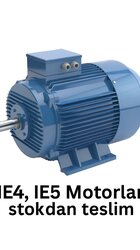
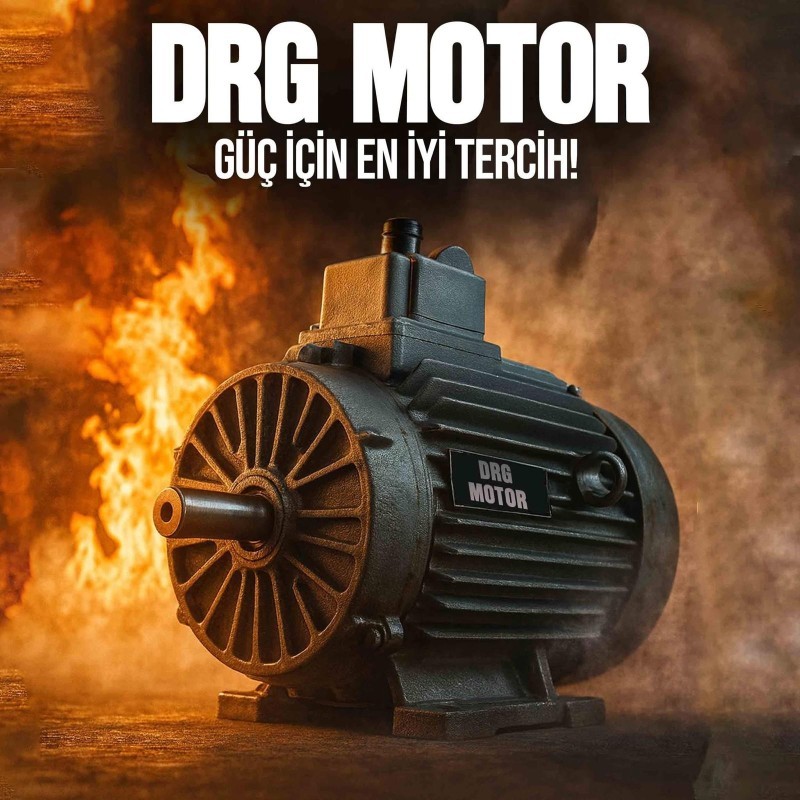

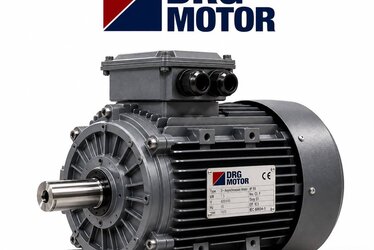
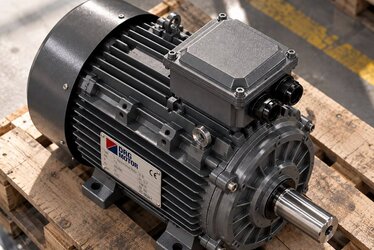
A plant that runs thirty motors does not need thirty good motors; it needs thirty identical ones. When two units carrying the same rating behave differently on the line, maintenance planning collapses into guesswork and spare parts stop being interchangeable. Standardising quality means the second delivery performs exactly like the first, and the twentieth like both.
Why Repeatability Beats a Single Good Unit
Same power, same class, same efficiency, same mechanical dimensions. That is the whole promise, and it simplifies the store room first. The IEC 60034 family defines motor performance, efficiency and mechanical dimensions internationally, which makes the repetition deliberate rather than accidental.
The Codes That Make Quality Measurable
Comparison between two suppliers is only possible when both describe the machine in the same language. Efficiency classes run from IE1 to IE5 under IEC 60034-30-1. Protection is stated as a code such as IP55. Insulation is given as a letter, F being the common industrial choice, and the duty type S1 declares continuous operation.
- IEC 60034-30-1: efficiency class definition, IE1 through IE5
- IP55: dust-tight housing, splash-proof against water
- F class insulation: high temperature endurance in the windings
- S1: uninterrupted continuous duty
Reading the Nameplate
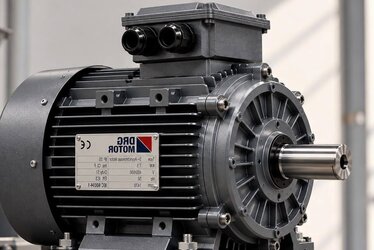
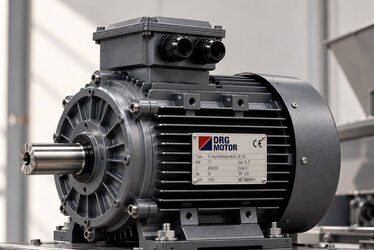
An industrial motor carries its technical identity in a handful of figures. The power band typically stretches from 0.55 kW to 355 kW on a 400 V / 50 Hz supply. Pole count fixes the speed: two poles give roughly 3000 rpm, four give 1500 rpm and six give 1000 rpm. Squirrel cage rotors dominate the sector because they are durable and need no maintenance. A complete, accurate nameplate is the first evidence of quality; an incomplete one is the first warning.
Choosing the Frame Material
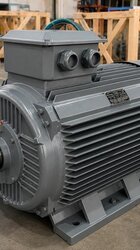
Heavy duty and shock-loaded drives get cast iron because it damps vibration and absorbs impact. Aluminium frames are lighter and conduct heat well, and they suit lighter service. The frame has to match the environment and the load, not the purchase order.
Mounting Geometry
Mounting is standardised too. Foot mounted B3, flange mounted B5 and small flange B14 cover most machine interfaces. Correct geometry lets the motor seat fully, and the shaft line then stays true. Misalignment shortens bearing life and generates vibration; dimensional conformity therefore belongs to installation quality, not to paperwork.
Where the Efficiency Class Pays Back
On a line that never stops, even a one percent efficiency difference turns into real money over a year. IE3 and IE4 units amortise quickly where the motor sits near full load for long hours; on short-duty or variable-load drives the balance shifts and a lower class can be the more sensible purchase. A class label settles nothing on its own; read it beside the hours the unit actually works together with the load fraction it actually carries.
Heat Is What Ages a Motor
Overheated windings lose their insulation long before anything else fails. Cooling fins and the shaft-mounted fan carry that heat away, and F class insulation holds a safe margin. Position the machine where air can actually reach it.
Four Checks Before Switching On
Measure winding insulation resistance, turn the shaft by hand, torque the terminal connections and confirm the supply matches the nameplate. Four checks, a few minutes, and most first-day failures disappear. The wider electric motor library covers the selection detail behind each.
Matching the Duty, Not Just the Rating
Two motors of equal power can be wrong for each other's job. Pumps and fans are chosen on speed and efficiency; crushers and conveyors on starting torque and mechanical strength. Dust or moisture pushes the protection class up, continuous running pushes cooling capacity up. Specify the conditions the machine will actually see, then let the standard codes do the comparing.