 English
 Le français
 Türkçe

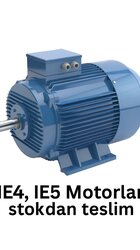
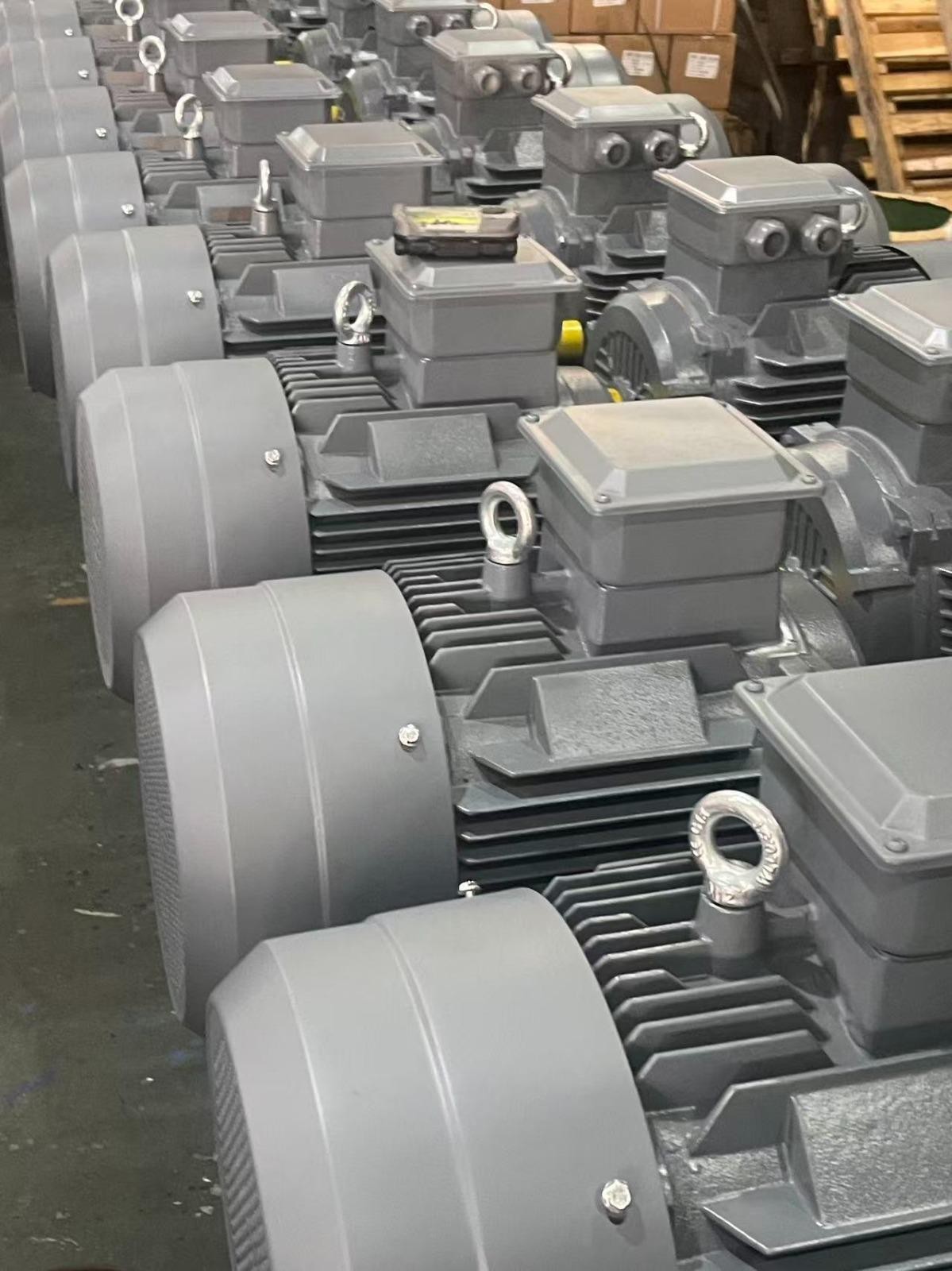

A supply range only becomes useful when it covers a workshop lathe and a heavy industrial crusher from the same catalogue, and stays technical enough to match each to the right machine. Breadth of power, availability from stock and an engineering view of the application are what turn a product list into a working solution.
From 0.55 kW to 355 kW
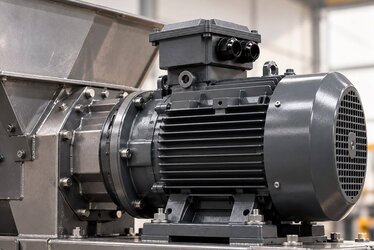
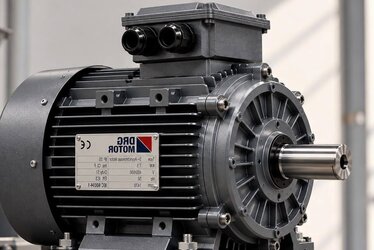
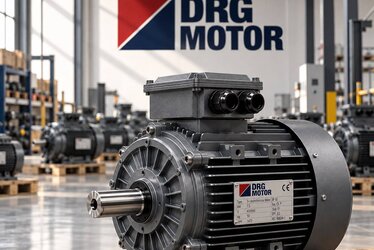
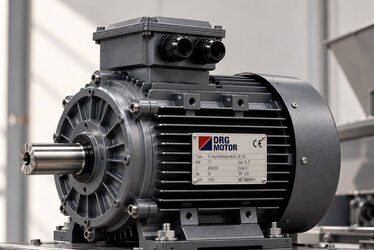
That band is the practical spine of the range, and it reaches from small bench equipment to the largest low voltage drives in heavy industry. Three phase squirrel cage induction motors form the core of it. Around that core sit the special types: brake motors, two-speed motors and inverter-compatible models for applications the standard machine cannot cover.
Efficiency Classes and Legal Compliance
Motors are graded under the IEC 60034-30-1 classification, with IE2, IE3 and IE4 available. Energy regulations now in force in Turkey and across the European Union make IE3 the minimum efficiency class within defined power bands. Choosing to that rule keeps a plant compliant and cuts its consumption in the same decision, which is unusual among regulatory obligations.
Frame Material and Mechanical Strength
In industrial service nothing decides durability more directly than what the frame is cast from. Cast iron brings vibration damping and rigidity, and it survives years of heavy-environment duty. Aluminium weighs less and sheds heat well, which suits smaller and portable equipment.
- Cast iron frame: high torque, heavy load, difficult environments.
- Aluminium frame: low weight, good heat transfer, portable equipment.
Protection and Insulation
Standard machines carry IP55: dust is fully excluded and water jets do no harm. Winding insulation is F class, and the temperature rise stays at the B class limit so a safety margin remains in service. That combination is what allows years of operation in dusty, damp and hot industrial locations. Duty type is S1, continuous running.
Speed and Mounting Options
Two, four and six pole machines are all available. The four pole at 1500 rpm is the most common general purpose choice, while high speed applications take the two pole at 3000 rpm and low speed high torque duties the six pole at 1000 rpm. Mounting comes as B3 foot, B5 large flange or B14 small flange, and that variety is what lets a motor drop into an existing machine without modification.
Sectors Served
- Pump and fan systems
- Conveyors and handling lines
- Compressors and hydraulic units
- Crushers, mills and agitators
- Textile, food and packaging machinery
Every sector brings its own load profile and ambient conditions, so the motor type is identified per installation rather than per catalogue line.
Getting the Size Right
Performance begins with correct sizing. A machine chosen too large sits at part load, where power factor and efficiency both suffer; one chosen too small overheats and dies young. Sizing from real shaft power, from the load profile and from duty type avoids inflating the initial investment and prevents wasted energy later.
Inverters and Soft Starters
Most motors in a modern plant now start through a frequency converter, or at least a soft starter, rather than being switched straight onto the line. Windings with inverter-rated insulation make that safe. On high power machines, direct on line starting produces a heavy inrush current, and limiting it protects the network and the mechanical transmission alike.
Duty Type and Commissioning
Duty type defines how the machine behaves under its particular pattern of use. Pumps and fans that run continuously are specified on S1; frequent start-stop or positioning duties bring the intermittent S3 to S6 ratings and a high permissible starting frequency into play. At commissioning, checking direction of rotation, phase sequence, voltage and current readings and bearing temperature heads off the failures that otherwise appear in the first weeks.