 English
 Le français
 Türkçe

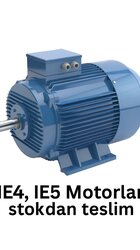
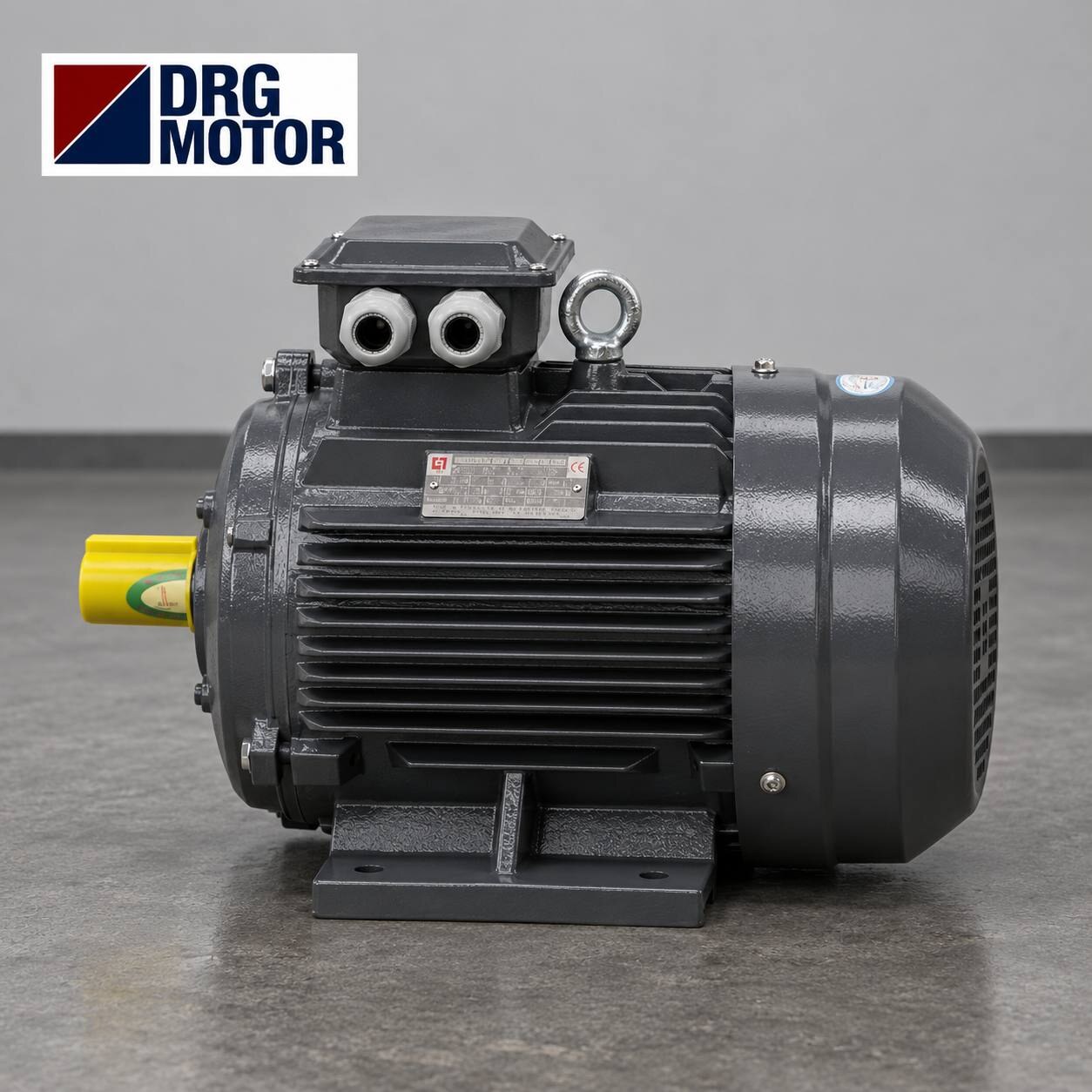

Whether a production line keeps turning usually depends on a component nobody looks at: the electric motor. Pick one that is correctly sized, efficient and durable and it lowers the energy bill, cuts unplanned stops and holds output steady as long as the driven machine lasts.
Where the Real Difference Shows Up
Two motors can carry the same power label and behave nothing alike in the field. Active material quality, efficiency class, insulation strength and the rigidity of the mechanical build separate them. Good copper winding, low-loss laminations and careful assembly make a machine that runs cooler and stays out of the repair shop for years.
What the Efficiency Class Costs You
IEC 60034-30-1 grades motor efficiency from IE1 to IE5. IE3, premium, is the common industrial reference today, and IE4 options exist for plants chasing more. One step up shows as a measurable drop in yearly consumption wherever a line runs around the clock.
- IE1: standard efficiency, rarely specified any more
- IE3: premium efficiency, the widespread industry standard
- IE4: super premium, for critical lines with long running hours
Which Power, Which Speed
Industrial demand runs from 0.55 kW workshop drives up to 355 kW heavy plant machinery. On a 400 V / 50 Hz network, synchronous speed follows straight from how many poles the stator is wound for: 3000 rpm at two poles, 1500 rpm at four, 1000 rpm at six. Slip in the squirrel-cage rotor puts the real speed slightly below those figures under load. Fans and compressors that need speed take two poles; conveyors and pumps take four; agitators and crushers that need torque take six.
Insulation and Protection Values
Dust, damp, vibration and heat all sit in the same room as the motor. Three values carry most of the durability:
- Class F insulation: windings protected with a wide margin against temperature
- IP55 protection: a frame that resists dust and water spray
- S1 duty: built for nonstop running at rated load
The Squirrel-Cage Rotor at Work
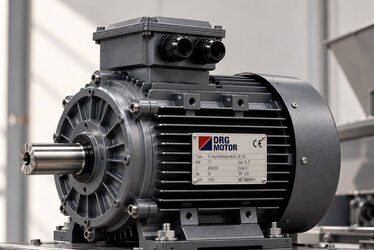
Stator field rotation drives a current into the rotor bars, and their interaction spins the shaft with torque. No brushes, no commutator, little maintenance. Torque exists only because the rotor trails the stator field by a small margin.
Housing Metal and How It Bolts Down
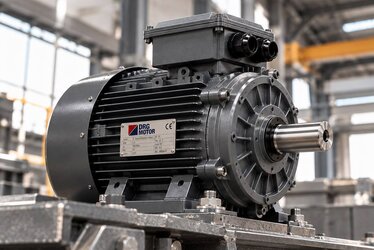
In heavy conditions grey cast iron is chosen for impact resistance and heat dissipation. Lighter, lower-power installations use aluminium instead. Mounting is picked the same way:
- B3: footed, bolted to the floor
- B5: large flange, coupled straight to the machine
- B14: small flange, compact build
A Sizing Checklist
Specifying a motor bigger than the load is the most frequent mistake. An oversized machine spends its life lightly loaded, where cos φ sags and efficiency falls away with it. Undersized, it is permanently strained, overheats and dies early. Actual power demand, starting torque and duty type belong in the calculation together.
Warnings That Arrive Before the Failure
Clearing dust from the fan cover and cooling fins keeps the motor cool enough to do its job. Bearings checked at intervals and greased when due prevent most mechanical failures. Insulation resistance measured periodically shows moisture or ageing in the winding while there is still time. Rising vibration, an unfamiliar noise or unusual heat is the first call for attention. Our motor selection notes go further into matching speed and power.
Spares and What They Are Worth
A stopped line usually costs several times what the motor costs. Whether bearings, capacitors, terminal box covers and cooling fans can be had quickly therefore belongs in the purchasing decision, not in an afterthought. Decide before commissioning which of your drives are single points of failure, and hold the spares for those first.