 English
 Le français
 Türkçe
Common Induction Motor Faults and Their Symptoms
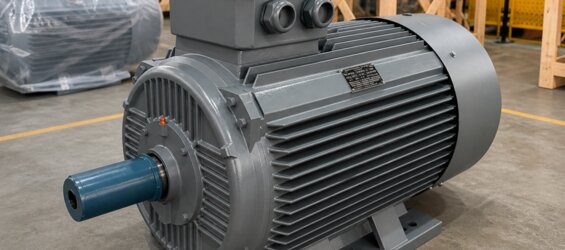
An induction motor stopping suddenly or failing unexpectedly rarely comes without warning. Before they break down, motors usually give signs: the temperature rises, the noise chang... More Details

Knowing the basics is essential to choosing the right motor. In this category you will find guide content on the electric motor working principle, motor types, efficiency classes and selection criteria. Get to know the world of motors with the technical knowledge of the DRG Motor expert team.
For the right motor, power (kW), speed (rpm), efficiency class, body material and mounting type should be considered together. Our high efficiency motors page guides you on efficiency and the power and speed options page on power/speed.
What is the difference between asynchronous and synchronous motors? In an asynchronous motor the rotor turns slightly slower than the magnetic field; in a synchronous motor it turns at the same speed.
Why is motor efficiency important? High efficiency does the same work with less electricity, lowering operating costs.
DRG Motor supports businesses on both the product and knowledge side. By reviewing this guide content you can choose the right motor more consciously, and contact us via drgmotor.com for technical questions.
Motor efficiency is classified as IE1 (Standard), IE2 (High), IE3 (Premium), IE4 (Super Premium) and IE5 (Ultra Premium). The higher the class, the lower the energy loss and the greater the savings. Which class suits you is determined by your running hours and power needs; review our guide content for details.
Which mounting type is needed? Foot (B3) mounting is used in most applications, while flange (B5) or combined (B35) mounting is preferred where direct coupling is required.
An induction motor stopping suddenly or failing unexpectedly rarely comes without warning. Before they break down, motors usually give signs: the temperature rises, the noise chang... More Details
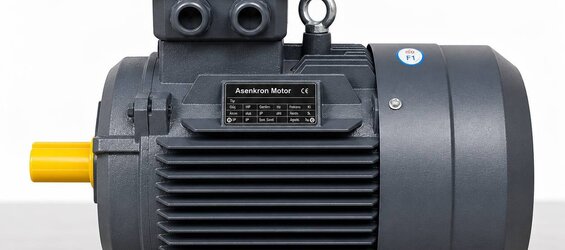
One of the most confusing topics you encounter when buying an electric motor is the two different standards that define the motor's frame size: IEC and NEMA. IEC is widespread in E... More Details
Flange-mounted electric motors bolt directly to machines such as pumps, gearboxes and fans, offering a far more compact mounting solution than foot-mounted bodies. The flange face ... More Details
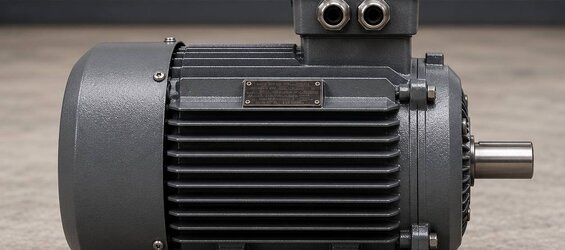
One of the most fundamental questions when designing a drive system is this: AC motor or DC motor? This choice is not merely a technical preference; it shapes the entire life cycle... More Details
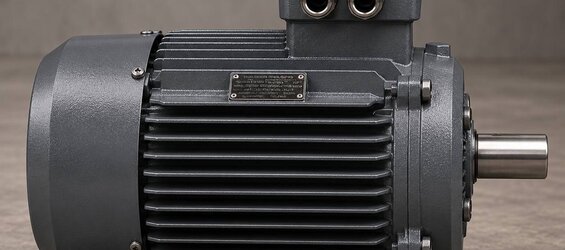
When you connect a motor directly to the grid, the windings meet a smooth, gentle sinusoidal voltage. But when you connect the motor behind a frequency inverter, the situation chan... More Details
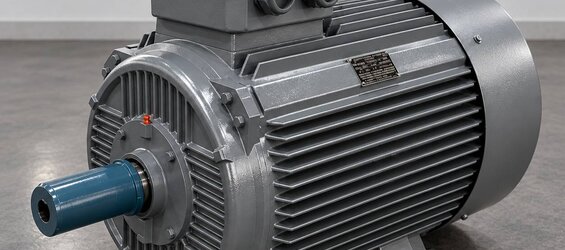
When you run an electric motor for years, you come to know its behavior intuitively: which sound is normal, what temperature to expect, how it responds under a given load. The conc... More Details
The most honest information about an electric motor's health usually comes from its vibration. When bearings begin to wear, when rotor imbalance develops, or when fasteners loosen,... More Details
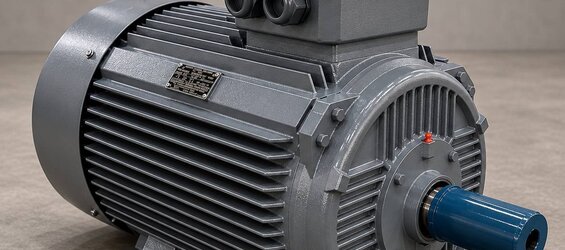
When an electric motor fails or its efficiency drops, the first question that usually comes to mind is "should I buy a new one?" Yet a motor's life does not end with its first faul... More Details
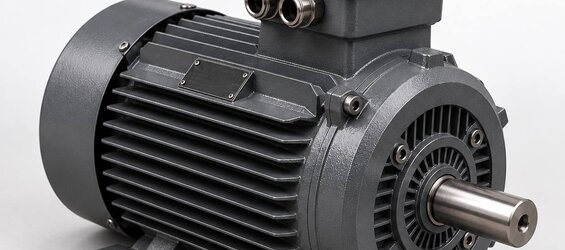
Diagnosing Broken Rotor Bars with Motor Current Signature Analysis (MCSA) One of the most critical yet hardest-to-reach parts of an asynchronous motor is its rotor. The rotor forms... More Details
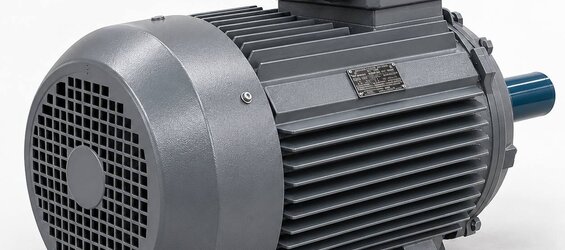
dv/dt and Reflected-Wave Overvoltage on Long Motor Cables The cable between a frequency inverter (VFD) and an asynchronous motor is a component that is often overlooked, yet it is ... More Details
Shaft Voltage and Bearing Currents in VFD-Driven Motors Driving an asynchronous motor with a frequency inverter (VFD) brings major advantages in energy savings and flexible speed c... More Details
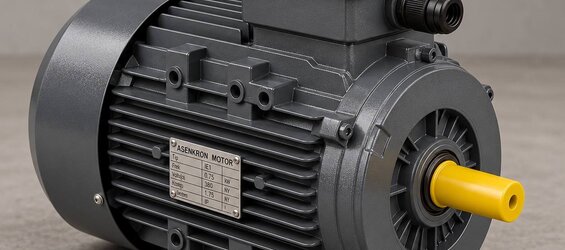
The correct operation of an electric motor depends on its power, speed and efficiency, and on how it is mounted. The way the motor connects to the machine, that is the mounting typ... More Details
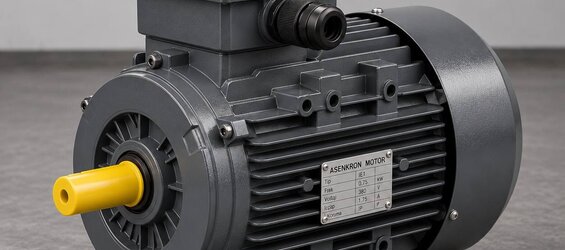
Induction motors are the most widely used sources of motion in industry, and at the heart of how these motors work lies the concept of slip. An induction motor can only produce tor... More Details
When selecting an electric motor, the first value most people look at is the power rating in kilowatts. Yet the concept that truly determines how a motor will behave in real life, ... More Details
The foundation of running an electric motor safely and efficiently lies in a properly built motor panel. At the heart of this panel is the contactor, which switches the motor in an... More Details
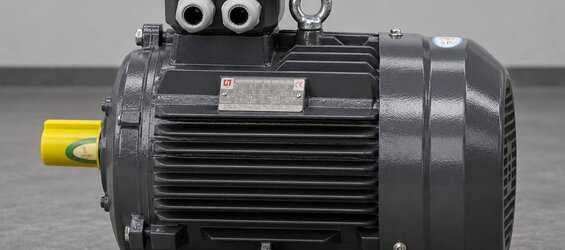
The heart of an electric motor is the windings placed inside its stator. These windings directly determine the motor's power, efficiency, and service life, and they are formed thro... More Details
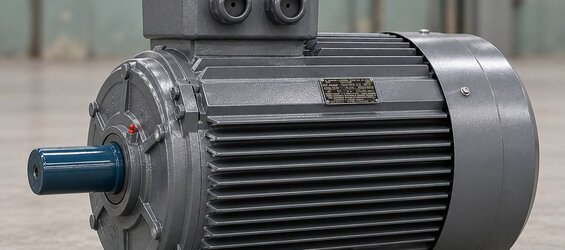
The most widely used motor in industry is the induction motor. However, in places that demand precise positioning, step and servo motors are preferred. These three motor types are ... More Details
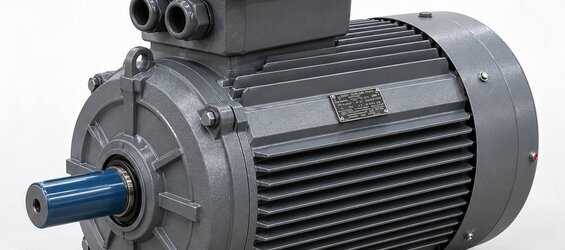
Three-phase electric motors run on the balanced energy of three phases, and that balance is the foundation of healthy operation. But if one of the phases is cut off or lost for any... More Details
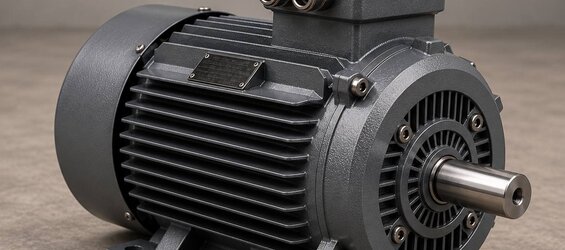
The safe operation of an electric motor depends on correct selection and maintenance, and on proper grounding. Grounding safely conducts any leakage currents that may appear on the... More Details
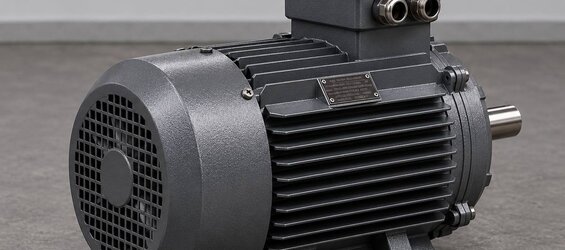
On the nameplate of an electric motor there is a value that is often overlooked but important: the service factor. Generally shown as a number such as 1.0 or 1.15, this value expre... More Details