English
 Le français
 Türkçe

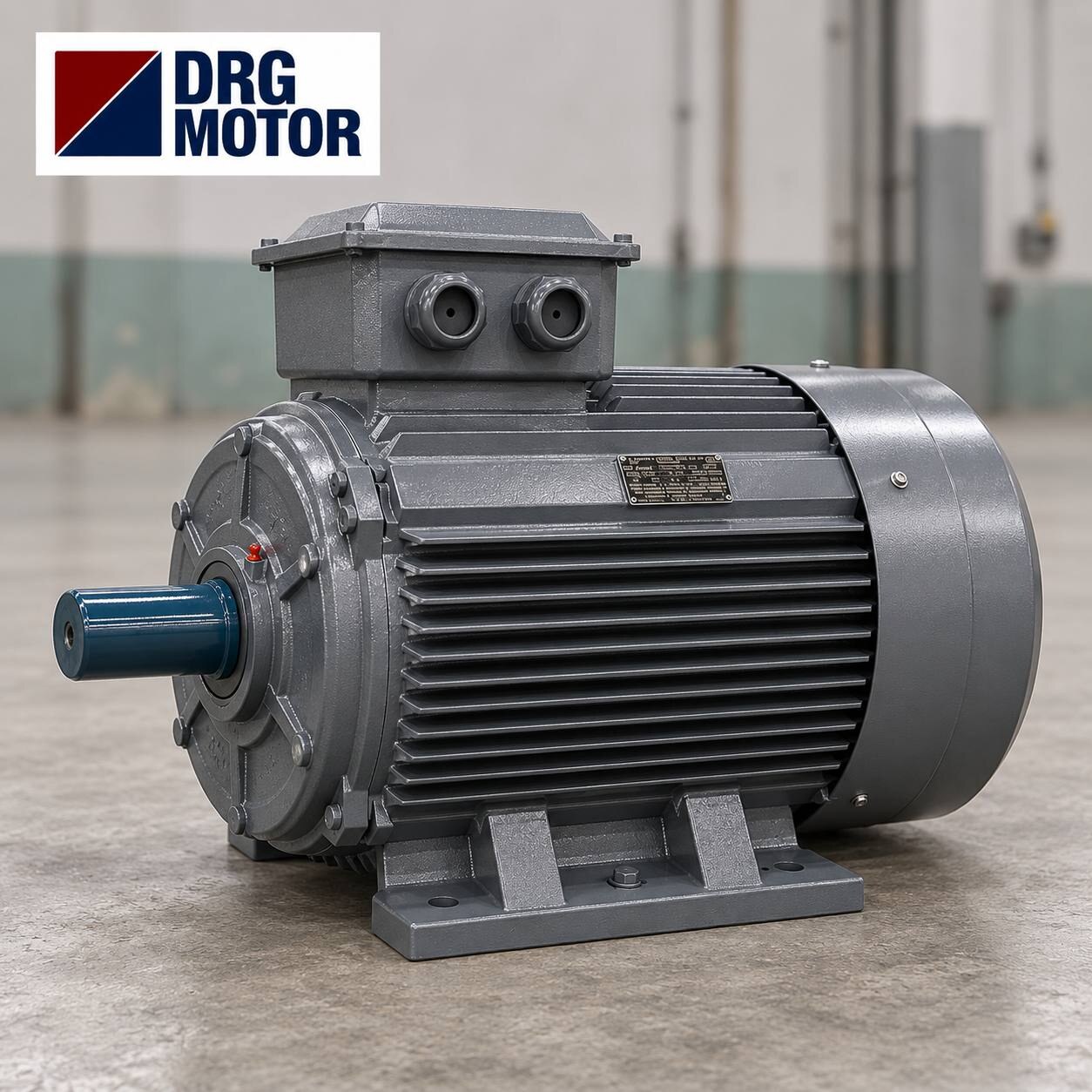

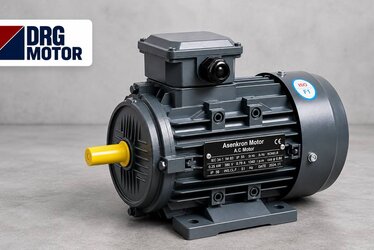
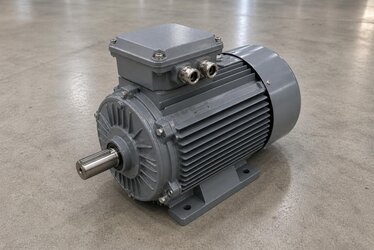
One of the most important measures of how "good" an electric motor is happens to be its efficiency class. The efficiency class shows how much of the electrical energy a motor draws from the grid it converts into useful mechanical work, and how much it wastes as heat and losses. With energy costs constantly rising and environmental sustainability coming to the fore, choosing the right efficiency class is a critical decision for both budget and the environment. In this article we examine the IE2, IE3, IE4 and IE5 classes in depth: the differences between them, how they are calculated, and which one to choose in each situation.
If you are also curious about the basic operating logic of a motor, the how an electric motor works article is a good start; here the focus is entirely on efficiency and energy savings.
Topics Covered in This Article
To understand efficiency in depth, each topic must be examined on its own. The topics below are summarized in this article; you can reach the detailed explanations through the related links:
- IE4 electric motor — the advantages of super premium efficiency
- IE5 ultra premium motors — synchronous reluctance technology
- IE3 premium efficiency — legal requirement and Ecodesign
- efficiency class selection — the right choice by running hours
- replacing old motors — payback and energy savings
- motor efficiency calculation — losses and measurement
What Is an Efficiency Class?
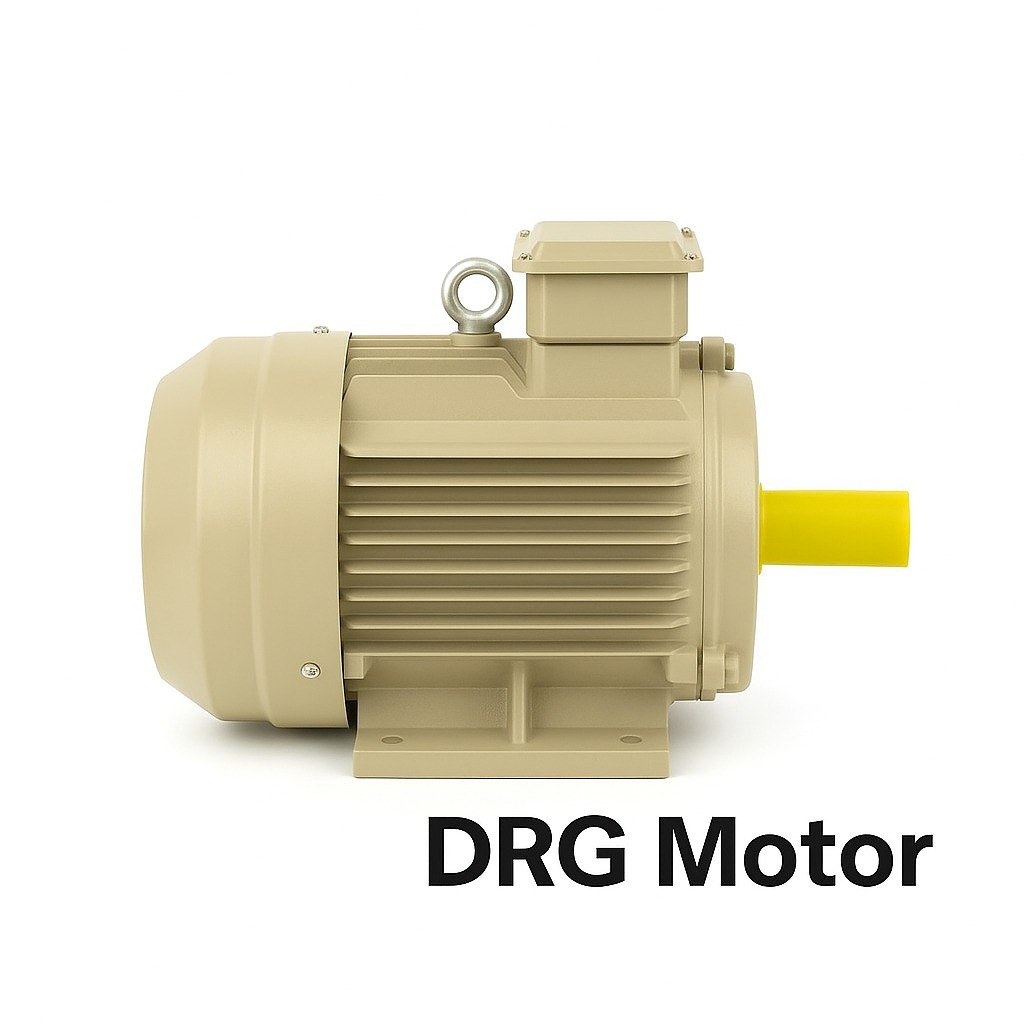
Efficiency in electric motors expresses what percentage of the electrical power a motor takes from the grid it delivers to the shaft. For example, a motor with 90 percent efficiency converts 90 percent of the power it draws into useful work, while spending 10 percent as heat, friction and magnetic losses. The efficiency class is an international classification that groups these efficiency values on a standard scale.
Thanks to this classification, motors of the same power from different brands can be compared fairly. The abbreviation "IE" stands for International Efficiency, and the higher the class number, the higher the motor's efficiency and the lower its losses. So an IE5 motor does the same job with noticeably less energy than an IE2 motor.
How Are IE Classes Determined?
Efficiency classes are defined by the international IEC 60034-30-1 standard. This standard sets the minimum efficiency values each class must meet for given power and speed ranges. Which class a motor falls into is determined by its power, pole count and measured efficiency value.
The classes start at IE1 and go upward: IE1 standard, IE2 high, IE3 premium, IE4 super premium and IE5 ultra premium efficiency. A motor of the same power reaches a higher IE class when built with better materials and a better design. This means more copper, higher-quality silicon steel and more precise manufacturing.
IE1 — Standard Efficiency
The IE1 class is the lowest efficiency level, defined for applications requiring basic performance. Once common, this class is no longer favored, or its sale is restricted, in new installations in many countries due to energy regulations. Although its low initial cost looks attractive, it is an expensive option in the long run because of its high energy loss.
Today, IE1 motors remain mostly in very short-term or very low-use applications. IE1 is not a sensible choice for any continuously running system, because the extra energy it consumes quickly wipes out the advantage in purchase price.
IE2 — High Efficiency
IE2 class motors offer a more economical option by running with lower losses than IE1. Once considered the standard, this class has given way to higher classes in mandatory applications in many regions. Today, IE2 motors are generally accepted in certain applications only when used together with a variable speed drive (VSD).
IE2 can be thought of as a transition class between IE1 and IE3. While it is still preferred in some moderate-use applications, IE3 and higher classes are a much smarter investment in continuously running systems.
IE3 — Premium Efficiency
The IE3 (Premium Efficiency) class has become the minimum legal standard in many industries today. Motors in this class consume noticeably less energy, heat up less, last longer and run more quietly than IE2. In continuously running systems, IE3 is a very balanced option between energy efficiency and cost.
In many countries, including Türkiye, IE3 is now mandatory for motors in certain power ranges. For detailed information about the legal side of this class and what premium efficiency means, see the IE3 premium efficiency article, and for product options, see our IE3 electric motors page.
IE4 — Super Premium Efficiency
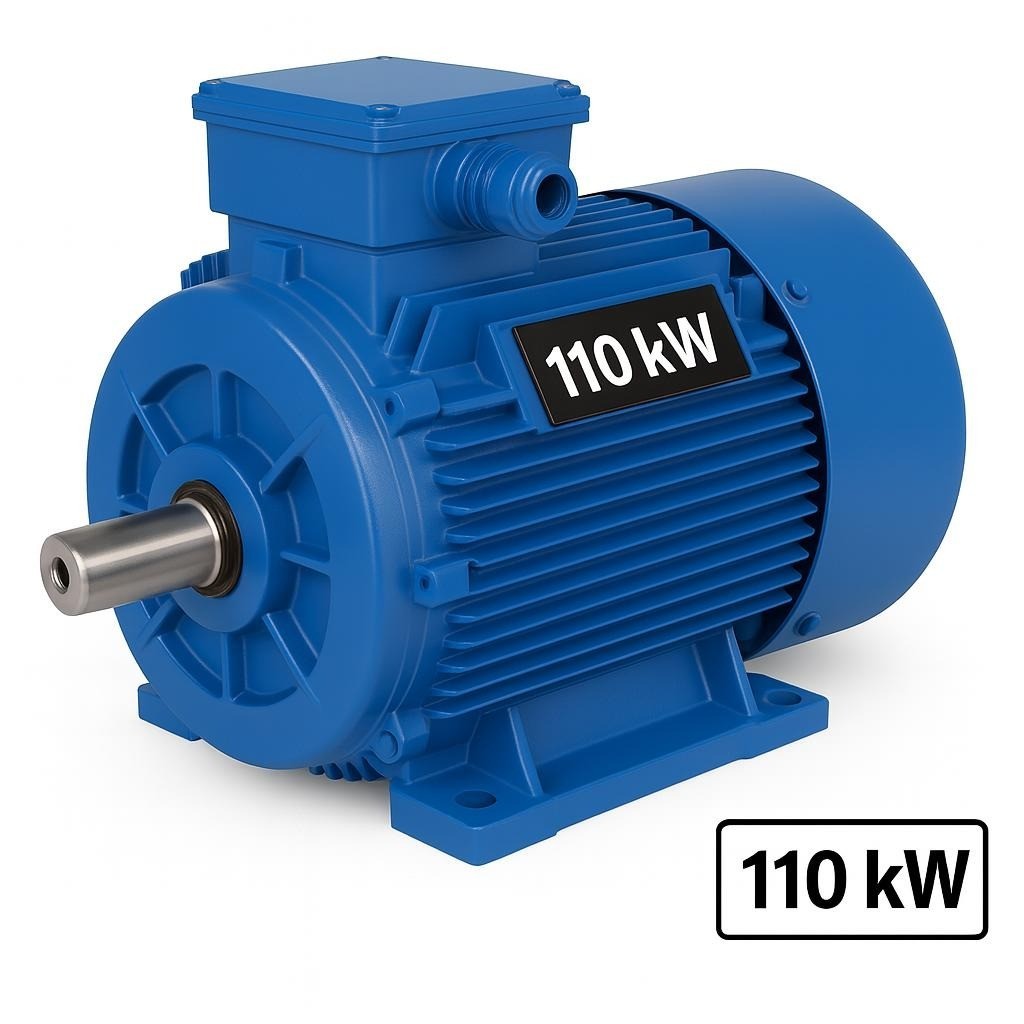
The IE4 (Super Premium Efficiency) class represents advanced motor technology that runs with even lower losses than IE3. This class is preferred especially in facilities with high electricity consumption where motors run 24/7. Although its initial cost is higher than IE3, the long-term energy savings it provides usually cover this difference in a short time.
The advantages of IE4 motors are not limited to energy savings; they also offer lower heating, longer life and quieter operation. For all the advantages of this class and the payback logic, read the IE4 electric motor article, and for products see the IE4 electric motors page.
IE5 — Ultra Premium Efficiency
With advancing motor technology, the IE5 (Ultra Premium Efficiency) class has also come into use. IE5 is the group of motors with the highest efficiency available among current technologies. By minimizing magnetic losses and using advanced design techniques, it brings energy consumption to the lowest possible level. A significant portion of IE5 motors are produced with synchronous reluctance (SynRM) technology.
This class provides a significant advantage especially in production facilities where energy cost is very high. For the details of IE5 and synchronous reluctance technology, see the IE5 ultra premium motors article, and for product options the IE5 electric motors page.
Differences Between Efficiency Classes
The basic difference between the classes is the magnitude of the losses the motor produces. As the class rises, stator and rotor losses, magnetic losses and friction losses decrease. The table below summarizes the general character of the classes.
| Class | Efficiency Level | Typical Use |
|---|---|---|
| IE1 | Standard | Very low-use, old systems |
| IE2 | High | Moderate use, mostly with a drive |
| IE3 | Premium | Minimum standard of industry |
| IE4 | Super Premium | 24/7 high-consumption facilities |
| IE5 | Ultra Premium | Facilities where energy cost is critical |
On paper, the efficiency difference between classes may seem small; but in a continuously running motor, these small percentages turn into thousands of kilowatt-hours of savings over the years.
How Is Motor Efficiency Calculated?
A motor's efficiency is the ratio of the mechanical power delivered to the shaft to the electrical power drawn from the grid. The difference consists of the losses inside the motor: copper losses (winding resistance), iron losses (magnetic), friction and windage losses, and load losses. Moving from one class to another is essentially achieved by reducing these losses.
For detailed information about how efficiency is measured, where each loss comes from and how they are reduced, see the motor efficiency calculation article.
How to Choose the Right Efficiency Class?
Choosing the right class does not depend on a single rule; the motor's annual running hours, electricity unit price, load profile and the application's requirements must all be evaluated together. While IE3 may be enough for a motor that runs very little, moving to IE4 or IE5 pays back much faster in a high-power motor running 24/7.
The general rule is this: the more the motor runs, the more sensible it is to move to a higher efficiency class. To determine the right class by running hours, see the efficiency class selection article, and for all options see the high efficiency motors section.
Switching to an Efficient Motor and Payback
Replacing an old, low-efficiency motor with a high-efficiency one is one of the fastest-returning investments in most facilities. Most of the money a motor costs over its lifetime is not the purchase price but the electricity it consumes. Therefore, the higher initial cost of an efficient motor is usually paid back within a few years, sometimes within months, through the savings it provides.
The payback period varies with the motor's power, running hours and electricity price. For the payback calculation and savings potential of replacing an old motor, see the replacing old motors article.
Legal Requirements and Ecodesign
The European Union's Ecodesign regulation and parallel national regulations set the minimum efficiency class of motors placed on the market. These regulations have risen over time; first IE2, then IE3 for certain power ranges, became the minimum requirement. The aim is to reduce energy waste and lower carbon emissions.
This is why, when buying a new motor, the price is only half of the question; the efficiency requirements in force decide the other half. A motor below the mandatory class is not the right choice, either legally or economically.
Efficiency and the Frequency Drive (VFD)
The class sets the ceiling. How the motor is operated decides how close you get to it. Especially in variable-load applications such as pumps and fans, running the motor with a frequency drive (VFD) provides large savings, because the motor runs at the speed needed and therefore with only as much energy as needed.
The combination of a high efficiency-class motor and a frequency drive offers the lowest energy consumption achievable in an application. For this reason, when making an efficiency decision, the operating method should be considered as much as the motor's class.
Environmental Impact and Sustainability
A very large share of the electricity generated in the world is consumed by electric motors. This is why motor efficiency is not just an operating-cost issue but an energy and environmental matter on a national and global scale. A high-efficiency motor directly reduces the carbon footprint by doing the same job with less energy.
Switching to efficient motors contributes to both businesses' sustainability goals and national energy savings. In this respect, choosing the efficiency class is not just a technical decision but also an environmental responsibility.
Its Relationship with the Motor's Operating Principle
To truly understand efficiency, you also need to know how the motor works. The rotating magnetic field produced by the stator induces a current in the rotor, and in this process some energy inevitably turns into heat. Efficiency classes show how well the losses in this process are managed.
You can find a detailed look at the motor's basic operation and the role of the rotating magnetic field in the how an electric motor works article. Knowing the operating principle makes it easier to understand where the efficiency differences come from.
Types of Losses in a Motor
What determines a motor's efficiency is the sum of the losses produced inside it. These losses fall into four main groups: copper losses, iron losses, mechanical losses and load losses. Copper losses are the heat produced by resistance as current flows through the windings and grow with the load. Iron (magnetic) losses arise from the constant change of direction of the magnetic field in the core and are independent of load.
Mechanical losses come from bearing friction and the air resistance of the cooling fan; load losses are extra losses caused by uneven current distribution. Moving to a higher efficiency class essentially means reducing all four of these losses together. Better copper, thinner low-loss silicon steel and more precise manufacturing lower the losses and move the motor to a higher class.
Temperature, Insulation and Efficiency
There is a direct relationship between efficiency and temperature. Because losses turn into heat, an inefficient motor heats up more. Overheating shortens the life of the winding insulation; as a general rule, every significant rise in operating temperature can halve the insulation life. This is why a high-efficiency motor, by heating up less, both saves energy and lasts longer.
The insulation class (such as F or H) shows the temperature up to which the motor can safely operate. Because high-efficiency motors heat up less, the thermal stress on the insulation is also reduced. This is an important advantage especially in facilities with a high ambient temperature, and it lowers maintenance costs.
Difference Between Efficiency and Power Factor
Efficiency and power factor (cosφ) are often confused but are different concepts. Efficiency shows how much of the power drawn is converted into useful work. Power factor expresses how much of the current drawn is spent on real work and how much on setting up the magnetic field. Together, they determine how efficiently a motor uses the grid.
A high-efficiency motor usually also has a better power factor, but this is not always guaranteed. In large facilities, a low power factor is corrected with compensation systems. The right motor choice should aim for both high efficiency and a good power factor.
Efficiency at Partial Load
A motor does not always run at full load; in most applications the load changes over time. An important point is that a motor's efficiency changes with the load. Motors usually deliver their highest efficiency between about three-quarter and full load; at very low loads, efficiency drops noticeably.
This is why an oversized motor is inefficient, because it constantly runs at low load. A higher efficiency class also improves part-load behavior; but correct sizing is still essential. In variable-load applications, a frequency drive significantly improves part-load efficiency.
The Importance of Correct Sizing
A topic as important as the efficiency class is choosing the motor at the right power. Choosing an oversized motor is a common mistake; such a motor constantly runs at low load, that is, in its least efficient region, and both consumes more energy and lowers the power factor. An undersized motor, on the other hand, is constantly strained, overheats and has a shortened life.
The ideal is to choose the motor so that it runs in the region where its typical load is most efficient. For this reason, the "let's buy big just in case" approach often leads to a waste of money and energy. Correct sizing is a critical step that complements the savings provided by a high efficiency class.
Reading the Efficiency Nameplate
On every motor's nameplate, the efficiency class (IE2, IE3, IE4, IE5) is clearly written. The plate also includes the rated power, voltage, current, speed, frequency, power factor and sometimes the efficiency values at full/partial load. When choosing a motor or looking for a replacement, checking the efficiency class and values on the plate is the first step to the right decision.
The efficiency value on the plate shows the motor's real performance at a given load. Even if two motors have the same power, if their plates show different efficiency classes, their long-term costs can be very different. This is why reading the nameplate is not just a technical habit but an economic necessity.
Synchronous Reluctance and IE5
One of the most notable technologies of the IE5 class is the synchronous reluctance motor (SynRM). In these motors, instead of a classic squirrel cage, the rotor uses a special geometry that guides the magnetic field. Because no current is induced in the rotor, rotor losses are largely eliminated and efficiency reaches the ultra premium level.
Synchronous reluctance motors work together with a frequency drive and offer very high efficiency especially in applications such as pumps, fans and compressors. For the details of this technology, see the IE5 ultra premium motors article.
Savings in Pumps, Fans and Compressors
The applications where efficiency makes the biggest difference are continuously running pump, fan and compressor systems. Because power is proportional to the cube of speed in these loads, speed control provides enormous savings. The combination of a high efficiency-class motor and a frequency drive significantly lowers the energy bill in these systems.
For example, when fan motors for a ventilation system and pump motors for a water system are chosen with the right efficiency class, the investment pays for itself in a short time. In these applications, efficiency is the largest source of savings.
Total Cost of Ownership (TCO)
To understand a motor's real cost, looking only at the purchase price is misleading. The total cost of ownership is the sum of the purchase, installation, energy consumption and maintenance costs. In a continuously running motor, the vast majority of this total, often more than 90 percent, comes from energy consumption.
For this reason, a difference of a few percentage points in efficiency turns into an amount many times greater than the purchase price over the motor's lifetime. The extra cost paid for a higher efficiency class is almost always a profitable investment in terms of total cost of ownership. The right decision is made by looking at the total cost, not the price.
The Effect of Maintenance on Efficiency
Efficiency is bought once and then maintained; a clogged fan cover or a worn bearing takes back part of what the class promised. Poor maintenance can lower the performance of even the highest efficiency-class motor. Worn bearings increase friction, dirty cooling channels overheat the motor, and loose connections cause losses.
Regular bearing checks, cleaning and correct alignment allow the motor to maintain the efficiency stated on its nameplate. In other words, efficiency begins with choosing the right motor but is sustained with regular maintenance. Good maintenance guarantees that the savings provided by a high efficiency class continue for years.
Efficiency and Motor Type
The efficiency class is also affected by the motor type. Classic squirrel-cage asynchronous motors can reach IE3 and even IE4 level; however, the highest efficiency is usually achieved with permanent-magnet (PMSM) and synchronous reluctance (SynRM) motors. The reason is that rotor losses are largely eliminated in these motors.
Still, the choice of motor type is not made on efficiency alone; cost, the need for a drive, starting behavior and the application are also decisive. For most general industrial applications a high-efficiency asynchronous motor is the most balanced solution, while in special applications requiring very high efficiency, synchronous types stand out.
Efficiency by Sector
The importance of efficiency varies by sector. Continuously running facilities — for example water and wastewater pumps, ventilation systems, cement and mining plants, food and textile factories — are the applications that benefit most from a high efficiency class. Because motors in these facilities run 16-24 hours a day, even a small efficiency difference turns into large savings.
By contrast, in applications that run only a few hours a day or are used seasonally, the payback takes longer. This is why the efficiency decision should be made according to the operating profile of the sector and the application. A correct analysis reveals the most sensible class for each sector.
Energy Efficiency Regulations and Incentives
In many countries a minimum standard sets the floor, and separate incentive schemes reward going above it. Programs such as grants, tax advantages or low-interest loans that support the switch to an efficient motor can further shorten the payback period of the investment. Businesses researching these supports makes the switch to a higher efficiency class even more attractive.
Regulations are becoming stricter over time; the minimum requirement that is IE3 today may move toward higher classes in the future. For this reason, when making a new investment, weigh the standard in force today against the one already announced for the coming period.
The Future of Efficiency
Motor technology is constantly advancing and efficiency standards are rising. IE3, once considered top-tier, has become the minimum standard today; IE4 and IE5 are spreading rapidly. In the future, even higher efficiency levels and smarter, self-monitoring motors are expected to become standard.
Frequency drives, sensors and digital monitoring add a second gain on top of efficiency: consumption becomes measurable, so a fault shows up in the data before it shows up on the shop floor. For this reason, investing in a high efficiency class today also means preparing for the future.
Common Misconceptions About Efficiency
There are a few common misconceptions about efficiency. One is the idea that "a high-efficiency motor is always unnecessarily expensive"; yet in motors that run a lot, this difference pays back quickly. Another is the fallacy that "a small power difference is insignificant"; in continuously running systems, small percentages turn into large amounts.
Another mistake is looking only at the motor's class and ignoring the operating method. Without correct sizing, the use of a frequency drive and regular maintenance, a high efficiency class alone does not give the best result. Efficiency requires a holistic approach.
Frequently Asked Questions
What does IE mean? IE stands for International Efficiency. The higher the class number, the higher the motor's efficiency and the lower its losses.
What is the difference between IE3 and IE4? IE4 runs with lower losses than IE3; it does the same job with slightly less energy. In motors that run a lot, this difference quickly turns into savings.
Which is the most efficient class? The highest class currently available is IE5 (ultra premium efficiency); it minimizes magnetic losses.
Which class should I choose? Your motor's annual running hours and electricity price are decisive; a higher class for motors that run a lot, while IE3 is usually enough for those that run little.
Is a high-efficiency motor expensive? Its initial cost is higher; but thanks to the energy savings it provides, the total cost of ownership is usually lower.
Can an IE2 motor still be used? In some applications, mostly together with a frequency drive; but in many power ranges the minimum standard is now IE3.
The Right Efficiency Decision
In electric motors, the efficiency class is the most important measure that determines how much energy and money a motor will spend over its lifetime. As you move from IE2 up to IE5, the motor does the same job with less energy; although the initial cost rises, the long-term savings more than cover this difference. To choose the right class, you should look not at the purchase price but at the running hours, electricity cost and the application's requirements. The right efficiency class is a smart investment that brings both savings to the business and benefit to the environment.