 English
 Le français
 Türkçe

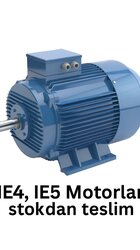

Efficiency in an electric motor shows how much of the electrical energy drawn from the grid becomes mechanical power at the shaft end. The difference turns into heat as winding, iron and friction losses. Efficiency classes measure how good this conversion is.
What Exactly Is Efficiency?
Efficiency is the ratio of output mechanical power to input electrical power. A 90 percent efficient motor turns 10 percent of the power it draws into heat as loss. These losses fall into three main groups: copper (winding) loss, iron (laminated steel) loss and mechanical friction loss.
What the IE Class Changes on the Bill
The international standard divides motors into five classes: IE1 Standard, IE2 High Efficiency, IE3 Premium, IE4 Super Premium and IE5 Ultra Premium. As the class rises, losses fall at the same power; moving toward IE5, the motor does the same work with less energy.
Which Class for Which Application?
For short, infrequent duties IE3 may be enough. In pumps, fans and compressors running continuously (S1 duty) for long hours, an IE4 or IE5 class noticeably lowers lifetime energy cost. The choice is made by operating hours and load profile.
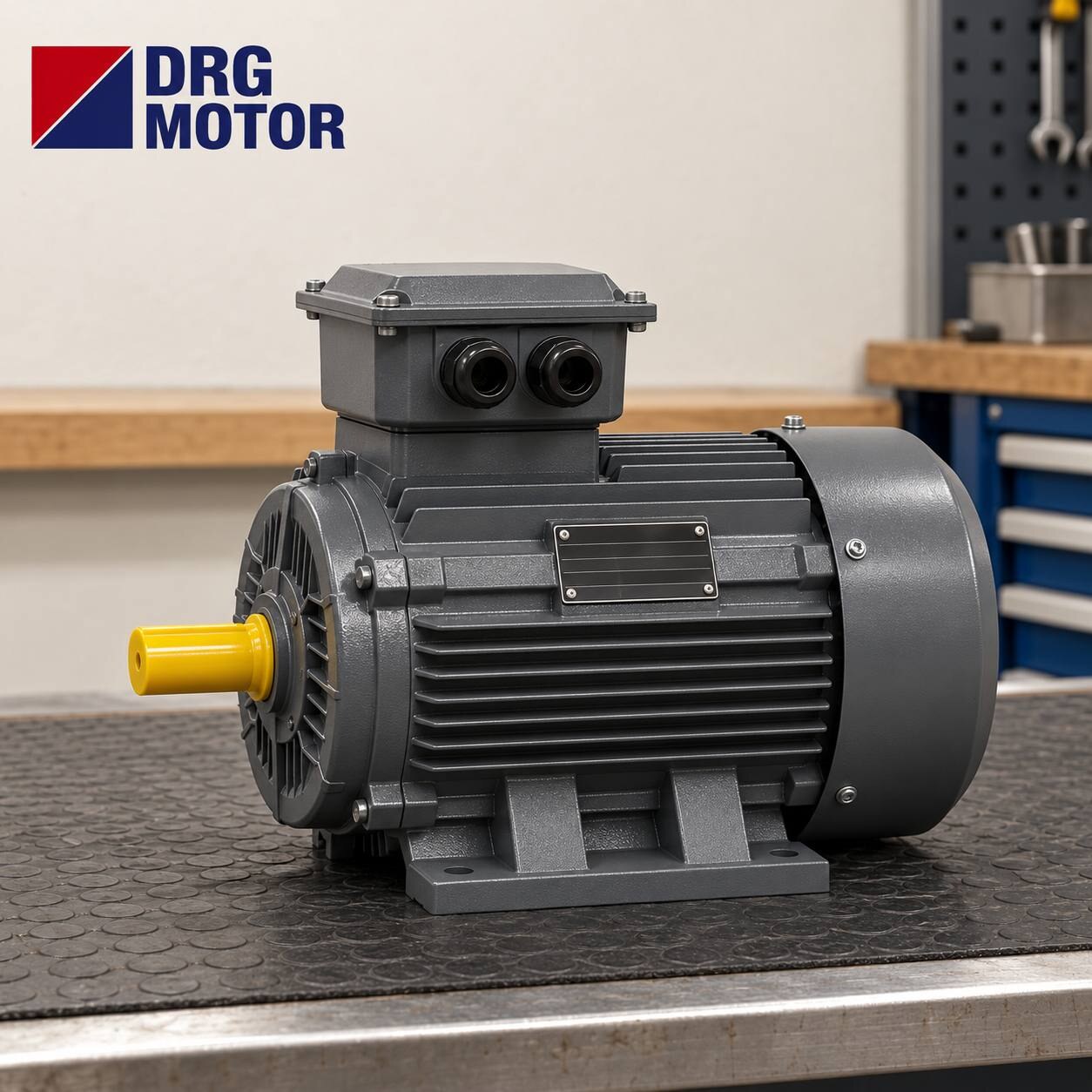
IE3-IE4-IE5 Motor Sales: DRG Motor
DRG Motor, a supplier based in Izmir, supplies IE3, IE4 and IE5 class motors from 0.55 to 355 kW with 2/4/6-pole options. Share your operating hours and load, and we will recommend the right motor by setting the efficiency class and power together.