 English
 Le français
 Türkçe

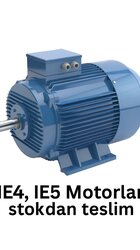
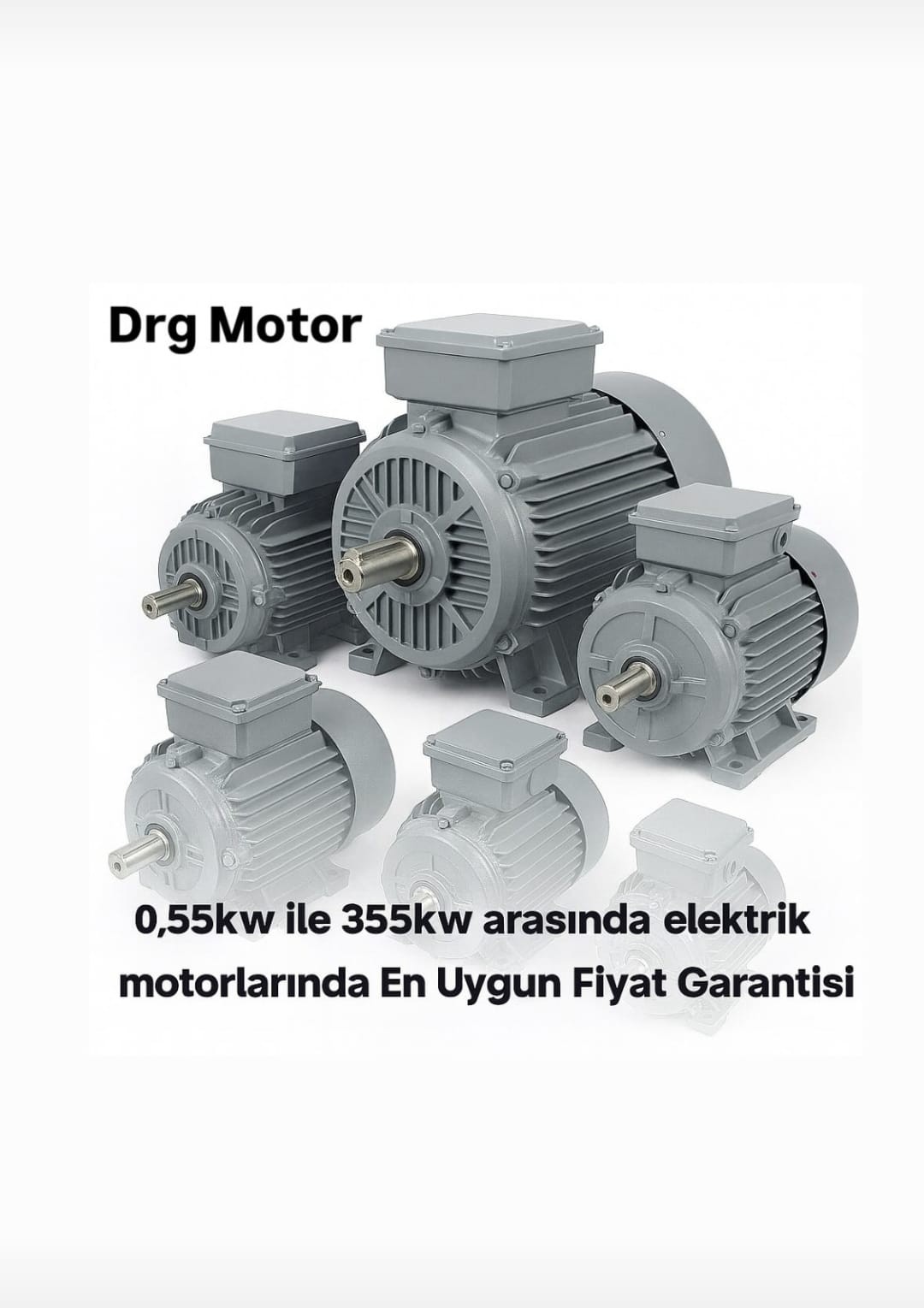

Concrete batching plants and crushing-screening sites give an electric motor about the hardest working conditions it will ever meet. Constant dust, heavy vibration, sudden load steps and long shifts wear an ordinary machine out fast.
What the Duty Actually Looks Like
Feed into a crusher is never uniform. One moment a large rock produces a sudden torque step, the next the feed stops and the machine runs almost unloaded. That swinging load demands high breakaway torque, plus enough reserve to survive short overloads. Aggregate dust finds its way into any motor whose protection rating is too low, and once inside it grinds at the bearing grease and settles into the winding insulation.
Motor Demand Varies by Equipment
No single specification serves the whole plant.
- Crushers: high starting torque and overload capability, usually four or six poles.
- Vibrating screens: balanced, durable machines that work under permanent vibration.
- Mixers: plenty of torque down at low speed, six-pole 1000 rpm being the common choice.
- Belt conveyors: continuous S1 duty, steady efficiency, flange mounting to suit a gearbox.
- Pump and fan sets: two or four poles for water and dust control.
Installed Power and Efficiency Class
Total motor power on a batching or crushing site can run into hundreds of kilowatts, and at that scale the class written on the nameplate is read back every month off the electricity meter. Under IEC 60034-30-1, IE3 and IE4 machines reach their figures through optimised rotor and stator design. Raising the class on a conveyor or mixer that runs all shift pays for itself out of the saving that builds up over the year.
Cast Iron Is Usually Mandatory
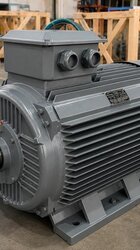
On screen and crusher lines the constant shaking tires a light aluminium frame, while cast iron versions of the same asynchronous machines damp the vibration and take mechanical impact far better. Cast iron also spreads heat evenly, holding winding temperature under control during heavy loading and extending service life.
Ratings That Survive a Batching Plant
Where aggregate dust is dense, IP55 is the minimum: it keeps dust out of the winding and blocks splashing water from any direction. F class insulation holds thermal margin even where ambient temperature is high, and S1 rated machines work a full shift driving conveyors and mixers without heat becoming an issue.
Choosing the Starter
Starting a crusher motor direct on line puts a sharp step into the supply and into the mechanical transmission alike, and on high-inertia crusher and mill drives that step tires belts, couplings and gears. Ramping up through a soft starter, or through a converter, also limits the starting current. On screens with varying throughput, the converter also trims energy by matching speed to demand.
Alignment, Vibration and Bearing Life
Most motor failures on heavy lines come from misalignment and excess vibration rather than from the motor itself. When the shaft and the driven equipment do not share an axis, a permanent side force sits on the bearings and shortens their life. Rising vibration readings are normally the first sign of that wear.
Dust on the Cooling Fins
Dust settling on the fins and fan cowl behaves like insulation, blocking heat rejection until winding temperature climbs and insulation life shortens. A totally enclosed fan cooled frame separates the winding from the outside dust while the external fins carry the heat away.
What a Stopped Line Costs
When one motor stops unexpectedly in a batching plant it can halt the whole sequence, and the mix has to move before it sets. Selection here is settled on uptime and on lifetime ownership cost, not on the lowest purchase price. Oversizing for a safety margin backfires: a motor running well below its real load falls off its best efficiency point and drags power factor down with it. Measure the true torque demand of each machine, add a sensible starting margin, and specify from that list.