 English
 Le français
 Türkçe

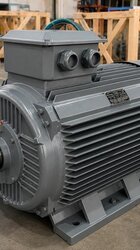
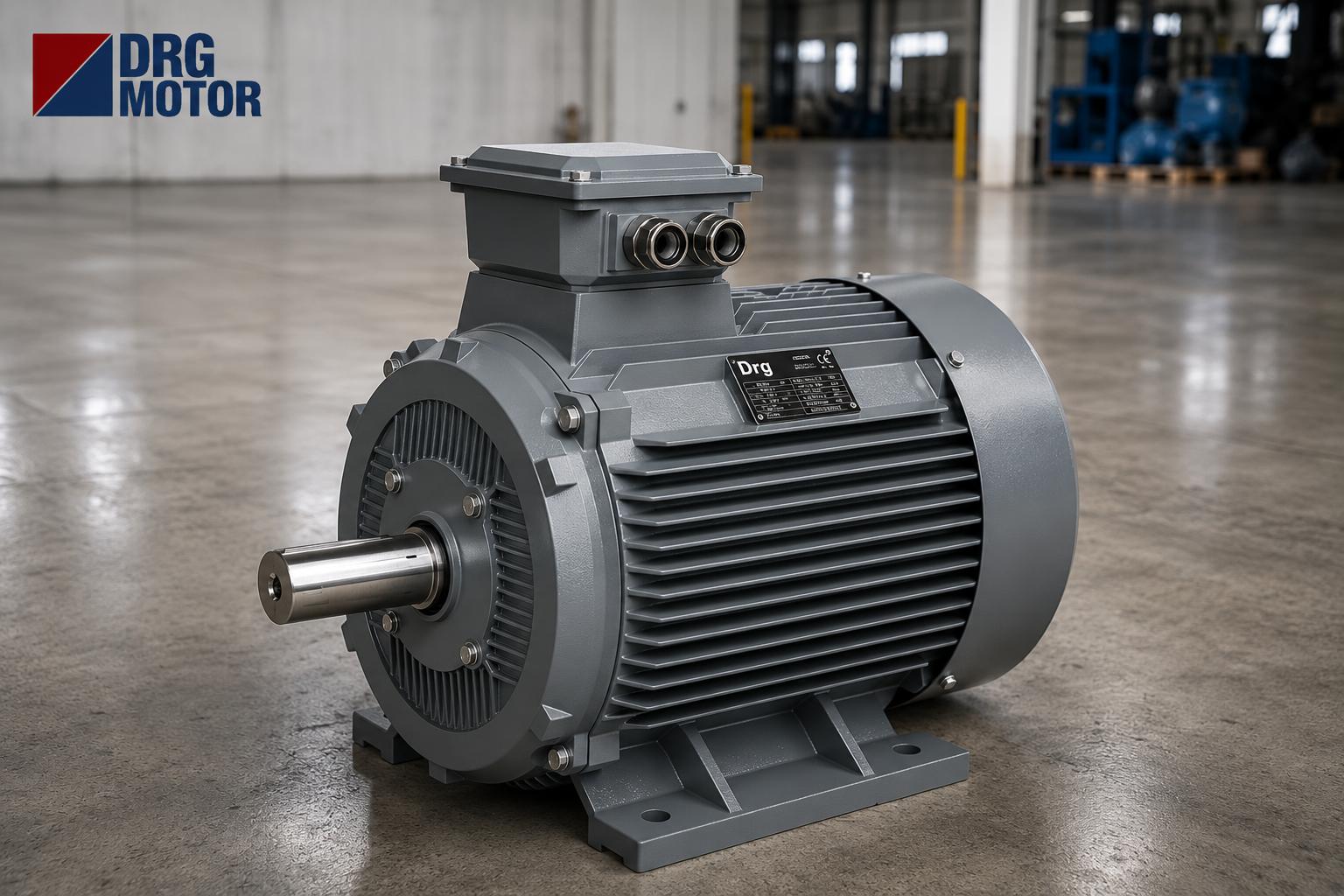

Cement and aggregate plants are among the most demanding industrial environments on earth, running around the clock under heavy load in dusty, abrasive conditions that punish equipment without mercy. From rotary kilns and hammer crushers to ball mills and belt conveyors, dozens of machines depend on high-power electric motors at their core. When a single motor stops unexpectedly, it does not just disable one machine; it can bring an entire production line to a halt for hours or even days. This is precisely why getting motor supply right for these plants is far more than a line item on a budget. It is a strategic decision that protects the continuity of production itself. At DRG Motor, we focus on this sector with a high-efficiency motor inventory proven in punishing conditions and ready for fast delivery.
The Realities a Cement and Aggregate Environment Forces on a Motor
A standard motor that runs flawlessly in a clean assembly hall or an office environment will often disappoint inside a cement plant. Fine cement and mineral dust clogs cooling fins, wears down sealing elements, and constantly tries to work its way into the bearings. High ambient temperatures, continuous vibration, and sudden load swings directly threaten the life of windings and bearings. For this reason, selecting a motor for aggregate and cement applications means weighing far more than the power rating alone; protection class, insulation class, and mechanical durability must all be assessed together.
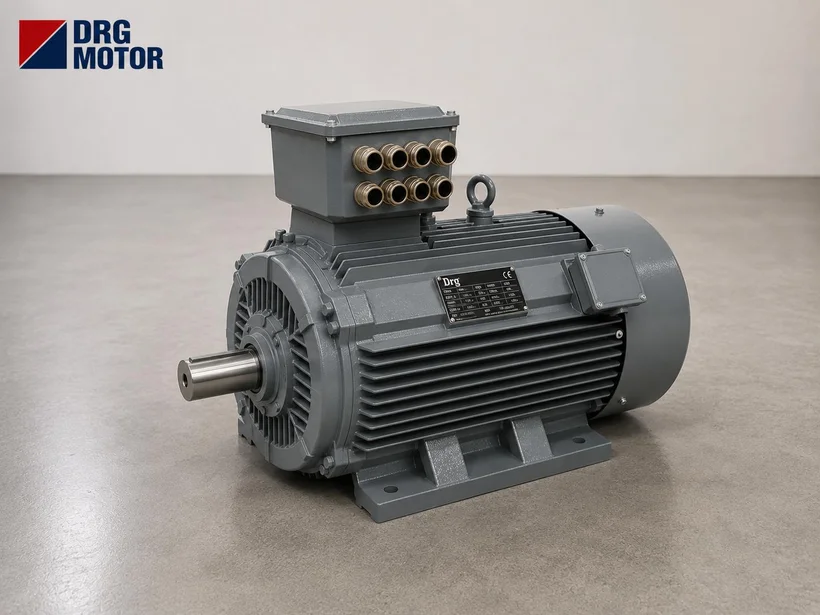
In the solutions we supply, we emphasise the features that genuinely make a difference in the field: IP55 and higher protection enclosures, F-class insulation combined with B-class temperature rise, and rugged frames built for vibration. With this margin, a motor running below its rated power still keeps a thermal reserve and produces far fewer failures over the long term. What plant managers truly look for is not the numbers printed on a nameplate, but a shaft that keeps turning through every shift and a line that is still running when they arrive the next morning.
Which Motor Power for Which Equipment
Motor demand in cement and aggregate plants is extremely varied, and every application calls for its own torque-speed profile. Reading that profile correctly removes both the cost and the failure risk of starting out with a motor that is too large or too small. The applications below are the ones we encounter most often in our supply requests:
- Primary and secondary crushers: Require sturdy, high-starting-torque motors built to withstand sudden load shocks. The solutions we offer for these duties sit within our stone crushing plant motors range, with power bands matched to real field conditions.
- Ball and vertical mills: Heavy-duty applications demanding continuous high power, long running hours, and very low vibration tolerance.
- Belt conveyors: Usually geared drives at medium-to-high power, needing smooth acceleration on start-up.
- Fans and exhausters: Running continuously in kiln and filter systems, with efficiency that feeds straight into the energy bill.
- Elevators and feeders: Applications demanding high torque at low speed, with frequent start-stop cycles.
Determining the right power, speed, and mounting type for each of these affects energy cost just as much as field productivity. That is why we always begin the supply process by asking about the application's real load profile rather than guessing.
Efficiency Class Writes the Energy Bill Directly
In cement and aggregate plants, electric motors account for a very large share of total energy consumption. At this scale, a difference of just a few points in efficiency class turns into a substantial sum by the end of the year. Choosing an IE3 or IE4 motor instead of IE2 may look like a slightly higher figure at the moment of purchase, but in a continuously running plant the payback period for that difference is often far shorter than expected. In high-power applications this calculation becomes even clearer, because the higher the consumption, the greater the savings that efficiency delivers.
During the supply stage, we remind our customers to consider not only the price of the motor but the total energy load it will create over its annual running hours. Choosing the right efficiency class is not a short-term saving; it is a permanent advantage that flows into the plant's operating budget for years to come.
Stock, Speed, and the True Cost of a Stopped Line
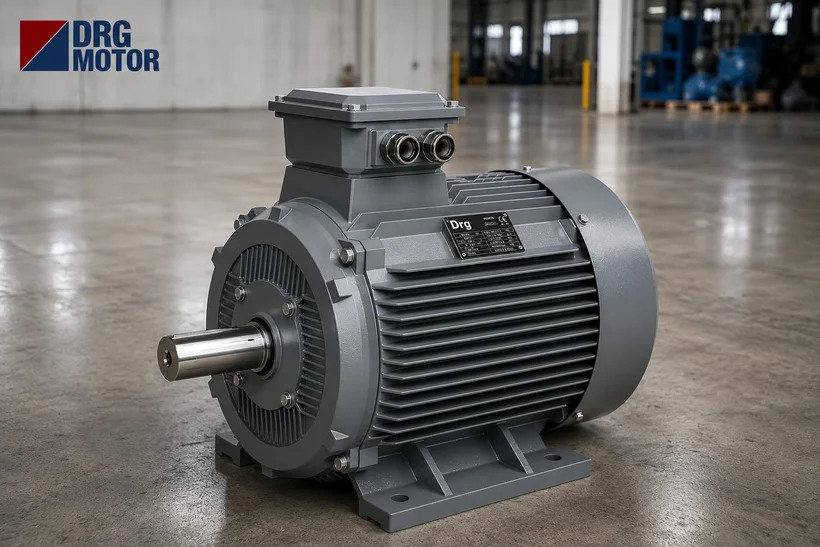
When a critical motor fails in a cement plant, the cost usually reaches far beyond the price of the product itself. Every stopped hour means lost production, contract penalties, and idle staff. For this reason, price is not the only decisive factor in high-power motor supply; how quickly the product reaches the field matters just as much. Thanks to our strong stock structure, DRG Motor can ship quickly in the most frequently requested power and speed bands, minimising the duration of unplanned downtime. For a maintenance team facing a halted kiln line at midnight, a motor that is already on the shelf in the correct frame size is worth far more than a marginally cheaper one quoted with a six-week lead time. We deliberately keep depth in the duty points that cement and aggregate plants ask for most, so that the answer to an emergency request is a dispatch date rather than a manufacturing queue. That stock-first approach is what turns an unplanned breakdown from a multi-day production loss into a same-week recovery.
As we carry our supply experience from the mining and heavy industry sectors over to cement and aggregate work, we understand just how urgently the field needs to act. We apply the same approach we developed for similarly harsh conditions in our maden elektrik motoru solutions, making sure plants are never left alone during an unexpected stoppage.
The Right Supplier Is an Advisor, Not Just a Price List
The most common mistake in high-power motor supply is reducing the decision to the nameplate power and a single price line. In reality, the right supplier for a cement and aggregate plant should be a technical counterpart who understands the field application, recommends the correct protection and insulation class, and can offer alternatives when needed. We are not a manufacturer but a solution partner that correctly matches and supplies the products of the sector's leading brands. This position frees us to recommend the motor that best fits the plant's real need, without being tied to a single brand.
You can see a concrete example of this advisory approach in our konkasör motoru fiyatı content, where we transparently break down the cost elements of crusher applications. Our aim is to help the customer see not only what they pay today, but the total value that motor will create over its entire service life.
What Technical Detail Means on the Plant Floor
Every value on the nameplate has a concrete counterpart in the field. The protection class determines how effectively dust is kept out of the motor. The insulation class shows how much heat the motor can withstand and therefore how hard it can be pushed. The mounting type decides whether the motor will fit the existing drive arrangement, and a wrongly chosen flange or foot type can cause days of fitment problems on site. Bearing construction and vibration class, meanwhile, directly govern service life in long-running continuous applications such as mills and fans.
This is why, when we receive a supply request, we ask for the required power, the speed, the mounting type, the ambient temperature, the duty regime, and whether a frequency converter is in use. These details prevent the wrong motor from ever being shipped to the field, sparing the customer an unnecessary return or a costly mismatch.
A Fast, Clear Quote for Your Plant
We are ready to supply the right product for the high-power motor needs in your cement and aggregate plants, in the correct protection class and on a fast delivery schedule. Whether you need to replace a single critical motor or equip an entire new line, we will assess your application's real load profile together and respond with a clear, specific quote. Share your equipment list and technical expectations; our team will quickly confirm stock availability, suitable power bands, and lead times, and get back to you. Getting cement plant motor supply right is the most tangible guarantee that your production continues without interruption, and we are here to provide exactly that.