 English
 Le français
 Türkçe

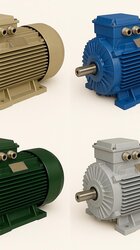
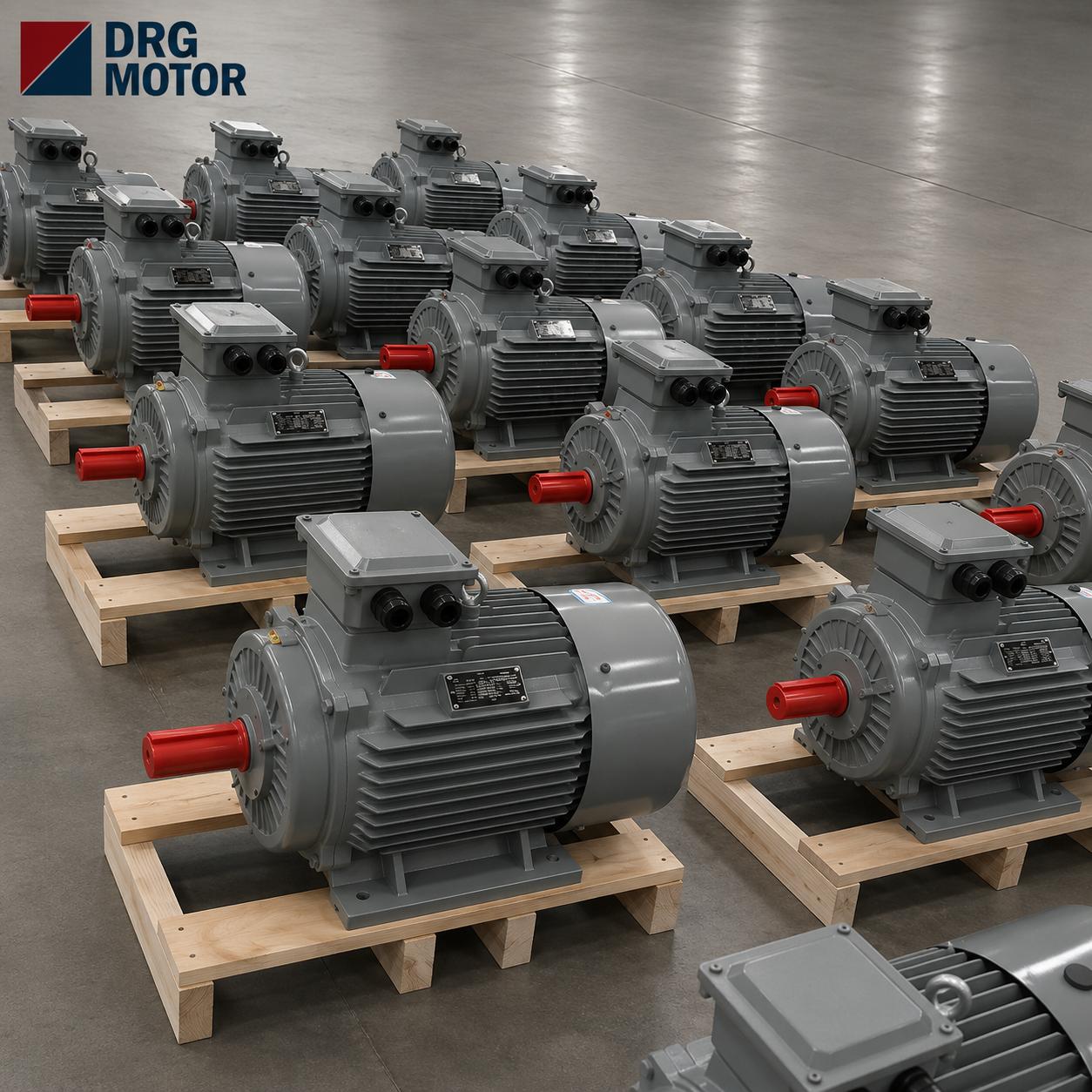

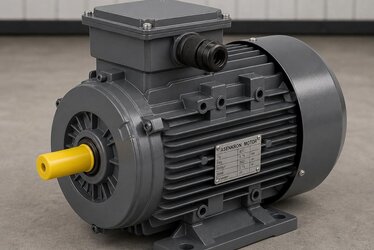
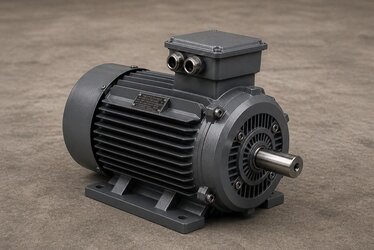
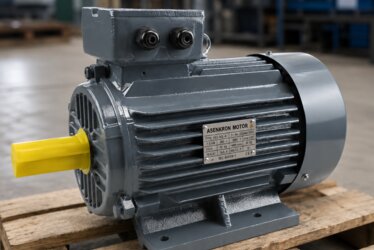
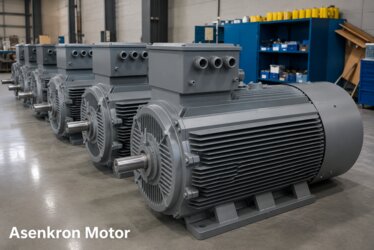
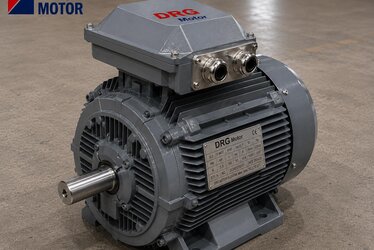
With every stroke of a jaw crusher, every second a hammer mill shatters rock and every shift a screen keeps shaking, the motor housing pays an invisible price. In these environments the housing material is no longer a detail; it is the main variable that decides how long the equipment survives. A cast iron housing, thanks to a mass that absorbs impact energy and disperses mechanical shock before it turns into structural damage, delivers far longer service life in heavy industry than aluminium or thin sheet-metal frames. On this page we approach impact resistance not from the price tag but from the real cost of failure on site, and we invite you to contact us directly for the configuration and quotation that fit your plant.
The Mark Impact Leaves on a Motor Housing
Heavy impact reaches a motor in two ways: direct external strikes and mechanical shock reflected back through the drive train. A large lump dropping into the crusher feed, a sudden load swing on the crusher rotor or a conveyor releasing its tension all send a shock wave through the shaft and mounting feet into the housing. Thin-walled light frames flex against this wave, accumulate micro-cracks and eventually slide into resonance. Cast iron, with its high mass and inherent damping capacity, swallows that energy; it lowers vibration amplitude and protects the geometry of the bearing seats, delaying any loss of bearing alignment.
Where the Mechanical Edge of Cast Iron Comes From
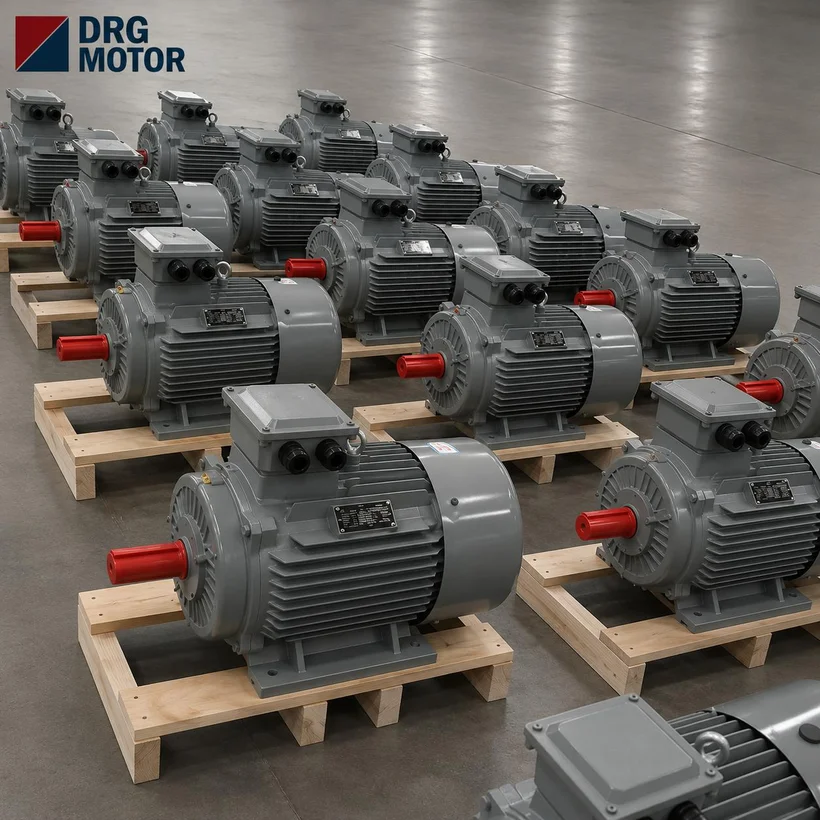
The graphite flakes distributed through grey cast iron give the material exceptional vibration damping and compressive strength. The same graphite structure makes the material behave more steadily against friction and wear. In an impact environment the three most critical properties are:
- High compressive strength: The housing holds its form under clamp and bolt forces without crushing; flange and foot contact surfaces keep their plane.
- Inherent damping: The graphite flakes convert vibration energy into heat and cut off the wave echoing through the housing.
- Dimensional stability: Under thermal expansion and mechanical load the housing geometry shifts minimally, which keeps bearing and air-gap alignment stable for a long time.
When these three properties combine, the cast iron housing is not merely a durable shell but a mechanical buffer that isolates all the sensitive internal components from the shock of the site. Our cast iron three-phase electric motor page covers every performance dimension of the housing material in more depth.
Why a Cast Iron Housing Is Essential in Crushers
Inside a crushing plant the rotating shaft carries three loads at once that almost no other duty stacks together: torque that lurches to a peak, acceleration that reverses direction every second and vibration that reaches into the bone of the machine. Jaw crushers, impact crushers, hammer mills and primary crushers pump that trio into the motor shaft without ever letting up. In these applications a light-frame motor soon develops cracks at the mounting feet, loosening at the terminal box and ovalisation at the bearing seat. A cast iron housing resists deformation under the same vibration spectrum and distributes the energy bursts across its structural mass.
Selecting the right motor for such lines requires evaluating the load profile, the cycle frequency and the mounting method together. For plant-type selections you can review our stone crushing plant motors range and request a quotation for the housing size that matches the impact character of your line.
Resistance to Cracking and Deformation
The moment a motor housing "breaks" usually does not arrive with a single large blow but with a fatigue crack accumulated over hundreds of small vibration cycles. This fatigue process accelerates in thin-walled frames, because low mass concentrates stress into a few cross-sections. In a cast iron housing the wall thickness and casting geometry spread stress across a large volume. Classic crack-initiation points such as the roots of cooling fins, foot corners and flange transitions are shaped with more generous radii in a cast design, lowering stress concentration.
In field practice this means that under the same impact load a cast iron motor shows its first crack far later, and even when that crack appears the housing mass prevents a sudden break, granting a planned maintenance window. Given that unexpected stoppages translate into hourly revenue loss in mining and aggregate plants, this delay is a direct financial gain.
Protection Against Dust, Moisture and Abrasive Environments
Impact never comes alone; the crusher and mining environment also means heavy dust, abrasive stone powder, moisture and temperature swings. The thick wall of a cast iron housing offers a far larger material reserve against corrosion and wear than a thin sheet frame. Even if the surface wears, enough wall thickness remains underneath to keep operating.
- High ingress-protection compatibility: The cast housing supports sealed covers and terminal boxes with a rigid seating surface; gasket pressure against dust and water entry is preserved for a long time.
- Thermal mass: The thick body absorbs heat slowly during sudden load increases and sheds it through a large surface, so temperature spikes stress the winding insulation less.
- Mechanical protection: Against accidental external effects such as falling rock, bucket strikes or tool contact, the housing takes the first line of impact.
Our page on cast iron housing heat dissipation and cooling behaviour complements this topic by showing how impact resistance and thermal endurance work together.
The Link Between Vibration, Resonance and Bearing Life
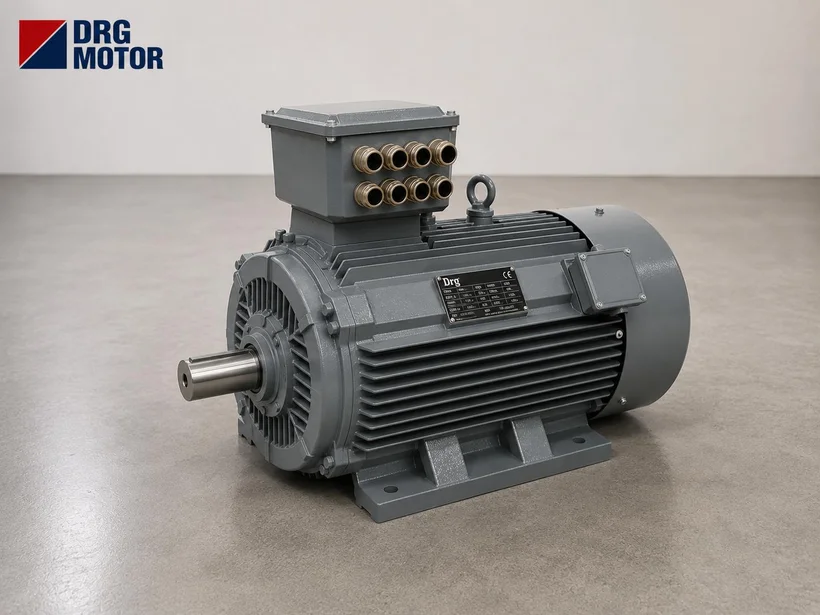
Impact resistance is not only a matter of "not breaking"; on lines where vibration is continuous, the real life-limiting factor is how long the bearings and winding withstand that vibration. A light frame carries external shock inward, causing early bearing fatigue and air-gap imbalance. The damping capacity of a cast iron housing weakens vibration before it reaches the bearing seats, which means the oil film is preserved and bearing life is extended.
For readers curious about how quiet, low-vibration operation is shaped by the housing material, our page on cast iron vibration damping and quiet operation addresses the same material's contribution on the continuity side rather than the impact side. Read together, the two topics make it clear why a cast iron housing is the shared answer for both impact-loaded and vibration-loaded lines.
Factors to Weigh When Choosing the Right Motor
When selecting a motor for a heavy-impact environment, the decision must be driven by the application's load character, not by a headline price. The main factors we evaluate together during supply are:
- Load profile: Continuous, impact or cyclic? Starting torque and switching frequency directly affect the housing size.
- Mounting method: Foot-mounted (B3), flange-mounted (B5) or combined mounting changes how impact load distributes into the housing.
- Environmental conditions: Dust density, moisture, ambient temperature and the type of abrasive powder set the protection class.
- Cooling needs: Whether an external fan or extra cooling is required for low-speed heavy loads.
- Spare parts and continuity: If line-stoppage cost is high, stock availability and fast supply become decision criteria.
For plants looking for a flexible starting point in general industrial applications, our general-purpose industrial motors offer a suitable base, while stressed and heavy lines require stepping the housing class up. Whatever your application, we can identify the right cast iron model for your impact profile together from our three-phase asynchronous motors range.
Where Cast Iron Sits in Total Cost of Ownership
A cast iron motor may carry a higher initial value at the moment of purchase; however, in a heavy-impact environment the decision does not end with that figure. The early failure of a light-frame motor usually triggers a far larger item alongside the spare-part cost: the line going down. In mining, aggregate and crushing plants an unplanned stoppage means a loss many times the price of the motor. The long service life, rare failures and predictable maintenance window of a cast iron housing pull total cost of ownership noticeably down over a few years of use.
That is why, at the quotation stage, we suggest putting the motor price beside the expected running hours, the stoppage cost and the maintenance frequency. When the right housing class is chosen, the extra paid usually returns with the very first unplanned stoppage avoided.
How Impact Energy Travels Inside the Housing
When an impact reaches the motor, the energy does not vanish; it looks for a path among the housing, the bearings, the shaft and the mounting base. In a light-frame motor this path is short and hard: the thin wall reflects the energy, the wave echoes inside the housing many times, and each echo adds a notch to the fatigue account. In a cast iron housing the energy spreads into a large mass, the graphite flakes turn part of the wave into heat and the rest is damped in a controlled way. This difference explains why, under the same impact value, a cast iron housing accumulates far less internal stress.
Understanding the journey of energy inside the housing also shows why the choice of housing class cannot be reduced to a single number. Two motors may have the same power; yet one absorbs the impact while the other traps it inside. During supply we evaluate the peak impact value and repetition frequency of your application together and recommend the housing configuration that distributes that energy most healthily.
When Heat and Impact Combine
A heavy-impact environment is rarely cool and clean; it usually comes together with high ambient temperature, friction heat and inadequate ventilation. As temperature rises, the mechanical strength of the material drops and the same impact causes more damage. Here the thermal mass of the cast iron housing provides a second advantage: the thick wall absorbs heat slowly and sheds it through its large surface, so the housing's resistance to impact is largely preserved even at high temperature.
This combined effect explains why on some lines light-frame motors fail more often in summer. A selection made without accounting for how temperature affects impact resistance may look good in a cold test yet surrender early on site. The ambient temperature, dust load and ventilation conditions of your plant are as decisive in the housing-class decision as the impact profile; that is why we gather this data together before quoting.
Observations From the Field: Where Light Frames Give Way
Over the years, feedback from crushing and screening lines shows that light-frame motors surrender at the same weak points again and again. The most common picture is hairline cracks starting from the bolt holes of the mounting feet; the thin cross-section fatigues under repeated impact, first showing an invisible line and then a full break that separates the foot from the housing. The second frequent point is the terminal-box connection: constant vibration loosens the seating surface of the cover and the gland, dust and moisture seep in, and insulation resistance drops. The third point is the gradual ovalisation of the bearing seat; when the housing cannot damp the impact, the seat grows by microns, the bearing develops play and failure accelerates.
In a cast iron housing all three scenarios are markedly delayed. The thick foot section makes cracking harder, the rigid terminal-box seating surface preserves gasket pressure, and the massive bearing seat keeps its geometry stable for a long time. The difference on site is often summed up in a single sentence: "we used to swap the motor every two years; now the same motor is in its fifth year." We do not offer these observations as a literal promise for every plant, yet the field repeatedly confirms that choosing the right housing class genuinely lengthens the interval between failures.
Matching Load Type to Housing Class
Not every heavy application calls for the same level of cast iron; the point is to match the load type to the housing class correctly. In supply discussions we roughly divide the application into three impact profiles:
- Steady heavy load: Continuity-driven applications such as compressors, pumps and fans; here housing strength matters but impact peaks are limited.
- Cyclic load: Applications that switch in and out such as conveyors, hoisting and mixing; each start brings starting torque and mechanical shock, so the housing's resistance to repeated fatigue comes to the fore.
- Severe impact load: Crushers, mills, hammer mills and primary crushing; peak torque rises far above the average and the vibration spectrum is broad, so the highest housing class is needed here.
This classification prevents both oversized and undersized motor selection. Buying an over-heavy housing for a light application inflates the budget; buying a weak housing for a heavy line costs far more through early failure. The right match balances both the initial investment and the total cost.
How Mounting and Commissioning Details Affect Durability
Even the soundest cast iron housing can have its life shortened by faulty installation. In an impact environment there are a few practical points to watch during commissioning. The rigidity of the foundation platform is decisive; a flexing or cracked base reflects back the vibration the housing damps, reducing the advantage. Coupling and pulley alignment directly affects the side-load shock travelling from the shaft into the housing; a misalignment creates a constant strain that even a cast iron housing cannot overcome.
- Bolt torque: Foot bolts must be tightened evenly and to the manufacturer value; a loose foot piles the impact onto a single point.
- Vibration mounts: On some lines damping pads placed between the housing and the base support the inherent damping of the cast iron.
- Periodic alignment checks: Heavy impact can shift alignment over time; regular checks directly protect bearing life.
Once the right housing class is chosen, attending to these mounting details fully realises the long life a cast iron housing offers. During supply we also share mounting-method and connection recommendations suited to your application.
The Weight of Housing Choice in Mining and Aggregate Lines
Quarries, lime and cement plants, aggregate and ready-mix lines make the motor not just a power source but the most critical link in the line. In these operations the feed is uninterrupted, the material is abrasive and the stoppage cost is high. Along the chain stretching from the primary crusher to the screen, from the conveyor to the mill, a single motor giving way usually halts the entire line. That is why housing choice on these lines moves beyond a supply preference and becomes a direct part of operational continuity.
In these environments the impact and wear resistance offered by a cast iron housing noticeably reduces the line's risk of an unplanned stoppage. When the lump impacts at the feed point, the abrasive effect of stone dust and the moisture-temperature swings are considered together, the material reserve provided by a thick wall becomes decisive. When selecting motors for your mining and aggregate plants, we assess the criticality level of each motor on the line separately and recommend the most robust housing class for the highest-risk points.
The Importance of Spare Parts, Stock and Fast Supply
Choosing the right motor in a heavy-impact environment is not enough on its own; the supply chain behind that motor is at least as decisive as the housing material. When a crusher line stops, the time lost is larger than the price of the motor in most operations, so how fast a spare motor or critical parts arrive directly affects production loss. That is why, in the supply discussion, we cover the housing class, the stock status, the delivery time and the availability of spare parts in the years ahead.
- Stock availability: Ready stock in frequently used power and mounting classes brings a line back up quickly in an unexpected failure.
- Delivery-time transparency: Sharing a realistic delivery schedule at the quotation stage lets you build your maintenance planning on solid ground.
- Long-term parts support: Accessibility of critical parts such as bearings, gaskets and terminals extends the total life of the motor.
This approach aims to put the right cast iron motor on site and to keep it running for years. As a supplier, our value lies in standing beside you not only at the first sale but throughout the life of the line.
Making Maintenance Planning Predictable
In a heavy-impact environment the goal of maintenance is not to wait for failure but to see it coming. One of the most valuable traits of a cast iron housing is that it offers a slow-developing, observable wear profile instead of sudden, unannounced breaks. When vibration measurement, temperature monitoring and regular visual inspection come together, it becomes possible to fit the maintenance window of a cast iron motor into the shift schedule.
This predictability is especially valuable in mining and aggregate plants, because the cost of an unplanned stoppage is not just repair but the lost output of a halted line. The cast iron housing's tendency toward late, signalled failure turns maintenance from an emergency response into a planned job. During the supply process we also discuss the availability of critical parts such as spare bearings and gaskets, helping you keep that maintenance window genuinely short.
Let Us Define the Right Cast Iron Solution for Your Plant
Heavy impact, continuous vibration and an abrasive environment turn motor selection from a standard catalogue choice into an engineering decision. As a cast iron three-phase motor supplier, we listen to your load profile, mounting method and environmental conditions, then clarify the housing class suited to your crusher, mill and mining lines while sharing stock status and delivery time transparently. To receive the motor that matches the impact character of your line and our current quotation, simply get in touch; let us define together the cast iron configuration that fits your application best.