 English
 Le français
 Türkçe

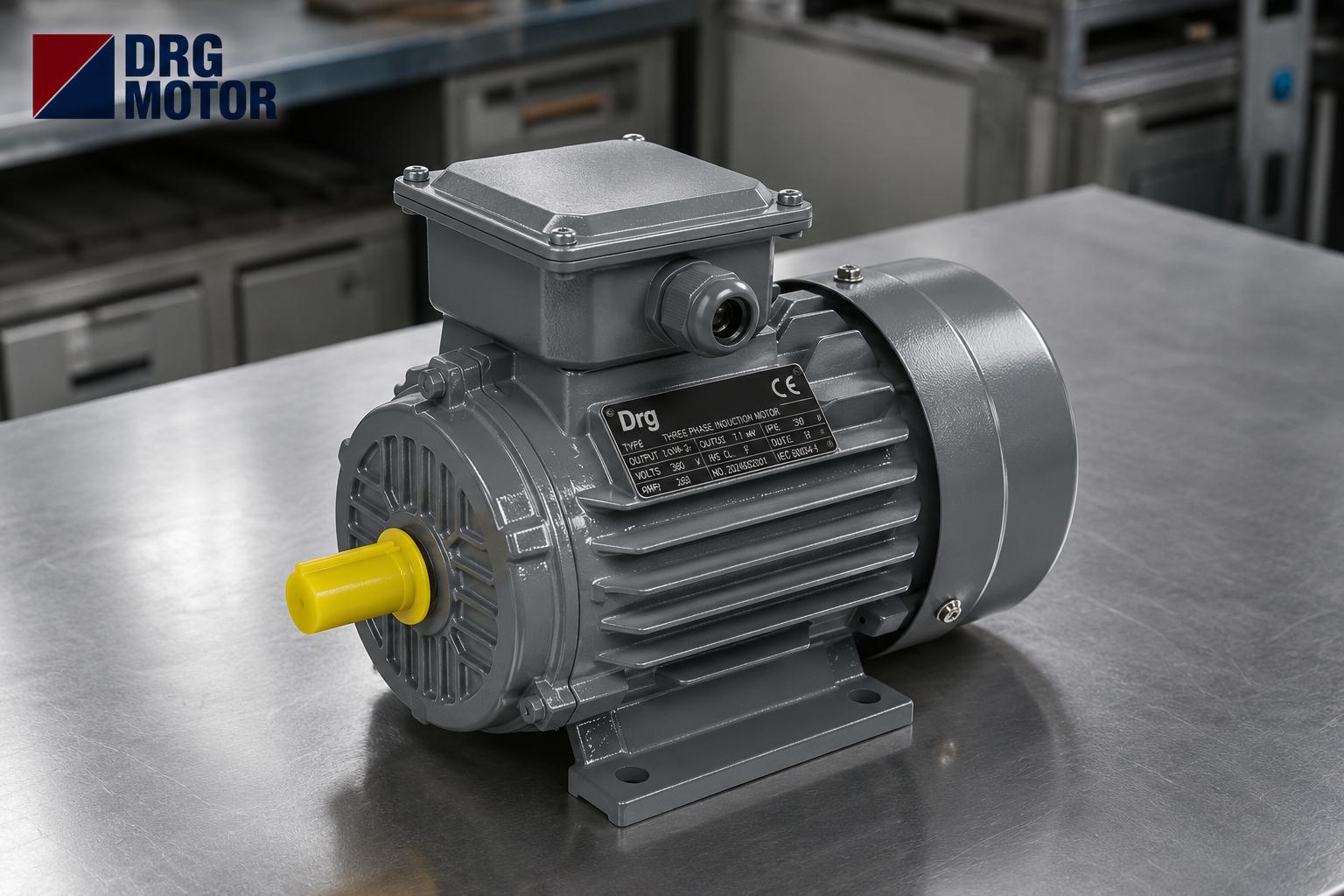

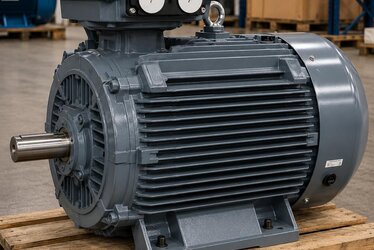
The real productivity of a recycling plant is measured by how quickly and continuously incoming material can be broken down and moved. Sudden shock loads on the crusher shaft, conveyor lines turning for hours without pause, and constant operation in dusty, humid conditions push every motor on the drive side far beyond ordinary duty. A single poorly selected recycling motor can lock up an entire shift with one unplanned stoppage. At DRG Motor we do not build plants; we are a B2B partner that supplies the right power, the right protection and the right stock speed from a single point of contact.
No two recycling operations are alike. The needs of a plastic baling line differ fundamentally from those of a scrap metal shredding plant. That is why we build every quotation around the load profile of your site: material type, crusher type, speed range, cycle frequency and ambient conditions. We apply the same disciplined approach to heavy industry lines as well; for example, the selection logic behind our stone crushing plant motors can be mapped directly onto the impact character of recycling crushers.
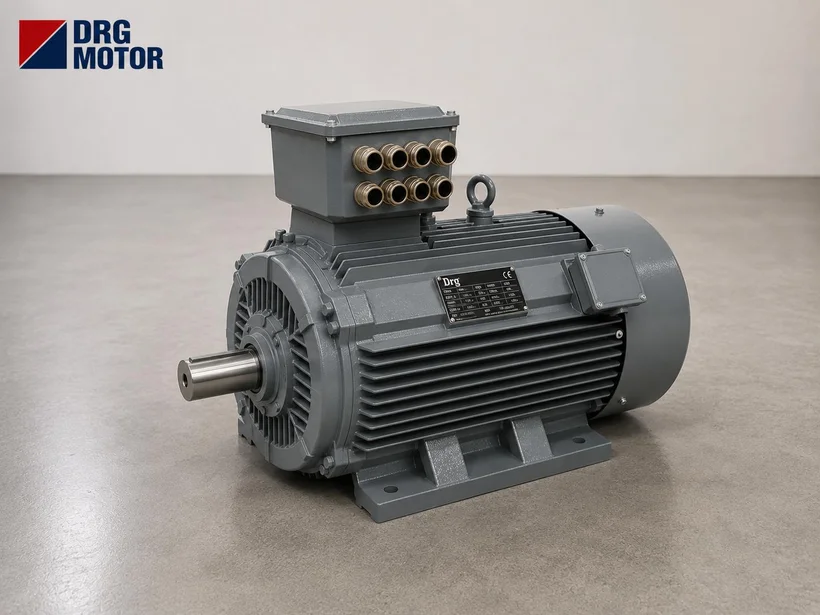
The shock load reality in crusher and shredder motors
The crusher is the heart of a recycling line, and these machines never run on a flat load curve. An unexpected piece of metal, a thick block of plastic or a jammed bale forces the motor to face a counter-force many times above its rated torque in an instant. For this reason, selecting a recycling motor is never about kW alone; starting torque, breakdown torque and short-term overload capacity are the decisive factors.
In shredder-type applications, high starting torque and a winding design that withstands frequent load reversals come first. In single-stage primary crushers, continuity and thermal endurance take priority. We study the load table coming from the field and raise the service factor of the motor accordingly, because in recycling there is no such thing as an average load, only the worst moment.
Shock loading also fatigues the mechanical transmission components. For this reason we consider the motor together with the coupling, pulley and gearbox, and recommend the right connection type so that sudden torque spikes do not damage the shaft and bearings. On lines that jam frequently, we make the combination of thermal and electronic protection a part of the quotation, ensuring the motor drops out safely under overload. The goal is that every time the crusher snags, it is the correctly designed protection chain that intervenes, not the motor itself.
Continuity and low-speed torque on conveyor lines
No matter how powerful the crusher is, when the conveyor carrying the material stops, the whole line stops. In recycling plants, conveyors usually start under load, meaning they must pull from standstill while the belt is already full. This demands a motor that produces high torque at start-up and then delivers stable moment at low speed.
- High starting torque suited to loaded start-up with correct gearbox matching
- Right pole count selection for constant moment even at low speed
- Brake and holding solutions that prevent roll-back on inclined belts
- Winding insulation fully compatible with frequency inverters for variable feed
We always evaluate conveyor motors together with the crusher, because the rhythm of the line breaks at a single weak link. Since the gearbox flange and shaft dimensions of the motors we supply match site standards, installation-related delays are also eliminated. On long conveyor lines with more than one drive point, balanced load sharing between these motors becomes critical too; otherwise one drive drags the other and belt tension breaks down.
On inclined, outdoor conveyors, brake motors and anti roll-back solutions come into play as well. Keeping a loaded belt from rolling back during a power cut is vital both for safety and for restart time. We ask about these details during the quotation stage and recommend based on the real geometry of the site, because a standard conveyor motor stops being standard on an inclined line.
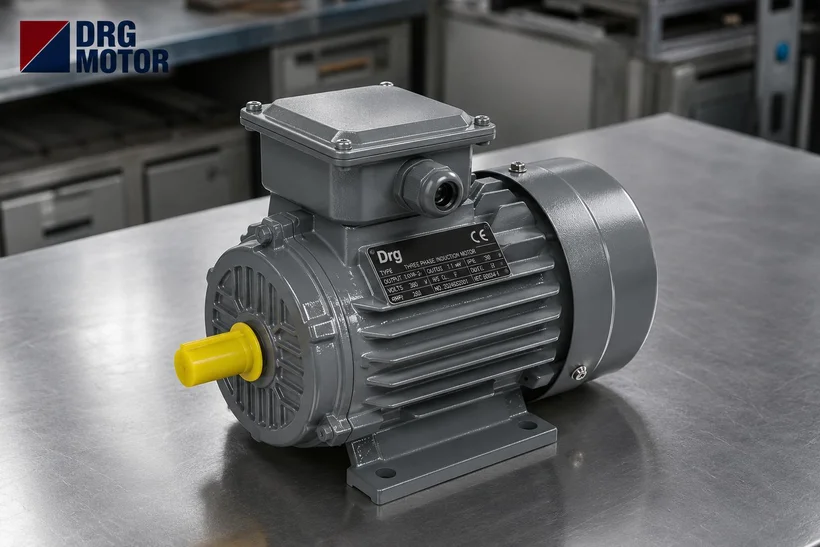
Protection class against dust, moisture and abrasion
A recycling site is one of the harshest environments a motor can face. Fine conductive dust, moisture from washing lines and constant vibration quickly wear down a motor with an inadequate protection class. That is why we recommend at least IP55 as standard on these lines, and IP65 or higher at critical points. For enclosed crushing chambers with heavy dust, we offer additional seal and shaft gasket packages.
For insulation, we prefer the F insulation / B temperature rise combination, so the motor keeps its thermal margin in hot and dusty conditions. We apply the same endurance logic on cement and mineral lines too; our content detailing this approach, çimento tesisi motoru, overlaps closely with the abrasive-environment expectations of recycling.
Efficiency class and energy cost
Conveyor and crusher motors are equipment that runs 16 to 24 hours a day. At this intensity of operation, the efficiency class of the motor is reflected directly in the electricity bill. IE3 and, where possible, IE4 efficiency class motors may cost a little more at the initial investment, but they usually pay back that difference within the first season through annual energy savings.
During the quotation stage we ask about your annual operating hours and tariff structure, because choosing the right efficiency class based on the real use of the site is always more profitable than choosing from a catalogue. Our goal is not to supply the most expensive motor, but the one that lowers your total cost of ownership the most.
Fast stock, critical spares and the cost of downtime
In a recycling plant, one hour of downtime costs that hour's output, the clearing of accumulated material on the line and your contracted delivery schedule. That is why supply speed is as critical as price. We keep broad stock in the most frequently used kW ratings and frame sizes; for non-standard requests we give a firm lead time and never spring surprise delays.
We recommend drawing up a spare plan for the critical motors of your plant. Together we identify which motors would lock the entire line if they failed, and we arrange priority stock and fast shipment for these items. Our experience in sectors with very high downtime cost, which we describe in our maden elektrik motoru article, summarises well why this backup approach works.
In practice, the biggest saving we see comes not from the motor price but from the stoppages avoided. When a recycling plant can fit a shelf spare and keep producing instead of waiting for days, the cost of a single motor has already paid for itself. That is why in quotation talks we discuss the motor to be purchased and how quickly it can be replaced in the event of a failure. Fast supply is not a luxury for a recycling operation; it is a guarantee of production.
Frequency inverter and variable speed compatibility
Most recycling lines today are driven by frequency inverters. This offers a major advantage in adjusting the feed to material flow, providing soft starts and saving energy. However, every motor driven by an inverter must be ready for it in terms of winding insulation and bearing design. Otherwise voltage spikes and shaft currents end the motor's life far earlier than expected.
Because the crusher keeps jamming and clearing and the conveyor feed keeps changing with material flow, the winding is hit by far harsher and more frequently repeated voltage spikes than on an ordinary line; that is why, on recycling crusher and conveyor lines you intend to drive from an inverter, we select motors with spike-resistant magnet wire and reinforced winding insulation, and add insulated bearings on the higher-power units where the risk of shaft currents is greatest. On conveyors that will run for long periods at low speed, we evaluate forced cooling options, because a motor relying on its own fan may not cool adequately at low speed. When preparing the quotation, we always ask which motors will be fed from an inverter.
How we shape the quotation
We do not give a net price without knowing the site, because the right price is the price of the right motor. Instead, we build the quotation around a few concrete factors:
- Power need of crusher and conveyor, starting torque and cycle frequency
- Required protection (IP) and insulation class, ambient dust and moisture
- Efficiency class and energy projection based on annual operating hours
- Gearbox/flange matching and mechanical fit with the existing line
- Critical spare needs and delivery time expectation
It is enough to send us this information; we handle the rest. Whether you are looking for a single motor or a full supply plan for the entire line, we move forward by clarifying every step from recycling motor selection to shipment.
The right power for your recycling line is one message away
Do not leave your plant's crusher and conveyor motors to guesswork. Share your load profile, operating hours and ambient conditions with us, and let us prepare a site-specific recycling motor supply quotation balanced for efficiency and endurance. With fast stock, the correct protection class and firm lead times, we are here as a B2B partner that keeps your line turning without interruption. Tell us your requirement today, and let us build the most suitable motor and delivery plan together.