 English
 Le français
 Türkçe

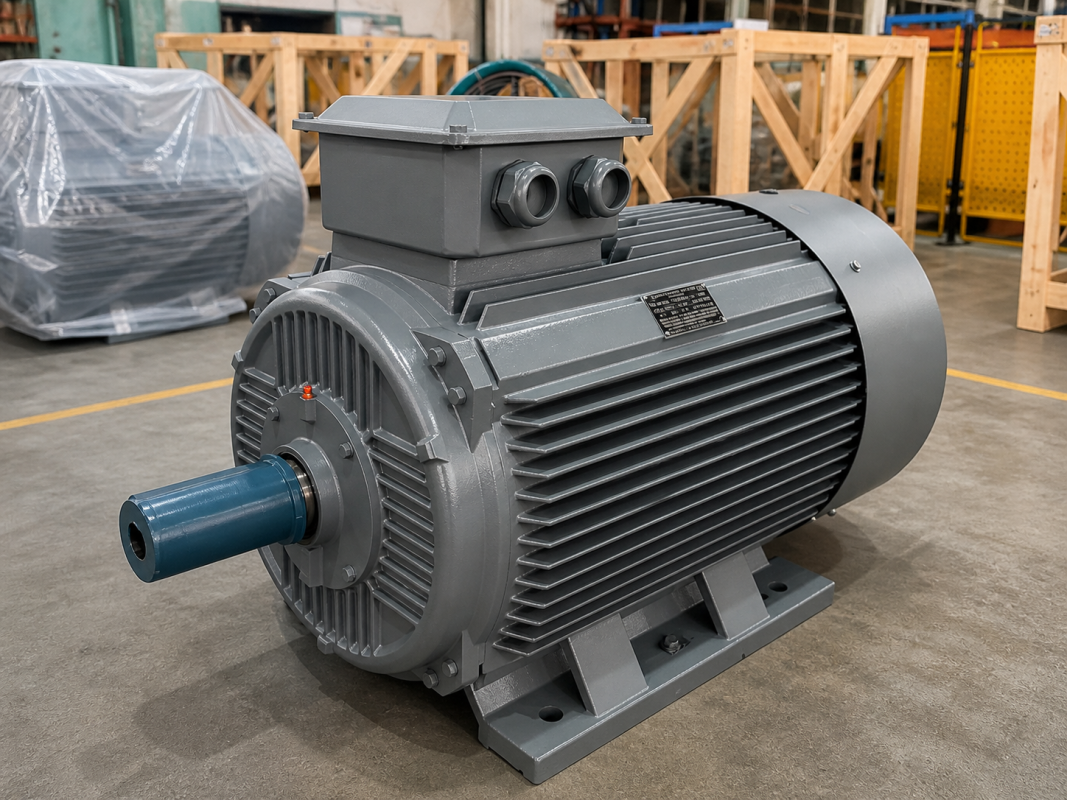

The most critical factor determining the life of an electric motor often comes down to a single, usually invisible variable: winding temperature. As long as the windings stay within the temperature limit they were designed for, the motor runs safely for decades; but when that limit is exceeded even for a few minutes, the insulation ages rapidly and the motor begins to die silently. This is exactly why the temperature sensors placed inside a motor work like a modern motor's immune system. At DRG Motor, thermistor (PTC) and PT100 sensor pockets are offered as standard in many of the motors we supply; because measuring winding temperature directly, instead of guessing it from the outside, is the most certain way to protect a motor. In this article we cover step by step how thermistors and PT100 work, the differences between them, how they integrate with a protection relay, and the deep relationship they have with the insulation class.
Why Is Winding Temperature So Important?
The heating of a motor is a natural result of the current flowing through it. However, every insulating material has a temperature ceiling it can withstand. When this ceiling is exceeded, the insulation life shortens exponentially. Continuously monitoring the winding temperature is the only reliable way to keep the motor below this invisible ceiling. We covered the foundation of this topic in detail in our electric motor temperature control article.
Why Is Measuring From the Outside Not Enough?
The temperature measured from the motor's frame lags far behind the actual temperature of the winding. This is because heat is first born in the winding, then reaches the iron core and finally the frame. By the time the frame heats up, the winding may already have reached a dangerous temperature. For this reason, real protection requires the sensor to be placed directly inside the winding, where the heat is born.
The Logic of Embedded Sensors
Embedded sensors are placed between the winding heads while the motor is being wound and are buried in the varnish. This way they measure within a few millimeters of the hottest region of the winding. In a three-phase motor, usually one sensor is placed per phase; protection is provided based on the temperature of the hottest phase. This placement makes it possible to detect a temperature rise within seconds.
What Is a Thermistor (PTC)?
A PTC (Positive Temperature Coefficient) thermistor is a small semiconductor element whose resistance rises as the temperature increases. At normal temperature its resistance is low and stays almost constant. When a certain threshold temperature (the rated response temperature) is reached, its resistance suddenly and very sharply rises. This sudden jump is interpreted by the protection relay as an alarm or a stop signal.
How Does a PTC Trip?
A PTC is not a thermometer but a threshold switch. It has a single job: to report that the set temperature has been reached. When the winding reaches this threshold, the PTC's resistance rises rapidly, the protection relay detects this change and stops the motor. A PTC does not tell you how many degrees it is; it only says "the limit has been exceeded." This simplicity makes it a fast and reliable last line of defense.
What Is a PT100?
A PT100 is a precise temperature sensor made from a platinum resistance. The 100 in its name comes from showing exactly 100 ohms of resistance at 0 °C. As the temperature rises, its resistance increases linearly and predictably. Thanks to this, a PT100 continuously measures not just a threshold but the exact value of the instantaneous temperature. With a PT100 you can read how many degrees the winding is at any moment.
Continuous Measurement With PT100
The greatest advantage of the PT100 is that you can see the temperature as a trend. If the winding is slowly heating up, you notice it before it reaches the danger limit and take precautions. This feature makes the PT100 ideal for predictive maintenance. A slow climb in the temperature curve is an early herald of blocked ventilation, increasing load, or a beginning mechanical problem.
PT1000 and Other Variants
Platinum resistance sensors are not limited to the PT100; the PT1000, showing 1000 ohms at 0 °C, is also common. The higher base resistance reduces the effect of cable resistance on the measurement and gives more stable results over long cable distances. Its working logic is the same as the PT100; only the resistance scale differs. Which variant to use is determined according to the input type of the protection relay or transmitter.
Three- and Four-Wire Connection
The accuracy of a PT100 sensor is also affected by the resistance of the cable running to it. In long cables, a two-wire connection creates error by reading the cable resistance as if it were the winding temperature. For this reason, in precise applications three-wire or four-wire connections are preferred; these connections account for the cable resistance and subtract it from the measurement. The correct connection type ensures that the precision offered by the PT100 is not wasted.
Click to see current electric motor prices and order nowSEE PRICES →
The Fundamental Difference Between PTC and PT100
The philosophy of the two sensors is different. The PTC is a protector: it waits quietly and only steps in at the moment of danger. The PT100 is an observer: it measures continuously and gives you the full data. In many advanced motors the two are used together; the PT100 for monitoring and trends, the PTC as the final safety lock. The table below compares these differences together with the thermal overload relay.
| Feature | PTC Thermistor | PT100 | Thermal Overload Relay |
|---|---|---|---|
| Measurement location | Inside winding (embedded) | Inside winding (embedded) | Outside motor (via current) |
| Value measured | Threshold exceeded (yes/no) | Instantaneous temperature value | Drawn current |
| Sensitivity | Single threshold, very fast | High, continuous | Indirect, delayed |
| Trend tracking | None | Yes | None |
| Typical use | Last-line protection | Monitoring + protection | Overload protection |
Why Is a Thermal Relay Not Enough on Its Own?
A thermal relay provides indirect protection by measuring the current the motor draws. It steps in when the current rises, which works in most overload situations. However, the thermal relay does not see the actual temperature of the winding. A motor with blocked ventilation, high ambient temperature, or frequent start-stop cycles can overheat even while drawing normal current. In these cases the thermal relay does not respond at all. For this reason, embedded sensors fill the gap that the thermal relay cannot see. We covered the details of overload protection in our electric motor overload protection article.
The Protection Relay and Its Working Logic
Embedded sensors do nothing on their own; they must be connected to a protection relay. For the PTC, a dedicated thermistor relay continuously monitors the resistance of the sensors and opens its contact to stop the motor when the threshold is exceeded. For the PT100, a temperature transmitter or PLC input converts the resistance value into temperature, both displaying it and applying the alarm/stop limits.
Alarm and Stop Thresholds
A good protection strategy is two-stage. The first threshold is an alarm: the temperature is rising but not yet dangerous; the operator is warned and the load can be reduced. The second threshold is a stop: the temperature has reached the critical limit and the motor is shut down immediately. While the PT100's continuous measurement makes this two-stage strategy possible, the PTC usually offers a single, sharp stop threshold.
Relationship With the Insulation Class
Temperature protection thresholds are not chosen at random; they are set according to the motor's insulation class. Every insulation class has a temperature ceiling, and the sensor thresholds are set just below this ceiling. A motor with a high insulation class withstands higher temperatures, so its thresholds are also higher. We explained this relationship with tables in our electric motor insulation class article.
Temperature Class and Threshold Selection
When determining the threshold temperature, the insulation's withstand limit and the operating environment are considered together. The alarm threshold is usually set somewhat below the insulation ceiling, and the stop threshold very close to the ceiling. This margin ensures that the insulation is not damaged during the short time it takes for the protection relay to respond and stop the motor.
Use With a Frequency Inverter
Embedded sensors are even more critical in motors running with a frequency inverter (drive). A motor running at low speed cannot push enough air with its own fan and can heat up in a way the thermal relay cannot see. Most modern drives have a PTC or PT100 input; the sensor is connected directly to the drive, integrating motor protection into the drive logic.
Dusty and Hot Environments
Dust blocks the cooling fins and fan cover of the motor, preventing heat dissipation. In hot environments, the motor's own heat is added to the already high ambient temperature. Under these conditions, the embedded sensor is the only guard that catches heating not noticeable from the outside. Our electric motor IP protection class article guides you in choosing the right enclosure for the environment.
The Effect of Frequent Start-Stop
In motors that frequently stop and start, a high inrush current flows at every start and this current heats the winding. If it starts again before there is enough time to cool, the temperature accumulates. While the thermal relay cannot see this accumulation, the embedded PT100 clearly shows the temperature climbing step by step and provides the opportunity to intervene in time.
How Many Sensors Are Needed?
In a standard application, three PTCs are connected in series to a three-phase motor; the heating of any phase triggers the protection. In more critical applications six sensors are used: three for the alarm threshold and three for the stop threshold. With PT100, usually one sensor is placed per phase and the hottest phase is taken as reference. Facilities that also want to monitor bearing temperature can add a separate PT100 to the bearing housings. The number of sensors is determined by the magnitude of the risk to be protected against.
Monitoring Bearing Temperature
Although not as much as winding temperature, bearing temperature is also a critical indicator in large motors. A worn or dry bearing heats up; this heating is caught by a PT100 placed in the bearing housing. An abnormal rise in bearing temperature is often the first sign that the end of bearing life is approaching. We gathered methods for extending bearing life in our extending electric motor bearing life article.
Heating Caused by Misalignment
A poorly aligned shaft strains the bearings and produces extra friction; this friction turns into heat. The additional load created by misalignment also causes the motor to draw more current than normal and the winding to heat up. Embedded sensors catch this indirect heating and give a clue to a mechanical problem. We explained the importance of correct alignment in our motor shaft and coupling alignment article.
The Trio of Noise, Vibration and Temperature
The health of a motor is understood not by a single indicator but by reading several signs together. Increasing noise and vibration often go hand in hand with heating; because friction produces both sound and heat. Temperature sensors fill the heat leg of this picture. We covered methods for reducing noise and vibration in our reducing electric motor noise and vibration article.
Phase Loss and Sudden Heating
In a three-phase motor, the loss of one phase causes the remaining two phases to draw excessive current and the winding to heat very rapidly. This heating can be so fast that only an embedded sensor can respond in time. We examined the symptoms and consequences of phase loss in our electric motor phase loss article; temperature protection saves lives in such faults too.
Integration Into the Maintenance Routine
Once temperature sensors are installed, they must not be forgotten and should be checked regularly. The test button of the PTC relay should be tried periodically, and the consistency of PT100 readings verified. Adding these checks to your electric motor maintenance steps routine ensures the protection system is always ready.
Together With Predictive Maintenance
The continuous temperature data offered by the PT100 is one of the basic inputs of predictive maintenance. Slow changes in the temperature trend report problems before a fault even occurs. When you combine this data with vibration data, you obtain the full health picture of the motor. We deepened the topic in our electric motor predictive maintenance article.
Combined With Vibration Monitoring
Temperature and vibration are like two complementary indicators. A bearing fault first increases vibration, then raises temperature due to friction. Monitoring the two data together strengthens early diagnosis. For wireless solutions, our wireless vibration sensor condition monitoring article offers an additional perspective.
Sensor Faults and Verification
Embedded sensors can also fail over time; a broken cable or a short-circuited sensor can give false readings. Good protection relays detect a break or short circuit in the sensor line and give a warning. This feature prevents the protection from silently dropping out and increases the reliability of the system.
Evaluating Together With Insulation Health
The insulation of a motor running continuously at high temperature ages rapidly; the result appears as a drop in insulation resistance. For this reason, temperature protection and periodic insulation measurements complement each other. Temperature sensors prevent aging, while the insulation test measures the degree of aging. Together they let you fully track a motor's insulation health.
Connection With Winding Quality
Correct placement of the sensors is part of winding quality. A sensor carefully buried between the winding heads measures the hottest point correctly; a carelessly placed sensor can give misleadingly low values. For this reason, quality winding sets the reliability of the winding and of the protection system around it. We covered the topic in our motor winding quality article.
Requesting Sensors When Choosing a New Motor
When purchasing a new motor, if your application is critical it is wise to request PTC and/or PT100 sensors. Embedding the sensors in the winding during production provides a far more reliable and accurate measurement than adding them later. These sensor options are offered on request in the products in DRG's industrial electric motors category.
Temperature Assurance With DRG Motor
Measuring winding temperature directly is the most certain way to protect a motor; because it offers real data, not a guess. At DRG Motor, we carefully offer PTC thermistor and PT100 sensor options in the motors we supply, according to the criticality of your application. Whether you want a sharp PTC protection for last-line safety or a precise PT100 system for continuous monitoring, we can design together the right solution to protect your windings from the inside. To protect your motors from temperature-related faults and extend their life, get in touch with the DRG Motor team; let us determine together the most suitable temperature protection solution for your facility's conditions.
DRG Electric Motors Suited to This Topic
The models below are available in the DRG Motor online shop. Click a model code to see its technical data, dimensions and current price, and order right away.
- DRG-100L1-4 – 2.2 kW – 1450 rpm – aluminium frame
- DRG-132S-4 – 5.5 kW – 1460 rpm – cast iron frame
- DRG-160M-4 – 11 kW – 1465 rpm – cast iron frame
- DRG-180L-4 – 22 kW – 1470 rpm – cast iron frame
Click to see current prices of all electric motors and order nowSEE PRICES →