 English
 Le français
 Türkçe

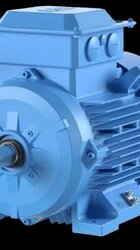
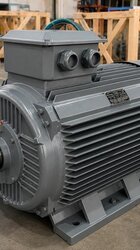
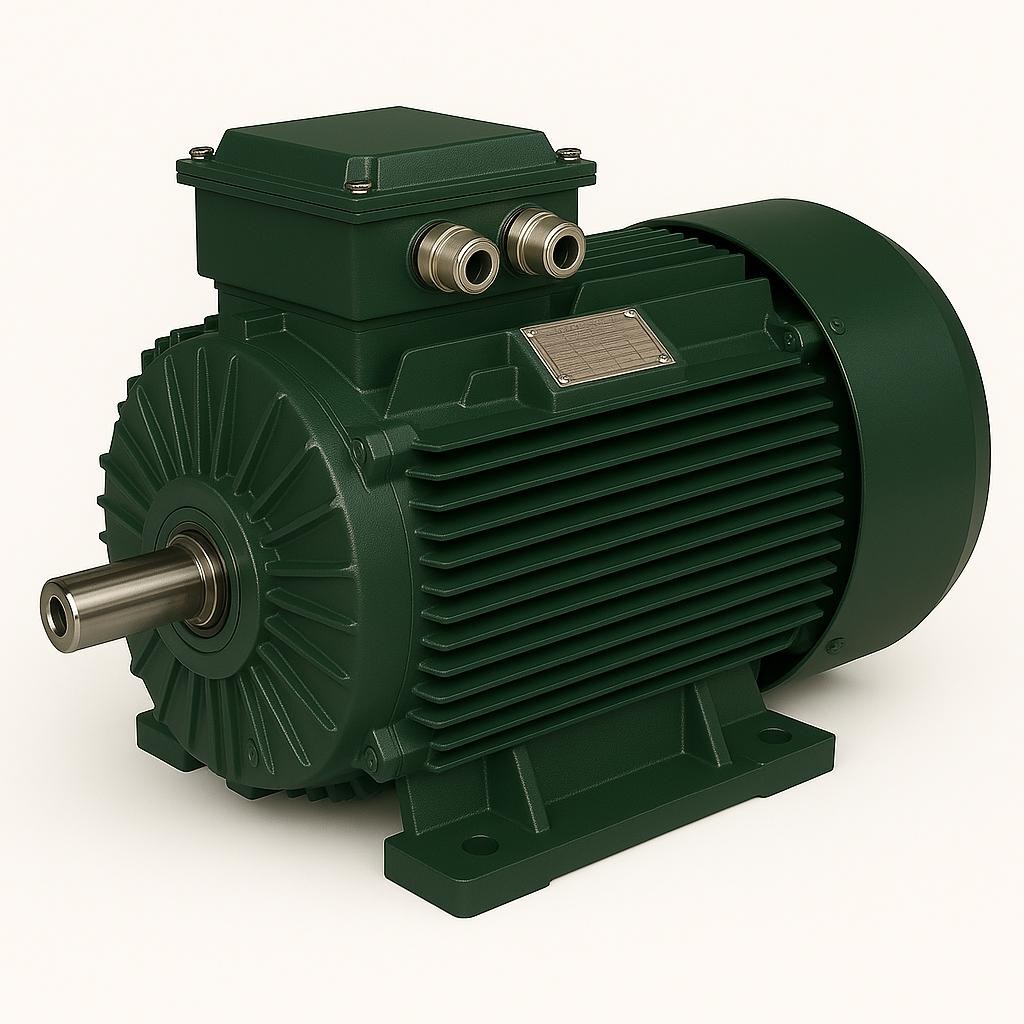

Two electric motors can have the same power, the same speed and the same efficiency; yet one runs flawlessly for years in a dusty crushing plant while the other burns its winding within a few months. The difference often hides in an invisible detail: the enclosure and cooling type. How a motor is cooled and how it is protected from its surroundings directly determines the environment in which that motor can live. At DRG Motor, in the motors we design for different applications, we evaluate the enclosure type together with the dust, moisture and temperature of the operating environment; because the right enclosure choice is one of the most fundamental decisions that multiplies a motor's life. In this article we cover step by step the common enclosure types, primarily TEFC (totally enclosed fan-cooled) and ODP (open drip-proof), which one is suitable for which environment, and the relationship of the enclosure type with the IP protection class.
What Does the Motor Enclosure Do?
The motor enclosure is not just a shell; it performs three tasks at once. First, it protects the rotating and live parts from external contact. Second, it prevents dust, water and foreign objects from getting inside. Third, it mediates the removal of heat born in the winding and the core. How these three tasks are balanced determines the enclosure type.
Why Is Cooling So Critical?
The greatest enemy of a motor is heat. Winding insulation ages rapidly when it exceeds the temperature limit it can withstand. For this reason, how effectively a motor dissipates the heat it produces directly determines its life. The enclosure type defines how this heat dissipation takes place. We covered the effect of temperature on motor life in detail in our electric motor temperature control article.
What Is TEFC?
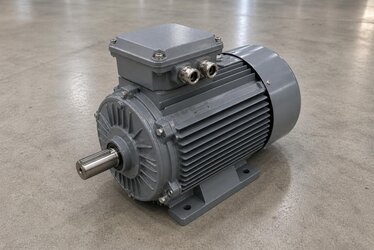
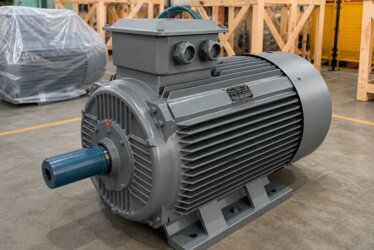
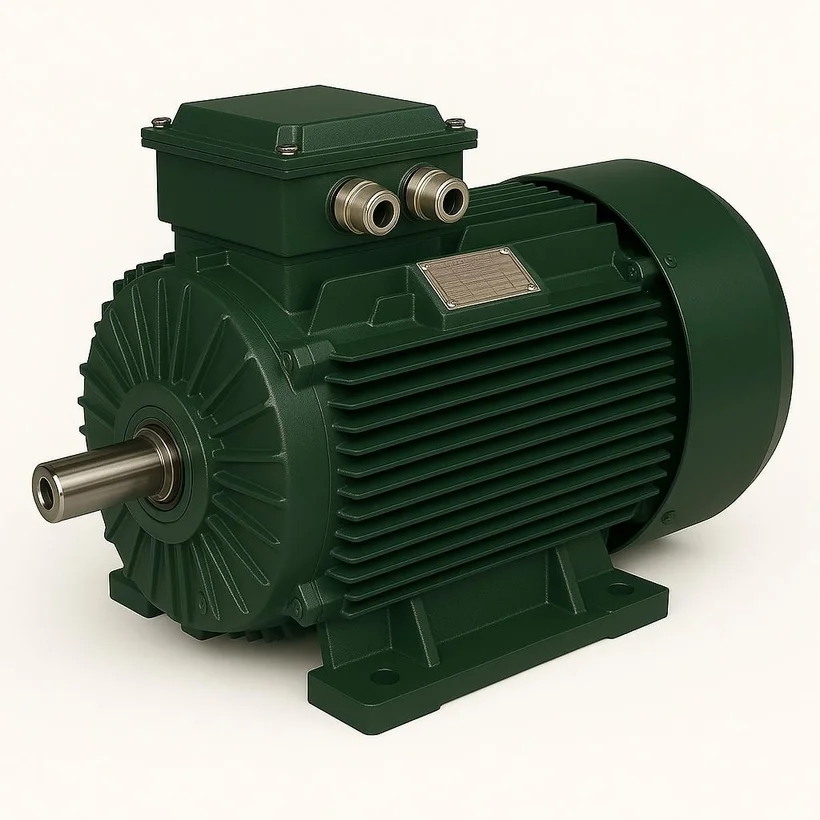
TEFC stands for "totally enclosed fan-cooled." In this motor the enclosure is completely sealed; there is no air exchange between the inside and the outside. Cooling is provided by air blown from outside the enclosure by a fan mounted on the rear end of the shaft. This air passes over the cooling fins on the enclosure and carries away the heat inside. While the internal volume is protected from dust and moisture, cooling is done from the external surface.
Why Is TEFC So Common?
TEFC is the most frequently used enclosure type in industry, and there are solid reasons for this. Thanks to its closed structure, it protects the internal winding even in dusty, humid and dirty environments. At the same time, its external fan cooling provides sufficient heat dissipation in most applications. The balance it strikes between protection and cooling makes TEFC an almost universal choice. The large majority of the products in DRG's industrial electric motors range have this structure.
What Is ODP?
ODP stands for "open drip-proof." In this motor the enclosure is not completely closed; it has ventilation openings and outside air passes directly through the motor to cool the winding. The openings are designed to prevent dripping water and large particles from entering at a certain angle. Thanks to internal cooling, ODP motors can deliver more power in the same size; however, their protection is limited.
Which Environments Are ODP Motors Suitable For?
ODP motors are suitable for clean, dry and indoor environments. Because they rely on internal air circulation, they work efficiently in places without dust, moisture and water splashing. Pump rooms, clean machine cabinets and indoor applications are typical use areas. Due to their open structure, they are not preferred outdoors or in dusty sites.
What Is TENV?
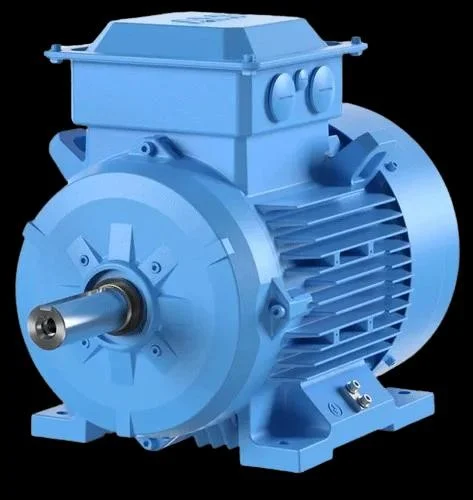
TENV stands for "totally enclosed non-ventilated." In this motor the enclosure is sealed like TEFC, but there is no separate cooling fan. Heat is dissipated only by natural convection and radiation from the enclosure surface. TENV motors are usually used in small powers, in applications where fan noise is not wanted or where the fan carries a risk of clogging. Because their cooling capacity is limited, they are rarely preferred at high powers.
WPI and WPII Open Enclosures
Open enclosure motors also have their own variants. Weather-protected types pass the air drawn in through filters and labyrinth channels, trapping some of the dust and moisture. These structures offer a middle ground between fully open ODP and fully closed TEFC. In relatively clean but not fully controlled environments, they provide a little more protection while preserving the high cooling capacity of the open enclosure.
Open and Closed Enclosure: The Power Density Difference
In the same enclosure size, an open motor can usually deliver more power than a closed motor. This is because internal cooling takes the heat directly from the winding; a closed enclosure must transfer the heat first to the enclosure and then to the outside air. For this reason, if higher power is needed from the same frame size in clean environments, an open enclosure provides an advantage. However, this advantage is only meaningful if the environment is clean and dry.
Comparison of the Three Enclosure Types
To see which enclosure is suitable for you, the three types must be placed side by side. The table below summarizes the basic differences, from protection to cooling, from typical environment to use area.
| Feature | TEFC (Totally Enclosed Fan-Cooled) | ODP (Open Drip-Proof) | TENV (Totally Enclosed Non-Ventilated) |
|---|---|---|---|
| Enclosure structure | Sealed, closed | With ventilation openings | Sealed, closed |
| Cooling method | External fan + fins | Internal air circulation | Natural convection |
| Dust/moisture protection | High | Low | High |
| Typical environment | Dusty, humid, outdoor | Clean, dry, indoor | Clean, low power |
| Typical use | General industry, field | Pump, inside cabinet | Small machines, quiet area |
Enclosure Choice in Dusty Environments
Dust is one of a motor's most insidious enemies. Dust entering an open-enclosure motor clogs the winding channels, prevents heat dissipation and forms leakage paths on the insulation surface. For this reason, closed-enclosure (TEFC) motors are preferred in dusty sites such as stone crushing, cement, mining and woodworking. The closed structure physically prevents dust from reaching the vital internal regions.
Humid and Wet Environments
Moisture is the enemy of winding insulation; when it seeps in, it lowers the insulation resistance and leads to leakage currents. In environments with water splashing, washdown or high humidity, only sealed-enclosure motors work safely. In such environments, the IP protection class becomes critical together with the enclosure type; our electric motor IP protection class article guides you toward the right choice.
The Relationship Between Enclosure Type and IP Class
Enclosure type and IP protection class are often confused but describe different things. The enclosure type defines how the motor is cooled and its general structure; the IP class states the degree of protection against dust and water in numbers. The two are evaluated together: a closed TEFC enclosure naturally enables a high IP class, while an open ODP enclosure stays at a low IP class. When choosing a motor for an environment, both pieces of information must be checked together.
The Importance of the Cooling Fan
In TEFC motors, cooling depends entirely on the external fan. A broken fan blade, a fan cover clogged with dust, or dirty fins seriously weaken the cooling. For this reason, the fan cover and fins must be cleaned regularly. A clogged cooling surface can overheat the motor even at normal load. It is important to add these checks to your electric motor maintenance steps routine.
The Cooling Problem at Low Speed
Because the fan of a TEFC motor is mounted on the shaft, when the motor slows down the fan also slows and pushes less air. A motor running for a long time at low speed with a frequency inverter can overheat because its own fan becomes insufficient. In these cases, an external (independent) cooling fan or an embedded temperature sensor solution comes into play. We covered the details of temperature protection in our electric motor temperature control article.
When Is an External Cooling Fan Needed?
In motors that run continuously over a wide speed range, especially at low speeds, the shaft-mounted fan cannot provide sufficient cooling. In this case an external fan driven by an independent electric motor is added behind the motor. This fan provides a constant airflow regardless of the motor's speed and guarantees cooling even at low speed. It is a smart solution for wide-speed-range applications.
Alignment and Enclosure Vibration
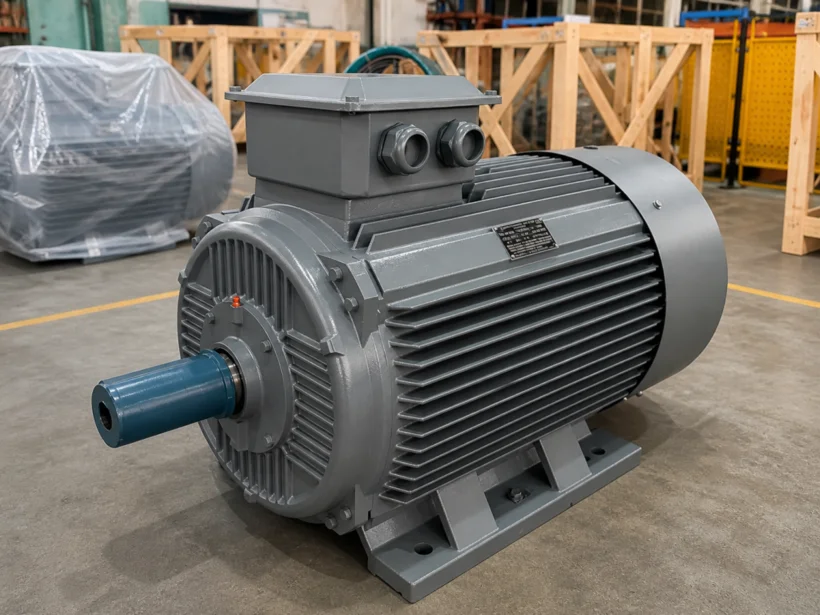
The enclosure is also the carrier of the motor's mechanical health. A poorly aligned shaft transmits extra vibration to the enclosure; over time this vibration loosens the connection bolts and can strain the fin integrity of the enclosure. A solid enclosure, combined with correct alignment, dampens vibration and contributes to the quiet running of the motor. We explained the importance of correct alignment in our motor shaft and coupling alignment article.
Enclosure Type and Bearing Temperature
The cooling performance of the enclosure reaches the winding and, beyond it, the bearings in the housings. In an insufficiently cooled motor, the enclosure temperature rises, which causes the bearing grease to thin and shortens bearing life. A well-cooling enclosure keeps the bearings cool too and extends their life. We gathered methods for extending bearing life in our extending electric motor bearing life article.
Enclosure Material and Heat Dissipation
The material the enclosure is made of also affects cooling. Cast iron enclosures offer high thermal mass and durability, while aluminum enclosures conduct heat faster and are lighter. In dusty and harsh sites durable cast iron is preferred, while in places where lightness and fast cooling matter, aluminum stands out. The number and surface area of the fins also directly determine the heat dissipation capacity.
Thinking Together With the Insulation Class
While the enclosure type determines cooling, the insulation class determines how much temperature the winding can withstand. Together they form the motor's thermal budget. When a well-cooling enclosure combines with a high insulation class, the motor runs within a safe temperature margin even under harsh conditions. We deepened this relationship in our electric motor insulation class article.
Overload and Enclosure Type
A motor running continuously at high load produces more heat; in this case the cooling capacity of the enclosure becomes decisive. An insufficiently cooling enclosure quickly reaches the critical temperature under overload. The right enclosure choice also eases the burden on overload protection. We explained how to set overload protection in our electric motor overload protection article.
Noise and Fan Design
The cooling fan in TEFC motors is a significant source of the motor's total noise. The fan blade count, geometry and cover design determine the emitted sound. In applications where quietness matters, the fan design is optimized or different enclosure types are evaluated. We covered methods for reducing noise in our reducing electric motor noise and vibration article.
The Role of the Enclosure in Phase Loss
When one phase is lost in a three-phase motor, the remaining phases draw excessive current and the winding heats rapidly. In this case the cooling capacity of the enclosure alone is not enough; because the heat rise is very fast. For this reason, even a well-cooling enclosure does not provide protection against phase loss on its own and must be supported by an embedded sensor and a suitable relay. We examined the symptoms of phase loss in our electric motor phase loss article.
Winding Quality and Enclosure Compatibility
A good cooling structure finds its full value only when combined with a quality winding. A properly impregnated winding that conducts heat well benefits best from the cooling the enclosure provides. A loose or poorly impregnated winding cannot transfer heat efficiently to the enclosure and wastes the cooling advantage. For this reason, the enclosure type and motor winding quality must be considered together.
The Effect of Mounting Position on Cooling
The mounting position of a motor also affects its cooling. If the front of the fan cover is too close to a wall or another piece of equipment, the air the fan can draw is restricted and cooling weakens. For this reason, enough space must be left behind the motor. In vertical mounting, the direction of the fan cover and possible rain/dust ingress must also be considered.
Outdoor Applications
Motors working outdoors must cope with rain, sun and temperature changes. In these applications a closed enclosure may not be enough; rain protection on the fan cover and an enclosure heater against condensation may also be required. Because an enclosure heated under the sun adds an extra load to the ambient temperature, the cooling margin must be planned accordingly. Outdoors, the enclosure type and protection class are chosen together according to the harshest condition of the environment.
The Effect of the Right Enclosure Choice on Maintenance
A motor with an enclosure chosen to suit its environment fails far less and requires less maintenance. Choosing a closed enclosure for a dusty site and a sealed enclosure for a humid environment prevents winding faults that would otherwise occur later. A wrong enclosure choice, on the other hand, means constant cleaning, frequent stops and early winding renewal. For this reason, the enclosure type must be clarified at the very beginning of the purchasing decision.
Cooling Tracking With Predictive Maintenance
Embedded temperature sensors are the best way to continuously monitor the cooling performance of the enclosure. When the cooling surface begins to clog with dust, the temperature trend rises slowly and the sensor reports this early. When this approach combines with the electric motor predictive maintenance philosophy, it catches cooling problems before they turn into faults.
The Right Enclosure Solution With DRG Motor
The enclosure and cooling type determine the environment in which a motor will live; the right choice is the most fundamental decision that extends life and prevents faults. At DRG Motor, when designing our motors we evaluate the dust, moisture and temperature of the operating environment together and offer the enclosure and cooling solution most suitable for your application. Whether you want a closed-enclosure motor that will run safely in a dusty site or high efficiency in a clean environment, our team helps you determine the right structure together according to your environmental conditions. For an enclosure and cooling solution suited to your motors' environment, get in touch with DRG Motor; let us choose together the most suitable motor for your facility's conditions.