 English
 Le français
 Türkçe

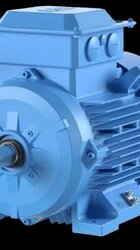
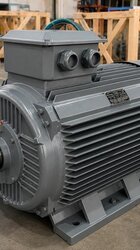
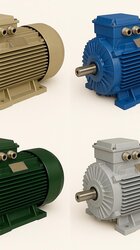
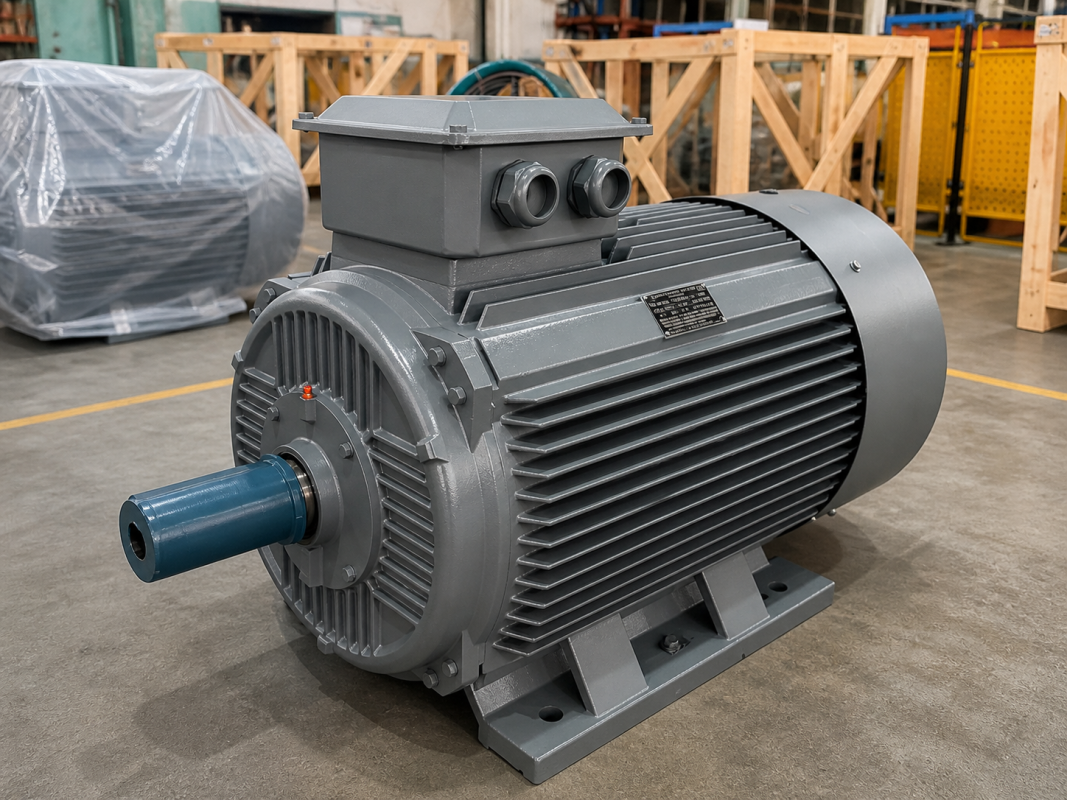

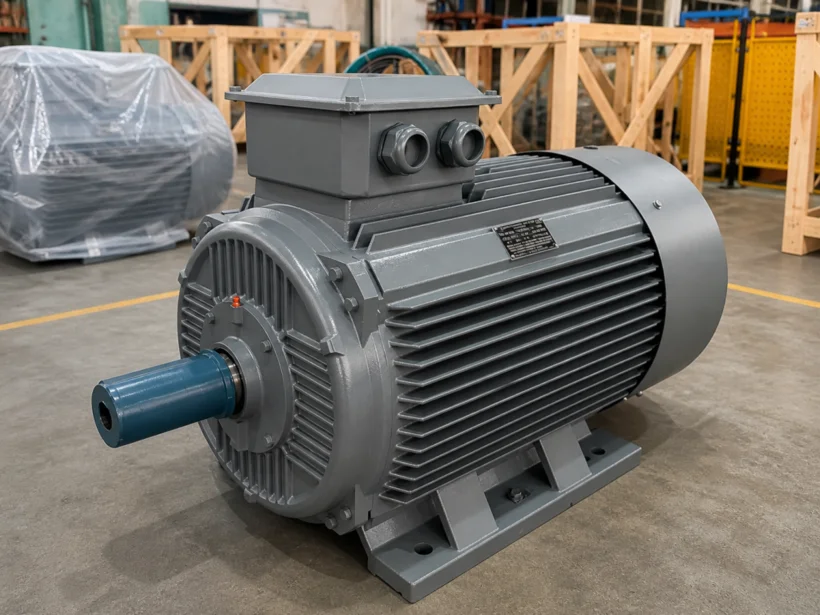
When an electric motor runs, it does not only produce mechanical power; it also releases heat in the windings, the rotor, and the bearing areas. If this heat is not kept under control, the insulation ages, efficiency falls, and the motor's service life is shortened dramatically. This is why a cooling system sits at the heart of every motor design. How that cooling is performed is described by an international standard through IC codes. At DRG Motor, in our IE3, IE4, and IE5 efficiency-class asynchronous motors, the right cooling solution is a precondition for both energy efficiency and long life. In this article we look in detail at why motors heat up, how cooling is classified, and what IC codes mean in practice.
Why Does an Electric Motor Heat Up?
No energy conversion is one hundred percent efficient. In an asynchronous motor, part of the electrical energy becomes mechanical power, while the rest turns into heat because of losses. Understanding where these losses come from also explains why cooling is so critical. The main heat sources are copper losses in the windings, iron (core) losses, rotor losses, and friction and ventilation losses.
Copper Losses and Winding Temperature
The current flowing through the stator and rotor windings produces heat because of the resistance of the conductors. This loss is proportional to the square of the current, so heating rises much faster as load increases. We examined in detail why an overloaded motor heats up so quickly and needs protection in our article on overload protection.
Iron Losses
The constant reversal of the magnetic field causes hysteresis and eddy current losses in the stator core. These losses depend on frequency and raise the core temperature. Using high-quality silicon steel laminations reduces them.
Rotor and Friction Losses
Heat is also produced in the rotor because of slip; as load increases, slip grows and rotor losses rise. To these we add bearing friction and the fan's own ventilation loss. The sum of all these losses determines the net amount of heat the motor must dissipate. The higher the efficiency, the smaller this total.
How Losses Become Heat
Every watt of loss produced in a motor eventually turns into heat that must be removed. For example, a 10 kW motor with 90% efficiency produces roughly 1 kW of heat. All of this heat must be carried to the surrounding environment by the cooling system; otherwise the temperature keeps rising and no balance is reached.
Why Is Cooling So Important?
Cooling is the mechanism that carries the generated heat from the motor to the outside environment. If cooling is insufficient, the winding temperature rises above the value permitted by the insulation class. The relationship between temperature and insulation life is very clear: every 10 °C of sustained temperature rise roughly halves the life of the insulation. For this reason insulation class and cooling cannot be considered separately.
The Relationship Between Temperature and Efficiency
Temperature affects life and efficiency. As the winding heats up, the resistance of the copper increases, so the copper losses grow too. This creates a vicious cycle: a hot motor loses more, and a motor that loses more heats up more. A well-designed cooling system breaks this cycle and keeps the motor at a stable temperature.
What Is an IC Code?
IC stands for "International Cooling" and describes the cooling method of a motor in a standardized way. IC codes are defined in the IEC 60034-6 standard. Thanks to this, anywhere in the world, when a motor nameplate reads "IC411", it means exactly one thing about how cooling is done. We discussed the importance of this nameplate information in our article on nameplate information.
How to Read an IC Code
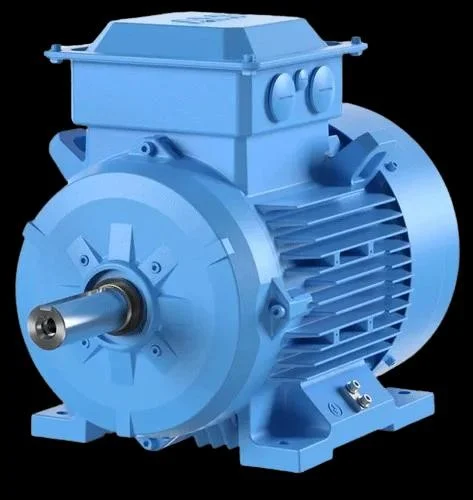
An IC code consists of several digits. The general structure is IC followed by digits: the first digit defines the arrangement of the cooling circuit, the second the way the primary coolant moves, and the third the method that drives the coolant. For example, in the common IC411 code, the motor is cooled over its surface by a fan mounted on its own shaft.
Common IC Codes and Their Meanings
We have gathered the IC codes most often encountered in industry and their practical meanings in the table below. This table provides a quick reference when selecting a motor or evaluating an existing one.
| IC Code | Cooling Method | Typical Use |
|---|---|---|
| IC410 | Surface cooling, no separate fan, natural convection | Small-power, low-load motors |
| IC411 | Surface cooling with shaft-mounted fan (TEFC) | The most common industrial asynchronous motor |
| IC416 | Surface cooling with an independent (external) fan | Motors running at low speed via an inverter |
| IC418 | Cooling by an air stream passing over the motor | Vehicle / on-fan applications |
| IC01 | Open type, internal air circulation by own fan | Clean, dry environments |
| IC06 | Open type with an external fan unit | High-power open motors |
IC411: The Standard Solution of Industry
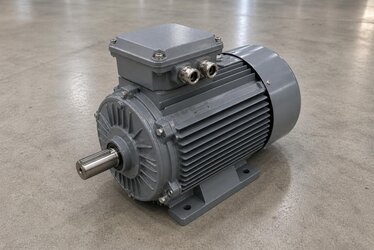
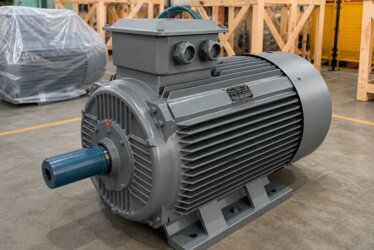
IC411 is the cooling method most often encountered in the field today. A fan placed on the rear cover of the motor turns with the shaft and blows air toward the cooling fins on the housing. This structure is also known as TEFC (Totally Enclosed Fan Cooled). Because the interior of the motor is isolated from the outside environment, it is protected from dust, moisture, and dirt.
Advantages of the TEFC Structure
A totally enclosed fan-cooled housing is a balanced solution in terms of both cooling and protection. Since the internal volume is sealed from the outside, the motor operates safely in harsh environments. This structure is usually offered together with a high IP protection class and provides resistance against dust and water.
The Relationship Between IC and IP Class
The IC code describes how cooling is done, while the IP code defines the housing's protection against solid objects and water. Although they describe different things, they are evaluated together. For example, a TEFC motor with IC411 cooling usually offers IP55 protection. In applications running at low speed via an inverter, the fan may become insufficient, so the independent-fan IC416 is preferred.
Why Is an Independent Fan Needed?
A shaft-mounted fan blows less air when the motor slows down. Yet when a motor runs at low speed but high torque via an inverter, heat generation does not decrease; on the contrary, the cooling need continues. In this case the shaft-mounted fan falls short. For motors operating over a wide speed range with a frequency inverter, a separately supplied external fan (IC416) is therefore used.
The Relationship Between Cooling and Speed
The pole count and therefore the speed of the motor directly affect the cooling capacity of the shaft-mounted fan. In a high-speed two-pole motor the fan blows a lot of air; in a low-speed eight-pole motor the same fan is less effective. We covered the relationship between pole count and speed in our article on pole count and speed.
Ambient Temperature and Cooling
A motor's cooling capacity depends on the temperature of the surrounding air. Standard motors are usually designed for a 40 °C ambient temperature. In hotter environments the temperature difference between the cooling air and the winding decreases and cooling weakens. Under high ambient temperature and altitude conditions, the motor's power must be reduced (derating) or stronger cooling provided.
The Effect of Altitude on Cooling
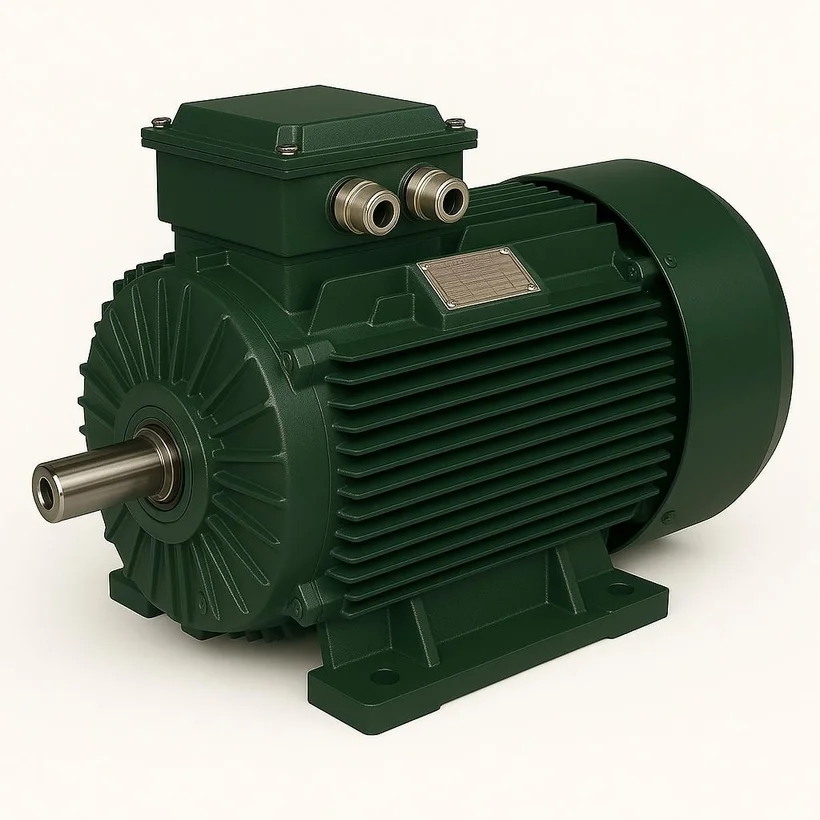
As altitude increases, air density decreases. Thinner air carries less heat per unit volume. For this reason, at altitudes above 1000 meters the same fan provides less cooling and the motor's power is gradually reduced. When high altitude and high temperature occur together, the derating effect compounds.
The Role of Cooling Fins
The longitudinal fins we see on the housing of a TEFC motor are not merely aesthetic. These fins enlarge the heat transfer surface; the air blown by the fan contacts a larger area and removes heat faster. Keeping the fins clean is therefore a critical maintenance step.
How a Dirty Cooling Surface Causes Trouble
When dust, oil, and dirt cover the housing fins, heat transfer drops. Under the same load the motor heats up more. One of the most common causes of overheating in the field is simply a dirty cooling surface and a clogged fan cover. Regular cleaning prevents expensive rewinds.
Confirming Cooling with Temperature Monitoring
The most reliable way to know whether cooling is sufficient is to monitor the winding temperature. PTC thermistors or PT100 sensors are embedded in the winding to measure the instantaneous temperature. You can find details on this in our article on temperature control. Temperature protection safeguards the motor by stopping it when the cooling system becomes insufficient for any reason.
The Relationship Between Efficiency Class and Cooling
High-efficiency motors such as IE3, IE4, and IE5 produce fewer losses and therefore heat up less. However, since these motors often have a more compact design, cooling must still be handled carefully. As efficiency rises, cooling becomes easier but never loses its importance.
Open-Type and Closed-Type Cooling
In open-type motors (IC01, IC06) the cooling air passes through the inside of the motor; this provides more effective cooling but requires a clean environment. In closed-type (TEFC) motors air passes only over the outside; cooling is a little harder but the motor is protected against dirt and moisture. The vast majority of industrial applications prefer the closed type.
Water-Cooled Motors
At very high powers or in tight installation spaces, air cooling may become insufficient. In these cases cooling is done by circulating water through channels placed inside the housing. Water cooling makes it possible to obtain higher power in the same frame size but requires a more complex installation.
Cooling and Noise
The fan is a significant source of motor noise. In high-speed motors fan noise can dominate. Striking a balance between cooling and acoustic comfort is important, especially in environments where people are present. Independent-fan solutions make managing noise easier in some cases.
Factors That Influence the Cooling Method
The right cooling solution depends on the motor's power, speed, operating environment, speed range, and mounting style. While IC411 is sufficient for a pump motor running continuously at constant speed, IC416 may be needed for a conveyor motor operating over a wide speed range. These choices directly determine efficiency in three-phase motor in industry applications.
Points to Watch in Cooling Maintenance
For healthy cooling, the air inlet openings of the fan cover must be clear, the housing fins kept clean, and sufficient air circulation space left around the motor. Squeezing the motor too close to a wall or into a closed enclosure prevents the fan from drawing fresh air and leads to overheating.
The Consequences of Wrong Cooling
When cooling is insufficient, the first sign is usually a darkening of the insulation color and a characteristic burnt smell. This is followed by a winding short circuit and ultimately motor failure. Problems such as phase imbalance also create extra heating and consume the cooling margin; this is why protection against phase loss is also part of cooling health.
The Effect of Mounting Style on Cooling
Whether the motor is mounted horizontally or vertically affects the position of the fan cover and the airflow. In vertical mounting, whether the fan cover is at the top or bottom leads to different results in terms of dust accumulation and water ingress. In vertical mountings exposed to water from above, using an additional protective canopy is necessary for both cooling and protection.
Cooling Check During Commissioning
When a new motor is commissioned, it should be checked that the fan turns in the correct direction, the air inlet grilles are open, and the housing temperature stays within acceptable limits. Tracking the housing temperature by hand or with a non-contact thermometer in the first hours reveals a hidden cooling problem early.
Cooling and Duty Cycle
The cooling behavior of a continuously running (S1) motor differs from that of a frequently stopping-starting (S4) motor. In motors that start frequently, the high current at each start produces extra heat; in this case the motor may reheat before it can fully cool down. The duty cycle is always considered when selecting the cooling method and motor size.
Cooling and Energy Saving
A well-cooled motor runs at a lower winding temperature; lower temperature means lower resistance, and lower resistance means fewer losses. For this reason, correct cooling extends life and lowers operating cost. High-efficiency motors enlarge this gain further with soft starting and inverter use.
Heat Management with Soft Starting
A directly started motor draws a high current at every start, and this current produces extra heat in the winding. Soft starting reduces the starting current and thereby lowers this thermal stress, keeping the motor cooler especially in applications that start frequently.
The Life of the Cooling System
The fan itself can also wear over time; plastic fans in particular can become brittle at high temperatures. During periodic maintenance, the integrity of the fan, the soundness of the cover, and the clearance of the air paths should be checked. A sound fan is the first link of the entire cooling chain.
A Summary of the Right Cooling Choice
The cooling method is chosen by evaluating power, speed, environment, and duty type together. The IC code is the standard language of this decision, and when read correctly it clearly explains how the motor will stay cool. A wrong cooling choice can drive even the highest-quality motor into early failure.
Choose Your Cooling Solution Right with DRG
Although the cooling method may look like a small code on a motor nameplate, it is in fact a fundamental design decision that determines that motor's life, efficiency, and reliability. From IC411 to IC416, every solution has its own field of use, and the right choice comes from correctly understanding the conditions of the application. At DRG Motor, we configure our IE3, IE4, and IE5 efficiency-class asynchronous motors according to your application's cooling requirements. For the right IC code, the right IP class, and the right cooling solution, you can review our industrial electric motors page and determine the most suitable motor for your project together with us. If you are curious about the basic working principle of electric motors, our what is an electric motor article is a good starting point.