 English
 Le français
 Türkçe

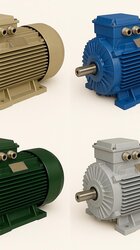
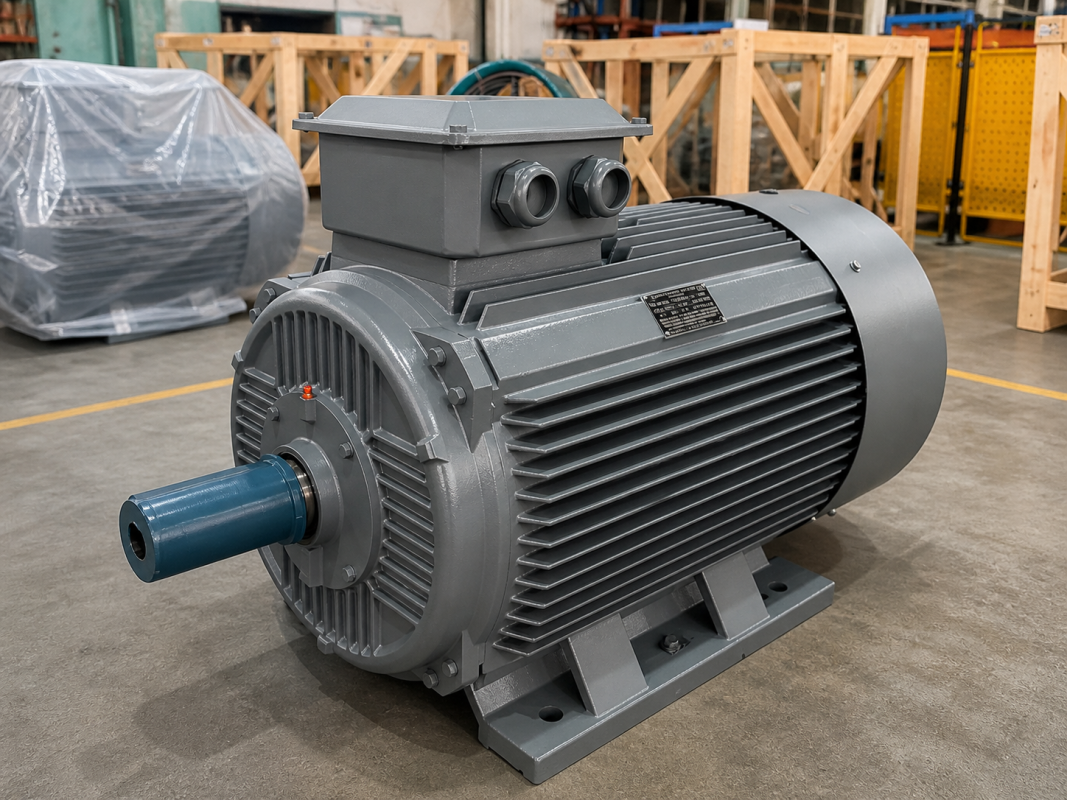

For many years, industry produced heat by burning fuel. Today this equation is changing: industrial heat pumps take low-temperature waste heat and lift it to the higher temperature that processes need, producing heat with electricity. At the center of this transformation are electric motors, because the power that turns a heat pump's compressor, fans and pumps comes from motors. In industrial heat pumps, electric motor selection directly determines both the efficiency and the reliability of the system. In this article we examine the compressor drive motor, the fan and pump motors, waste heat recovery and the requirements of continuous operation, drawing on DRG Motor's experience with IE3, IE4 and IE5 induction motors.
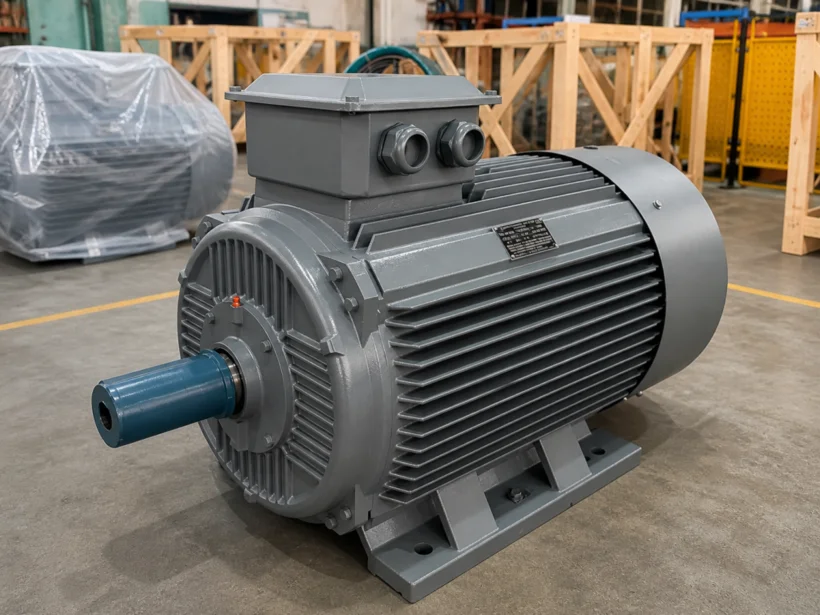
How does an industrial heat pump work?
A heat pump draws heat from a low-temperature source, raises this heat with the help of a compressor and delivers it to the process at a higher temperature. Because it moves more than one unit of heat for every unit of electrical energy it draws, it is far more efficient than direct electric heating. The heart of this cycle is the compressor, and the electric motor that turns the compressor is the most critical component determining system performance.
The compressor drive motor: the heart of the system
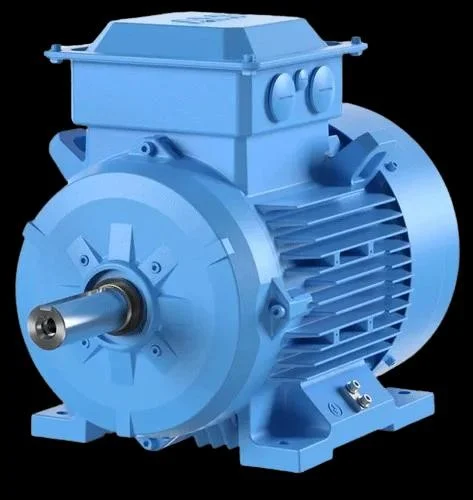
In an industrial heat pump, the largest and most critical motor is the one driving the compressor. This motor runs continuously under heavy load and directly affects the system's coefficient of performance. A high-efficiency compressor motor minimizes the electrical energy the heat pump draws. For this reason the compressor drive motor should be in the IE4 or IE5 class, designed for heavy duty. It is one of the most demanding applications in the industrial electric motors family.
The coefficient of performance (COP) is a heat pump's fundamental performance indicator; it expresses how many units of heat it moves for every unit of electricity it draws. The higher the COP, the lower the cost of the heat produced. This is exactly where the electric motor comes in: as the motor's efficiency falls, more electricity is drawn to produce the same heat and the COP drops. So motor efficiency directly determines the economic performance of the heat pump. That is why motor selection in heat pump design is not a secondary detail but a primary decision that determines the success of the system.
The compressor motor spends almost its entire operating time near rated load. This continuous, high load requires the motor to be very well designed thermally. It is expected to withstand short-term load increases just above rated power without turning this into continuous wear. This balance is achieved only with a motor built for heavy duty with a solid mechanical structure. A motor designed for light duty wears out far sooner than expected under compressor load.
Starting torque and compressor load
Compressors require a high starting torque when they come online. Especially a compressor standing under pressure demands serious torque from the motor at the first moment of movement. A motor not selected in the right torque class struggles at start-up and overheats. Our article on compressor motor starting torque details this topic; the same principles apply to heat pump compressors.
Fan and pump motors
A heat pump is not just a compressor. Fans or pumps are needed to gather heat from the heat source, and pumps again to carry heat to the process. These auxiliary motors also run continuously and have an important share in total efficiency. The principles of water pump motor selection and fan motor selection apply to the auxiliary drives of the heat pump too.
Waste heat recovery: putting free energy to work
The greatest strength of industrial heat pumps is recovering waste heat that would normally be rejected to the atmosphere. The exhaust air, cooling water or flue gas of a process carries valuable heat. The heat pump takes this low-temperature heat and raises it to a usable temperature. The efficiency of the fan and pump motors that enable this recovery directly affects the total gain of the system, because the cost of the recovered heat is essentially the electricity these motors draw.
The appeal of waste heat recovery is that in most facilities this heat already exists. The heat rejected to the atmosphere from a cooling tower, the exhaust of a drying process or the heat released from a compressor room is normally a lost resource. When the heat pump gathers this resource and makes it reusable at another point in the process, the facility uses the same fuel twice. As the efficiency of the motors sustaining this circular heat flow rises, the net gain of recovery rises too.
Continuous operation and S1 duty
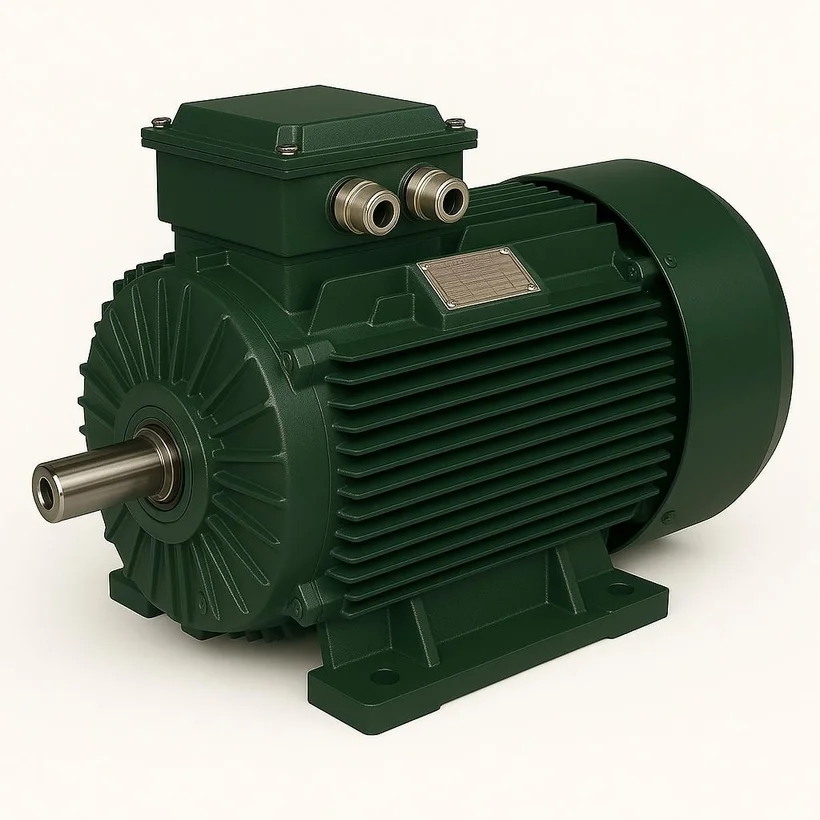
Because industrial heat pumps usually meet a process's heat demand continuously, their motors turn in S1 continuous duty. In this case the motor's insulation class, temperature resistance and bearing life must suit continuous operation. A motor designed for short duty tires quickly in a heat pump. A motor designed for continuous duty, running stably under heavy load, is essential.
Why is high efficiency so important?
A heat pump's appeal comes from its efficiency; the more efficient the system, the lower the cost of the heat produced. The efficiency of the compressor and auxiliary motors directly affects this equation. A low-efficiency motor eats into the saving the heat pump provides. For this reason IE4 and IE5 class motors should be preferred in heat pump applications. High-efficiency electric motors are the fundamental element that keeps the economic logic of the heat pump standing.
Torque and speed requirements
Every motor in a heat pump requires a different torque and speed profile. The compressor demands high torque, the fans carry a large air volume at a certain speed, and the pumps want a torque-speed balance suited to the head. Selecting the right pole count for each application raises system efficiency. The relationship between pole count and speed must be set so that each motor matches its own duty.
Variable heat load with speed control
Process heat demand is not constant; it changes during the day and seasonally. Here, adjusting the speed of the compressor and auxiliary motors to the load with a frequency inverter delivers great efficiency. In periods when full heat demand is absent, lowering the motor's speed instead of running it at full speed both saves energy and tunes the system precisely to the heat demand. Saving energy with a frequency inverter explains the basis of this mechanism.
Speed control also enables the compressor to come online smoothly. Instead of an abrupt start at full voltage, the gradual acceleration of the motor reduces mechanical stress and extends the life of both the compressor and the motor. This smooth operation is especially valuable in heat pumps that cycle on and off frequently, because every hard start creates a shock that wears out all the system's components. Inverter drive removes these shocks, delivering a gain in both energy and durability.
Electrification of process heat
Producing heat with electricity in industry has become an important part of the energy transition. Industrial heat pumps can meet low- and medium-temperature process heat without burning fuel. The success of this electrification depends on the efficiency of the electric motors used. Efficient motors make producing heat with electricity both economical and sustainable. The electrification of process heat sits at the center of modern industry's energy strategy, and the success of this strategy depends directly on the efficiency and durability of the motors used.
Another advantage of electrification is that heat production is no longer tied to burning fuel at a single point. An electrically driven heat pump can be flexibly controlled through the facility's electrical infrastructure, fine-tuned with speed control and easily connected to energy monitoring systems. This flexibility makes it possible to meet the process's heat demand far more precisely. But the efficient operation of this flexible system always depends on the quality of the underlying electric motor, because the whole system's efficiency in turning energy into heat begins with the motor's efficiency.
Multi-stage and multi-motor systems
Large industrial heat pumps usually contain more than one compressor stage and many auxiliary motors. As load rises the stages come online in sequence, and as load falls they pull back. In this staged structure each motor must be selected in the right efficiency class to match its own duty. Even a single low-efficiency motor pulls down the average efficiency of the whole system. For this reason motors in heat pump design must be planned as a whole, according to the system's load profile.
Reliability: the guarantee of continuous production
If a heat pump meets a process's heat demand, a stopped motor means stopped production directly. For this reason the reliability of heat pump motors is critical. Quality bearings, a solid winding structure and a durable frame are the foundation of fault-free operation for years. Winding quality directly determines the life of a motor running continuously under heavy load.
Right-sizing and efficiency
Oversizing heat pump motors is costly because of continuous operation. A lightly loaded compressor or pump motor loses both its efficiency and its power factor. Motors right-sized to the real heat load protect the system's coefficient of performance. Determining the right power through the kW and speed table supports this decision.
Temperature management and protecting the motor
A heat pump works in a hot environment and under continuous load. In these conditions, monitoring the motor's own temperature gives an early warning before failure and prevents unplanned stops. Thermally managing the motor correctly both protects efficiency and extends life. Electric motor temperature control is indispensable for continuously running heat pump motors.
Efficiency tracking with energy monitoring
A heat pump's coefficient of performance is the ratio of the electricity it draws to the heat it provides. Monitoring this ratio continuously shows whether the system is running healthily. Monitoring the energy consumption of the motors both reveals optimization opportunities and catches a motor's efficiency loss early. Electric motor energy monitoring is the basic tool for sustaining the heat pump's performance.
Power factor and electrical load
A large compressor motor running continuously directly affects the facility's power factor. A high-efficiency, right-sized motor runs with a healthier power factor and reduces the reactive load. Power factor and cosφ management is an important component of energy cost in systems like heat pumps that draw high power continuously.
Payback: the return period of efficiency
A high-efficiency motor pays back its initial cost quickly in a continuously running application like a heat pump. Because the motor runs most of the year, even a few points of efficiency difference turns into a noticeable saving in annual energy consumption. This saving usually covers the extra purchase price of the motor in a short time. Our article on high-efficiency motor payback period shows how this return is calculated and reveals how short this period becomes in continuously running systems like heat pumps.
When converting old systems to heat pumps
Facilities converting old fuel-burning heating systems to heat pumps gain long-term benefit by getting motor selection right from the start. Likewise, replacing low-efficiency old motors in an existing heat pump is an investment that pays back quickly. When deciding when to replace a motor, the annual impact of the efficiency difference is decisive in continuously running systems. The decision of when to replace an old motor is an important part of protecting heat pump efficiency.
Maintenance and a predictive approach
Continuously running heat pump motors are among the equipment that need regular maintenance most. When bearing condition, vibration and temperature are monitored regularly, faults are detected before they occur. Because the impact of an unplanned stop on the process is high, predictive maintenance here is a necessity. Electric motor maintenance steps make this approach systematic.
The role of rotor and winding quality at continuous load
In a motor turning continuously under heavy load, the foundation of efficiency and reliability lies in the quality of the rotor and winding. Quality copper winding and a low-loss rotor both produce less heat and keep the efficiency curve high. Rotor and copper winding quality directly determines both the performance and the long life of the motor in an application that runs without stopping, like a heat pump.
The value of a durable frame in continuous operation
In a motor turning continuously under heavy load, mechanical durability is the foundation of everything. DRG Motor's cast-iron-bodied induction motors dissipate heat steadily, absorb vibration and withstand long continuous operation. In a heat pump that meets a process's heat demand, the strength of the frame turns directly into reliability and secures the stable operation of the system for years.
DRG Motor: an efficient and reliable heat pump
At DRG Motor we know the two fundamental demands of industrial heat pumps: high efficiency and uninterrupted reliability. Our IE3, IE4 and IE5 induction motor range brings together efficiency and durability at every point of the heat pump, from compressor drive to auxiliary fan and pump motors. For facilities that want to electrify process heat and turn waste heat into value, you can review our DRG Motor product page. The more efficiently your heat pump runs, the more valuable every unit of heat you produce becomes. A correctly selected motor secures that your heat pump runs at the same efficiency both on day one and years later, protecting your electrification investment over the long term.