English
 Le français
 Türkçe




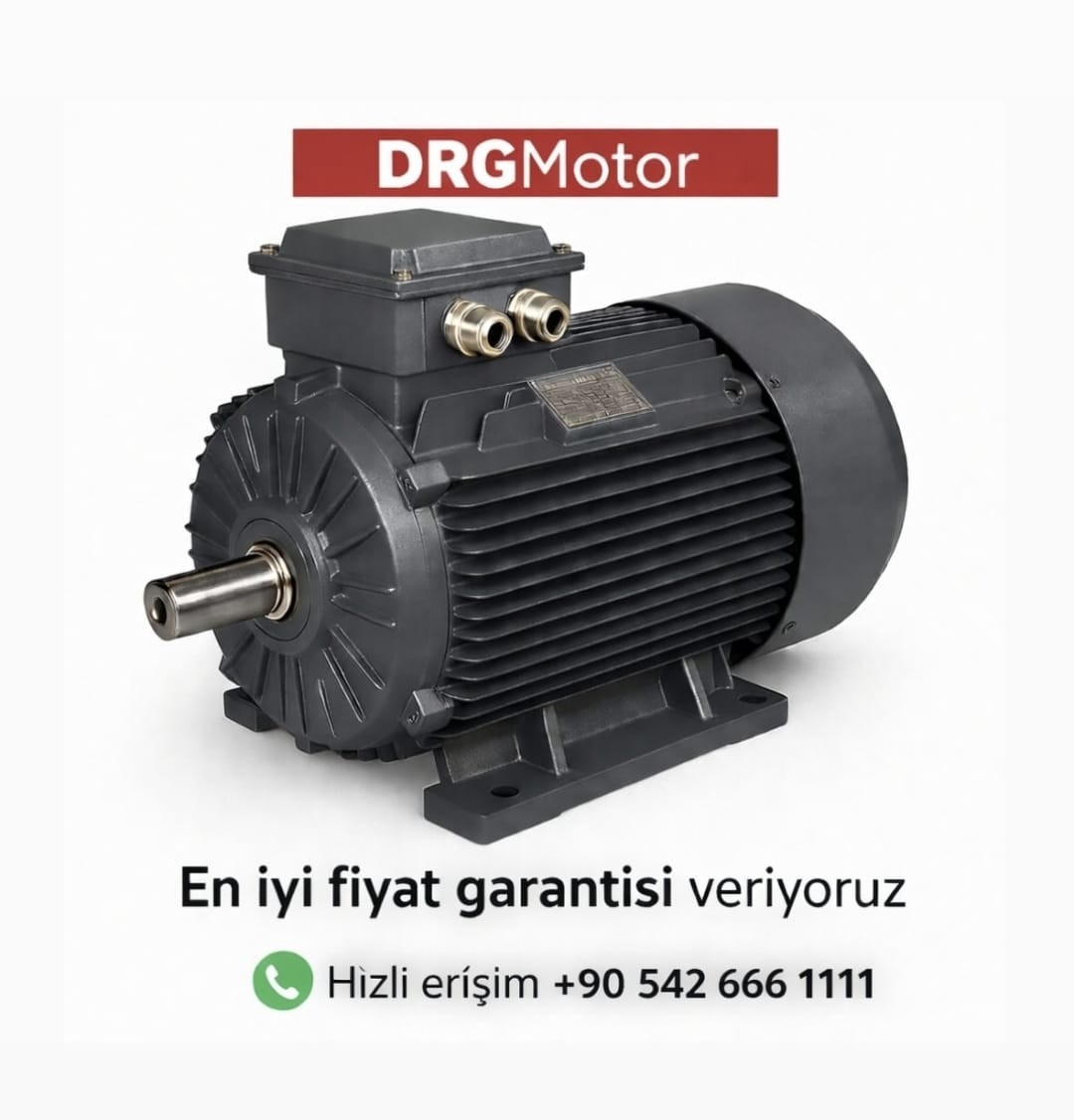

When a maintenance manager gives their boss a budget of "motor 25,674.00 TRY", the invoice total at the end of the job is almost always higher. A motor does not turn on its own: it needs the cable that brings power to it, the breaker and overload relay that protect it, the starter that manages its start-up, the coupling or pulley that transfers power to the machine, the base that carries it and the labour that puts it all together. This article is an item-by-item checklist for placing the motor price correctly within the total installation budget. We do not give figures for the items other than the motor, because those amounts vary from job to job with cable length, panel design and site conditions. Instead, we explain what makes each item grow or shrink and what to ask when collecting quotations.
The Motor First: Shop Prices for Three Ratings
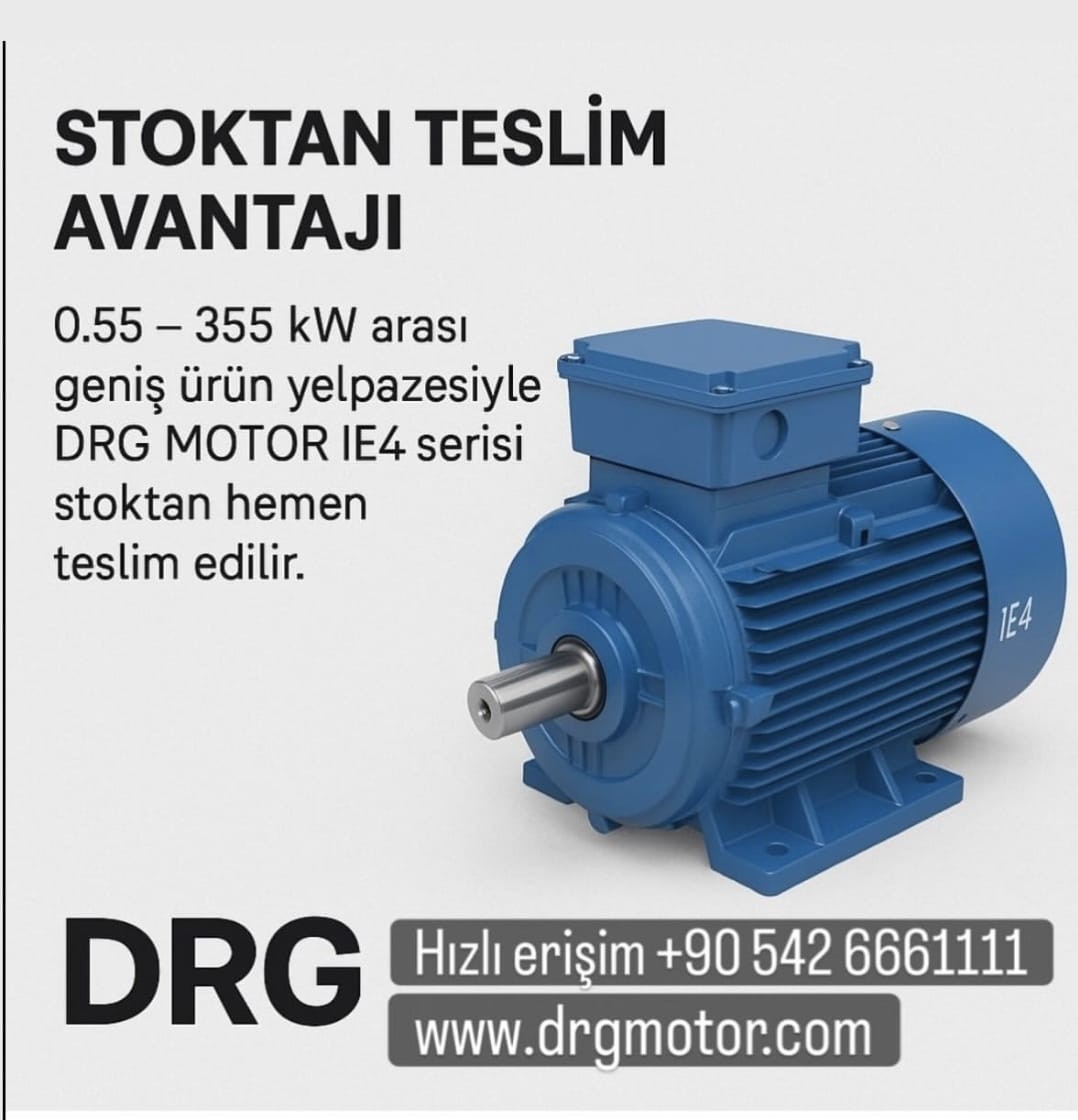
The fixed and easiest-to-find item in the budget is the motor itself. Below are shop prices and rated current for three ratings in the 1500 rpm class. We added the rated current because it will be the starting point later when selecting cable and protection devices.
| Model | Power / frame | Current (400 V) | excl. VAT | incl. VAT (20%) |
|---|---|---|---|---|
| DRG-112M-4 | 4 kW, aluminium | 7.95 A | 10,960.95 TRY | 13,153.14 TRY |
| DRG-160M-4 | 11 kW, cast iron | 20.4 A | 25,674.00 TRY | 30,808.80 TRY |
| DRG-180L-4 | 22 kW, cast iron | 39.7 A | 41,504.10 TRY | 49,804.92 TRY |
Prices are taken from the DRG Motor online shop list dated 24.09.2026; a 3% discount applies to bank transfer/EFT payments, shipping is not included in the price and is paid by the buyer. Please see the shop page for current prices.
Shipping is the first item beyond the motor and is often forgotten. Since the buyer pays it, it should be a separate line in the budget; details are on the delivery and shipping page.
Cable: Four Questions That Determine the Cross-Section
Cable is priced per metre, so the distance between motor and panel directly affects the budget. The main points an electrical designer looks at when choosing the cross-section are:
- Current: the higher the rated current, the larger the cross-section. In the table above you can see that current rises more than fivefold between 4 kW and 22 kW; the cable gets thicker accordingly.
- Length and voltage drop: on long runs, voltage drop rather than cable heating becomes decisive; as distance grows, moving up one size may be necessary.
- Installation method: cable in conduit, on a tray, underground or bundled with other cables carries different current.
- Environment: heat, moisture, oil or chemicals change the sheath type; if a screened cable is required (often requested with a drive), cost changes too.
So when requesting a quote, do not have the cable written as "motor cable" but as cross-section, number of cores, type and metres. You can use the tools on the electric motor calculators page for a first idea; the final cross-section should be decided by a qualified electrical engineer.
Inside the Panel: Breaker, Contactor and Overload Relay
Each motor needs at least one protection and switching chain in the panel. The typical arrangement is:
- Motor protection breaker or fuse/circuit breaker: protects against short circuit; selected according to motor current and the short-circuit level of the line.
- Contactor: switches the motor remotely or via automation; its rating is chosen according to motor power and utilisation category.
- Overload relay: protects against overload; its setting range must cover the rated current.
- Control devices: start/stop buttons, emergency stop, indicator lamps, control transformer or fuse.
If there is an existing panel and a motor of the same power is being replaced, this item is often close to zero. If the power increases, the contactor and overload relay change too; if there is no space in the panel, a new enclosure comes into play. When collecting quotes, ask "will the existing panel be used?" first.
How Does the Starting Method Change the Budget?
How the motor will start is the decision that changes panel cost the most. Ranked by complexity, the options are:
| Method | Added to the panel | When to consider |
|---|---|---|
| Direct-on-line | One contactor + overload relay | Small power, where the supply can handle the starting current |
| Star-delta | Three contactors, timer relay, six-lead cable to the motor | Medium ratings where starting current must be reduced; the motor must be delta-connectable at 400 V |
| Soft starter | Electronic starter, usually with a bypass contactor | Reducing water hammer in pumps or jerking in conveyors |
| Frequency drive | Drive, input/output filters if needed, screened cable | Processes needing speed adjustment |
Remember that with star-delta the number of cables to the motor doubles; the cable item must be updated to reflect this decision. A motor marked 400/690 V runs in delta on a 400 V supply and is therefore suitable for star-delta; this method is not used with a motor marked 230/400 V.
Mechanical Connection: Coupling, Pulley and Base
How the motor shaft connects to the machine determines both the material and the labour item.
Coupling
In a direct connection a coupling sits between the two shafts. Selection requires both shaft diameters and key sizes, the torque to be transmitted and the gap between the shafts. If the old coupling does not fit the new motor's shaft, a new hub or complete coupling is needed. The real hidden cost of a coupled connection is alignment: alignment work with a laser or dial gauge is a separate line.
Pulley and belt
Pulleys and belts are used when the speed ratio is to be changed. The motor pulley must be bored to the shaft diameter, and the number and profile of belts chosen according to the power transmitted. A slide-rail motor base may be needed for belt tensioning.
Base
A foot-mounted motor is fixed to a base or frame. If the new motor's foot hole dimensions match the old one, the base is reused as is; if the frame size changes, an adapter plate or new base is needed. Mounting motor and machine on a common baseframe helps keep alignment over time.
Labour and Commissioning
Labour is the most negotiated but least defined item. Make sure the following tasks are listed separately in the quote:
- Removal and transport of the old motor (including a crane or forklift if needed)
- Placing and fixing the new motor on the base
- Coupling/pulley fitting and alignment or belt tensioning
- Cable pulling, cable lugs and gland connections, terminal connection
- Changes inside the panel and overload relay setting
- Insulation measurement, direction of rotation check, no-load and load current measurement
Work done at weekends or during production stops may be charged at a different rate; ask about this in advance as well.
Item Checklist Table
You can fill in the table below for your own quote comparison. We have left the amount column empty; we recommend obtaining at least one quote per line.
| Item | What the quote should state | Can the existing one be used? | Amount |
|---|---|---|---|
| Motor | Model code, kW, rpm, frame, mounting | — | Shop price |
| Shipping | Freight depot/courier, delivery address | — | |
| Cable | Cross-section, cores, type, metres | Yes / No | |
| Protection and switching | Breaker, contactor, overload setting range | Yes / No | |
| Starter | Method and power rating | Yes / No | |
| Coupling / pulley | Shaft diameters, key, torque | Yes / No | |
| Base / adapter | Foot hole dimensions, frame size | Yes / No | |
| Labour | Removal, fitting, alignment, commissioning | — |
For the motor line, you can take the code and price from the online shop page. The more "Yes" answers in the "Can the existing one be used?" column, the larger the motor's share of the total; on a line built from scratch, the sum of the non-motor items can be decisive.
Frequently Asked Questions
Why don't you give figures for the items other than the motor?
Cable length, panel condition, starting method and site access differ on every job. A general figure would be misleading, so we recommend getting a separate quote for each item using the checklist table.
I am replacing a motor of the same power. Which items probably won't change?
If the frame size and mounting type are the same, the base, cable and panel devices can usually be reused. Still check the shaft diameter and key size; the coupling hub may not fit.
Can I choose the cable cross-section myself from the rated current?
Rated current is the starting point, but length, installation method and ambient temperature change the result. Use the calculators for a first idea and leave the final decision to a qualified electrician.
Does the bank transfer discount cover the non-motor items too?
The shop's 3% bank transfer/EFT discount applies to the motor bought from the shop. Items such as cable, panel and labour are usually bought from other suppliers and are subject to their terms.
To pin down the motor line in your installation budget, call +90 (542) 666 11 11 or send the model and power details to [email protected]; other channels are on our contact page.