English
 Le français
 Türkçe

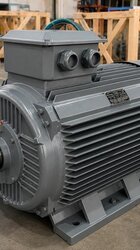

A crushing plant asks more of an electric motor than almost any other installation. Constant torque demand, sudden load steps, heavy mineral dust, vibration and long shifts arrive together, and an ordinary machine wears out fast under that combination.
What a Crusher Line Does to a Motor
Material never flows evenly through a jaw, cone or impact crusher. A large rock dropping into the chamber demands very high torque within a fraction of a second, and such spikes punish both the winding and the mechanical assembly. Dust is continuous, vibration is high, and plants often sit in the open.
- High pull-out torque against sudden load steps
- IP55 protection as a minimum against dust ingress
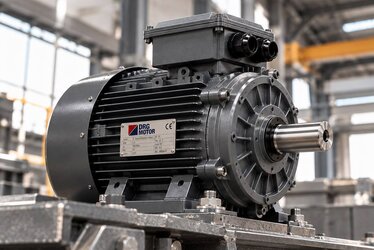
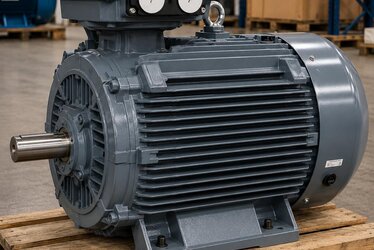
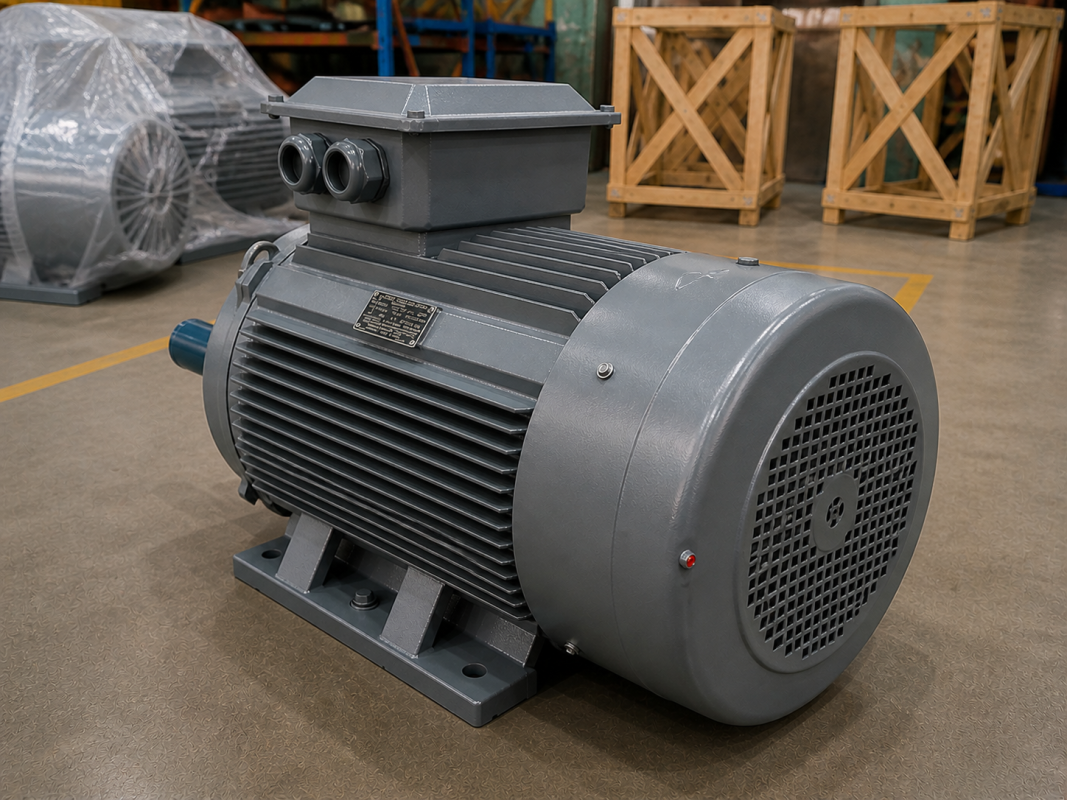
- Cast iron frame and solid bearing housings to survive vibration
- Class F insulation suited to open-site conditions
The Frame Decides the Service Life
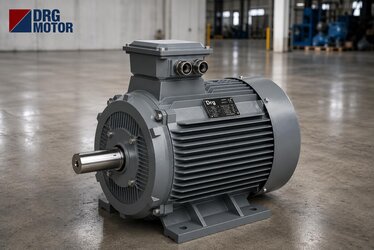
Cast iron carries the crusher and mill drives because it resists impact and vibration better than anything lighter. Aluminium is lighter and dissipates heat well, so it belongs on belt conveyors, screens and other auxiliaries where shock loading is lower. One frame material for the whole plant wastes money at one end and shortens life at the other.
Torque, Speed and Pole Count
Frequency and pole count together fix the speed: at 50 Hz, two poles give 3000 rpm, four give 1500 rpm and six give 1000 rpm. Crushers want high torque at moderate speed, so four- and six-pole models dominate. As load rises the slip of the squirrel-cage rotor grows a little and the motor delivers more torque. What matters is whether it meets that torque without stalling when material jams.
Flywheel, Pulleys and the Mechanical Link
Power usually reaches the crusher shaft through V-belts and pulleys, and on jaw crushers a large flywheel stores energy through the idle part of the cycle to help the motor at the peak. Get the pulley ratio wrong and the machine either labours at low speed or runs too fast and spoils the product size. Belt tension and pulley alignment load the motor bearings directly.
Energy Consumption Over a Shift Pattern
Quarry plants work long hours, often across shifts, which leaves the purchase price a minor line item next to the electricity bill. IE3, IE4 and IE5 machines deliver identical mechanical output while wasting less, and on a heavily loaded line the step from IE3 to IE4 repays its extra cost through operating savings.
Starting Method and Protection Gear
Forcing a heavily loaded crusher motor to start direct-on-line produces a large inrush and can pull the local voltage down. Ramping the start instead — star-delta switching, a soft starter, or an inverter driving the crusher up to speed — spares the incoming supply and the crushing chamber alike. A sealed terminal box, phase protection and a thermal overload relay complete the package. Where an inverter is used, the winding insulation must suit that duty.
One Plant, Several Load Profiles
A crushing plant is more than its crusher. Belt conveyors, vibrating screens, feeders and washing units all need drives, each with its own character:
- Crusher: high torque, shock loading, cast iron frame
- Belt conveyor: constant torque, continuous duty, geared drive
- Vibrating screen: a purpose-built design with a balanced rotor
- Feeder: variable speed, usually inverter controlled
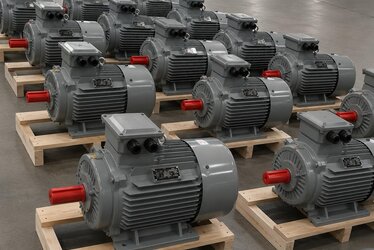
Between 0.55 and 355 kW at 400 V / 50 Hz in S1 duty, every point of the plant can be covered. Efficiency class detail sits in our IE3 motor article.
Ambient Temperature, Cooling and Derating
Standard ratings assume 40 °C ambient and 1000 metres altitude; above either figure the output has to be derated. Dust caked into the cooling fins weakens airflow and raises winding temperature, so cleaning fins and fan cover preserves the margin class F insulation gives.
Mark the drives whose failure stops the line and stock a spare for those ratings; a planned swap puts the crusher back on stream in minutes.