 English
 Türkçe
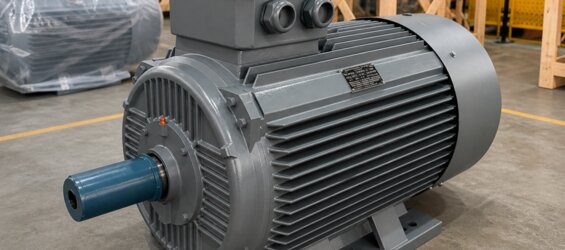
Motor Voltage and Frequency Tolerances (Derating)
An electric motor is designed to run at the single voltage and frequency value written on its nameplate; however, in the real world the supply conditions never stay exactly fixed a... More Details

An electric motor is designed to run at the single voltage and frequency value written on its nameplate; however, in the real world the supply conditions never stay exactly fixed a... More Details
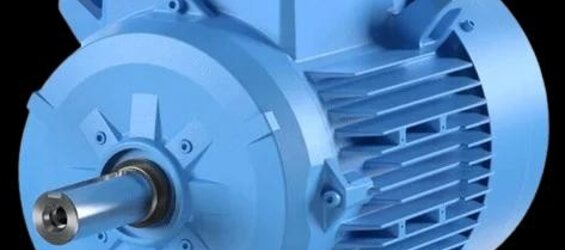
The moment an electric motor is first energized is one of the most demanding moments it experiences throughout its working life. A stationary asynchronous motor draws a current far... More Details
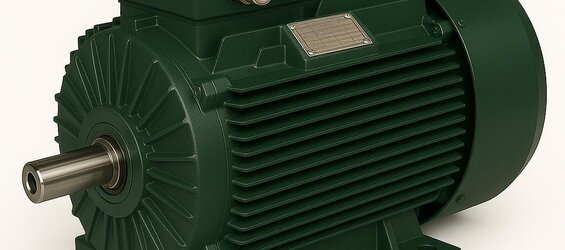
Connecting an electric motor to the supply correctly is the first condition for safe and efficient operation. In three-phase asynchronous motors, this connection is made in the ter... More Details
One of the most fundamental decisions when selecting a motor to drive a machine is this: should the motor be connected directly, or should a gearbox be placed in between? This choi... More Details
Whether an electric motor is mounted horizontally or vertically may at first look like nothing more than a layout preference. In reality, this choice directly affects many mechanic... More Details
When you run an electric motor for years, you come to know its behavior intuitively: which sound is normal, what temperature to expect, how it responds under a given load. The conc... More Details
When an electricity bill comes in higher than expected, the first remedy that comes to mind is usually to swap a single component, the motor, for a more efficient model. Yet an ele... More Details
When an electric motor fails or its efficiency drops, the first question that usually comes to mind is "should I buy a new one?" Yet a motor's life does not end with its first faul... More Details
For many years, industry produced heat by burning fuel. Today this equation is changing: industrial heat pumps take low-temperature waste heat and lift it to the higher temperature... More Details
At the heart of a data center sit the servers, but the infrastructure that keeps those servers running without interruption is the cooling system. If the heat produced by thousands... More Details
When you look at the nameplate of an electric motor, you see that the power is sometimes written in kilowatts (kW) and sometimes in horsepower (HP). The speed is given as revolutio... More Details
Induction motors are divided, by rotor construction, into two broad families: the squirrel cage (short-circuited bar) rotor and the wound rotor (slip-ring) motor. From the outside ... More Details
Aggregate and quarry plants are among the most demanding operating environments for electric motors. In these plants, where tonnes of rock are crushed, screens vibrate constantly a... More Details
Induction motors are the most widely used sources of motion in industry, and at the heart of how these motors work lies the concept of slip. An induction motor can only produce tor... More Details
When selecting an electric motor, the first value most people look at is the power rating in kilowatts. Yet the concept that truly determines how a motor will behave in real life, ... More Details
There are two basic ways to turn a machine or a pump: either set up a mechanical drive with a diesel generator or engine, or use an electric motor fed from the grid. This choice di... More Details
The foundation of running an electric motor safely and efficiently lies in a properly built motor panel. At the heart of this panel is the contactor, which switches the motor in an... More Details
In industrial facilities, warehouses, and large commercial buildings, the quality of the indoor air directly affects production efficiency and worker health. One of the most effect... More Details
The heart of an electric motor is the windings placed inside its stator. These windings directly determine the motor's power, efficiency, and service life, and they are formed thro... More Details
Ceramic production involves many stages, including raw material preparation, forming, drying, firing, and glazing. Electric motors are at work in nearly all of these stages. A wide... More Details