 English
 Le français
 Türkçe

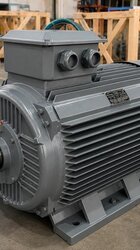

There are two basic ways to turn a machine or a pump: either set up a mechanical drive with a diesel generator or engine, or use an electric motor fed from the grid. This choice directly affects many factors, from operating cost to maintenance burden, and from environmental impact to noise level. To make the right decision, it is necessary to clearly understand the strengths and weaknesses of both methods.
In this article, we will examine in detail when a grid-powered electric motor is advantageous instead of a generator or diesel drive. You can also read our article on what is an electric motor for the basic logic of electric motors.
The basic difference between diesel drive and grid motor
In a diesel drive, the mechanical power produced by the combustion of fuel directly turns the machine or is converted into electricity through a generator. In a grid motor, ready-made electrical energy is converted into mechanical power by an electric motor.
The energy source, efficiency, and cost structure of these two approaches are completely different. While the diesel system depends on fuel, the electric motor depends on the grid infrastructure. This fundamental difference also reveals the conditions that determine which method is more suitable.
Operating cost comparison
The most decisive factor in operating cost is the energy expense. Diesel fuel is generally more expensive per unit of energy than grid electricity, and its price fluctuates.
An electric motor fed from the grid often does the same job at a much lower energy cost. In continuous and long-term operation, this difference turns into a large saving over the years. For this reason, the cost advantage of the electric motor grows as the operating time lengthens.
When making a calculation, one must look at the price of fuel or electricity and at the efficiency of the system. Producing electricity with a diesel generator and then turning a motor is more expensive per unit of work due to both fuel and conversion loss. A motor fed directly from the grid, on the other hand, eliminates these intermediate losses. In a pump that runs long hours a day, this difference becomes a very large item in the annual energy budget.
Initial investment cost
In the initial investment, the picture can sometimes be reversed. Bringing electrical infrastructure to a site without a grid connection can require a high initial investment, including transformer and line costs.
In contrast, a diesel generator can be put into service immediately without the need for cables. For this reason, the initial investment and the long-term operating cost must be evaluated together. In most permanent facilities, once the electrical infrastructure is built, it pays for itself over many years.
When deciding, the total cost of ownership, that is, all of the investment, energy, maintenance, and lifetime expenses, must be calculated together. A diesel system that seems cheap at first glance can become much more expensive in the long run with high fuel and maintenance costs. In contrast, the grid motor, which seems to have a high initial infrastructure cost, closes the gap within a few years. For this reason, making the decision by looking only at the initial investment is misleading.
Service Plan and Spares
Diesel engines require regular and frequent maintenance due to oil, filters, the fuel system, and many moving parts. This maintenance brings both time and cost.
Electric motors, on the other hand, have far fewer moving parts and are quite simple to maintain. Usually, bearing lubrication and periodic inspection are sufficient. Our article on maintenance steps summarizes this simple maintenance routine.
In a diesel engine, many items such as oil changes, air and fuel filters, injector cleaning, and the cooling system require constant attention. Neglecting this maintenance leads to sudden failures and costly repairs. In an electric motor, regularly checking the bearings and measuring the winding insulation resistance is usually sufficient. Our article on extending bearing life provides guidance on extending bearing life.
Comparison in terms of efficiency
In diesel engines, a significant part of the chemical energy of the fuel is lost as heat; mechanical efficiency is often limited. Producing electricity with a generator and then turning a motor creates additional loss due to double conversion.
Electric motors fed from the grid, on the other hand, operate with high efficiency in a single conversion. High-efficiency electric motors convert most of the energy into mechanical power, providing a clear advantage over diesel systems.
A modern IE3 or IE4 class electric motor converts a very large portion of the electricity it receives into mechanical power. In diesel engines, most of the combustion heat is lost through the exhaust and cooling. You can find detailed information on where efficiency losses come from in our article on efficiency losses. This efficiency difference is the electric motor's strongest card during long operating hours.
Emissions and environmental impact
Diesel drive emits exhaust gas, particulate matter, and carbon dioxide as a result of combustion. These emissions are subject to limitations in terms of both environmental regulations and occupational health.
A grid-powered electric motor produces no emissions at the point of use. This advantage grows even more on a grid fed from renewable sources. For facilities with environmental goals, the electric motor is by far the cleaner solution.
For businesses trying to reduce their carbon footprint, this difference is becoming increasingly decisive. In many countries, emission limits imposed on diesel systems make diesel use difficult in enclosed and residential facilities. The electric motor, on the other hand, can be safely operated in an enclosed environment without the problem of exhaust gas. This is an important advantage in terms of both legal compliance and worker health.
Noise level
Diesel engines produce high noise and vibration while running. This negatively affects both worker comfort and nearby residents.
Electric motors run much more quietly; with proper installation, their vibration is also minimal. In residential environments where noise is a problem, the electric motor is the solution to be preferred. Our article on reducing noise and vibration offers additional information.
Grid infrastructure requirement
The biggest prerequisite for an electric motor is a reliable grid connection. If the site is far from the city grid or the connection is difficult, this requirement can turn into a significant obstacle.
If a connection is possible, it is sufficient to install a transformer of the required power and a suitable line. If the grid is stable, the motor operates without interruption and safely. For this reason, grid access must be evaluated first in site selection.
It is important that the grid is present and stable and of sufficient capacity. In a region that experiences frequent voltage fluctuations or outages, the motor can be damaged or production can be disrupted. In such cases, an installation supported by a voltage regulator or a backup generator may be needed. Solid grid infrastructure is the prerequisite for fully benefiting from all the advantages of the electric motor.
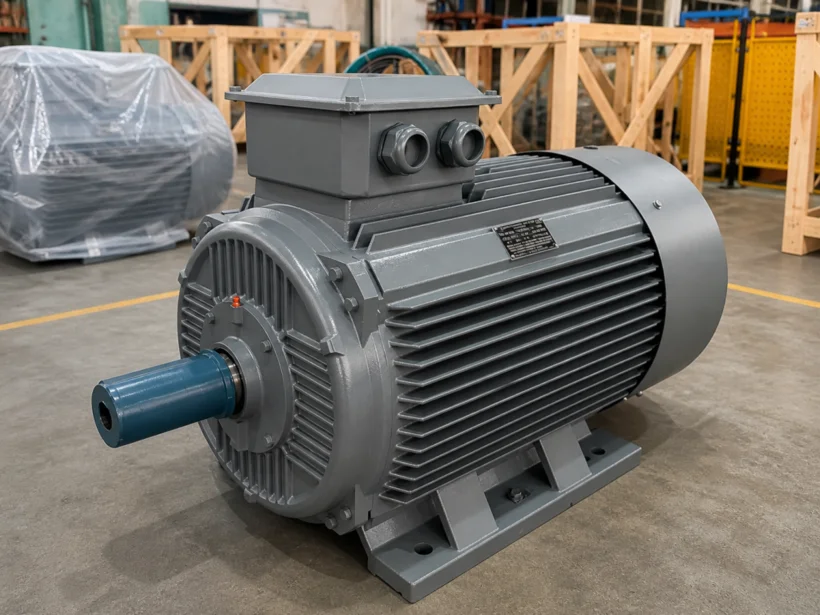
Continuous operation and reliability
In facilities that run for most of the day, reliability is critically important. In a diesel system, refueling and frequent maintenance can increase unplanned downtime.
An electric motor runs almost without interruption on a stable grid. Industrial electric motors are designed to suit this continuous operation and cause no trouble for many years.
In a diesel generator, the fuel level must be constantly monitored and refueling must be done; this increases dependence on human intervention. The electric motor, on the other hand, is far more suitable for fully automatic and unmanned operation since it does not require refueling. The motor's condition can be continuously tracked with remote monitoring systems. This reliability minimizes the risk of downtime in critical processes.
Speed and torque control
In modern applications, precisely adjusting the speed and torque of the machine provides a great advantage. In diesel drive, this control is limited and coarse.
The electric motor allows precise speed control over a very wide range with a frequency inverter. Our article on frequency inverter energy saving explains this flexibility.
In applications such as pumps and fans, reducing the speed significantly lowers energy consumption, providing a saving that cannot be achieved in a diesel system. The inverter also provides a soft start to the motor, reducing the starting current and mechanical stress. The ability to adjust the speed instantly according to the process need also improves production quality. This flexibility allows the electric motor to integrate easily into modern automation systems.
Fuel storage and logistics
In a diesel system, the storage, transport, and safe keeping of fuel bring a separate burden. Fuel tanks, the risk of leakage, and refueling logistics keep the operation busy.
There is no such logistics in an electric motor; energy comes directly through the cable. This simplicity eliminates both the operational burden and the related risks.
Fuel tanks require special safety measures as they carry the risk of fire and environmental pollution. Fluctuations in fuel prices also make the operating budget unpredictable. With grid electricity, the cost is more stable and plannable. This predictability facilitates long-term investment decisions.
The role of the generator as backup power
It is not correct to see the generator as completely unnecessary. In situations where there is no grid or the grid is cut off, the generator is a vital backup power source.
The ideal solution is often to use the electric motor as the main drive and the generator as an emergency backup. In this way, both low operating cost and the assurance of uninterrupted operation are obtained.
In this hybrid approach, the motor is fed from the grid under normal conditions; when the grid is cut off, an automatic transfer switch kicks in and starts the generator. In this way, critical processes never stop, but since the generator runs only when needed, fuel and maintenance costs remain low. This solution is common in places where downtime is unacceptable, such as hospitals, food plants, and continuous production facilities. The combination of an electric motor as the main drive and a generator as backup is the most balanced option for most industrial facilities.
Lifespan and durability
Electric motors, thanks to their few moving parts, are much longer-lived than diesel engines. With proper maintenance, they can operate for decades.
Diesel engines, on the other hand, require more frequent overhauls and part replacements. In the long run, the total cost of ownership of the electric motor is significantly lower.
A well-maintained electric motor can be returned to service by rewinding even when its winding burns out; this protects the investment. In diesel engines, the wear of main parts such as the block, crankshaft, and injection system requires costly overhauls. This durability difference clearly emerges, especially in facilities that run uninterrupted for years. Long life makes the electric motor a sensible choice for permanent installations.
Overload and phase protection
In grid motors, protection devices against overload and phase faults are easily added. These devices protect the motor safely.
A thermal relay and a phase protection relay extend the life of the motor. Our articles on overload protection and phase loss explain these protections in detail.
Grounding and electrical safety
In a grid-powered motor, grounding is the foundation of safety. The leakage current that occurs when insulation weakens is safely discharged with proper grounding.
Solid grounding protects both the motor and the personnel. Our article on grounding completes this subject.
The electrical safety of the grid motor is integrated with a properly built panel and protection components. A residual current relay, fuse, and motor protection circuit breaker secure the motor against various faults. These protection layers offer a safety and simplicity that does not exist in a diesel system. A well-designed electric drive is both a safe and easy-to-maintain installation.
Tracking with energy monitoring
In grid motors, current and energy consumption can be easily monitored. This monitoring makes it possible both to optimize efficiency and to detect faults early.
In a diesel system, such monitoring is much more complex. Our article on energy monitoring explains this approach.
What Field Crews Check
In electric motors, faults can be detected before they occur with vibration and temperature measurements. In this way, unplanned downtime is prevented.
This predictive approach further increases the reliability of the grid motor. Our article on predictive maintenance explains the methods.
Which should be preferred in which situation?
In permanent facilities that have grid access, run for a long time, and have emission-noise sensitivity, the electric motor is by far advantageous. Its low operating cost and long life cover the initial investment in a short time.
In remote sites without a grid, temporary construction sites, or for backup power needs, the diesel generator is indispensable. The decision must be made according to the conditions of the site and the operating time.
For example, in constantly relocating applications such as mining sites, road construction sites, and mobile crushing plants, diesel drive is more practical. In contrast, for a pump station inside a factory or a fixed conveyor line, a grid motor is much more sensible. As the annual operating hours increase and the site becomes permanent, the balance tips in favor of the electric motor. The right decision is made with a careful analysis of these factors.
Where These Motors Run
In fixed and continuously running applications such as pumps, fans, compressors, and conveyors, the trend is toward grid-powered electric motors. These machines operate most efficiently with an electric motor in permanent installations.
Facilities with a three-phase grid get the highest efficiency from these motors. Our article on three-phase motor in industry explains the prevalence of this use.
Choosing the right motor
Once the decision to switch to a grid motor is made, it is necessary to choose the right motor in the power, speed, and efficiency class suitable for the application. A wrong choice overshadows the expected saving.
A reliable supplier correctly determines the motor suitable for the need. Our article on electric motor dealers offers selection tips.
Efficient grid solutions with DRG Motor
As an alternative to generator drive, DRG Motor ships high-efficiency and long-lasting electric motors fed from the grid. With their low operating cost, simple maintenance, and quiet operation, these motors are an economical and environmentally friendly solution for permanent facilities.
If you are evaluating the switch from diesel drive to a grid motor in your facility, you can review DRG Motor products and contact our expert team for the right choice. For more information, you can read our article on high-efficiency electric motors or visit our homepage.