 English
 Türkçe
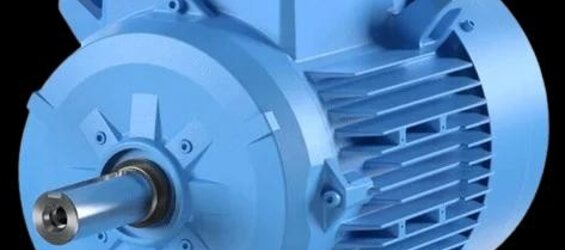
V/f vs Vector Control in Frequency Inverters
A frequency inverter can change the speed of an induction motor, but how it does so depends on the control method you choose. There are two fundamental approaches: scalar V/f contr... More Details

A frequency inverter can change the speed of an induction motor, but how it does so depends on the control method you choose. There are two fundamental approaches: scalar V/f contr... More Details
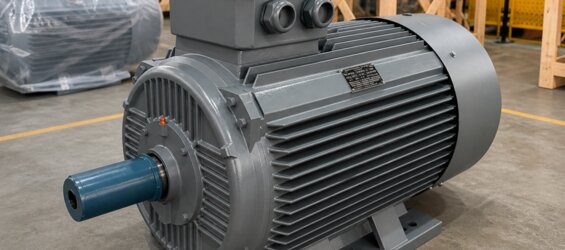
A soft starter limits the inrush current and mechanical shock of an induction motor by gradually raising the starting voltage instead of connecting the machine directly to the line... More Details
A frequency inverter provides large energy savings by flexibly adjusting the motor's speed; but this benefit comes with an invisible side effect: electrical noise. The inverter dri... More Details
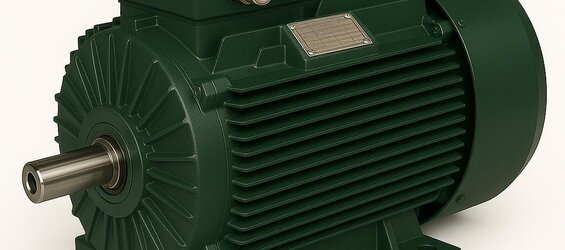
One of the most vulnerable points of an electric motor is where the shaft leaves the frame. At this point a small gap must remain between the rotating shaft and the stationary fram... More Details
Before an electric motor fails, it almost always gives a warning: vibration. Bearing wear, imbalance, misalignment, looseness or electrical problems all leave a trace in the motor'... More Details
Some loads are simply too large to fit within the power of a single motor. A belt conveyor hundreds of metres long, the lifting system of a heavy bridge crane, or the drive of a la... More Details
When an electric motor runs, the job of the winding insulation is not only to carry energy; it is also to separate the live conductors from the frame, and the frame from the people... More Details
On a cold winter morning, an electric motor waiting outdoors or in a chilled warehouse meets conditions at its first start that are very different from those in a warm environment.... More Details
The insulation of large-power electric motors ages silently and over the years. This aging is usually invisible from the outside, until one day the winding insulation collapses and... More Details
The path to selecting the right motor often does not run, as is commonly assumed, through looking only at the power value. What really matters is the character of the load the moto... More Details
An electric motor cannot convert all the energy it draws into mechanical work; part of that energy inevitably turns into heat. In most facilities, this heat is seen as a loss that ... More Details
There is a single graph that best describes the character of an induction motor: the torque-speed curve. This curve shows how much torque the motor can produce at every speed from ... More Details
No matter how high the power of an electric motor is, that power is useless if it cannot reach the shaft. The shaft is the bridge that transfers the rotary motion and torque the mo... More Details
The life of an electric motor begins not the moment it is first started, but the moment it leaves the factory. Most facilities do not commission a motor immediately after purchasin... More Details
One of the greatest enemies of an electric motor is moisture, which is often invisible to the eye but advances silently. When moisture seeps inside the motor, it weakens the insula... More Details
When you change the speed of a motor in a pump or fan system, knowing in advance how much the flow, pressure and power will change is one of the fundamental questions of engineerin... More Details
Two electric motors can have the same power, the same speed and the same efficiency; yet one runs flawlessly for years in a dusty crushing plant while the other burns its winding w... More Details
The most critical factor determining the life of an electric motor often comes down to a single, usually invisible variable: winding temperature. As long as the windings stay withi... More Details
At the heart of every electric motor lies an invisible yet critical boundary between the copper windings and the metal frame: the insulation. This layer, formed by enamel, varnish ... More Details
When an electric motor runs, it does not only produce mechanical power; it also releases heat in the windings, the rotor, and the bearing areas. If this heat is not kept under cont... More Details