 English
 Le français
 Türkçe

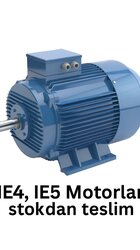
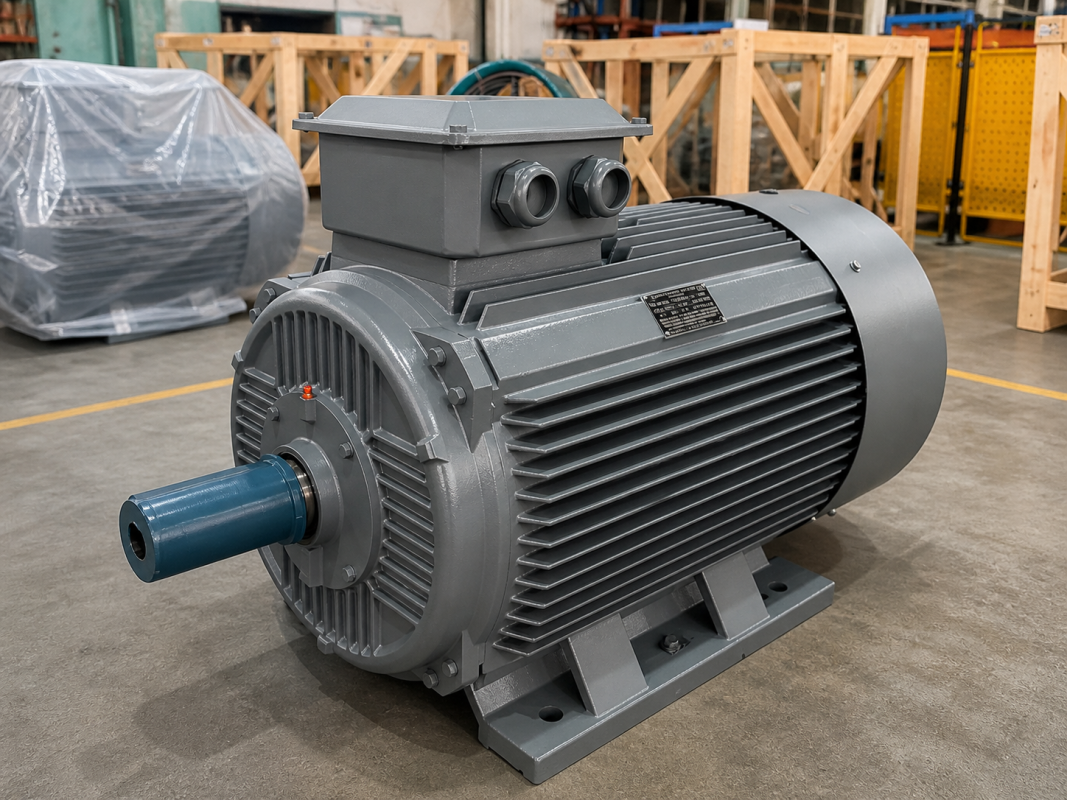

Before an electric motor fails, it almost always gives a warning: vibration. Bearing wear, imbalance, misalignment, looseness or electrical problems all leave a trace in the motor's vibration signature. An engineer who can read these traces can catch the fault weeks, even months, before the motor stops. This idea lies at the very foundation of vibration analysis. However, distinguishing the type of fault by looking at the raw vibration signal is almost impossible, because the signal is the intertwined sum of dozens of different sources. The tool that breaks this complex signal into meaningful parts is the FFT, the Fast Fourier Transform. In this article we explain, from DRG's perspective, what the FFT is, the difference between the time domain and the frequency domain, which frequency points to which fault, and how this information is used in predictive maintenance.
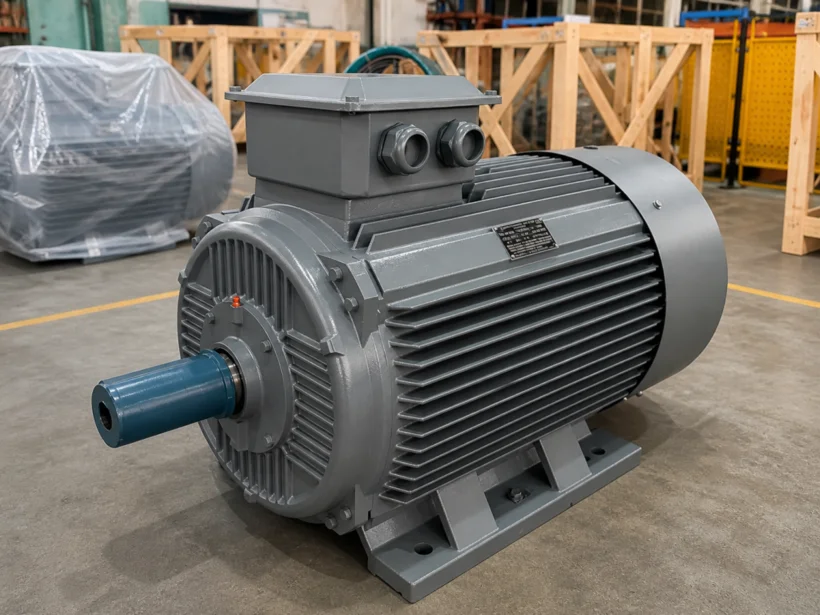
Why Is Vibration a Herald of Faults?
A perfectly balanced, aligned and sound motor vibrates extremely little. When a component wears, loosens or loses its balance, the rotating forces become irregular, and this irregularity reflects onto the housing as vibration. The severity of the vibration reveals the size of the fault, while the frequency reveals its type. Vibration is therefore a language the motor speaks; the FFT is the dictionary that translates this language.
What Is a Time-Domain Signal?
When a vibration sensor is placed on a motor, it produces a signal that changes over time. This signal is called "time-domain" data; the horizontal axis is time, the vertical axis is vibration amplitude. The time-domain signal gives an idea of the motor's total vibration level but cannot separate the different frequencies within it. It is like a single recording of a complex orchestra; you cannot tell which instrument is playing.
Moving to the Frequency Domain
The FFT takes this complex time-domain signal and re-expresses it as the sum of the individual frequencies that make it up. The result is a "frequency-domain" chart; the horizontal axis is frequency (Hz or per revolution), and the vertical axis is the vibration amplitude at that frequency. Now you can hear each instrument of the orchestra separately. Wherever there is a peak, the mechanical or electrical event corresponding to that frequency has come to the fore.
The practical value of this transformation is enormous. While in the time domain you can go no further than saying "the motor is vibrating," in the frequency domain you can make precise statements such as "there is imbalance at 25 Hz, an electrical problem at 100 Hz." In other words, the FFT turns a vague complaint into a concrete diagnosis. This clarity is the key to replacing the right part at the right time and avoiding unnecessary disassembly.
Fourier's Basic Idea
The idea Fourier put forward two centuries ago is simple but powerful: every periodic signal can be expressed as the sum of sine waves of different frequencies and amplitudes. The FFT turns this decomposition into an algorithm that a computer can perform rapidly. Modern vibration instruments take thousands of samples per second and instantly convert them into a spectrum using the FFT.
Running Frequency: The Reference for Everything
In vibration analysis, the most important reference is the motor's rotational frequency. This is generally called 1x. For example, the running frequency of a motor turning at 1500 rpm is 25 Hz. All other fault frequencies mostly appear as multiples of this 1x value (2x, 3x) or as certain ratios of it. That is why, when reading a spectrum, you first find 1x and then position the other peaks relative to it.
Imbalance: The Classic 1x Signature
If there is mass imbalance in the rotor, a centrifugal force in the same direction forms at every turn. This creates a dominant vibration peak at exactly the running frequency, that is, at 1x. Imbalance is one of the most easily recognised signatures in the spectrum: high amplitude at 1x and relatively low levels at the other harmonics. The nice thing about imbalance is that it can often be remedied with a dynamic balancing operation; by adding small balance weights at the correct points on the rotor, the vibration is largely damped. So when you see a dominant 1x signature, it is wise to check the balance before panicking.
Misalignment: The Herald of 2x
If the coupling between the motor shaft and the load is not perfectly aligned, a strain that repeats twice per turn forms. This appears in the spectrum as a distinct peak in the 2x region (twice the running frequency). In misalignment, both 1x and 2x usually rise, but the dominance of 2x points to misalignment.
Mechanical Looseness and Harmonics
If the foot bolts are loose, the bearing is not seated, or the housing is cracked, many harmonics of the running frequency (1x, 2x, 3x, 4x...) appear in the vibration spectrum. Looseness effectively "clips" the signal and creates many side peaks. The simultaneous rise of multiple harmonics is a classic sign of looseness.
A point to note in diagnosing looseness is that the problem is often not in the motor itself but in its mounting. A bolt not tightened to the correct torque value or a base that is not seated properly can make even the soundest motor vibrate. So when a looseness signature is seen, the mechanical connections and mounting should be checked first; often the solution is a simple tightening.
Click to see current electric motor prices and order nowSEE PRICES →
Don't Fall into the Resonance Trap
Not every vibration peak is a fault. Sometimes the natural frequency of the structure coincides with the operating frequency and resonance occurs; this causes even a small force to turn into a large vibration. To distinguish resonance from a real mechanical fault, you need to change the motor's speed and observe how the peak behaves. Resonance is often resolved by increasing the mounting stiffness or shifting the operating point.
Bearing Faults: High-Frequency Signatures
Bearing faults are the area where vibration analysis is strongest. The inner race, outer race, ball and cage elements of a bearing each have their own characteristic pass frequency. These frequencies are not exact multiples of the running frequency; they are usually decimal ratios and much higher than the running frequency. The appearance of a peak at these special frequencies in the spectrum indicates early wear in the relevant bearing element.
The most valuable aspect of bearing faults is that they can be caught very early. When a microscopic crack forms in a race, while there is still no noise or heating, a small peak appears at its characteristic frequency in the spectrum. Thanks to this early warning, the bearing can be replaced before it fully fails and damages the shaft. A bearing fault left too late can scratch the shaft, strain the housing and turn into a much more expensive repair. That is why monitoring bearing frequencies is the most profitable leg of predictive maintenance.
Electrical Faults: 2x Line Frequency
Some vibrations are not mechanical but electrical in origin. Stator problems, air-gap irregularities or rotor defects can create a vibration peak at twice the line frequency (100 Hz on a 50 Hz supply). This 2x line signature must not be confused with mechanical faults, because its solution is completely different. For electrically originated rotor faults, current signature analysis is also a powerful complement; we addressed this in our article on MCSA broken rotor bar diagnosis.
Frequency–Fault Relationship Table
The table below summarises the relationship between the typical frequency peaks seen in the spectrum and the possible fault types. This table serves as a quick reference when reading a spectrum.
| Vibration Frequency | Possible Fault | Typical Clue |
|---|---|---|
| 1x running | Imbalance | Dominant single peak, low harmonics |
| 2x running | Misalignment | Distinct 2x, together with 1x |
| 1x, 2x, 3x, 4x... (multiple harmonics) | Mechanical looseness | Many harmonic peaks |
| High, decimal-ratio frequencies | Bearing fault | Peaks not multiples of running speed |
| 2x line frequency (e.g. 100 Hz) | Electrical fault | Supply-related, not confused with mechanical |
Amplitude or Frequency: Which Matters?
Frequency tells you the type of fault, while amplitude tells you its severity. If a peak appears at the right frequency and its amplitude increases over time, this means the fault is progressing. That is why a single measurement is not enough; the trend over time is far more valuable. Comparing today's spectrum with the one from six months ago reveals a hidden wear.
The Power of Trend Tracking
The essence of predictive maintenance is not a single photograph but a film. Monitoring how the amplitude at a particular frequency changes over weeks and months lets you predict when the fault will reach the critical threshold. This way, maintenance turns from an unplanned stoppage into a planned shutdown. You can find the foundations of this approach in our article on electric motor predictive maintenance.
Wireless Sensors and Continuous Monitoring
In the past, a technician would go to the field for vibration measurement and measure motors one by one with a handheld device. Today, wireless vibration sensors permanently attached to the motor can collect data around the clock and perform FFT analysis automatically. This continuous monitoring catches even suddenly developing faults. We elaborated on the topic in our article on wireless vibration sensor condition monitoring.
Resolution and Sampling
The quality of FFT analysis depends on how much data you collect. A high sampling rate lets you see higher frequencies; a long measurement time increases your ability to distinguish two close frequencies, that is, the resolution. To catch high-frequency signatures such as bearing faults, sufficiently fast sampling is essential.
What Do Sidebands Tell Us?
Sometimes small peaks placed at regular intervals on either side of the main peak are seen. These are called sidebands. Sidebands indicate that one vibration is being modulated by another frequency and usually appear in bearing or gear faults. The spacing of the sidebands reveals which component is problematic.
The Relationship Between Vibration and Noise
Vibration and noise often stem from the same root. A vibration peak seen in the spectrum often shows itself as audible noise too. That is why vibration analysis is also a way to diagnose noise sources. We examined this relationship in our article on reducing electric motor noise and vibration.
The Importance of the Measurement Point
Where and in which direction the sensor is placed on the motor directly affects the accuracy of the measurement. Measurements are usually taken in three directions, horizontal, vertical and axial, because each fault type vibrates more dominantly in a different direction. For example, misalignment is more distinct in the axial direction, while imbalance is more distinct in the radial direction.
Avoiding Misinterpretation
The FFT is a powerful tool, but its interpretation requires experience. Multiple fault types can create a peak at the same frequency; that is why the spectrum must be evaluated together with the motor's structure, speed and historical data. Looking at a single peak and making a hasty diagnosis can lead to wrong maintenance decisions.
Its Link to Efficiency
Increasing vibration usually means increasing loss. A rubbing bearing or a misaligned coupling increases mechanical loss and lowers the motor's efficiency. So keeping vibration low prevents faults and cuts energy consumption. You can find the sources of efficiency loss in our article on electric motor efficiency losses.
Vibration in Drive-Fed Systems
In motors driven by a frequency inverter, the vibration spectrum can contain additional components related to the drive's switching frequency. That is why, when analysing variable-speed systems, it is important to separate the electrical signatures produced by the drive from mechanical faults. This requires an experienced eye. Moreover, because the motor's speed constantly changes in drive-fed systems, the 1x reference is also not fixed. In this case, to read the spectrum correctly, the actual speed at the moment of measurement must be known and the frequencies scaled accordingly. Otherwise an interpretation based on a fixed reference becomes misleading.
Modern vibration instruments solve this problem by synchronising the motor's instantaneous speed with a tachometer or drive data. This way, fault signatures can be reliably tracked even in variable-speed applications. Correctly configuring the drive and motor together is important for both efficiency and traceability.
What Is Envelope Analysis?
In the early stage of bearing faults, the actual fault signature is hidden within weak, high-frequency vibrations. A special technique called envelope analysis filters this high-frequency region and reveals the repetitive impacts within it. This way, even a very small bearing defect becomes distinct. Envelope analysis is a powerful complement for catching early faults that classic FFT cannot see, and it is standard on most modern monitoring devices.
FFT in Industrial Application
In heavy-industry applications such as stone crushing, pumps, fans and conveyors, motors operate under tough conditions, and vibration analysis becomes invaluable here. You can examine DRG's durable motor solutions for such applications in our article on industrial electric motors.
Integration into the Maintenance Plan
FFT analysis is not a miracle on its own; its power emerges when it is part of a regular maintenance programme. Taking measurements at set intervals, recording the results and tracking the trends keeps the motor's health under continuous control. This way, faults are addressed before they grow.
A Step-by-Step Diagnostic Logic
In practice, diagnosis usually proceeds as follows: first, the overall vibration level is checked to see whether it is normal; if it is high, the spectrum is opened; the dominant frequency is examined to see whether it is 1x, 2x or high-frequency; the found frequency is matched with the table; and finally, the urgency of the fault is evaluated with trend data. This systematic approach brings data-based decisions instead of guesswork.
Healthy and Quiet Operation with DRG Motor
Vibration analysis and the FFT are the most powerful way to read a motor's inner world from the outside; used correctly, they largely eliminate unplanned stoppages, energy loss and unexpected fault costs. At DRG, alongside our motors that are built to run in a balanced and quiet way, we offer engineering support so that these motors stay healthy throughout their lifetime. If you want to understand the vibration behaviour of the motors in your facility, set up the right sensor and monitoring strategy, or switch to next-generation balanced motors, get in touch with us. DRG Motor stands by you with reliable, data-driven motor solutions.
DRG Electric Motors Suited to This Topic
The models below are available in the DRG Motor online shop. Click a model code to see its technical data, dimensions and current price, and order right away.
- DRG-132M2-6 – 5.5 kW – 968 rpm – cast iron frame
- DRG-180L-6 – 15 kW – 978 rpm – cast iron frame
- DRG-225M-6 – 30 kW – 980 rpm – cast iron frame
- DRG-280S-6 – 45 kW – 985 rpm – cast iron frame
Click to see current prices of all electric motors and order nowSEE PRICES →