 English
 Le français
 Türkçe


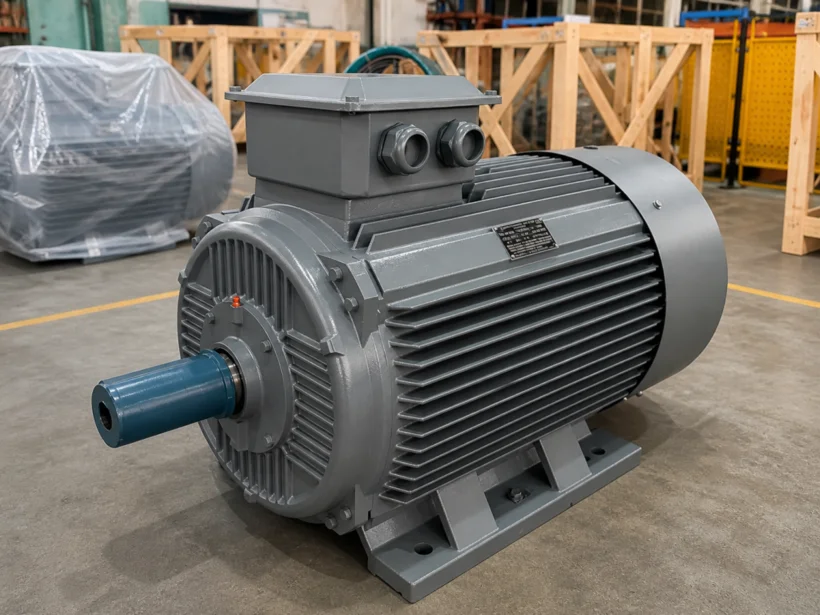
On a cold winter morning, an electric motor waiting outdoors or in a chilled warehouse meets conditions at its first start that are very different from those in a warm environment. Low temperature directly affects the motor's lubrication, its starting behavior and even the moisture in its insulation. Without the right precautions, a start made in the cold both stresses the motor and can shorten its life. From the engineering perspective of DRG Motor, this article covers how low temperature raises grease viscosity, why current rises during a cold start, the risks created by condensation and moisture, the role of anti-condensation heaters, and the right grease selection for low-temperature applications. We also examine the commissioning precautions for cold-storage, outdoor-field and low-ambient-temperature facilities within a practical framework.
Why Is a Cold Start a Different Situation?
An electric motor gives its best performance within the temperature range it was designed for. When the ambient temperature approaches the lower limit of this range or drops below it, the physical conditions of the motor change. The grease stiffens, the metals contract and moisture tends to condense. These changes can turn a start that causes no problem at all in a warm environment into a challenging event in the cold.
That is why a cold start is not just a slightly harder version of a normal start, but a separate situation requiring its own precautions. Understanding it protects the motor both from immediate damage and from long-term wear.
How Does Grease Viscosity Change at Low Temperature?
Lubricating grease loses its consistency as the temperature drops, and its viscosity rises; that is, it becomes more solid and less flowing. Grease that spreads easily and protects bearing surfaces when warm thickens in the cold and hinders movement. This increases the resistance on the bearings at the moment of start and delays the formation of the lubricating film. Correctly planning bearing greasing and lubrication intervals also covers the grease selection that underlies this problem.
Thickened grease does not just increase friction; by delaying the correct lubrication of the bearing, it enlarges the risk of early wear. That is why grease selection is a critical decision in cold applications.
Why Does Starting Current Rise in the Cold?
Thickened grease and contracting mechanical tolerances require more torque for the motor to start turning. More torque means more starting current. The already high starting current rises further in cold conditions and stresses the motor electrically. This situation also affects winding temperature and thermal protection behavior in applications that start frequently.
High starting current is a burden for both the motor itself and the supply grid. A commissioning that takes cold conditions into account anticipates this burden and sets the protection accordingly.
The Risks Created by Condensation and Moisture
After a cold motor has been stopped for a long time, the air and surfaces inside it drop to the ambient temperature. When the temperature rises again or humid air enters the motor, condensation forms on the cold surfaces. This condensed moisture accumulates on the winding insulation, lowering insulation resistance and wearing the insulation over the long term. As much as the choice of the electric motor insulation class, protecting the insulation from moisture is decisive for motor life.
The Role of the Anti-Condensation (Standstill) Heater
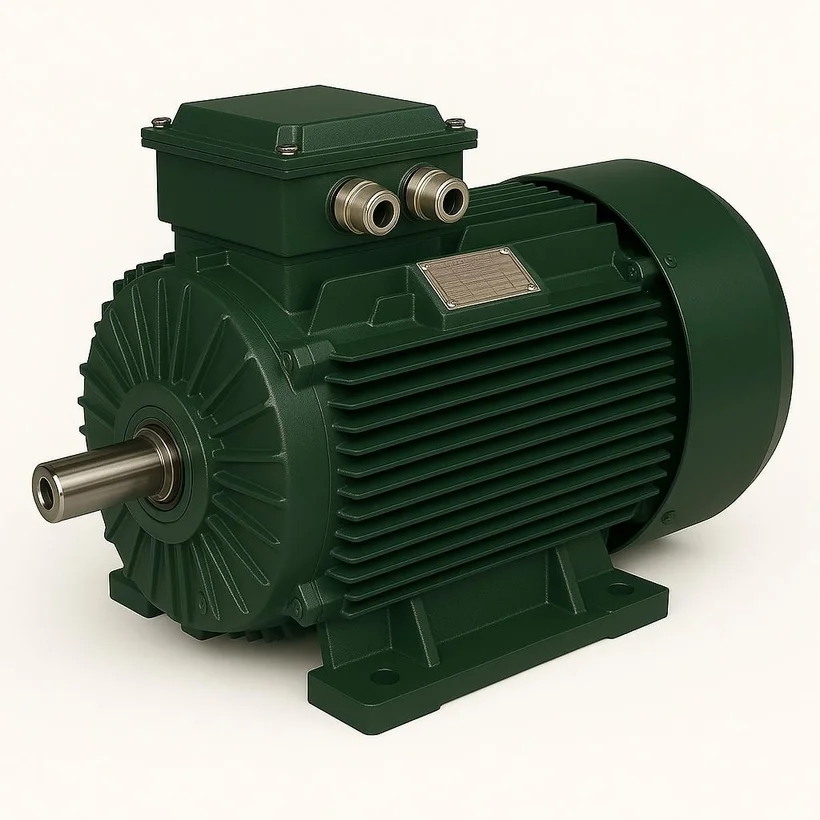
For motors operating in cold and humid environments, one of the most effective precautions is the anti-condensation heater. This heater keeps the windings slightly above ambient temperature while the motor is stopped, preventing condensation. When the inside of the motor stays slightly warmer than its surroundings, moisture cannot condense on the surfaces and the insulation stays dry. This simple precaution markedly extends insulation life, especially in motors that stand for long periods and are then started.
The heater is disabled when the motor starts running; its job is only to keep moisture away during standstill. That is why it has become almost a standard precaution in cold-storage and outdoor-field applications.
The Right Grease Selection for Low Temperature
The most fundamental precaution of cold applications is selecting a grease that keeps its fluidity even at low temperature. Low-temperature greases are formulated to lubricate the bearing without solidifying too much in the cold. The right grease reduces starting resistance, keeps current at a reasonable level and prevents early wear of the bearing. The wrong grease, on the other hand, can turn even the highest-quality motor into equipment that struggles in the cold.
When selecting grease, the lowest temperature at which the motor will operate must be taken as the basis. Greases with a wide temperature range can meet both the cold start and the operating temperature together.
Characteristics of Cold-Storage Applications
Motors operating in chilled warehouses are continuously exposed to low temperature. Here the motor must cope with the cold environment not only at start but throughout operation. In these applications, low-temperature grease, suitable insulation and moisture management must be considered together. In addition, cold-storage motors may be subject to frequent start-stop cycles, which increases the condensation risk.
Outdoor and Field Applications
Motors operating in the open air are exposed to seasonal temperature variations and humid conditions. While they start at very low temperatures on winter mornings, the temperature can rise during the day; this cycle triggers condensation. The effect of ambient temperature and altitude on motor selection forms the basis of choosing the right motor in outdoor applications. A suitable protection class, an anti-condensation heater and the right grease ensure that outdoor-field motors run safely in the cold.
Cold Start Precautions: A Comparative View
The table below summarizes the main problems created by starting in the cold and the precaution corresponding to each. This framework makes it easier to see which precaution comes to the fore under which condition.
| Cold-Related Problem | Effect | Precaution |
|---|---|---|
| Rise in grease viscosity | Starting resistance, delayed lubrication | Selecting low-temperature grease |
| High starting current | Winding stress, thermal tripping | Protection setting, gradual start |
| Condensation and moisture | Low insulation resistance, insulation wear | Anti-condensation heater |
| Mechanical contraction | Tolerance change, extra friction | Warm-up time at commissioning |
As the table shows, a cold start is managed not with a single precaution but with several precautions that complement each other. The right combination is determined according to the temperature and humidity conditions of the application.
The Mutual Complement of Grease and Insulation
There are two main fronts in a cold start: grease on the mechanical side and insulation on the electrical side. Although these two seem independent, they are different faces of the same problem. While low-temperature grease protects the bearing, the anti-condensation heater keeps the insulation dry. For a motor to run safely in the cold, both fronts must be considered together; focusing on only one leaves the risk from the other side exposed.
The Effect of Standstill Duration on the Cold Start
How long a motor has been stopped directly affects the cold start risk. After a short stop, the motor may still be warm and no problem arises. But after a long stop, the motor cools completely, the grease stiffens and condensation accumulates. That is why the first start after long stops such as a weekend or an off-season is the moment to approach most carefully. The anti-condensation heater provides its most valuable protection precisely during these long stops.
Insulation Check Before Commissioning
Before starting a motor that has waited in the cold for a long time, measuring the insulation resistance is a wise precaution. An insulation resistance lowered due to condensation shows that starting the motor immediately is risky. The insulation resistance (megger) test is the most practical way to verify that the insulation is dry and healthy before commissioning. If necessary, the motor is started after being dried with an anti-condensation heater or low voltage.
Safe Start with Gradual Warm-Up
In very cold conditions, instead of immediately commissioning the motor at full load, it is useful to allow a short warm-up time. When the motor runs at low load for a while, the grease warms and becomes fluid and the mechanical tolerances return to normal. This gradual approach both softens the effect of the starting current and gives the bearings time to be lubricated correctly. A hasty full-load start creates an unnecessary strain on a cold motor.
Protecting Bearing Health in the Cold
The component most affected by a cold start is the bearings. Thickened grease and high starting resistance can lead to early wear on the bearing surfaces. The right grease selection, a suitable lubrication interval and a gradual start are the basic tools for protecting bearing life. An approach that watches over bearing health secures the motor's most fragile point in cold applications.
The Effect of Cold Start on Efficiency
A motor operating in the cold may spend more energy than normal during start and until it warms up. Increased friction and high starting current temporarily lower efficiency during this period. When the motor reaches operating temperature, efficiency returns to normal, but in cold applications that start and stop frequently, these temporary losses can accumulate. High-efficiency electric motors limit this effect by running with fewer losses even in cold conditions.
Avoiding Over-Lubrication
A common mistake made while trying to protect the bearing in cold conditions is applying too much grease. Excess grease creates unnecessary friction and heat inside the bearing; in the cold, this excess stiffens even more and hinders movement. The correct amount is to follow the grease range and lubrication interval recommended by the supplier. In cold applications, the solution is not more grease, but the right type and the right amount of grease.
The Effect of Frequent Start-Stop Cycles
Motors that start and stop frequently in a cold environment face a special difficulty. At each stop the motor cools and the condensation risk rises; at each start, high current and starting resistance come into play again. This cycle wears down both the insulation and the bearing. In such applications, anti-condensation precautions, suitable grease and the right motor selection become even more critical, because the strain is not one-off but a repeating load.
The Importance of the Motor Protection Class
Motors operating in outdoor and humid environments must have a suitable protection class against water and dust. Inadequate protection lets moisture enter the motor and enlarges the condensation problem. The right protection class, together with anti-condensation precautions, ensures the long-lived operation of the motor in a cold and humid field. The protection class must be chosen correctly from the start according to the environmental conditions of the application.
Thermal Protection and Cold Conditions
The motor's thermal protection can behave differently than expected at a cold start. High starting current means the protection settings must take cold conditions into account. A protection set too sensitively can lead to unnecessary tripping in the cold; a setting too loose puts the motor at risk. The right balance is established by considering the lowest operating temperature of the application.
Cold-Climate Design Matters
A motor that will run continuously at low temperature becomes far more reliable when it is chosen with these conditions in mind. Cold-climate design means planning suitable grease, the right insulation, an anti-condensation heater and a suitable protection class together. This holistic approach protects the motor against the cold not from a single point, but from every front. Although precautions added afterwards work, the soundest solution is choosing the motor suitable for cold conditions from the start.
Planning Pre-Heating Times
In very cold fields, defining a certain pre-heating time before starting the motor makes the start much safer. An anti-condensation heater or a low-power pre-heating brings the motor to a reasonable temperature before start; thus the grease softens and condensed moisture moves away. Adding this time to the operating routine makes starts on cold mornings predictable and trouble-free.
The Contribution of Correct Motor Selection to Cold Performance
A motor resistant to cold conditions starts with the right selection. In industrial electric motors, a suitable insulation class, the right protection degree and grease appropriate for low temperature eliminate most cold-start problems from the very start. A well-chosen motor runs safely in the conditions it was designed for, instead of struggling in the cold. Knowing the real temperature conditions of the application is a precondition of correct motor selection.
Common Mistakes of a Cold Start
The most common mistakes in a cold start arise from underestimating the problem. Starting the motor without measuring insulation resistance, trying to get through winter with summer grease, disabling the anti-condensation heater, or starting directly at full load after a long stop are among the foremost of these mistakes. Each may not look like a big problem on its own; but when they come together, they accelerate the wear of the motor in the cold. Avoiding these mistakes often requires not expensive equipment, but only the right habit.
Commissioning Checklist
Before commissioning a motor in the cold, a few basic checks greatly reduce the risk: measuring the insulation resistance, assessing the grease condition, confirming the operability of the anti-condensation heater, and reviewing the protection settings according to cold conditions. This short checklist clears a start made on a cold morning of surprises and brings the motor safely into service.
DRG Motor for Reliable Operation in Demanding Conditions
At DRG Motor the induction motors we supply cover mild conditions and demanding ones alike: cold storage, outdoor fields and low ambient temperature. The right insulation class, a suitable protection degree and a lubrication approach oriented to low-temperature conditions ensure that your motors start safely and run long even in the cold. To determine together the motor solution most suitable for your application's temperature and humidity conditions, you can explore DRG Motor products and get in touch with our engineering team. A motor that starts trouble-free even on a cold morning begins with the right selection and the right precaution.