 English
 Le français
 Türkçe

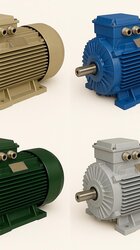
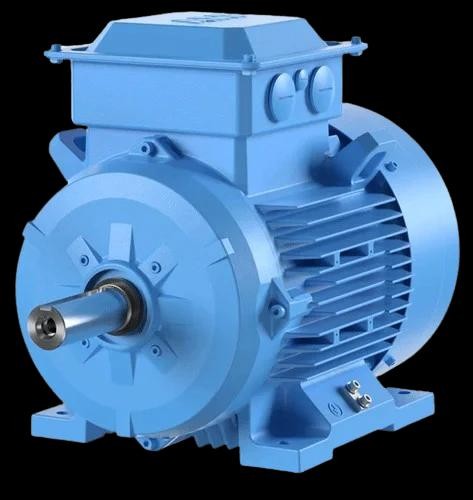

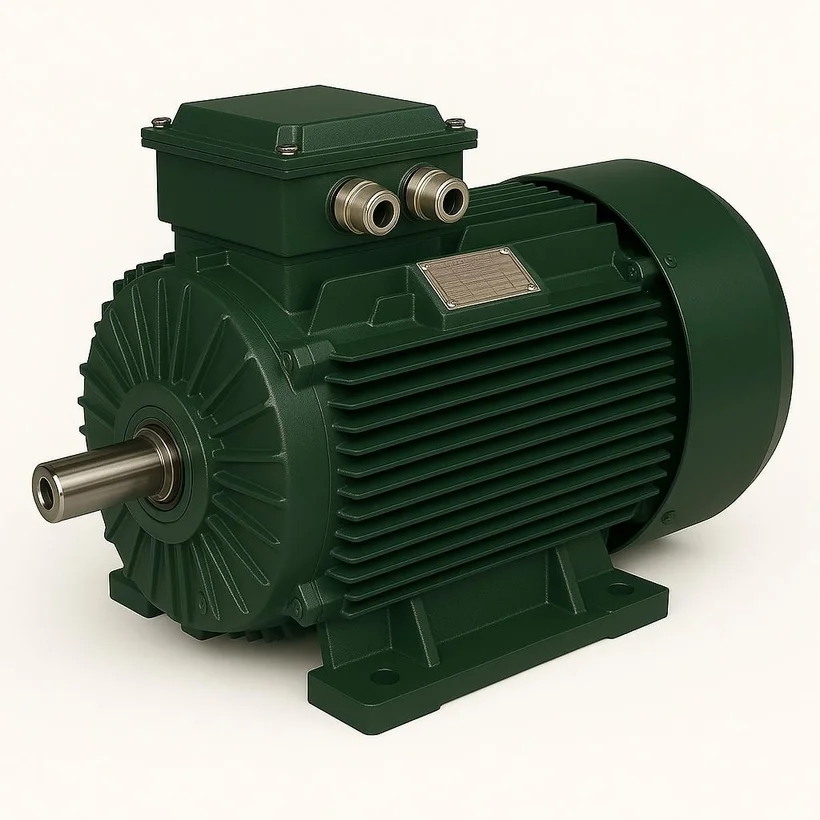
Some loads are simply too large to fit within the power of a single motor. A belt conveyor hundreds of metres long, the lifting system of a heavy bridge crane, or the drive of a large mill is often driven by more than one electric motor working together. But connecting two or more motors to the same load does not simply mean adding up their power. The motors must share the load fairly, turn at the same speed and run without forcing one another. In this article we examine the concepts of load sharing and synchronization in multi-motor drives, the risks created by unbalanced sharing, the logic of master-slave control, and how DRG's IE3/IE4/IE5 class asynchronous motors are used in multi-drive systems.
Why are multiple motors used?
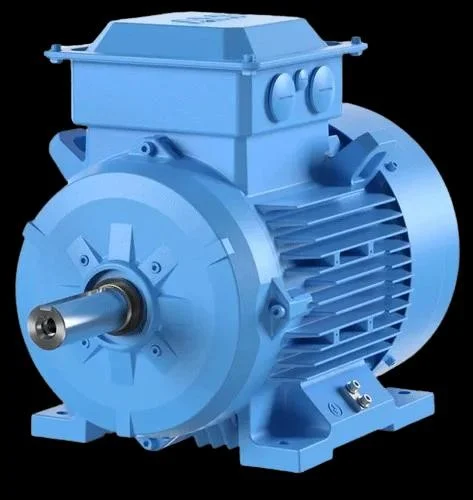
Beyond a certain point, the power of a single motor becomes both physically and economically inefficient. Manufacturing, transporting and connecting a very large motor becomes difficult. Instead, distributing the load across several medium-power motors is often a more flexible and more reliable solution. In addition, the ability of the others to keep the system partially running if one motor fails increases continuity.
What exactly is load sharing?
Load sharing means that each of the motors driving a common load takes on a certain proportion of the total load. Ideally, two identical motors share the load equally, and four motors each take a quarter. In practice this balance deviates depending on the characteristics of the motors, the way they are connected and the control method. The aim is to keep this deviation within acceptable limits.
The risk of unbalanced sharing
If the motors do not share the load equally, one motor is loaded far more than the others. The overloaded motor heats up more, its insulation ages faster, and it frequently triggers its overload protection. Meanwhile, the lightly loaded motor runs below its capacity and becomes inefficient. As a result, the system loses both its reliability and its efficiency.
Mechanically coupled motors
In some systems the motors are mechanically connected to the same shaft or the same gearbox. In this case the motors are forced to turn physically at the same speed. The mechanical coupling naturally provides speed synchronization but does not guarantee load sharing; even with a mechanical bond, one motor can produce more torque than another.
Electrically coupled motors
Without a mechanical bond, motors may be connected to one another only through the load they drive. For example, a long conveyor may have separate motors at each end. In this case, achieving speed and torque balance is left entirely to the control system. This is more flexible than mechanically coupled systems but more challenging in terms of control.
The natural load sharing of the asynchronous motor
Asynchronous motors have a peculiar advantage: the slip characteristic. When the load increases, the motor's speed drops somewhat, which makes the motor produce more torque. If one of two asynchronous motors driving the same shaft is loaded more, it slows slightly and the other motor steps in to balance the load. This natural balance can work in simple systems without additional control.
The limits of the slip characteristic
However, the natural balance is not perfect. If the slip curves of the motors are not exactly the same, the sharing will not be equal. Connecting motors from different suppliers or of different ages to the same load therefore creates imbalance. The safest approach is to use motors with identical characteristics in a multi-motor drive.
The master-slave control logic
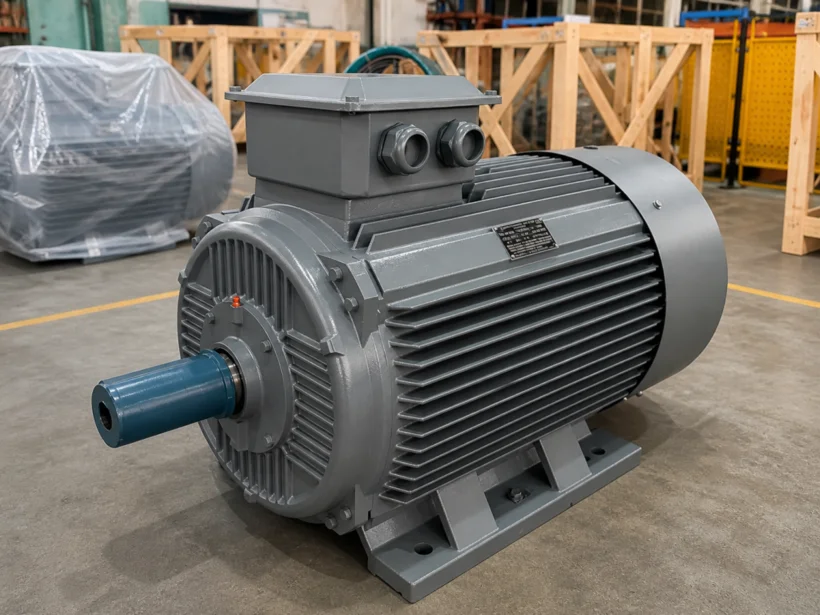
When a variable frequency drive is used, load sharing can be managed much more precisely. In the master-slave method, one drive sets the speed as the "master"; the other drives follow the master's torque or speed as "slaves". In this way all the motors run according to the same reference and the load is distributed fairly.
Speed following or torque following?
There are two basic strategies in the master-slave structure. In speed following, all motors track the same speed reference; this is preferred in systems that are not mechanically coupled. In torque following, the slave motors imitate the torque produced by the master; this ensures equal distribution of the load in mechanically tightly coupled systems. The choice of the right strategy depends on the mechanical structure of the system.
Torque sharing table
The table below summarises the effect of different control methods on load sharing.
| Method | Sharing precision | Suitable system |
|---|---|---|
| Natural slip (uncontrolled) | Low | Mechanically coupled, identical motors |
| Speed following (master-slave) | Medium | Mechanically uncoupled systems |
| Torque following (master-slave) | High | Mechanically tightly coupled systems |
| Load balancing (droop) | Medium-high | Large loads with parallel drives |
What is droop control?
Droop control imitates the natural slip behaviour of the asynchronous motor with the drive. When one motor is loaded more, the drive slightly lowers its speed reference and shifts the load to the other motors. This method provides an automatic balance between the motors and is especially common in large loads with parallel drives.
Multi-motor drive in conveyor systems
In a long belt conveyor a single motor creates a large tension at one end of the belt. Instead, several motors placed at different points of the belt distribute the tension and protect the belt. In conveyor belt motor selection, this multi-drive structure extends belt life and reduces the starting load.
Synchronization in crane and lifting systems
In bridge cranes and heavy lifting systems, perfect synchronous operation of two motors is critical. If the two sides of the lifting system move at different speeds, the load tilts and a dangerous situation arises. In crane and lifting motors, synchronization is mandatory for both safety and load balance.
Load distribution at start-up
The most challenging moment in multi-motor systems is start-up. If all motors come online at the same time, the inrush current can strain the network. For this reason motors are usually started in stages or softly with a drive. Staged starting both reduces the current surge and protects the mechanical system.
The importance of shaft and coupling alignment
In mechanically coupled multi-motor systems, the shaft and coupling of each motor must be precisely aligned. Misalignment leads to one motor forcing another, to vibration and to bearing wear. Shaft and coupling alignment is a mechanical requirement as important as load sharing in multi-motor drives.
Feedback and the use of encoders
In systems requiring precise synchronization, an encoder is fitted to each motor to feed back the actual speed and position. With this information the control system continuously corrects the position of the motors relative to one another. Feedback control provides far more precise synchronization than open-loop control.
The effect of phase loss on a multi-motor system
If a phase loss occurs in one motor of a multi-motor system, that motor weakens and dumps the load onto the other motors. This sudden imbalance leads to the overloading of the healthy motors. For this reason, each motor having independent phase protection is important for system safety.
The identity rule in motor selection
In a multi-motor drive it is ideal for the motors to be of the same power, the same speed and, if possible, from the same production batch. Identical motors show similar slip characteristics and naturally share the load more equally. Combining motors of different characteristics strains the control system unnecessarily.
Multiple drives in panel design
In a panel driving several motors, separate protection and control elements are needed for each motor. In panel and contactor selection, the number of motors, the starting sequence and the synchronization requirement must be planned together. A well-designed panel makes the harmonious operation of all motors easier.
Attention to shaft voltage and bearing current
In multi-motor systems driven by a drive, each motor is exposed to the risk of shaft voltage and bearing currents. This effect appears separately in each motor; therefore protective measures must be applied to all motors. Otherwise the bearing of one motor may wear far faster than the others.
Efficiency and load sharing
An asynchronous motor shows its best efficiency at its most efficient point, that is, when running close to its rated load. Balanced load sharing keeps all motors running in this efficient region. With unbalanced sharing, some motors run inefficiently at low load while others are strained at overload; this increases the total energy consumption.
Redundancy and continuity
An important advantage of multi-motor systems is redundancy. When one motor fails, the remaining motors can keep the system running, even if at reduced capacity. This prevents production from stopping entirely in critical processes. A well-designed multi-motor drive is more robust than a single-motor system.
Commissioning and testing
When a multi-motor system is commissioned, the load sharing of the motors must be measured. Imbalance is detected by comparing the current drawn by each motor. If necessary, the control parameters are adjusted to equalise the sharing. This first adjustment is the basis of balanced operation throughout the system's life.
Prevalence in industrial applications
Multi-motor drives appear in many areas of heavy industry. In industrial electric motor applications, long conveyors, large mills, heavy cranes and multi-line production systems use this structure. Each application has its own synchronization requirement.
A balanced approach in maintenance
In a multi-motor system, equal loading of the motors is also advantageous for maintenance. Equally loaded motors age at a similar rate; thus maintenance and renewal planning becomes predictable. In an unbalanced system, one motor becomes a constant source of failure while the others remain idle.
The role of control software
In modern multi-motor systems, load sharing is largely managed by control software. The software continuously compares the current and speed of the motors, detects imbalance and corrects the references automatically. In this way the system continues to run in balance even when external conditions change.
The basic logic of the multi-motor system
Ultimately, a multi-motor drive is the harmonious operation of several electric motors for a single purpose. The key to this harmony is correct motor selection, balanced load sharing and precise synchronization. When these three are provided together, the system behaves like a single large motor but is far more flexible and reliable.
System size and scalability
Another value of the multi-motor structure is scalability. When the need grows, adding a new motor to the system is far easier than replacing a single giant motor. This flexibility makes it easier for the plant to adapt to future capacity increases and protects the investment in the long term.
Dynamic response to load variation
In real plants the load is not constant; the amount of material on a conveyor, the weight lifted by a crane, or the fill of a mill changes continuously. The success of a multi-motor drive is measured by how quickly and evenly it responds to this changing load. A well-tuned control system raises the torque of all motors simultaneously when the load suddenly increases, and redistributes the references so that no motor remains idle when the load drops. This dynamic response protects both the mechanical components and the motors.
Insulation and thermal balance
A direct result of balanced load sharing is that the motors run at similar temperatures. The insulation class margin of motors running at the same temperature is consumed at a similar rate and the windings age together. In an unbalanced system where one motor runs constantly hot and another constantly cool, the insulation lives differ significantly. Thermal balance therefore decides both efficiency and long-term reliability.
Vibration and mechanical harmony
In systems where several motors are connected to the same structure, the vibrations produced by the motors can affect one another. Motors that do not run synchronously can create vibration modes that lead to resonance and fatigue in the mechanical structure. Good synchronization also harmonises the vibrations of the motors, extending the life of the mechanical structure. Synchronization is therefore not only an electrical but a mechanical requirement.
Communication network and latency
In the master-slave structure the motors talk to one another over a communication network. The speed and latency of this network directly affect the quality of synchronization. A high-latency communication causes the slave motors to follow the master late and leads to transient imbalances. For this reason, a low-latency, reliable communication infrastructure must be established in systems requiring fast response. The system's transition to a safe stop in the event of a network break must also be planned in advance.
Grounding and common structure
In a system with several motors, the frame of each motor must be properly grounded. In motors connected to a common mechanical structure, preventing a potential difference from forming between the grounding connections is important for both safety and signal integrity. A proper grounding arrangement also helps the control signals to be transmitted without being affected by noise.
Capacity planning and reserve margin
When designing a multi-motor system, it is good practice for the total power of the motors to be somewhat greater than the load. This reserve margin ensures that the remaining motors can carry the load when one motor fails. It also lowers the thermal load and extends the system's life by preventing all motors from running constantly at the limit. Correct capacity planning is the basis of both reliability and efficiency.
Monitoring and early fault detection
In multi-motor systems, monitoring the current, temperature and vibration of each motor separately is the most effective way to catch imbalance early. When the current of one motor begins to deviate from the others, this is often the first sign of a mechanical problem or load imbalance. Continuous monitoring allows a small deviation to be corrected before it turns into a major failure.
DRG's approach to multi-motor solutions
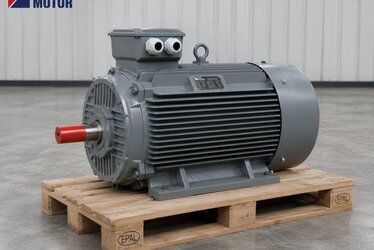
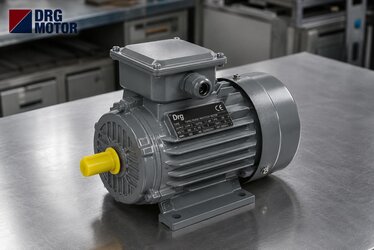
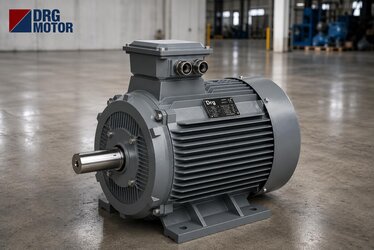
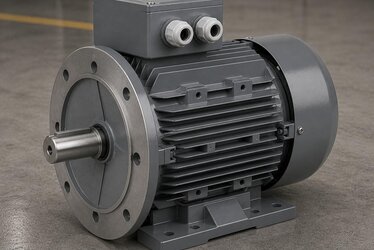
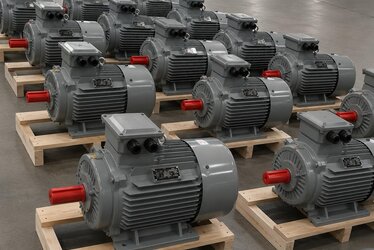
As DRG Motor, the IE3, IE4 and IE5 class asynchronous motors we supply are suitable for balanced load sharing in multi-motor drives thanks to their identical production quality and consistent slip characteristics. For long conveyors, heavy cranes and multi-drive systems, our motors work in harmony with both natural balance and drive-based synchronization approaches. To plan together the correct motor selection and synchronization strategy for your multi-motor system, you can contact the DRG Motor expert team.