 English
 Le français
 Türkçe

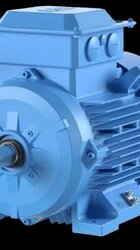
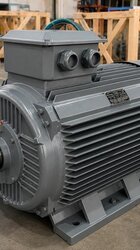
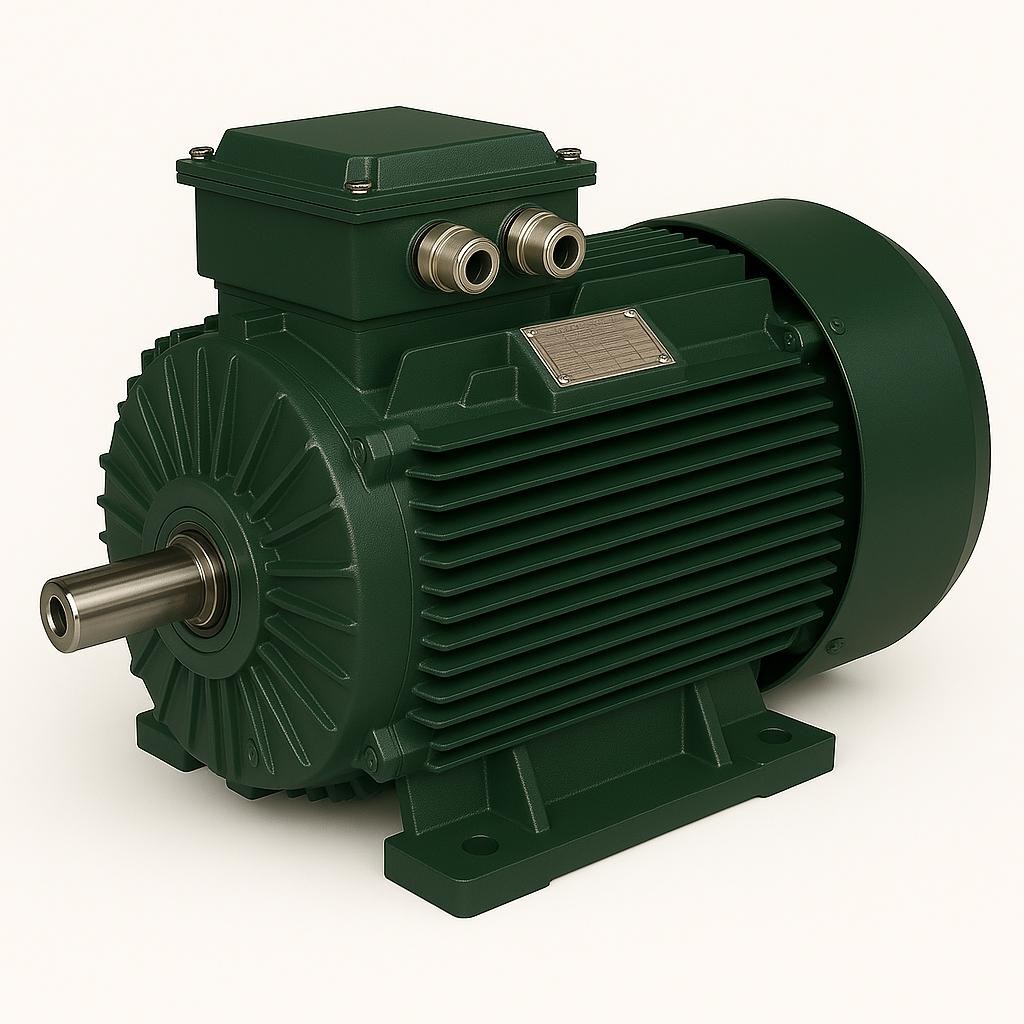

The insulation of large-power electric motors ages silently and over the years. This aging is usually invisible from the outside, until one day the winding insulation collapses and the motor stops with an unexpected failure. Partial discharge (PD) monitoring is a diagnostic method used precisely to hear this silent aging early. Especially in large induction motors operating at medium and high voltage, it captures the small electrical discharges forming inside the insulation and gives a warning weeks or even months before a failure appears. From the engineering perspective of DRG Motor, this article covers what partial discharge is, in which motors it matters and why, the online and periodic measurement approaches, and how this differs from classic insulation tests. We also clarify why this method is not needed in low-voltage small motors.
What Is Partial Discharge (PD)?
Partial discharge is a small, local electrical discharge in an insulation material that does not bridge the entire gap between two conductors, that is, does not fully puncture the insulation. Under sufficiently high voltage, these small discharges form in tiny air voids, cracks or material defects inside the insulation. Each discharge alone seems harmless, but when continuously repeated, it slowly erodes the insulation.
That is why partial discharge is not a failure, but a herald of failure. Monitoring it allows the deterioration process of the insulation to be noticed before it even begins.
How Does Partial Discharge Wear Down Insulation?
Repeated partial discharges locally damage the structure of the insulation material. Each discharge releases a small amount of energy into the weak point of the insulation; over time this leads to charring of the material, the formation of cavities and conductive paths. As this process advances, the strength of the insulation decreases and, eventually, full breakdown (short circuit) becomes inevitable.
What matters is that this process happens not suddenly but gradually. It is precisely this gradual nature that makes partial discharge monitoring meaningful: because the process can be tracked, there is time to intervene.
In Which Motors Does Partial Discharge Matter?
Partial discharge is mainly a problem of large motors operating at medium and high voltage. The higher the voltage, the greater the electrical stress on the insulation, and the more likely discharge becomes at insulation defects. That is why high-value, long-running large motors feeding a critical production line are the main target of PD monitoring.
These motors are usually equipment that is hard to back up, expensive to replace and very costly to stop. Therefore, continuously watching over their insulation is a direct economic necessity.
Why Is It Not Needed in Low-Voltage Small Motors?
Let us clarify an important point from the start: partial discharge monitoring is not necessary for standard low-voltage, small-power motors. In these motors, the electrical stress on the insulation is not high enough to produce partial discharge in any meaningful way. To monitor insulation health in these motors, simpler and sufficient methods such as the insulation resistance (megger) test are used.
So PD monitoring is not a method to be applied to every motor, but an advanced diagnostic tool specific to a particular class of motor. Applying the right method to the right motor is critical in terms of both cost and effectiveness.
The Difference Between Partial Discharge and the Megger Test
The megger test measures the current resistance of the insulation and gives a general health snapshot; but it cannot always catch early a local deterioration that has begun inside the insulation. Partial discharge monitoring, on the other hand, directly detects the active discharge events inside the insulation; that is, it sees not the deterioration itself but the process that creates it. Whatever the electric motor insulation class may be, these two methods work not as substitutes but as complements to each other.
Online PD Monitoring
Online monitoring is the continuous tracking of partial discharges in the insulation while the motor operates normally. Sensors permanently fitted to the motor monitor discharge activity in real time and capture changes in the trend. The strength of this approach is observing the insulation under real operating conditions, because discharge behavior changes with temperature, load and humidity.
Online monitoring is preferred especially for critical motors whose downtime is very costly, because it offers a continuous health picture without stopping the motor.
Periodic (Offline) PD Measurement
Periodic measurement is a one-off test carried out at certain intervals, often during planned maintenance. By stopping the motor or applying a special voltage, the discharge level in the insulation is measured and compared with previous measurements. Although this approach does not offer a trend as detailed as continuous monitoring, it provides a regular check at lower cost.
For most facilities, the right strategy is to balance these two approaches according to the criticality of the motor: online for the most critical motors, periodic for the others.
Comparison of Online and Periodic Monitoring
The table below summarizes the main differences between the two approaches and makes it easier to see which is more suitable for which motor.
| Feature | Online Monitoring | Periodic (Offline) Measurement |
|---|---|---|
| Measurement frequency | Continuous, real-time | At certain intervals, one-off |
| Motor state | While running | Usually while stopped |
| Trend tracking | Detailed, continuous trend | Point comparison |
| Cost | Higher initial investment | Lower, per measurement |
| Most suitable motor | Most critical large motors with costly downtime | Important but backable motors |
As the table shows, the choice depends on the criticality of the motor and the cost of downtime. The two methods are not alternatives but answers to different needs.
How Is Partial Discharge Detected?
Partial discharge events produce very short-lived electrical pulses inside the insulation. These pulses are detected with suitable sensors electrically or, in some cases, through the high-frequency signals they emit. The sensors measure the magnitude and frequency of the discharge; when this data is combined, a picture forms about the current state of the insulation. The quality of detection depends on the position of the sensor and the measurement system's ability to filter out noise.
Separating Noise from Real Discharge
One of the most challenging aspects of PD measurement is separating real partial discharge signals from electrical noise in the environment. Many electrical sources in a facility can produce similar signals; therefore the measurement system must be able to distinguish the real discharge coming from the motor's insulation from external noise. A measurement that is not interpreted correctly can lead to a false alarm or an overlooked problem. For this reason, PD data gains meaning through experienced evaluation.
The Place of PD Monitoring in Predictive Maintenance
Partial discharge monitoring is a powerful component of predictive maintenance. Because it sees failure as a trend developing over time, it allows the motor to be taken out of service in a planned way before it fully collapses. In an electric motor predictive maintenance strategy, PD is like a separate sense organ representing insulation health alongside vibration and temperature monitoring.
Early Diagnosis of Insulation Aging
The most valuable aspect of PD monitoring is noticing insulation aging while it is still reversible. A gradual increase in the discharge level is a sign that deterioration has begun at a certain point in the insulation. When this trend is caught, the motor can be inspected at the next planned stop and, if necessary, its winding can be renewed; thus an unexpected failure and the large downtime cost it would bring are prevented.
Commissioning a Baseline Measurement
The most effective use of partial discharge monitoring goes through taking a baseline (reference) measurement while the motor is newly commissioned. This first measurement records the discharge level of the insulation in its healthy state and forms a starting point for all future comparisons. A single measurement made without a reference struggles to answer the question "is this level high or low?". That is why a good monitoring strategy starts collecting data from the motor's first day.
The Relationship Between Insulation Class and PD Resistance
The motor's insulation class determines its resistance to operating temperature, which indirectly affects partial discharge resistance. Insulation aging at high temperature becomes more open to defects and the probability of discharge increases. That is why choosing a suitable insulation class is important in terms of both thermal and electrical resistance. Insulation class and PD resistance are two complementary parts of the same picture of insulation health.
Interpreting the Discharge Trend
In partial discharge measurement, a single reading is often not meaningful on its own; what really matters is the trend. How the discharge level changes over time shows whether the insulation is improving or worsening. A stable and low level points to healthy insulation, while a continuous and accelerating increase heralds the need for imminent intervention. That is why measurements must be recorded and compared regularly.
The Effect of Temperature, Humidity and Contamination
Partial discharge behavior is affected by the motor's operating environment. High temperature stresses the insulation, while humidity and surface contamination increase the probability of discharge. That is why environmental conditions are also taken into account when interpreting PD data. The insulation of a motor running clean and at an appropriate temperature ages far more slowly than that of a motor running in a dirty and hot environment.
The Role of Winding Design and Material Quality
A motor's resistance to partial discharge depends largely on the winding design and the quality of the insulation material. Insulation that is well designed, void-free and produced with quality material contains fewer defects and therefore produces fewer discharges. That is why preventing PD problems begins, before monitoring, with production quality. Sound insulation is the best monitoring system, because it minimizes the problem to be monitored.
The Limits of PD Monitoring
Partial discharge monitoring is a powerful diagnostic tool, but it does not tell everything on its own. Mechanical problems, bearing failures or cooling problems are monitored by different methods. PD is a special window focused on insulation health; that is why it provides the highest value when used together with other monitoring methods as part of a holistic maintenance strategy.
The Economic Rationale of PD Monitoring
Although partial discharge monitoring looks like a cost item, it is in fact an insurance investment. An unexpected insulation failure of a large motor costs dearly through the production lost during downtime, much more than through the motor itself. The monitoring system prevents both the production loss and the emergency repair cost by turning this failure into planned maintenance. The return on investment is often more than achieved by preventing even a single major stoppage.
Its Relationship with the Spare Motor Strategy
Monitoring the insulation health of a critical motor also strengthens the spare motor strategy. For a motor whose discharge trend is rising, a spare can be procured in advance or a planned replacement can be scheduled. This way, instead of searching for a solution in panic at the moment of failure, one acts with a plan prepared in advance. Monitoring and backup together secure continuity in critical motors.
PD Check After Motor Rewinding
When a large motor's winding is renewed, a partial discharge measurement is a valuable check to verify the quality of the new insulation. Small defects or voids that may form during the rewinding can later become a source of discharge. A PD measurement made after rewinding confirms that the motor is delivered with healthy insulation before returning to the field. This both documents the quality of the work and prevents an early failure.
Determining the Monitoring Frequency
Not every motor needs to be monitored at the same frequency. The monitoring frequency is determined according to the criticality and age of the motor and the trend in previous measurements. While infrequent checks suffice for young and healthy insulation, a motor whose discharge trend is rising should be monitored more often. This flexible approach directs monitoring resources to where they are most needed and avoids unnecessary measurement cost.
Which Facilities Benefit from PD Monitoring?
Facilities with large medium/high-voltage motors feeding critical production lines benefit most from PD monitoring. An unexpected failure stopping these motors means both a large production loss and a long repair process. In such equipment, continuously watching over the insulation is the most effective way to manage risk.
The Contribution of Correct Motor Selection to Insulation Health
Preventing insulation problems begins with selecting the right motor. In industrial electric motors, a suitable insulation class, quality winding and design appropriate to the right environmental conditions reduce partial discharge risk from the very start. A well-chosen motor does not eliminate the need for monitoring but markedly lowers the number and severity of problems to be monitored.
The Future of Partial Discharge Monitoring
As sensor technology and data processing methods develop, partial discharge monitoring is becoming increasingly accessible and smarter. Continuously collected data makes it possible to understand the insulation's behavior in much finer detail and to catch trends earlier. This development means that watching over the insulation health of critical motors is opening up not only to large facilities but to an ever-wider range of users. The earlier monitoring begins, the more valuable the knowledge gained over the insulation's lifetime.
Turning Monitoring Data into a Maintenance Decision
The real value of PD monitoring lies in turning the data it collects into a maintenance decision. When a rising discharge trend is caught, the motor should be inspected at the next planned stop and, if necessary, its winding renewed. This proactive approach turns an unexpected failure into planned maintenance; thus both cost and risk are brought under control. A monitoring system that does not turn data into a decision wastes its potential.
DRG Motor for Reliable Insulation and Long Life
At DRG Motor, we design the insulation system of the induction motors we supply with the priority of long life and reliability. Quality winding material and careful production lower partial discharge risk from the very start, enabling your motors to run longer and trouble-free. To determine together reliable, durable motor solutions with the right insulation class for your facility's critical applications, you can explore DRG Motor products and get in touch with our engineering team. Sound insulation is your motor's silent but most valuable assurance.