 English
 Le français
 Türkçe


Our Quick Access Phone Numbers:
+90 (542) 666 11 11
+90 (533) 777 04 44
Mail : [email protected]
DRG MOTOR | Sales of High Efficiency Electric Motors
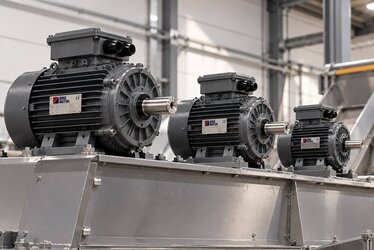
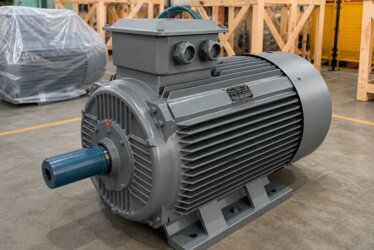
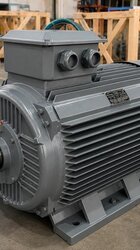
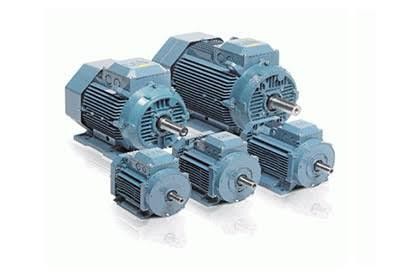
A catalogue that starts at 0.55 kW and ends at 355 kW is really two catalogues bound together, because the questions asked at the two ends have almost nothing in common. At the small end the mounting decides everything. Whether the frame bolts down on feet, hangs on a flange or sits on a face plate settles which model can go on the machine, and a wrong choice there means new steelwork rather than a new motor. Shaft diameter and length come next, then the position of the terminal box, which on a crowded skid decides whether the cable can even be brought in. The kilowatt figure is often the last thing checked, because several ratings will do the work. In the middle of the band the question changes to availability. These are the frames that a plant replaces most often, and the sensible plant keeps one of each on a shelf rather than discovering on a Friday afternoon that the nearest one is three days away. Standardising on a small number of ratings and mountings across a factory turns a stores problem into a habit. At the top of the band the machine itself becomes an installation. Lifting gear, a foundation, cable of the right section and a starting arrangement all have to exist before the motor is unloaded, and none of that is decided by the catalogue. What the wide band buys is continuity: one frame convention, one insulation class, one protection rating and one set of mounting codes from the smallest machine in the building to the largest. A plant that runs motors from several suppliers carries several sets of spares and several sets of habits. Give the rating, the speed and the mounting of the machine you are working on and the matching frame can be identified across the whole 0.55 to 355 kW band, including the neighbouring ratings that would also do the work.