 English
 Le français
 Türkçe

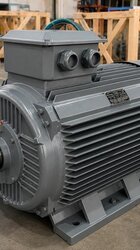
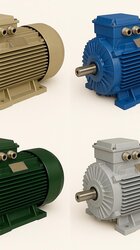
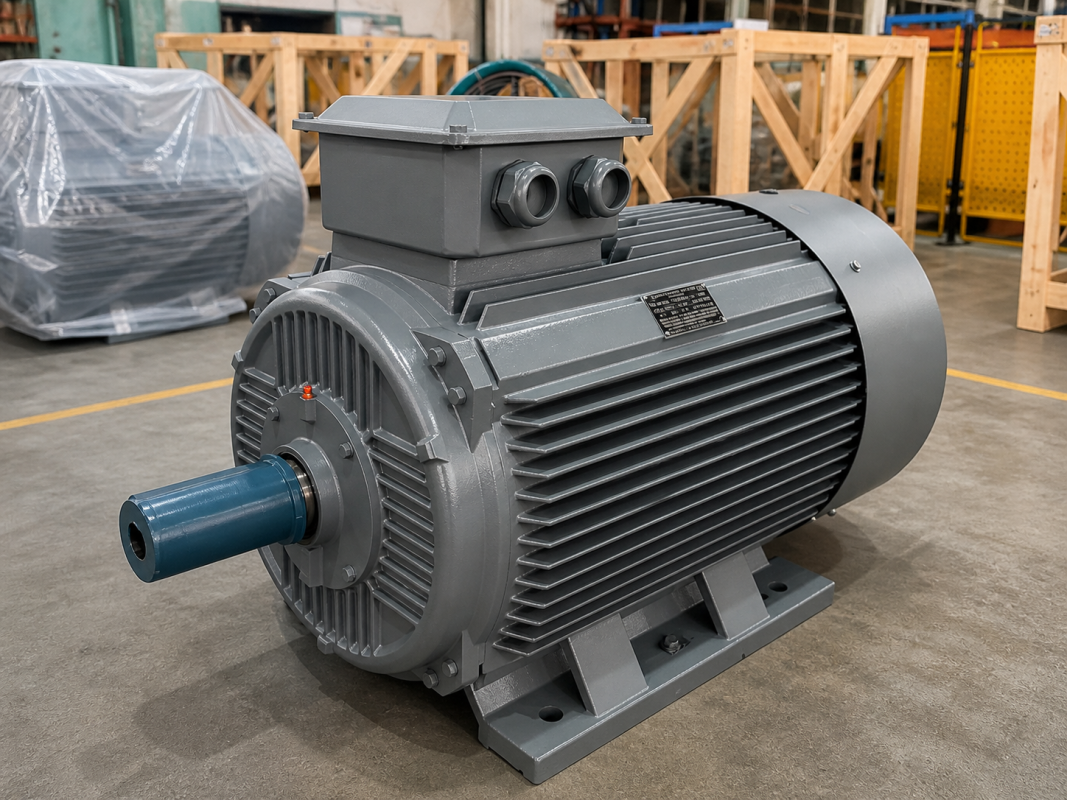

Direct-on-line starting is the oldest and simplest way to start an induction motor. The motor is connected directly to the line through a contactor and is suddenly energized at full voltage. There is no voltage ramping and no current limiting. This simplicity makes it cheap and reliable, but it comes at the cost of a high inrush current and a harsh mechanical shock. Knowing when direct starting is suitable and when it is risky is the basis of the right drive decision. In this article we explain, through the eyes of the DRG Motor field, what the DOL method is, its advantages and disadvantages, and when you need to move to star-delta, a soft starter or an inverter.
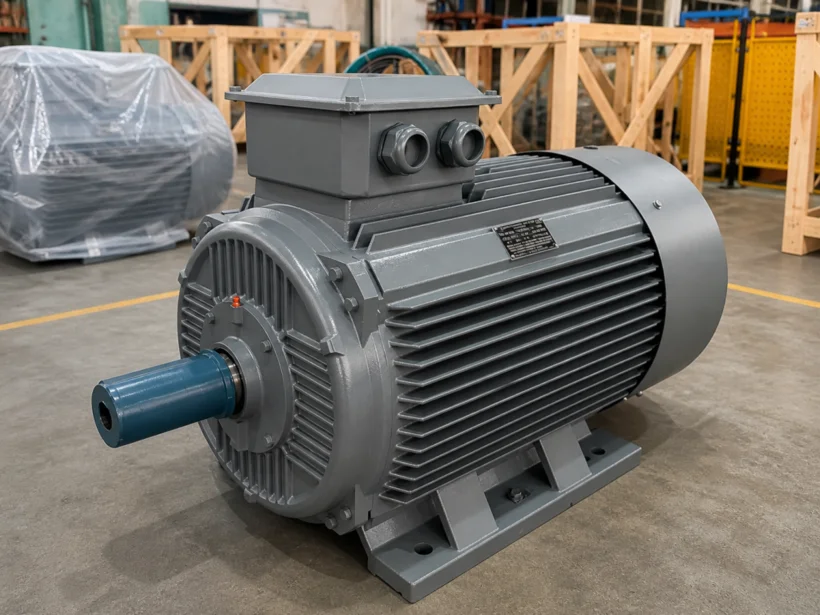
What Is Direct-On-Line Starting?
In direct-on-line starting (DOL) the motor is connected directly to full line voltage by the closing of a contactor. From the very first instant the motor sees the rated voltage and produces maximum torque. The circuit is extremely simple: a contactor, a thermal relay and protective elements are enough.
Components of the DOL Circuit
A typical DOL panel contains a main switch, a contactor, a thermal overload relay and a fuse. The thermal relay protects the motor against overload; for the details of this topic the article on electric motor overload protection is complementary. The simplicity of the circuit keeps both the cost and the probability of failure low.
Connecting the Motor Directly to the Line
The motor windings are connected directly to the line according to the connection in the terminal box. A three-phase motor is usually commissioned in delta or star, matching the voltage on its nameplate. To set up the connection correctly, it helps to understand the behavior in motor starting and inrush current.
The High Inrush Current Problem
The most distinctive feature of DOL is the high inrush current. At the first instant the motor draws 6 to 8 times its rated current. This current decreases rapidly as the motor accelerates and returns to normal within a few seconds, but that first instant is a serious shock for the grid. The duration of the inrush current also matters; under light load the motor picks up speed within seconds and the current drops quickly, while under a heavy or high-inertia load the high-current region lasts longer. This extended duration stresses both the fuses and the motor. For this reason, when deciding on DOL, weigh the peak value of the current together with how long it stays high.
Why Is the Inrush Current So High?
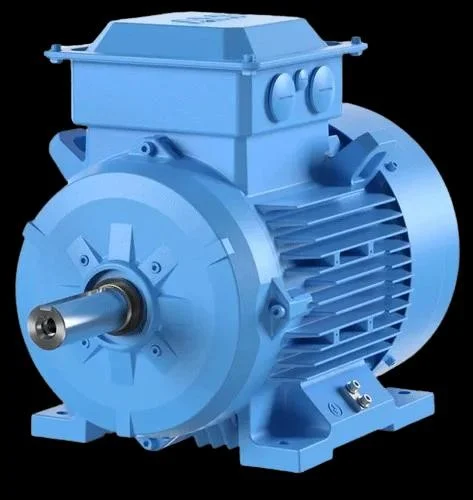
When the motor is stationary the rotor is stationary too and the slip is maximum. In this state the motor behaves almost like a short circuit and draws high current. As the speed increases the slip decreases and the current falls. This behavior is the nature of the induction motor and is covered in detail in the article on inrush current.
The Voltage Drop Effect
The high inrush current causes a temporary voltage drop on the supply line. Lighting fed from the same busbar may flicker and sensitive devices may be affected. On weak or long lines this drop is more pronounced and is the main factor limiting DOL.
The Harsh Mechanical Shock
Because in DOL the motor suddenly engages at full torque, a harsh shock is imposed on the load and the transmission components. The belt, coupling, gearbox and shaft experience this shock at every start. In sensitive or high-inertia systems this shock leads to wear over time. The magnitude of the shock depends on the difference between the starting torque the motor produces and the resistance of the load; a motor engaging at full torque almost kicks the load. This sudden acceleration causes the backlash in gears to close harshly, a tension surge in the belt and strain in the coupling. Although a one-time shock may seem unimportant, when repeated hundreds of times a day it noticeably shortens the life of the transmission components.
When Is DOL Suitable?
Direct-on-line starting is ideal for small motors and in situations where the grid can handle the shock. Since the inrush current of small motors stays low in absolute value, it does not strain the grid much. Also, if the load is light, the mechanical shock is unimportant. As a general approach, when the motor power is small compared to the transformer power and starts are infrequent, DOL can be used safely. Simple applications that run at constant speed, do not require speed adjustment and where the starting shock causes no problem are the natural domain of DOL. In such places, choosing a more complex starting method means unnecessary cost and maintenance burden.
Typical Places Where DOL Is Accepted
Small centrifugal pumps, room fans, compact blowers, small grinders and auxiliary drives are usually started direct-on-line. In these applications the load is light, the inertia is low and the motor picks up speed within seconds. In these scenarios, where the harsh shock is unimportant and the grid is robust, DOL is both the fastest and the most economical solution. Decades of trouble-free use in such places is proof of the method's reliability.
Comparison of Typical Starting Methods
| Method | Inrush Current | Starting Torque | Cost | Suitability |
|---|---|---|---|---|
| Direct (DOL) | 6-8x | Full | Lowest | Small power, robust grid |
| Star-delta | ~2-3x | ~1/3 | Low | Starting at no/light load |
| Soft starter | 3-4x (adjustable) | Adjustable | Medium | Load needing a soft start |
| Frequency inverter | ~1-1.5x | Full, controlled | High | Speed control + soft start |
The table is a quick decision tool along the inrush-current and cost axes. As you move from top to bottom the inrush current drops but the cost and complexity rise. DOL is at the extreme, the simplest and cheapest option; the inverter is the most capable but the most expensive option. The right decision is to choose the row the application truly needs. For example, if reducing only the inrush current is enough, star-delta remains economical; but if speed adjustment is also wanted, moving straight to an inverter makes sense, because the intermediate solutions do not meet this need.
Advantages of DOL
The lowest cost, the simplest circuit, the highest starting torque and the least maintenance are the main advantages of DOL. In some applications requiring starting under load, full starting torque is a necessity and DOL provides it directly.
Disadvantages of DOL
High inrush current, voltage drop, harsh mechanical shock and heating under frequent starts are the disadvantages of DOL. These drawbacks grow as the power increases and starts become more frequent; beyond a point, moving to another method becomes mandatory.
When Is Star-Delta Needed?
In medium-power motors, if starting is possible while the load is at no load or light, star-delta reduces the inrush current to one third. The motor starts in the star position, and once it accelerates it switches to delta. To understand the connection logic, knowing the behavior in inrush current is necessary.
The Limit of Star-Delta
Because in the star position the torque also drops to one third, if the load is heavy the motor cannot accelerate enough in star and a current surge occurs again at the transition to delta. For this reason star-delta works only in applications that start with a light load.
The Current Surge at the Star-Delta Transition
In the star-delta method the motor switches to delta after accelerating in star; at the moment of this transition, if the motor has not yet reached full speed, a brief current surge occurs. If the transition timing is not set correctly, this surge can approach the DOL inrush. For this reason star-delta delivers the expected benefit only if the motor can accelerate sufficiently in star. Setting the moment of transition correctly is the key to the method's success and once again recalls the light-load condition.
When Is a Soft Starter Needed?
If you need to reduce the mechanical shock, make the start gradual and limit the current in an adjustable way, a soft starter is preferred. It is frequently used in pumps, fans and conveyors. For the benefits soft starting provides, you can look at the article on soft starting advantages for electric motors.
When Is a Frequency Inverter Needed?
If a soft start is needed along with speed adjustment during operation, a frequency inverter is required. The inverter reduces the inrush current almost to the rated level and also provides energy saving. For this dimension, the article on energy saving with a frequency inverter provides guidance.
Starting Frequency and DOL
In applications requiring many starts per hour, DOL strains the motor and the contactor. Each start means high current and heat; under frequent starts the motor leans against its thermal limit. In this case a soft starter or an inverter protects both the motor and the contactor.
Grid Power and Transformer Capacity
The applicability of DOL depends on the capacity of the supplying transformer. A strong transformer handles the high inrush current without issue; on a weak grid the same motor causes a serious voltage drop. For this reason the decision rests on the motor rating and the grid capacity together.
The Role of Load Type
Systems that start under load, such as compressors, require full starting torque and DOL is advantageous in this respect. By contrast, sensitive or high-inertia loads are harmed by the harsh shock. To resolve the load character correctly, the motor selection by load type analysis should be performed. A high-inertia fan, when started with DOL, stays in the high-current region for a long time; this strains both the motor and the grid. The same fan, when started with a soft starter, keeps the current under control. For this reason the DOL decision should always be considered together with the load type, and the inertia and starting-torque requirement should be evaluated from the outset.
Contactor Selection and Life
The heart of the DOL circuit is the contactor. Because it switches a high current at every start, the contactor must be selected in a category suited to the motor power and the starting frequency. An inadequate contactor experiences burning and welding at the contacts and fails over time. A correctly sized contactor, on the other hand, handles hundreds of thousands of starts without issue. In applications with frequent starts, the contactor life directly determines the reliability of the system, so its selection should not be taken lightly.
Heating and the Thermal Limit
Each start produces heat in the motor; especially in heavy starts where the high current lasts long, the windings heat up. If a new start is made before the motor has cooled, heat accumulates and the thermal limit can be exceeded. For this reason, in motors running with DOL, the allowable number of starts per hour should be taken into account. The manufacturer's data specifies this limit; when exceeded, the winding insulation is damaged and the motor life shortens.
Relationship with Mechanical Transmission
The harsh start of DOL strains transmission components such as belts and gearboxes. Slip in the belt and tooth shock in the gearbox increase at this moment. When motor-gearbox compatibility is set up correctly, the shock can be managed somewhat, but to reduce it at the source, soft starting is more effective.
Feedback and the Control Circuit
Besides the power circuit, a DOL panel also contains a control circuit; the start and stop buttons, the seal-in (self-holding) contact and, if needed, the auxiliary contact of the thermal relay are in this circuit. The seal-in contact ensures the motor keeps running after the start button is released. To prevent the motor from restarting by itself after a fault or a voltage interruption, the control circuit must be designed correctly; this matters for both equipment and operator safety.
Energy and Operating Cost
DOL itself does not provide energy saving; the motor always runs at full speed. If the application requires variable flow or variable speed, a motor running with DOL consumes excess energy. For such loads, saving is achieved only with an inverter. If constant speed is sufficient, the simple structure of DOL keeps the operating cost low; but if there is a need for speed adjustment, DOL with its low initial cost may turn out more expensive in the long run. When deciding, weigh the initial investment against the energy consumption over the operating life.
Protection and Safety
In the DOL circuit a thermal overload relay and short-circuit protection are essential. If the motor stalls or is overloaded, the thermal relay opens the circuit. Phase-loss protection is also important; because a motor running on two phases heats up rapidly and burns out.
Commissioning and Checking
At the first start the direction of rotation should be checked, and the inrush current and time should be observed. The thermal relay should be set according to the motor's rated current. A setting that is too low leads to nuisance tripping, and one that is too high leads to running without protection. If the direction of rotation is wrong, it is corrected by swapping two phases; in direction-sensitive applications such as pumps this check is critical. A starting time longer than expected can indicate that the load has become heavier or that there is a mechanical problem. These simple observations keep the DOL circuit running trouble-free for a long time.
The Decision to Move from DOL to Other Methods
As an application grows or starts become more frequent, DOL may become inadequate. A visible voltage drop on the grid, frequently blown fuses, rapid wear in the transmission components and frequent tripping of the thermal relay are signs that the time has come to move to another method. When these symptoms appear, insisting on staying with DOL means both energy loss and early failure. Moving to a soft starter or an inverter at the right time protects both the motor and the plant in the long run.
The Place of DOL in Industrial Plants
In many plants, small pumps, fans and auxiliary motors still run with DOL, because it is simple and reliable. Large and critical motors, on the other hand, are moved to a soft starter or an inverter. In the selection of industrial electric motors, the starting strategy is determined according to power and grid.
Choosing the Right Method
In short: if there is small power and a robust grid, DOL; for medium power starting with a light load, star-delta; for a load needing a soft start, a soft starter; if speed adjustment is also needed, an inverter. The decision is made by evaluating power, load type, starting frequency and grid power together.
DRG Motor for the Right Starting Solutions
DRG Motor evaluates its AC induction motors together with the starting method most suitable for your application. Economical direct-on-line starting at small power, star-delta at light load, a soft starter for a sensitive load, an inverter where speed adjustment is needed; for every scenario we offer the right drive strategy. To evaluate your motor's power, load type and grid capacity together and select the most suitable starting method and the right motor, get in touch with the DRG Motor team.