 English
 Le français
 Türkçe

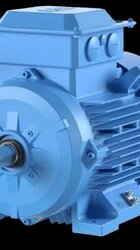
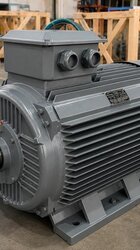
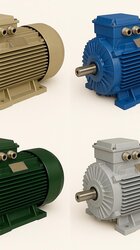
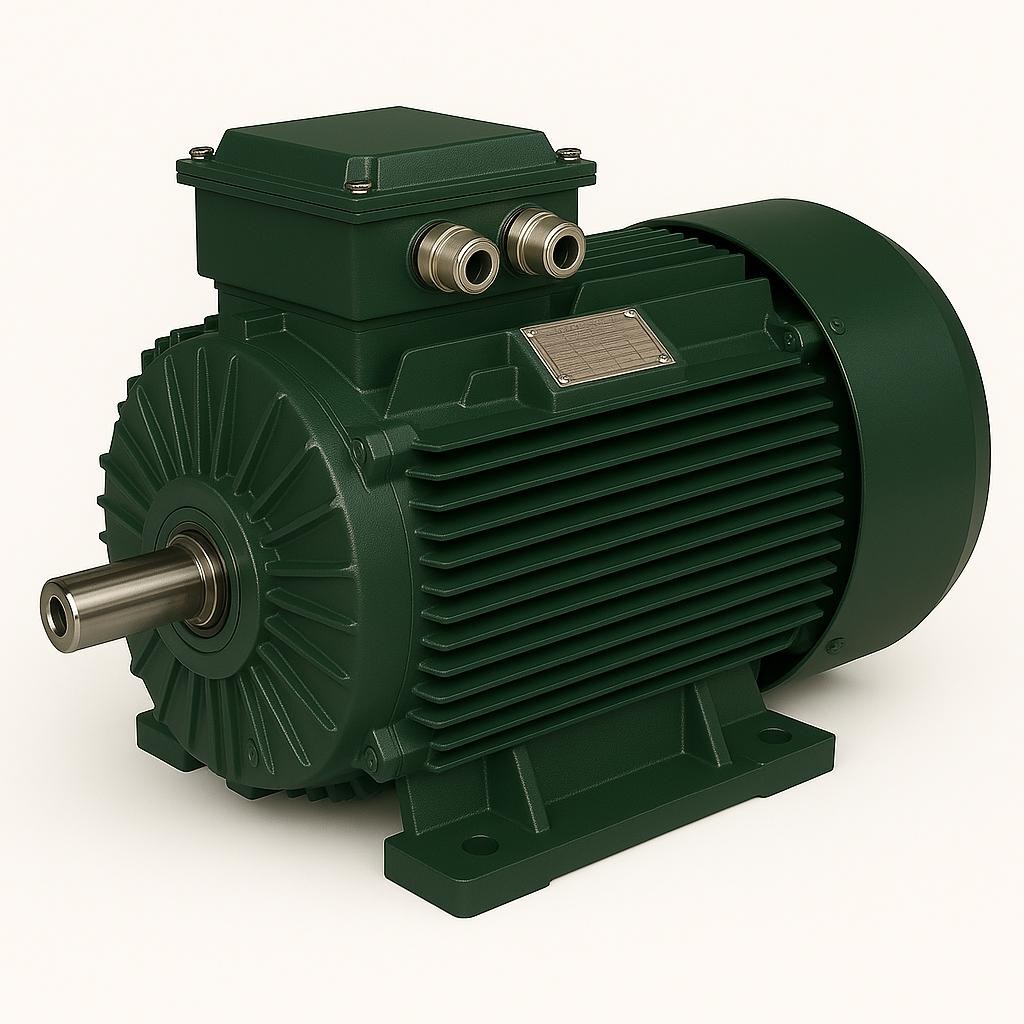

One of the most critical components determining the life and reliability of an electric motor is the bearing system. This element carries the shaft, makes rotation possible and transfers loads to the frame; when selected incorrectly, it becomes the point where the motor fails most often. In motor bearing selection, the fundamental distinction is between the sleeve bearing (plain/bushing type) and the rolling element bearing. Each solution has its own strengths and weaknesses; the right choice depends on the application's speed, load type, noise expectation and maintenance strategy. In this article we compare sleeve and rolling bearings from every angle and explain which should be preferred in which application, drawing on DRG's manufacturing experience. Our article on bearing types and selection is the foundational resource that complements this subject.
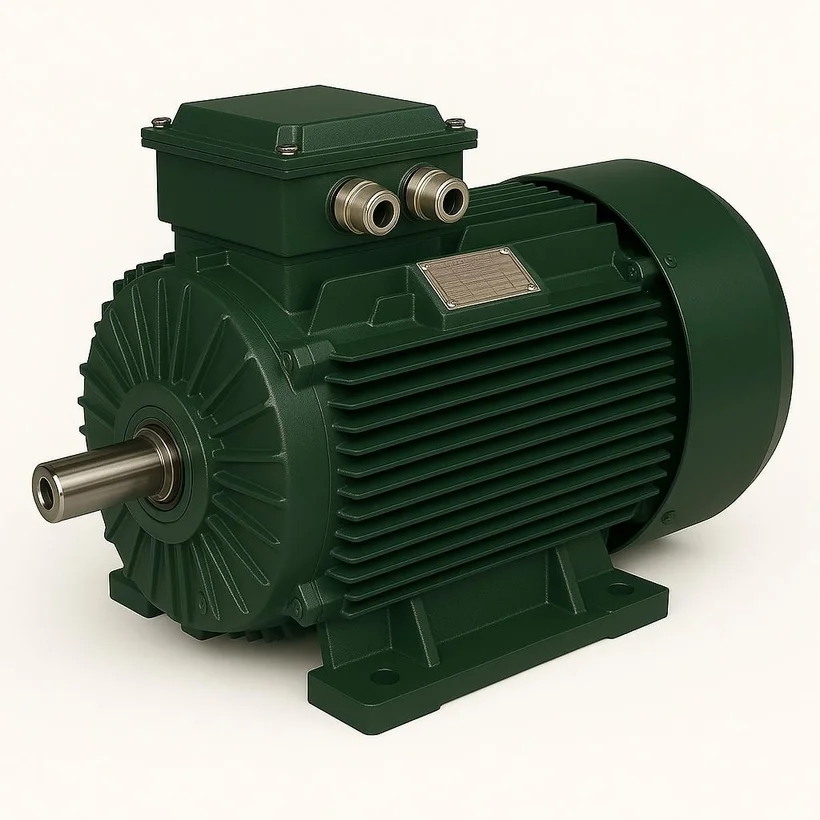
What Is the Job of a Motor Bearing?
The bearing positions the rotating shaft relative to the fixed frame and carries radial and axial loads. It also minimises friction so the motor turns efficiently. The bearing system directly affects both mechanical durability and the vibration and noise behaviour of the motor. However good the electrical design of a motor, if the bearing system is weak the motor fails early. The bearing is therefore treated as an unseen but decisive component of motor reliability. The machining quality of the bearing housing, the surface hardness of the shaft and assembly precision are also factors that directly affect bearing life.
What Is a Sleeve Bearing?
A sleeve bearing is a type in which the shaft slides on a film of oil and contains no rolling elements. The shaft usually turns inside a bronze or white-metal lined bushing. With correct lubrication a thin film forms between the shaft and the bearing surface and metal-to-metal contact is prevented. This structure offers a quiet, long-lasting solution in high-speed and high-power motors.
What Is a Rolling Bearing?
A rolling bearing contains rolling elements such as balls or rollers between an inner and outer ring. Rolling friction is lower than sliding friction, which provides low starting friction and high efficiency. Rolling bearings are preferred in the vast majority of industrial motors because they are standard, modular and usable across a wide load-speed range.
Sleeve Bearing and Rolling Bearing Comparison Table
The table below compares the two bearing types according to the main selection criteria. This overview provides a quick reference when determining the bearing suited to an application.
| Criterion | Sleeve Bearing | Rolling Bearing |
|---|---|---|
| Load capacity | Very high radial load | Balanced radial and axial |
| Speed | Excellent at high speed | Wide range, limited at very high speed |
| Noise | Very quiet | Moderate |
| Life | Very long if oil film is maintained | Limited by fatigue |
| Maintenance | Requires continuous lubrication | Periodic greasing |
| Cost | High (in large motors) | Low-medium, standard |
| Starting friction | Relatively high | Low |
Load Capacity Comparison
Sleeve bearings can carry very high radial loads because they distribute the load over a large contact surface through the oil film. Rolling bearings carry the load through point rolling contacts, which is advantageous in balancing axial and radial loads. The sleeve bearing stands out in large motors requiring very heavy radial load, while the rolling bearing is a practical solution for balanced load profiles.
The Effect of Speed on Bearing Selection
At high speed, rolling elements can be stressed by centrifugal force and heating. The sleeve bearing, thanks to its oil film, runs very stably at high speed. For this reason sleeve bearings are often preferred in large 2-pole high-speed motors. At low and medium speed the rolling bearing is sufficient and economical for most applications. The relationship of pole count and speed is a parameter that also affects bearing selection.
Noise and Vibration Behaviour
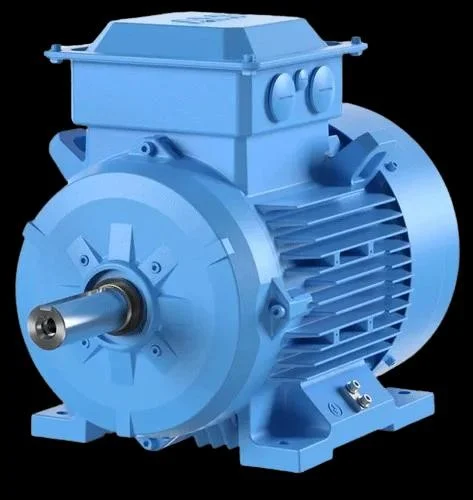
Because there is no metal-to-metal contact in a sleeve bearing, operation is very quiet. Rolling bearings can produce noise at a certain frequency due to the motion of the rolling elements. The sleeve bearing offers an advantage in environments where noise is critical, while in standard industrial settings the noise of a rolling bearing is usually at an acceptable level.
The Lubrication Difference: Film or Grease?
A sleeve bearing depends on a continuously maintained oil film; if lubrication is interrupted the film breaks down and damage develops quickly. Rolling bearings are usually grease-lubricated and periodic greasing is sufficient. Our article on bearing greasing and lubrication intervals helps determine the correct grease interval. The lubrication strategy is an inseparable part of bearing type selection.
The Difference in Maintenance Approach
A sleeve bearing requires more careful monitoring of oil level and film continuity. Rolling bearing maintenance is more standard and runs as adding grease at set intervals or replacing the bearing. The plant's maintenance capacity is an important factor determining which bearing type is practical.
Life and Fatigue Behaviour
The life of rolling bearings is limited by the fatigue cycles accumulating on the rolling surfaces and is calculated statistically. A sleeve bearing is theoretically very long-lasting as long as the oil film is maintained, because the contacting surfaces do not wear directly. The recommendations in extending bearing life aim to maximise life in rolling-bearing systems.
Starting Friction and Efficiency
Rolling bearings show low friction when moving from rest, which provides an energy advantage at start. In a sleeve bearing, because the film is not fully formed before the shaft moves, the starting friction is relatively high. In continuously running large motors this loses importance; in frequently stopping-starting applications the rolling bearing is advantageous.
Sleeve Bearings in Large and High-Speed Motors
In high-power and high-speed motors, the sleeve bearing is preferred because it provides stable, quiet and long-lasting operation at high load and speed. Such motors are usually used in continuously running heavy applications like power plants, large pumps and fans. Within the industrial electric motors family, this class forms the backbone of critical processes.
Rolling Bearings in Standard Applications
The vast majority of small and medium-power motors use rolling bearings. Being standard, economical, easily sourced and able to meet a wide load-speed range makes the rolling bearing the default solution. In pumps, fans, conveyors and general drives, the rolling bearing offers balanced performance.
Axial Load and Bearing Arrangement
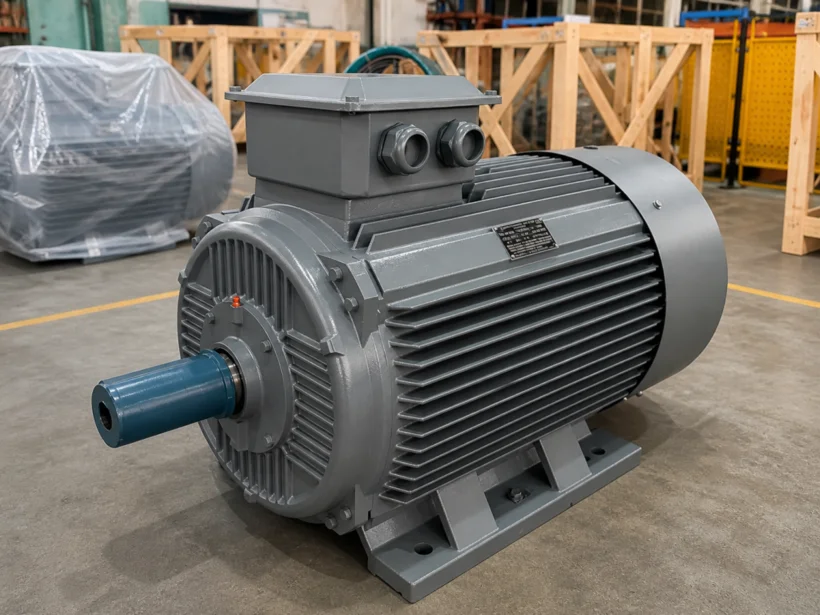
In applications that must carry axial load, the rolling bearing arrangement is configured with a fixed and a free bearing combination. A sleeve bearing may require a separate thrust bearing for axial load. Correctly configuring the bearing arrangement reduces vibration and wear by controlling the axial movement of the shaft.
Temperature and Thermal Behaviour
Both bearing types produce heat due to friction. In a sleeve bearing the oil also acts as a coolant. In a rolling bearing, excessive temperature shortens grease life and bearing life. Monitoring bearing temperature with motor temperature control increases safety in both solutions.
Sealing and Protection Against Contamination
Protecting bearings from dust, moisture and dirt is critical for life. Seals and sealing elements prevent both the oil from leaking out and dirt from entering. IP protection class selection is the complement of the bearing protection strategy.
Bearing Health with Vibration Monitoring
Bearing faults usually give early signs in the vibration signature. Regular vibration measurement enables early fault detection in both sleeve and rolling systems. Predictive maintenance preserves production continuity by preventing unplanned stops.
Bearing Replacement and Ease of Service
Rolling bearing replacement is standard and fast; the faulty bearing can be removed and a new one fitted. In a sleeve bearing, bushing replacement or re-casting is a more specialised operation. Ease of service is a factor affecting bearing type selection, especially in remote sites.
Cost Comparison
In small and medium motors the rolling bearing is more economical due to standard production and easy supply. In large motors, the long life and quietness the sleeve bearing provides can justify the higher initial cost over the long term. The high and low kW motors comparison supports the correct bearing choice according to power class.
Bearing Selection Recommendation by Application
As a general rule, the rolling bearing stands out in small-medium standard drives, and the sleeve bearing in high-power, high-speed, continuously running heavy applications. While sturdy rolling bearing arrangements are preferred in impact loads such as cranes, the sleeve bearing offers an advantage in large fans where quietness is critical. In crane and lifting motor applications, bearing loads are evaluated specifically.
Bearing Stress in Heavy Drives
In heavy drives such as mills and crushers the bearing loads and impacts are high. In mill and grinding motor applications, bearing selection is critically important in terms of both load capacity and durability. The correct bearing secures motor life under these demanding conditions.
The Relationship of Speed, Torque and Bearing
The torque the motor produces is transferred to the bearings via the shaft. The power, torque and speed relationship is the fundamental parameter that determines the load the bearing must carry. In high-torque low-speed motors, bearing sizing is done according to this load.
Mounting and Alignment Precision
Bearing life is directly related to correct mounting and alignment. Misalignment shortens the life of both rolling and sleeve bearings by creating additional load on the bearing. Coupling alignment and foundation connection are preconditions for bearing performance.
The Bearing in Terms of Efficiency and Losses
Bearing friction is part of the motor's mechanical losses. Within motor efficiency losses, friction losses are kept to a minimum with the correct bearing and lubrication. An efficient high-efficiency motor design also optimises bearing selection toward this goal.
Insulation and Bearing Interaction
In inverter-fed use, bearing currents can cause electro-erosion on bearing surfaces. Insulated bearings or suitable grounding solutions prevent this risk. Insulation class and bearing protection are evaluated together in modern drive-fed applications.
Commissioning Checks
At first start, bearing temperature, vibration and sound should be checked. In a sleeve bearing, confirming the oil level and film formation is important. These checks verify that the bearing runs at the expected performance.
The Effect of Environmental Conditions
Dusty, humid or high-temperature environments affect bearing selection. Suitable sealing and lubrication enable the bearing to withstand these conditions. Electrical infrastructure decisions such as supply cable sizing also support the overall reliability of the motor.
Common Causes of Bearing Failure
Insufficient or excessive lubrication, alignment error, contamination and overload are the most common causes of bearing failure. Knowing these causes in advance reduces the failure risk through both correct bearing selection and correct maintenance. Excess grease increases internal friction and heating in a rolling bearing, while insufficient grease leads to metal contact. In a sleeve bearing, even a momentary interruption of the oil film can cause permanent surface damage. Lubrication amount and interval must therefore be applied faithful to supplier data. Regular monitoring of vibration, temperature and sound records catches most of these failure causes at an early stage.
Bearing Clearance and Tolerance
In rolling bearings the internal (radial) clearance class is selected according to operating temperature and load. Too tight a clearance leads to heating, too wide a clearance to vibration. In a sleeve bearing, the film thickness between shaft and bushing is determined by oil viscosity and load. Correct tolerance selection is the basis of stable, long-lasting operation in both bearing types.
Oil Viscosity and Grease Type Selection
In a sleeve bearing the oil viscosity that determines film thickness is selected according to operating temperature and speed. In a rolling bearing the grease type must suit the temperature range and speed factor. The wrong lubricant choice can cause early failure even if the correct bearing type is selected. Lubricant selection must be addressed together with bearing design.
Combined Loads and Mixed Arrangements
In some applications the shaft carries both radial and variable axial load. In this case angular contact ball or tapered roller bearing arrangements are preferred. In large motors a sleeve radial bearing and a separate thrust bearing may be used together. Mixed arrangements increase system strength by meeting each load component with the most suitable bearing.
Environments Where Quiet Operation Matters
In large fans and pumps operating near hospitals, offices or in noise-limited zones, quietness is a priority criterion. The sleeve bearing's structure without metal-to-metal contact provides marked comfort in these environments. The noise expectation plays a direct role in the bearing type decision.
Stock and Spare Part Management
Because rolling bearings have a wide supply network in standard sizes, spare part management is easy; in case of failure they can be quickly sourced and replaced. Sleeve bearing bushings are often specific to the motor and require pre-planned stock. A spare bearing strategy in critical processes minimises unplanned downtime and supports production continuity.
Rebuilding and Recovery
A worn sleeve bearing can be returned to use by renewing or re-casting the bushing; this is an economical maintenance approach in large motors. Rolling bearings are usually replaced while the motor frame and shaft are preserved. Both approaches extend the total life cycle of the motor, contributing to resource efficiency.
The Total Effect of the Right Choice
Selecting the bearing type correctly affects the motor's life, noise, maintenance cost and energy efficiency together. A bearing compatible with the application's requirements improves both reliability and operating economy. Bearing selection should be regarded as an inseparable part of motor selection.
DRG Motor for Bearing Selection
DRG determines the correct bearing type by application in every power class; reliable rolling bearing arrangements in standard drives, and sleeve bearing solutions in large, high-speed heavy applications. By evaluating your load profile, speed and maintenance strategy together, we design the bearing system best suited to your motor. The right bearing means longer life and less downtime. Get in touch with the DRG engineering team about bearing type selection and bearing selection; together we will secure the heart of your motor.