 English
 Le français
 Türkçe

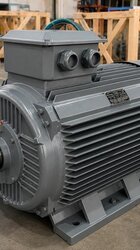
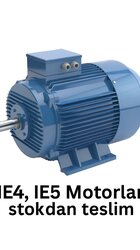
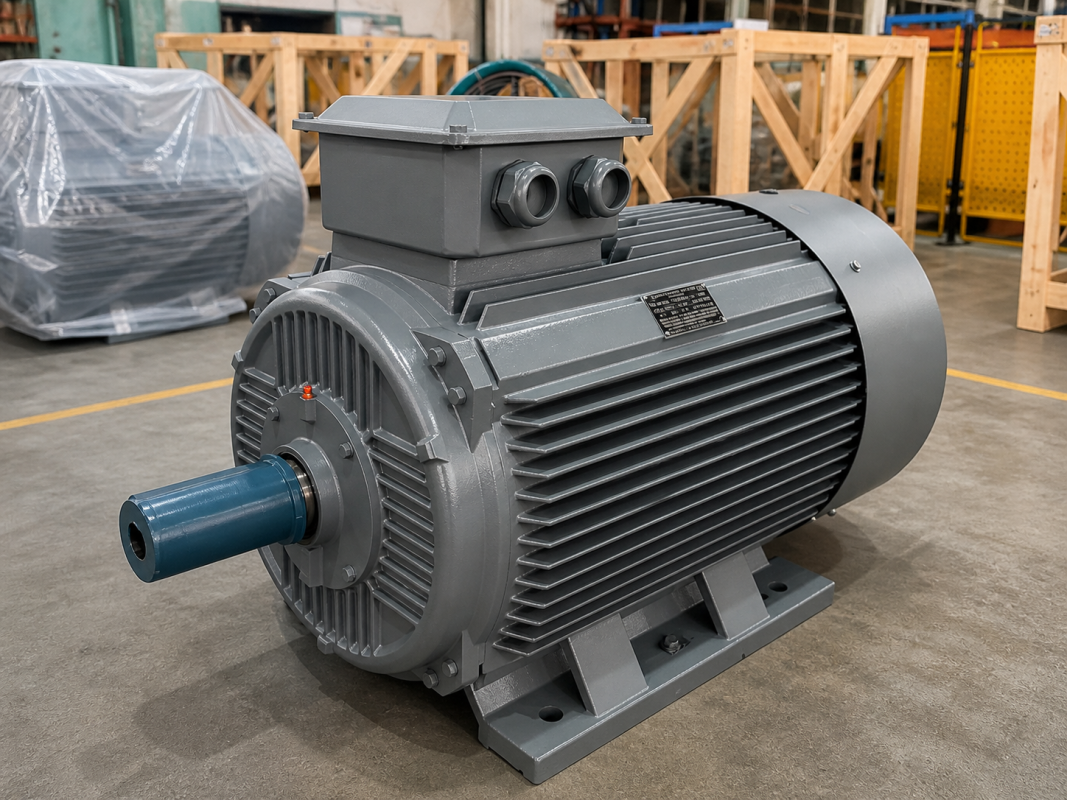

The most critical mechanical component that determines the lifespan of an AC induction motor is the bearing, and the vast majority of these bearings are lubricated with grease. Grease both forms the lubricating film and wraps the bearing like a barrier against external influences. When the right grease is applied in the right amount and at the right interval, the bearing runs trouble-free to the end of its design life; when applied incorrectly, the motor can fail before completing its first year. At DRG Motor, a significant portion of the early bearing failures we encounter in the field are caused not by a mechanical design flaw, but simply by poor grease management. In this article we examine in detail why greasing is so decisive, which factors change the lubrication interval, and what to watch for to lubricate correctly in the field.
The Real Job of Grease Inside the Motor
Although grease may at first look like a mere "slippery substance," it actually performs several tasks at once. It creates a very thin oil film between the bearing balls and the raceways, preventing metal-to-metal contact. Without this film, the surfaces rub against each other, temperature rises rapidly, and microscopic welds form that begin to deteriorate the surface.
Its second job is protection. By filling the bearing cavity, grease makes it harder for dust, moisture, and abrasive particles to get inside. Third, grease helps dissipate part of the heat generated by friction. All three of these tasks depend on the grease maintaining its basic structure; when the grease breaks down, all of them weaken at once.
The Structure of Grease: Base Oil, Thickener and Additives
Grease consists of three main components. The base oil is the part that actually does the lubricating. The thickener (usually soap-based) holds this oil like a sponge, keeping the grease in place. Additives provide properties such as oxidation resistance, pressure capacity, and corrosion protection.
While the motor runs, the thickener slowly releases the base oil it holds and feeds the contact zone. This is why grease has a "life": when the base oil is depleted or the additives break down, the grease can no longer perform its task. What we call the lubrication interval is essentially the moment when fresh grease must be added before this depletion point.
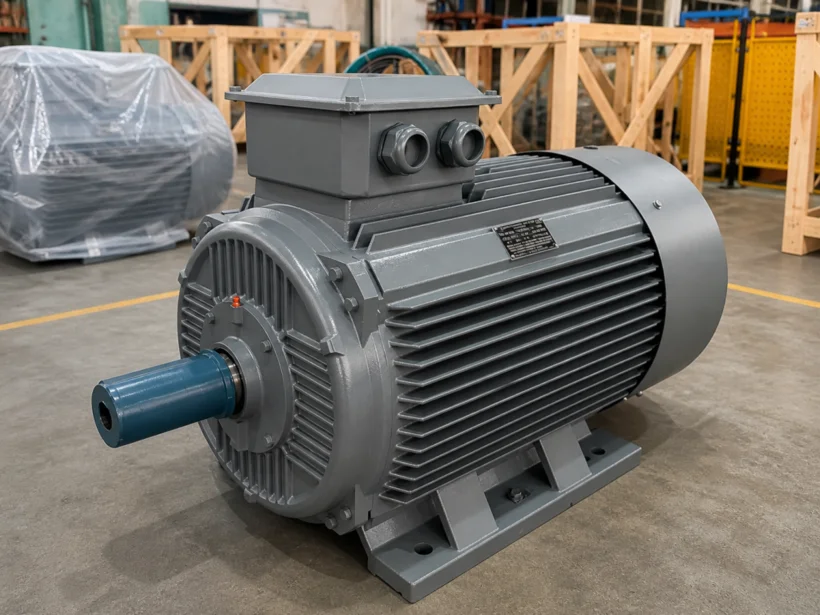
Factors That Affect the Lubrication Interval
Even for a single motor, there is no single answer to the question "how many hours is the lubrication interval." This period is a result determined jointly by many variables. The headings below are the factors that influence this period the most.
The Effect of Rotational Speed
The motor's speed of rotation is one of the strongest factors determining the lubrication interval. As speed increases, the grease inside the bearing works faster, heats up more, and loses its base oil more quickly. The lubrication interval of a two-pole motor running at 3000 rpm is noticeably shorter than that of a four-pole motor of the same frame size running at 1500 rpm.
For this reason, the lubrication interval should be kept more frequent on high-speed motors. Selecting a motor with the correct pole count moves efficiency and the maintenance load at the same time; we also address this topic in our industrial electric motors content.
The Effect of Operating Temperature
Temperature directly and harshly shortens grease life. The generally accepted approach is that every 15 °C rise in bearing temperature roughly halves the grease life. In other words, a motor that runs continuously at high temperature must be lubricated at an interval far below the catalog value.
The source of heat is not only the ambient; excessive load, insufficient cooling, misalignment, and even too much grease all raise the temperature. Monitoring motor temperature is therefore an inseparable part of maintenance planning; our motor temperature control article provides detailed information on this.
The Effect of Bearing Size and Type
Larger bearings take more grease and, because they usually run at lower speeds, have longer lubrication intervals; however, the grease quantity also increases proportionally. The bearing type is decisive too: ball bearings and roller bearings behave differently in terms of lubrication. We examined the topic of correct bearing selection in our electric motor bearing types and selection article.
As the bearing diameter (especially the bore diameter) grows, the lubrication interval shortens. For this reason, lubrication must be planned more carefully on large-frame motors.
The Effect of Mounting Position
Whether the motor runs horizontally or vertically also changes the lubrication interval. In vertically mounted motors, grease tends to slide downward under the effect of gravity, and this can shorten the lubrication interval. In vertical applications it is correct to determine the interval more conservatively.
Click to see current electric motor prices and order nowSEE PRICES →
Load and Vibration Conditions
In bearings running under high load, the oil film is strained more and the grease depletes faster. Likewise, impact loads, frequent start-stop cycles, and externally sourced vibration mechanically break down the structure of the grease. In vibrating environments, the lubrication interval needs to be shortened. Vibration is also a herald of an approaching failure; for this reason, the predictive maintenance approach should be considered together with the lubrication plan.
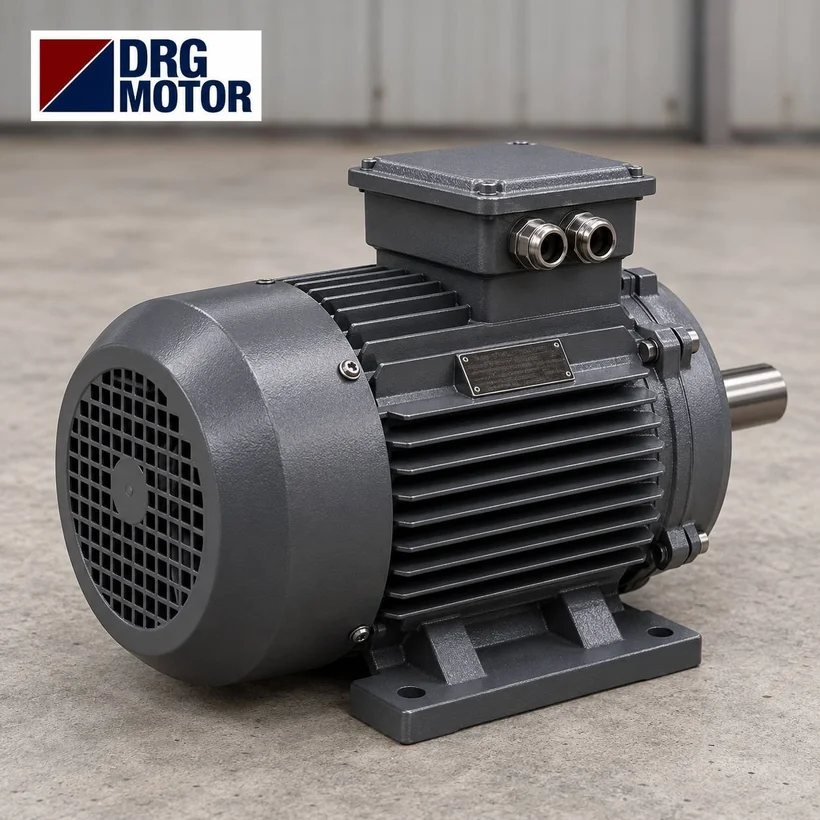
Approximate Lubrication Interval Table
The table below shows approximate lubrication intervals for a standard horizontally mounted motor under normal ambient conditions. These values are only a starting point for planning; the actual interval should be determined according to the motor's nameplate and bearing data.
| Frame / Speed | 2-pole (~3000 rpm) | 4-pole (~1500 rpm) | 6-8 pole (low speed) |
|---|---|---|---|
| Small frame (90-132) | Usually lifetime-lubricated | Usually lifetime-lubricated | Usually lifetime-lubricated |
| Medium frame (160-200) | About 2000-3500 hours | About 4000-6000 hours | About 6000-8000 hours |
| Large frame (225-315) | About 1500-2500 hours | About 3000-4500 hours | About 4500-6000 hours |
The periods in the table shorten according to temperature, load, and ambient conditions. In a high-temperature or dusty environment, it is safer to take half of these values as the basis.
The Harm of Over-Greasing
One of the most common mistakes in the field is the misconception that "the more grease, the better." In fact, too much grease is just as harmful as too little. When the bearing cavity is overfilled with grease, the rotating elements must constantly churn the grease. This churning significantly increases friction and therefore temperature.
The rising temperature separates the base oil of the grease, the thickener hardens, and the grease turns almost into a solid plug. The result is often early bearing failure. For this reason, when lubricating, it is important to stick to the motor's specified grease quantity and not add "a little more" by eye.
The Harm of Insufficient Grease
At the other extreme is insufficient lubrication. When the oil film does not form adequately, the metal surfaces make direct contact, friction increases, and flaking (pitting) begins on the surfaces. Signs of insufficient lubrication are mostly increased noise, rising temperature, and vibration.
Interestingly, the symptoms of over- and under-lubrication resemble each other; both manifest with an increase in temperature and vibration. For this reason, knowing the lubrication history is necessary to understand the source of the problem. For holistic ways to extend bearing life, our extending electric motor bearing life article is a good reference.
Why Grease Type Compatibility Matters
Not every grease suits every motor. The thickener type of greases (lithium, lithium complex, polyurea, etc.) and the base oil viscosity differ. The wrong grease choice cannot protect the bearing even if you lubricate at the correct interval.
One of the most critical issues is grease mixing. When two greases with different thickener types mix, they may be chemically incompatible; in this case the grease may soften and flow or harden and become non-functional. For this reason, the same type of grease should always be used in a motor's lubrication, and if a grease change is required, the bearing must first be cleaned thoroughly.
Base Oil Viscosity and Operating Condition Compatibility
The base oil viscosity of the grease must be selected to suit the motor's speed and temperature condition. While a lower-viscosity base oil is usually preferred for high-speed motors, higher viscosity is required for low-speed and heavily loaded applications. The wrong viscosity causes the oil film to be either too thin or thicker than necessary; both situations create friction and temperature problems.
Grease Nipple and Field Application
Most medium- and large-frame motors have a grease nipple for re-lubrication. In correct field practice, the motor is lubricated while running if possible; because the rotating bearing distributes the new grease in a balanced way. If there is a grease drain plug for the old grease to exit, this plug should be opened during lubrication so the excess grease can be expelled.
The nipple and its surroundings must definitely be cleaned before lubrication; otherwise dust and dirt are carried inside through the nipple. The grease should be delivered slowly and in the specified amount with the grease gun, avoiding sudden and excessive pressure.
Lifetime-Lubricated Bearings
In many small- and medium-frame motors, the bearings are sealed type, filled with grease at the factory and sealed. These bearings are called "lifetime-lubricated" and require no re-lubrication under normal conditions. When their grease is depleted, the bearing itself is replaced.
The best maintenance that can be done on such bearings is to keep the operating temperature low and avoid excessive load; because the life of the grease inside them depends entirely on the operating condition. A lifetime-lubricated bearing running at high temperature can deplete its grease much faster than stated in the catalog.
Recording the Lubrication History
The most neglected part of a regular lubrication program is keeping records. Writing down which motor was greased, when, with which grease, and how much; prevents both over-greasing and forgetting. Over time, these records build a valuable database for understanding the motor's behavior.
When lubrication records are combined with vibration and temperature measurements, a complete maintenance picture emerges. For this holistic approach, our electric motor maintenance steps article places lubrication within the overall maintenance plan.
Adjusting the Interval According to Season and Environment
The lubrication interval is not a fixed calendar; it must be adjusted according to seasonal and environmental conditions. When the ambient temperature rises in summer, grease life shortens and lubrication should be more frequent. The same flexibility is needed during dusty production periods. We addressed the effect of ambient temperature on motor selection and maintenance in our ambient temperature and altitude article.
The Role of Lubrication in Preventing Early Failure
Statistically, a significant portion of electric motor failures stem from bearings, and the majority of these bearing failures can be linked directly to lubrication errors. In other words, correct lubrication is a maintenance practice that significantly increases motor reliability even on its own. Lubrication is a simple protection method that requires no expensive equipment but offers very high returns.
The Difference Between First Lubrication and Re-Lubrication
A motor's initial grease fill is done at the factory by filling a certain proportion of the bearing cavity (usually between one-third and one-half) with grease. This first fill is calculated to last until the motor's first lubrication interval. Re-lubrication is the addition of fresh grease on top of the old grease at the moment this first grease has largely lost its function. The two operations require different amounts: the amount of grease to be added in re-lubrication is less than the initial fill and is usually specified in grams on the motor nameplate or bearing data.
Instead of estimating the re-lubrication amount by eye, it is necessary to stick to the calculated value. In practice, the approximate grease amount can be found with a simple formula based on the product of the bearing outer diameter and width, but the most accurate source is the motor's own documentation.
Evaluating Bearing Condition Before Lubrication
Briefly evaluating the current condition of the bearing before periodic lubrication both increases the effect of the lubrication and provides an opportunity to catch a hidden failure early. While the motor runs, the sound coming from the bearing area should be listened to, and whether there is an abnormal hum, rattle, or metallic friction noise should be noted. The temperature of the bearing housing should be checked by hand or with a non-contact thermometer, and if higher than expected, the cause should be investigated.
These quick checks turn lubrication from a mechanical habit into a diagnostic opportunity. The small signs noticed during lubrication are often early heralds of major failures, and timely intervention prevents costly downtime.
Grease Storage and Keeping Conditions
An issue most businesses overlook is that grease itself also has a shelf life. Grease that has been left open for a long time, taken on moisture, or stored at high temperature can deteriorate before use. In deteriorated grease, the base oil separates and oil accumulation is seen on the upper surface. When such grease is delivered to the motor, it cannot provide the expected protection.
Grease buckets should be kept closed in a cool and dry place; when taking grease, a clean spatula should be used and dirt or water should be prevented from getting into the bucket. Not mixing different types of grease in the same gun or container is also a rule to observe at this stage.
DRG Motor for Reliable Bearing Lubrication
A motor running trouble-free for years often depends on a small habit that is usually overlooked, namely correct grease management. At DRG Motor, we design the AC induction motors we supply so that their lubrication requirements are clear, maintenance is easy, and lifespan is long. To correctly determine your motors' lubrication interval, select the appropriate grease type, or get support on bearing maintenance, you can review our DRG Motor products and consult our team. A properly lubricated motor is a gain at least as valuable for your facility as energy efficiency.
DRG Electric Motors Suited to This Topic
The models below are available in the DRG Motor online shop. Click a model code to see its technical data, dimensions and current price, and order right away.
- DRG-100L1-4 – 2.2 kW – 1450 rpm – aluminium frame
- DRG-132S-4 – 5.5 kW – 1460 rpm – cast iron frame
- DRG-160M-4 – 11 kW – 1465 rpm – cast iron frame
- DRG-180L-4 – 22 kW – 1470 rpm – cast iron frame
Click to see current prices of all electric motors and order nowSEE PRICES →