 English
 Le français
 Türkçe

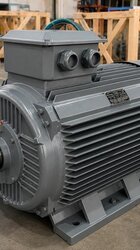
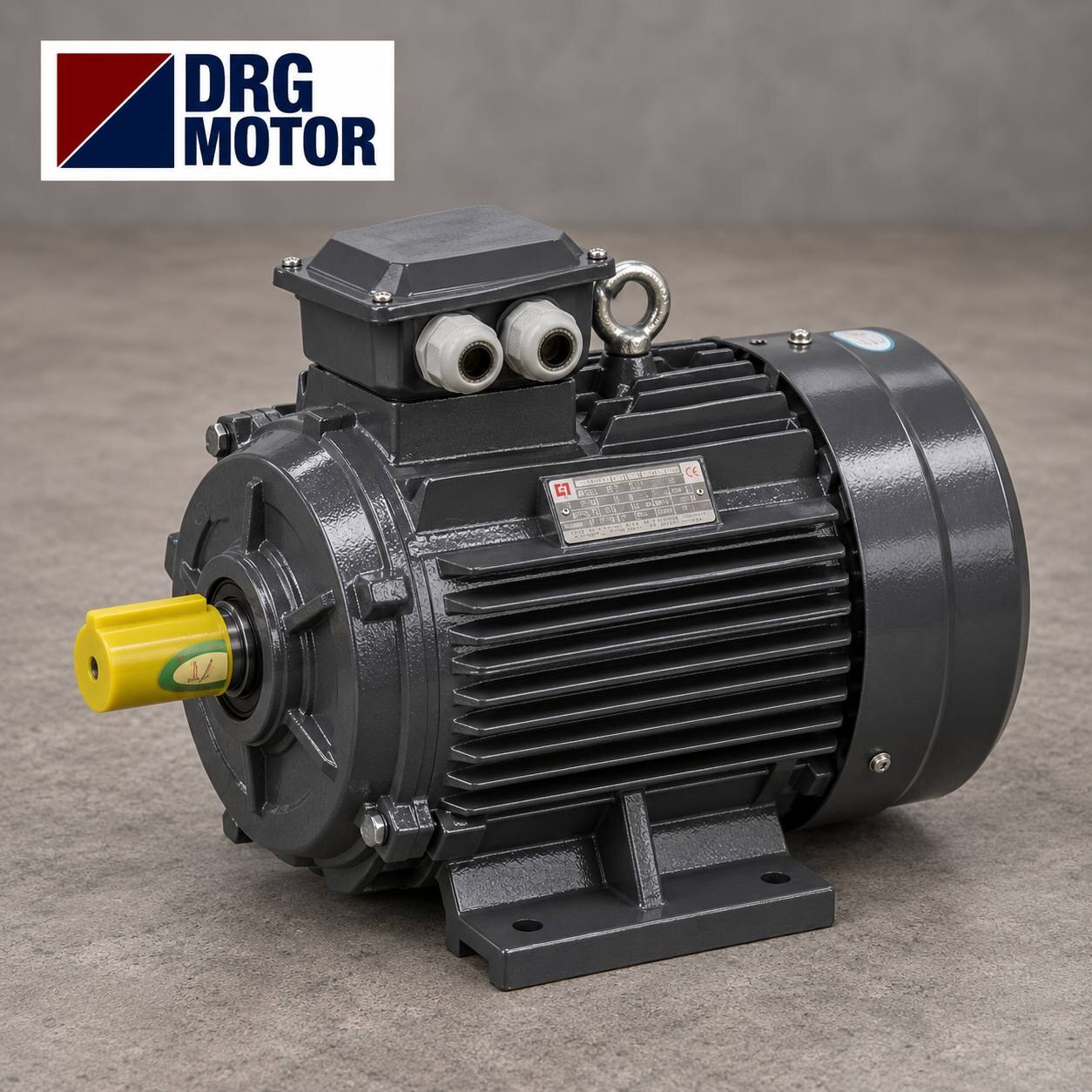

Dosing pumps, small agitators, labelling machines, bench tools and precision conveyors do not need power. They need controlled movement in a package that fits where the designer left room.
What Counts as Low Power
The low power band generally means 0.12 kW to 4 kW, and it drives the great majority of small machinery. As the rating drops the frame shrinks with it, which is what allows compact machine design and lower weight. The efficiency and durability standards do not shrink at all.
- 0.12 to 0.55 kW: dosing pumps, small fans, rotary tables
- 0.55 to 1.5 kW: agitators, short conveyors, packaging machines
- 1.5 to 4 kW: medium pumps, bench drives, extraction units
Steady Torque Beats High Speed
On small machines it is smooth torque, not rpm, that decides whether the process works. On a 50 Hz supply a 4-pole motor gives 1500 rpm synchronous, a 2-pole gives 3000 rpm and a 6-pole gives 1000 rpm. Precision dosing and mixing favour 4 or 6 poles because the torque is more even at low speed. Small fans and polishing work favour 2 poles.
Small Ratings Still Add Up
A single low-power motor looks like a rounding error on the meter. Put several dozen across a workshop and the total climbs quickly. The IEC 60034-30-1 efficiency classes apply here as well, so choose IE2 or IE3 where it is available. On labelling and packaging lines that run all day, one point of efficiency per motor across dozens of drives shows up in the year-end figure.
Aluminium as the Default Frame
Aluminium dominates this class. It is light, it sheds heat quickly, and it drops easily into the moving parts of a small machine. Cast iron becomes the better answer in corrosive, humid locations or in high-vibration duty. Class F insulation and IP55 protection let either version work in dusty and damp areas.
Mounting Around Tight Spaces
Flange connections dominate the low kW range because mounting flexibility decides the machine layout:
- B3, foot mounted, the classic bolt-down form
- B5, the large flange that seats the motor directly on the machine housing without an adapter
- B14, the small flange that fits crowded installations
B14 is the one that makes a motor disappear into a bench machine or a panel enclosure.
Speed Control on Small Drives
Small motors run happily on a frequency converter. In dosing and feeding duty that is how flow gets set precisely. Two things matter: the winding insulation has to suit inverter operation, and cooling has to stay adequate at low speed, since the shaft fan may no longer move enough air. Where that becomes a limit, forced ventilation is the answer.
Single-Phase or Three-Phase Supply
Workshops do not always have a three-phase supply, and single-phase 230 V motors are the practical answer when they do not. The trade is real: lower starting torque and usually somewhat lower efficiency than the three-phase equivalent at the same rating. Where three phase exists, it wins on efficiency and on speed control. On very small single-phase machines, capacitor-start models get the load moving without extra hardware.
Commissioning and Upkeep
Small motors are often buried in the tightest part of the machine, which makes cooling harder than it should be. Before the first run, check that the air inlet cover is clear, that rotation runs the correct way and that the terminal box connections are tight. A thermal overload relay of the correct rating is what stops a small winding from burning out.
Where They Earn Their Place
- Dosing and additive feed pumps on food lines
- Drive units in packaging and labelling machines
- Rotating spindles on laboratory and workshop benches
- Small mixers and agitator units
- Filters, extractors and small ventilation fans
What these share is a demand for even motion rather than power. Replacing an existing unit adds one constraint: shaft diameter, flange type and frame size must all match the machine exactly, or the retrofit turns into machining work.