English
 Le français
 Türkçe

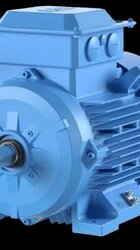
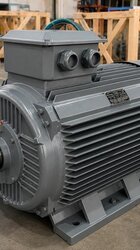
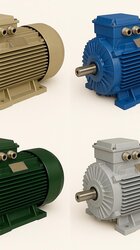
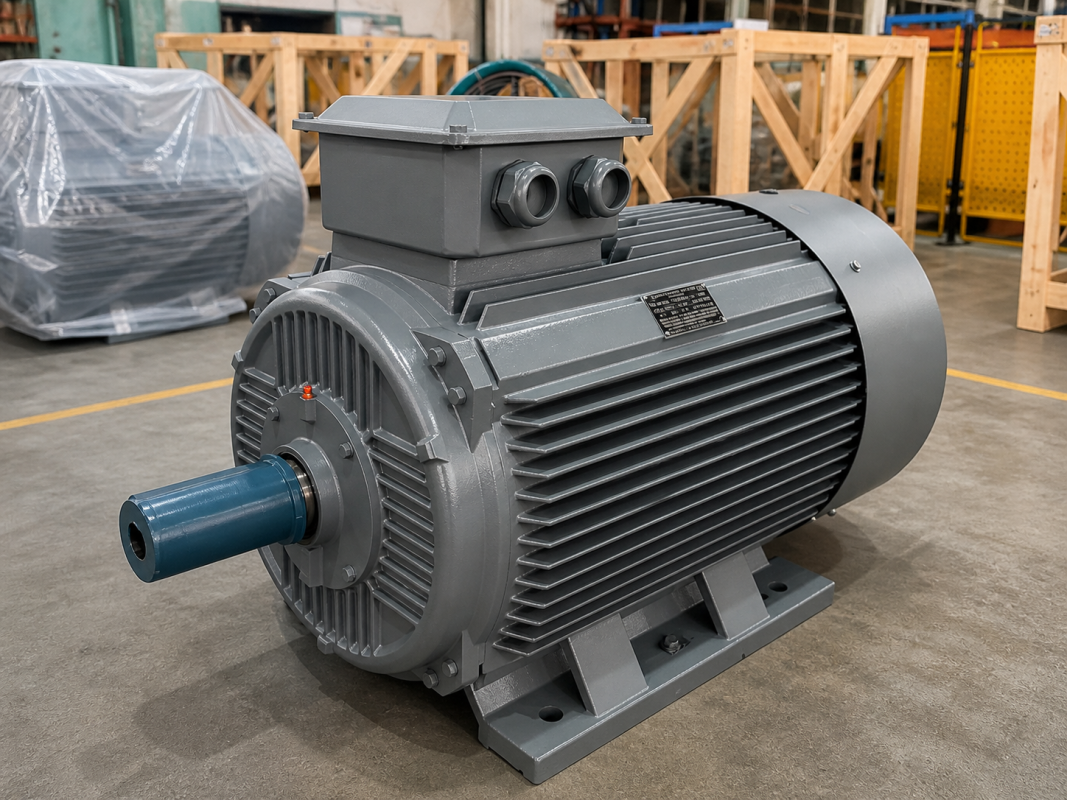

When the weight of a rotor turning thousands of times per minute is not evenly distributed at every point, a silent war begins inside even though the motor appears to run flawlessly. The name of this war is imbalance, and its consequences accumulate over the years in the bearings, the enclosure, the connection bolts and even the machine connected to the motor. Dynamic balancing is a critical process that corrects this invisible weight difference during production or maintenance, ensuring the motor runs vibration-free, quiet and long-lived. At DRG Motor, we balance every rotor we supply on precise balancing machines; because a well-balanced rotor is the quietest promise a motor makes throughout its life. In this article we cover step by step what rotor imbalance is, how dynamic balancing is done, the effect of imbalance on vibration and bearing life, balance quality grades, and when balancing is needed.
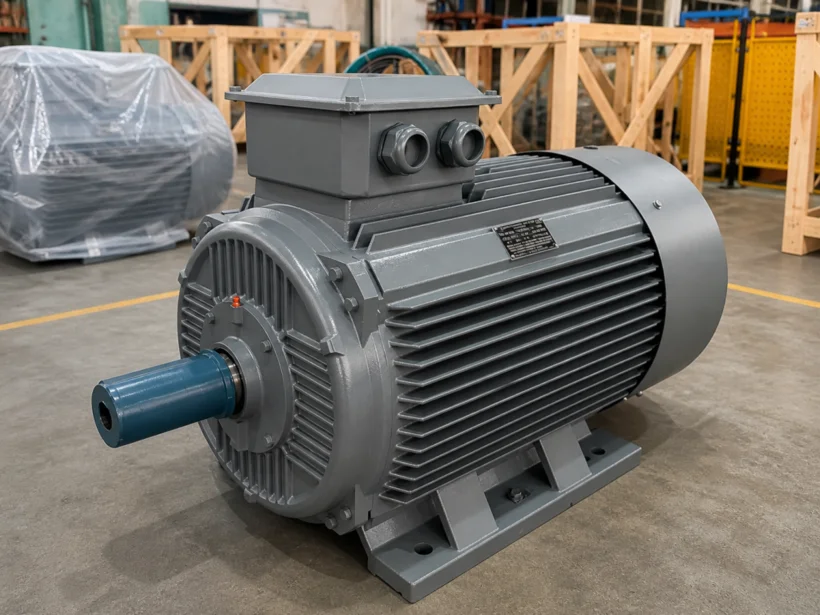
What Is Rotor Imbalance?
Rotor imbalance is when the center of gravity of the rotating mass does not coincide with the axis of rotation. In an ideal rotor, the mass is distributed perfectly symmetrically around the axis, and no extra force arises at any point when it rotates. In reality, small production tolerances, differences in material density, or wear accumulating over time shift the center of gravity a tiny amount off the axis. This small shift turns into a centrifugal force that grows with the rotation speed.
Why Is Imbalance Dangerous?
The centrifugal force arising from imbalance increases with the square of the rotation speed. That is, when the speed doubles, this force quadruples. For this reason, even a very small imbalance becomes a large source of vibration in high-speed motors. This force changes direction with every revolution, continuously straining the bearings, the enclosure and the connections; ultimately bringing early fatigue and failure.
The Difference Between Static and Dynamic Imbalance
There are two basic types of imbalance. In static imbalance, the excess weight is at a single point of the rotor; when the rotor is released, the same side always turns downward. In dynamic imbalance, the weight differences are in two different planes of the rotor, in opposite directions; this creates a wobbling (rocking) moment as the rotor turns. Dynamic balancing is the most comprehensive method because it can correct both types.
What Is Dynamic Balancing?
Dynamic balancing is a process that measures and corrects the imbalance in two different planes while turning the rotor at a speed close to its own operating conditions. The rotor is turned on a special balancing machine; sensors read the magnitude and angular position of the vibration in each plane. Based on this data, it is calculated where and how much weight should be added or removed to eliminate the imbalance.
How Does a Balancing Machine Work?
A balancing machine turns the rotor on precise bearings and measures the vibration produced during rotation with high-sensitivity sensors. With the help of a reference mark, the imbalance magnitude and its exact angular position on the rotor are both determined. This way the operator obtains the information "in this plane, at this angle, there is this many grams of excess" and makes the correction at a specific point.
Adding and Removing Weight
After the imbalance is detected, it is corrected by two methods. Either weight is added to the lighter side (welded washer, screwed weight), or material is removed from the heavier side (drilling, grinding). Which method is used depends on the rotor's design. The process is repeated with a measure-correct cycle until the targeted balance quality grade is reached.
Single-Plane and Two-Plane Balancing
The balancing process is done in one or two planes depending on the rotor's geometry. In thin and narrow rotors (for example a disc-shaped part), single-plane balancing is sufficient; because the mass is concentrated in a single plane. In long and cylindrical rotors, two-plane balancing is needed because weight differences can be in different places along the length. Because electric motor rotors are usually long, they require two-plane balancing.
The Concept of Residual Imbalance
No rotor can be balanced perfectly; there is always a small, measurable residual imbalance. What matters is that this residual value stays below the limit the application allows. The balance quality grade defines exactly this allowed limit. The goal is not zero imbalance but reaching an acceptable level of balance whose residual is harmless at operating speed.
The Effect of Imbalance on Vibration
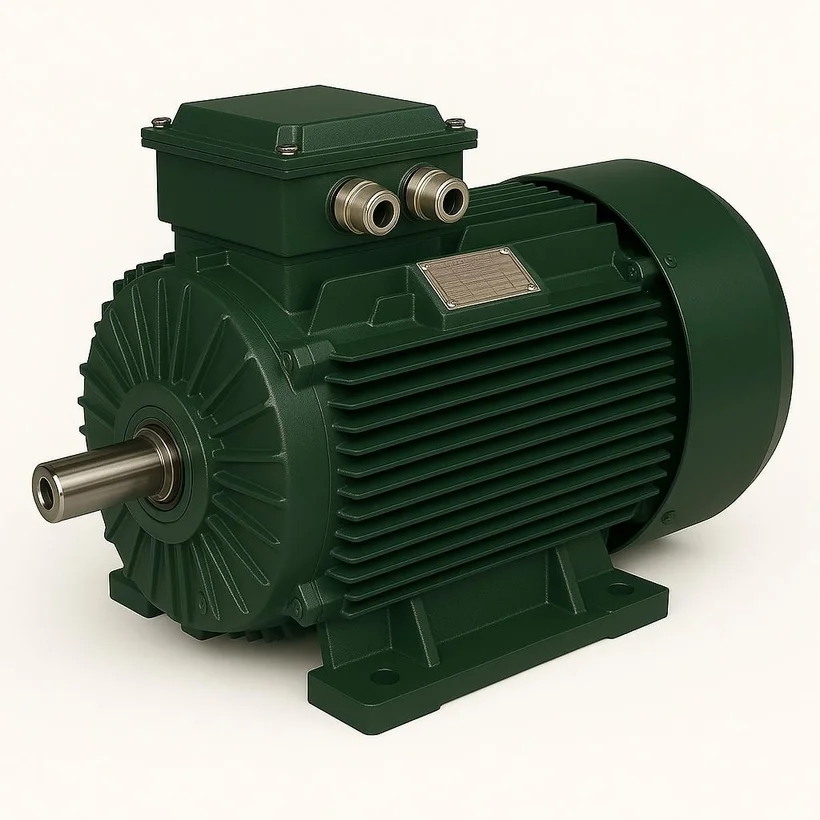
Imbalance is the most common cause of vibration in a motor. An unbalanced rotor produces a distinct vibration at the rotation frequency; when this vibration is measured, it appears as a single peak at the same frequency as the rotation speed. This signature makes it easy to distinguish imbalance from other faults. We covered the ways to reduce vibration in our reducing electric motor noise and vibration article.
The Effect of Imbalance on Bearing Life
The most expensive consequence of imbalance is on the bearings. The centrifugal force changing direction with every revolution continuously strains the bearing balls and races; this creates micro-cracks on the surfaces and early fatigue. The bearings of an unbalanced motor complete their life much sooner than those of a balanced motor. We gathered the ways to extend bearing life in our extending electric motor bearing life article.
Imbalance and Overall Motor Life
Vibration wears out not only the bearings but the whole motor. Continuous vibration moves the windings in their slots and erodes the insulation, loosens the connection bolts and starts fatigue on the cast enclosure surface. This cumulative damage shortens the total life of the motor. A well-balanced rotor, on the other hand, cuts off this chain of wear from the very start.
What Is the Balance Quality Grade?
How precisely a rotor needs to be balanced is expressed by the balance quality grade. This grade defines the allowed residual imbalance by relating it to the rotor's operating speed. As the grade number gets smaller, the required precision increases. For general-purpose electric motors the common target is G2.5; that is, the rotor is balanced so that it stays below a specific, low vibration threshold at operating speed.
Balance Quality Grades Table
Different applications require different precision. The table below summarizes common balance quality grades and typical use areas; the smaller the grade number, the more precise the balancing required.
| Balance Quality Grade | Precision | Typical Application |
|---|---|---|
| G6.3 | Standard | General-purpose, low-speed machines |
| G2.5 | High | Standard electric motors, pumps, fans |
| G1.0 | Very high | High-speed, precise drive applications |
| G0.4 | Highest | Special precision shaft systems |
How Does Imbalance Occur?
Why does a rotor become unbalanced? Tiny differences in material density, machining tolerances and assembly errors during production are the first source of imbalance. During operation, dust and dirt sticking to the rotor blades, wear, corrosion, or a break in a cooling fan blade disturb the balance. Even thermal expansion can create a small imbalance in rotors working in hot environments. Each of these reasons shows itself as vibration over time.
Cooling Fan and Imbalance
The motor's cooling fan can also be a source of imbalance. A broken fan blade, asymmetric coating with dust, or a piece breaking off disturb the balance of the rotating mass. In this case vibration increases and both cooling and motor life are negatively affected. For this reason, the fan should also be reviewed when making a balance assessment. We covered the importance of the cooling structure in our enclosure and cooling type article.
When Is Balancing Needed?
Balancing may be needed not only in production but at several points in the motor's life cycle. When a new rotor is produced, it is always balanced. When the rotor is rewound or a bearing is replaced, the balance can be disturbed and rebalancing is needed. In addition, if accumulated dirt, wear or blade damage in a long-running motor disturbs the balance, an increase in vibration is the herald of the need for balancing.
Balancing After Rewinding
When a motor is rewound, the balance can be affected even if the rotor is not usually put on the machine; especially if work has been done on the rotor. Rebalancing the rotor after a quality winding process ensures the motor returns to its first-day vibration-free performance. For this reason, balancing and motor winding quality should be considered together.
Balancing and Alignment Are Different
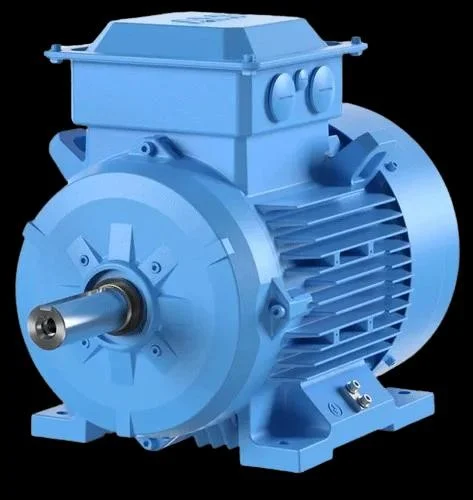
Dynamic balancing and shaft alignment are often confused but solve different problems. Balancing corrects the weight distribution of a single rotor around its own axis. Alignment ensures that the axes of two separate shafts (motor and driven machine) coincide with each other. Both produce vibration but their sources are different; when solving a vibration problem, both must be checked. We covered alignment in our motor shaft and coupling alignment article.
Catching Imbalance With Vibration Measurement
Imbalance leaves a very distinct signature in vibration measurement: a dominant peak at the rotation frequency. Regular vibration measurement lets you track how the imbalance develops over the years. A suddenly increasing rotation-frequency peak reports a part loss or dirt accumulation on the rotor. It is possible to make this monitoring continuous with wireless vibration sensor condition monitoring solutions.
The Place of Balancing in Predictive Maintenance
Imbalance is one of the most easily diagnosed faults of predictive maintenance; because it has a clear vibration signature. Thanks to trend tracking, a planned balancing process can be scheduled before the imbalance exceeds a vibration limit. This approach prevents unexpected stops and ties maintenance to a plan. We deepened the topic in our electric motor predictive maintenance article.
Can Balancing Be Done in the Field?
In some cases balancing can be done without removing the rotor, with the motor standing in place. In this method, known as field balancing, the imbalance is measured using vibration sensors connected to the motor and a rotation reference, and correction weights are added to accessible points. In large motors that are difficult to remove, this method saves time and cost. However, precision as high as machine balancing may not always be achieved; the application's requirement determines the method.
Imbalance and Phase Loss Should Not Be Confused
Increased vibration does not always mean imbalance. An electrical problem, for example phase loss or a winding fault, can also produce vibration; but its signature is different. For correct diagnosis the vibration spectrum must be read: a single peak at the rotation frequency points to imbalance, while peaks at different frequencies point to electrical or bearing-related problems. We examined electrical faults in our electric motor phase loss article.
Imbalance and the Overload Relationship
The extra vibration and friction arising from imbalance can cause the motor to draw a little more current and heat up. This small additional load narrows the temperature margin in the long run. A correctly balanced motor reduces unnecessary mechanical losses and allows overload protection to work more comfortably. We covered overload protection in our electric motor overload protection article.
Temperature and Vibration Are Read Together
The vibration produced by imbalance increases friction in the bearings over time and therefore heating. For this reason, increasing vibration and rising temperature often point to the same root cause. Monitoring the two indicators together catches imbalance-related problems early. We explained temperature tracking in our electric motor temperature control article.
The Importance of Mounting and the Foundation
Even a well-balanced rotor cannot fully solve the vibration problem if the motor is not seated on a solid foundation. Loose feet, a flexible base or insufficiently tightened bolts can turn even a small residual imbalance into large vibration. For this reason, to see the value of the balancing process, the motor must be mounted correctly on a rigid and even foundation.
High Speed and Balancing Precision
As a motor's speed increases, the force created by imbalance grows rapidly. For this reason, high-speed motors must be balanced much more precisely than low-speed ones. The same amount of residual imbalance, unnoticeable at low speed, can turn into serious vibration at high speed. Therefore, when choosing the balance quality grade, the motor's operating speed must be taken into account, and a tighter grade is targeted as the speed rises.
The Effect of Imbalance on the Connected Machine
The harm of an unbalanced motor is not limited to itself; the vibration is also transmitted to the connected machine through the coupling. In this case the bearings and housings of the pump, fan or gearbox are also strained unnecessarily. A well-balanced motor thus protects the life of the entire drive train. This chain effect shows why balancing matters not only for the motor but for the whole system.
IP Protection Class and Imbalance
In motors working in dusty and open environments, dust accumulating on the rotor is a hidden cause that disturbs the balance over time. A closed enclosure with a high protection class preserves the balance longer by preventing dust from reaching the rotor. For this reason, the right enclosure and protection class choice also extends the life of the balance. Our electric motor IP protection class article guides you toward the right choice for your environment.
The Contribution of Balancing to Maintenance Discipline
Regular vibration measurement and rebalancing when needed are an inseparable part of a motor's maintenance discipline. Checking the balance after operations such as bearing replacement, dirt cleaning or blade repair preserves the motor's vibration-free performance. Adding these checks to your electric motor maintenance steps routine pays off in the long run.
The Value of Balancing in Industrial Applications
In plants with continuous production, an unbalanced motor consumes both its own life and the life of the connected machine. For this reason, well-balanced motors are preferred in industrial environments. The products in DRG's industrial electric motors range offer low vibration and long life with their precisely balanced rotors.
Balanced and Quiet Solutions With DRG Motor
An unbalanced rotor is an invisible but continuously working source of wear; a well-balanced rotor, on the other hand, is the foundation of a quiet, vibration-free and long-lived motor. At DRG Motor, we carefully balance every rotor we supply on precise balancing machines, according to the quality grade the application requires; so that when our motors go into the field, they protect both the bearings and the connected machine. Whenever you need a low-vibration, quiet and long-lived motor, the DRG Motor team is by your side from the right product selection to field support. For balanced and trouble-free operation of your motors, get in touch with us; let us determine the most suitable solution for your application together.