 English
 Le français
 Türkçe

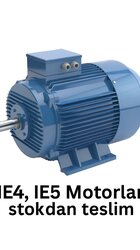

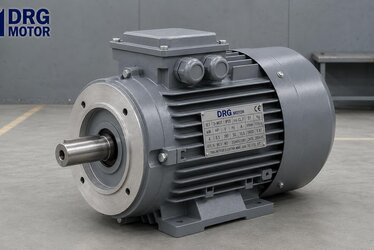
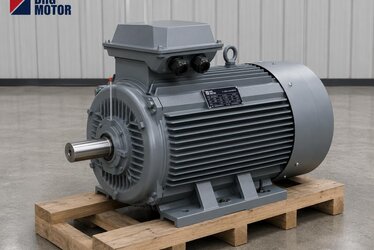
Across a plant, pumps, fans and compressors together draw the larger share of all electricity consumed. They run all day, and they spend the budget quietly. Efficiency, reliability and above all the sizing of the driving motor set what the site costs to run more directly than any other equipment decision.
Three Loads, Three Different Demands
These machines may share a motor family, but their load characters diverge. Variable torque describes centrifugal pumps and fans, whose power climbs steeply with speed; a small change in rpm produces a large change in power. Compressors behave much more like constant-torque loads and demand high breakaway moment. Positive displacement pumps start against a full line, so they also need starting torque. Pole count, starting method and the need for an inverter have to be judged separately for each.
- Centrifugal pump and fan: variable torque, large savings from a drive
- Positive displacement pump: constant torque, stable speed first
- Compressor: high starting torque, solid mechanical structure
Efficiency Steps from IE3 to IE5
IEC 60034-30-1 sorts machines from IE1 through IE5. On fluid equipment that never stops, the class difference lands straight on the invoice. IE3, IE4 and IE5 machines deliver identical output while losing less along the way. Where a pump motor logs several thousand running hours annually, two or three efficiency points can hand back more over the service life than appears on the original invoice. That comparison is the one most often skipped, and over long running hours the electricity bill reaches many times the purchase figure.
Trimming Flow with a Drive Rather Than a Damper
Fan and pump installations still commonly trim flow by shutting a damper or partly closing a valve. Full speed continues regardless, and the surplus energy is simply thrown away. Let a frequency inverter cut the speed instead, and power drops away with the flow. Because absorbed power on centrifugal impellers rises with the third power of rpm, a modest speed reduction takes a large slice off the bill. Soft starting comes with it, which cuts pressure surges and mechanical fatigue.
Picking Speed and Pole Count
2-pole machines at about 3000 rpm suit high-speed centrifugal compressors and certain pumps. 4-pole at 1500 rpm covers general-purpose pumps and fans. 6-pole at 1000 rpm belongs on heavy positive displacement pumps and large process fans, where the demand is torque rather than rpm. A correctly chosen pole count can remove a gearbox or a belt drive entirely, and with it the losses they carry. On pumps, speed sets both head and flow, so the choice follows the impeller and the system curve rather than the motor catalogue alone.
What the Pump Room Demands of the Housing
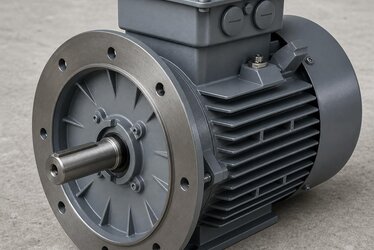
Pump motors work in damp corners, compressors in hot and vibrating ones, fans on dusty lines. An iron housing brings mechanical strength and good vibration damping; aluminium is lighter if the machine ever needs moving. IP55 covers dust and water spray, high winding temperature is handled by class F insulation, and S1 duty confirms the machine is built to turn all day without a break. In water and waste water pumping, where humidity is constant, the protection class deserves the closest look.
Sizing: the Checklist
Buy more motor than the job needs and you pay twice: idle capital, plus poor efficiency at light load. Choose one too small and it works permanently at the limit, overheats and gives up early. Correct sizing starts from the real torque and flow demand: head and flow for a pump, static pressure and volume for a fan, pressure and air delivery for a compressor. A machine that spends its life near its rated load stays in its efficient band; one that idles far below it does not.
Early Warning Signs
Rising vibration usually points to bearing wear or imbalance. Rising temperature means either overload or a cooling problem. An unfamiliar noise points to mechanical looseness. Log current, temperature and vibration on a schedule and small faults get caught while they are still small. In humid pump rooms the effective test is a periodic insulation resistance measurement, and it takes minutes.